Help us get this right
Does this portrait look right for Jie?
Nobody has judged this one yet. You would be the first.
Jie Erotic
Central Karamoja in northeastern Uganda, mainly Kotido District around Kotido town and Nakapelimoru, with dry season grazing lands to the west.
Jie, a dialect of Karamojong (Eastern Nilotic, Nilo-Saharan); mutually intelligible with Turkana and Toposa.
Traditional religion centered on the sky deity Akuj, with ox sacrifices led by senior elders; growing Catholic and Anglican Christianity, often practiced alongside it.
Ateker (Karamojong cluster) people, alongside the Karamojong, Dodoth, Teso, Turkana, Toposa and Nyangatom. Two ritual sections, Lokorwakol and Rengen. Closely related to the Jiye of South Sudan.
About Jie People
The Jie are cattle people of central Karamoja, in the dry northeast of Uganda, and their name is usually glossed as the fighters. It fits. A small population wedged between larger rivals, the Dodoth to the north and the Bokora and Matheniko Karamojong to the south, they have held the plains around Kotido since the eighteenth century by being hard to push around. They belong to the Ateker cluster, the family of closely related peoples that includes the Karamojong, Teso, Toposa, Nyangatom and Turkana. Turkana tradition holds that their own ancestors were young Jie herders who followed a lost ox down the escarpment into what is now Kenya and stayed. The two peoples have treated each other as kin and allies ever since, an unusual arrangement in a region where nearly everyone has raided nearly everyone else.
Their speech is a dialect of Karamojong, an Eastern Nilotic language, close enough to Turkana and Toposa that speakers manage without an interpreter. Life runs on a split plan. Women, children and elders stay in permanent stockaded homesteads in the center of Jie country, where the women grow sorghum. Young men move with the herds to dry season camps in the west, sometimes for months. Nakapelimoru, near Kotido town, is often described as one of the largest traditional villages in East Africa, a dense maze of thorn and wattle fencing that houses thousands. Cattle pay bridewealth, settle disputes and carry a man's reputation, and many men answer to the name of a favorite ox.
Authority sits with elders rather than chiefs. Men are initiated into named generation sets, and only the senior generation can lead the ox sacrifices and prayers to Akuj, the sky deity who sends or withholds rain. The Jie divide into two ritual sections, Lokorwakol and Rengen, each with hereditary fire makers whose kindling of new fire once marked moments of crisis and renewal. Catholic and Anglican missions have made many converts, but church and sacred grove tend to coexist.
The twentieth century was rough. Around 1900 a war leader named Loriang organized Jie fighters into a disciplined force and beat back much larger enemies. Colonial rule then sealed Karamoja off as a closed district and mostly neglected it. After automatic rifles flooded the region in 1979, cattle raiding turned from a contest with spears into something far deadlier, and the Ugandan army's forced disarmament campaigns since 2001 have brought abuses and heavy livestock losses of their own. Many Jie now combine herding with farming, trade in Kotido and wage work elsewhere in Uganda. The herds are smaller than they were, but they remain the measure of a good life.
Related ethnic groups
Groups that share Jie's homeland, region, language, or religious tradition. These are likely candidates for comparative phenotype reference.
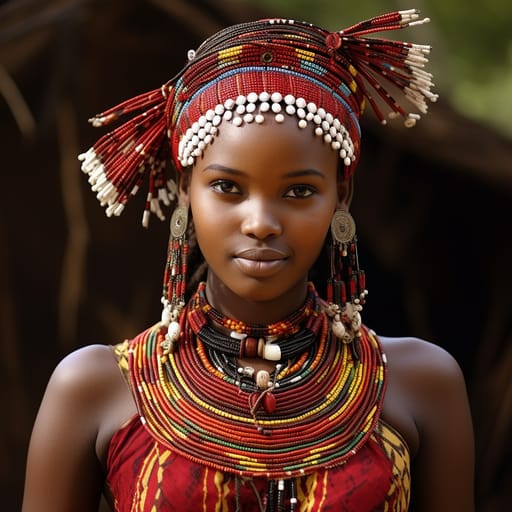
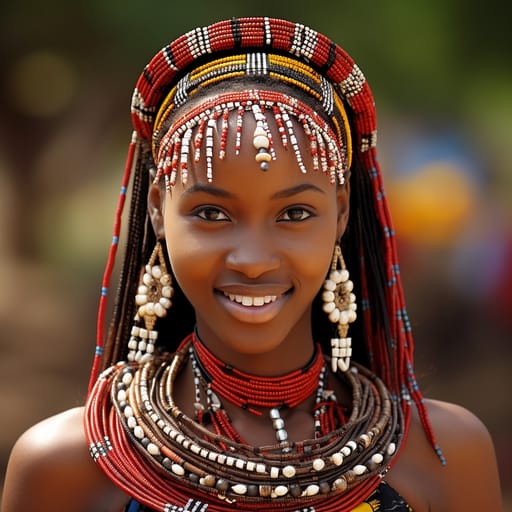
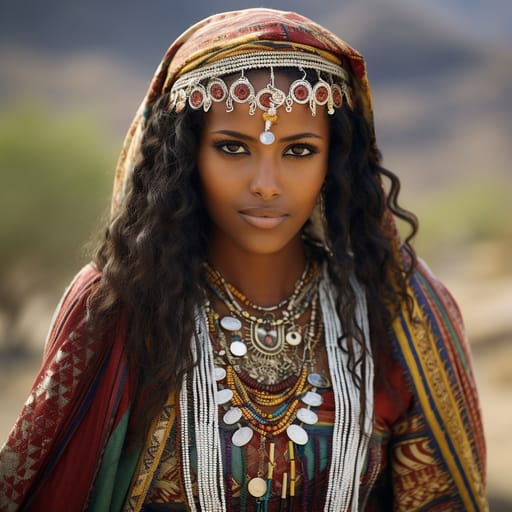
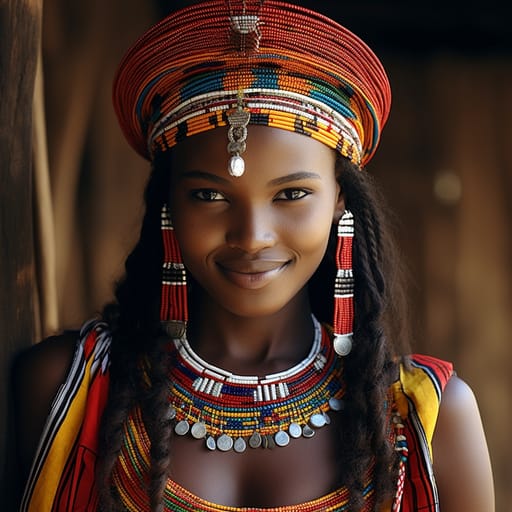
Typical Jie Phenotypes
Reference for AI generation: hair, eyes, skin, facial structure, build
Jie Body & Anatomy Reference
Per-feature anatomical profile for AI nude generation: Cushitic / Nilo-Cushitic East African phenotype
Jie Boobs & Breasts
Jie tits and boobs run small-to-medium-cup, high-set, conical, the classic Cushitic / Nilo-Cushitic East African bust profile. Jie nipples and areolas show moderate-to-high areolar pigmentation against the brown-to-deep-brown skin tone, with areolar diameter typically in the 28-38mm range and forward-set positioning rather than the lateral spread of the West African phenotype. Jie breasts trend firmer and less projecting than the African-American or West African norm, a function of the lean ectomorph-to-mesomorph body habitus and the mean adult female BMI 19-22. For anatomically accurate AI-generated Jie nudes the render preserves the small-to-medium-cup, high-set, conical shape, 28-38mm areolas with moderate-to-high pigmentation, and the torso proportions of the Cushitic / Nilo-Cushitic East African phenotype.
Jie Ass & Hips
Jie hips and butt usually read as small-to-medium, high-set, rounded. The skeletal base is narrow-to-medium iliac crests, longer torso-to-leg ratio, the Cushitic / Nilo-Cushitic East African pattern. Set against the wide-set heavy-projection West African or African-American norm, the difference is easy to see, and the hip-to-waist ratio is often what identifies Jie women in photos.
Jie Vagina & Pussy
Expect brown-to-deep-brown labial pigmentation, narrow-to-medium labia minora projection on Jie women, in keeping with Cushitic / Nilo-Cushitic East African ancestry. The pubic hair is tightly-coiled coarse texture, densely distributed. Coloring should run evenly from the brown to deep brown skin of the thighs to the labia, and Jie nude imagery should keep the hair's tightly-coiled coarse texture.
Jie Dicks & Penis
Jie dick and penile anatomy in adult AI generation should anchor on the regional reference data: regional mean ~13.5cm erect, moderate girth, ~12cm circumference, and deeper-pigmented than the West African norm. The Jie cock profile reflects the Cushitic / Nilo-Cushitic East African population's anthropometric measurements. The shaft pigmentation should track the surrounding brown to deep brown skin tone, and the pubic hair should keep its tightly-coiled coarse texture in the typical inverted-V escutcheon.
Jie Body, Curves & Build
Jie body type: lean ectomorph-to-mesomorph, with mean adult female BMI 19-22. This is the typical Cushitic / Nilo-Cushitic East African build. Height range, shoulder-to-hip ratio and fat distribution all follow from it, which is what an accurate Jie nude body should show.
Jie Skin Tone & Hair Texture
Jie skin tone falls in the brown to deep brown (Fitzpatrick V-VI) band, the surface signal most often miscalibrated by generic AI nude generators. Jie hair texture is typically tight 4A-4C coil, often worn natural or in braided/twisted protective styles, characteristic of the Cushitic / Nilo-Cushitic East African phenotype. In Jie nude renders the skin should hold that band consistently across the body.
Explore phenotype categories
Structured taxonomy with peer-reviewed scales · 22 anatomical categories
Erotic Poses & Sex Positions
From the pose catalog: 219 named positions with reference skeletons
Frequently asked questions about Jie people
Where is the Jie homeland?
The Jie homeland is Central Karamoja in northeastern Uganda, mainly Kotido District around Kotido town and Nakapelimoru, with dry season grazing lands to the west. in Eastern Africa.
What language do Jie people speak?
Jie people primarily speak Jie, a dialect of Karamojong (Eastern Nilotic, Nilo-Saharan); mutually intelligible with Turkana and Toposa..
What religion do Jie people practice?
The predominant religion among Jie people is Traditional religion centered on the sky deity Akuj, with ox sacrifices led by senior elders; growing Catholic and Anglican Christianity, often practiced alongside it..






Make your own Jie images
Five a day, free, no credits to buy. The studio starts from this group's phenotype data, so you can set body type, pose and style and keep the traits accurate.
Start with Jie