Help us get this right
Does this portrait look right for El Molo?
One tap. It takes a second and it is recorded.
1 says it looks right, 0 say it looks off.
El Molo Erotic
Southeastern shore of Lake Turkana, Marsabit County, northern Kenya
Samburu (Nilotic) in daily use; ancestral El Molo (Cushitic, Afroasiatic) now nearly extinct
Traditional animism (some Christianity)
About El Molo People
The El Molo are one of the smallest and most distinctive ethnic groups in Kenya, living in a cluster of settlements on the arid southeastern shore of Lake Turkana in Marsabit County. Their self-designation is often rendered as Gurapau, meaning people who eat fish, and their entire way of life has historically been bound to the alkaline waters of the lake rather than to the herding economy of their neighbors. Surrounded by pastoralist peoples such as the Samburu, Rendille, and Turkana, the El Molo have long occupied a singular ecological niche as a fishing and hunting community.
Society and subsistence
Unlike almost every surrounding group, the El Molo do not depend on cattle, camels, or goats for their livelihood. They fish the lake from small doum-palm rafts, using nets, lines, and harpoons, and historically hunted hippopotamus, crocodile, and turtle in the shallows. This fish-based diet, combined with the mineral-heavy lake water, has been linked by researchers to skeletal fluorosis and the notably short stature recorded among older generations. Social organization is small-scale and kin-based, without the elaborate age-set systems of their Nilotic neighbors. Centuries of intermarriage with the Samburu have led most El Molo to adopt the Samburu language and many of its customs.
Language and identity
The ancestral El Molo language belonged to the Cushitic branch of the Afroasiatic family, related distantly to the languages of the Horn of Africa. Today only fragments survive, remembered chiefly in songs, prayers, and fishing vocabulary, while daily speech is Samburu, a Nilotic language. This linguistic shift, together with a very small population, has made the El Molo a frequent focus of scholars documenting endangered peoples. Traditional belief centers on ancestral spirits and the lake itself, though Christianity has made inroads through nearby mission stations.
Appearance and adornment
The El Molo are typically dark-skinned and, among older people, relatively short in stature. Traditional dress is minimal and suited to the intense heat of the Turkana basin, with women wearing beaded collars, bracelets, and belts, and both sexes historically using little more than a hide or cloth wrap. Ornaments made from fish bone, doum-palm fiber, and imported glass beads reflect both the lake economy and trade with neighboring herders. Estimates of population vary, with the ethnically distinct core numbering only in the low hundreds and the broader El Molo community perhaps approaching a thousand.
Related ethnic groups
Groups that share El Molo's homeland, region, language, or religious tradition. These are likely candidates for comparative phenotype reference.
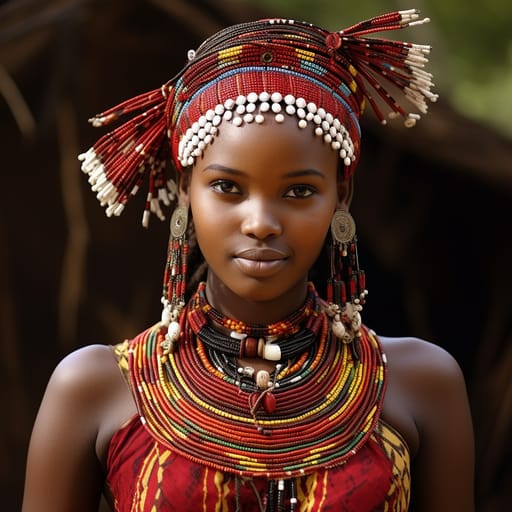
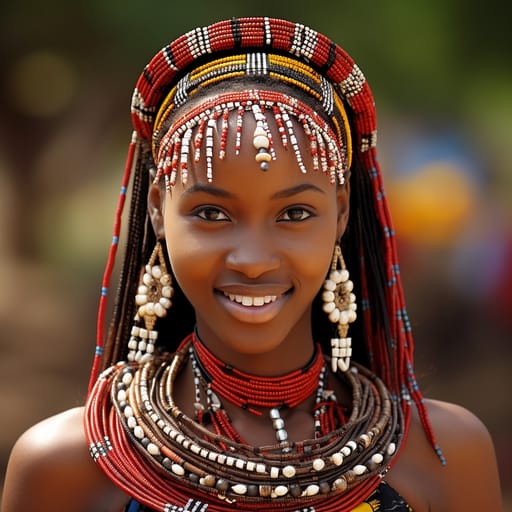
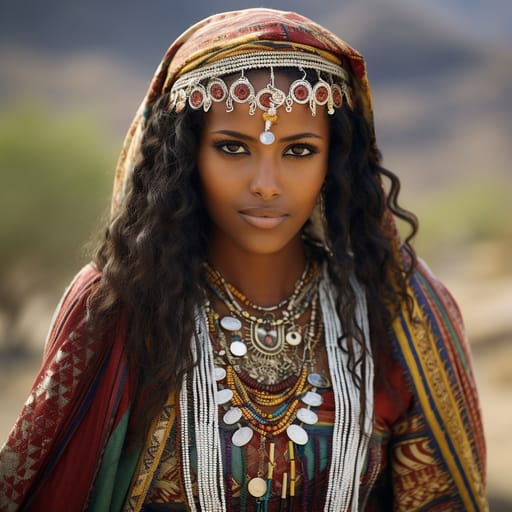
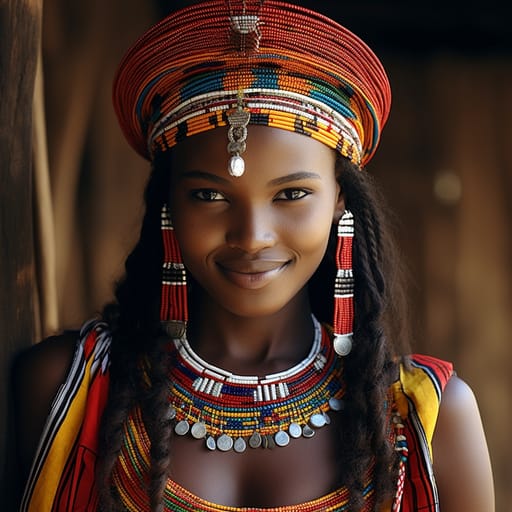
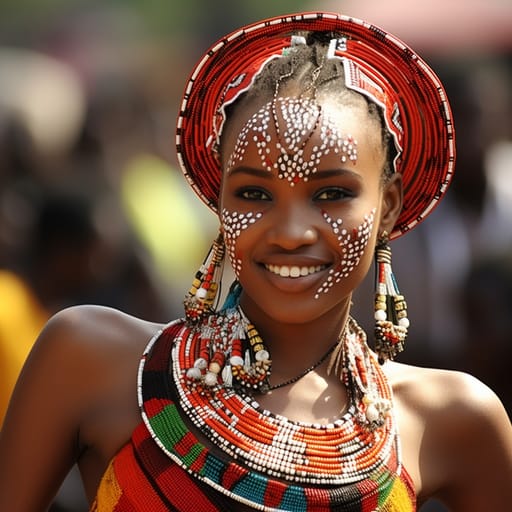
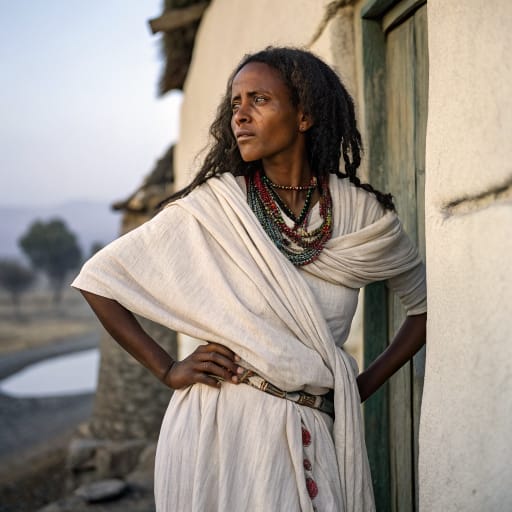
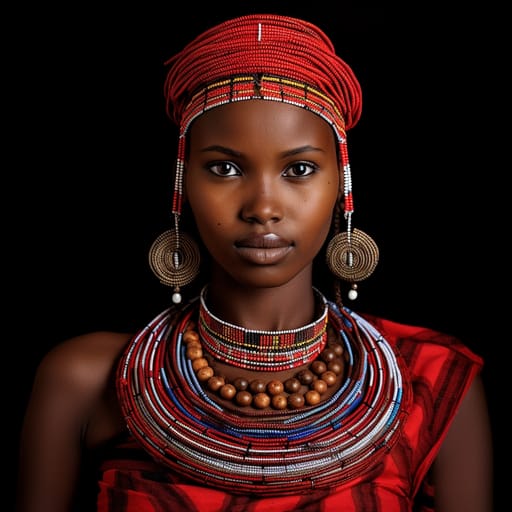
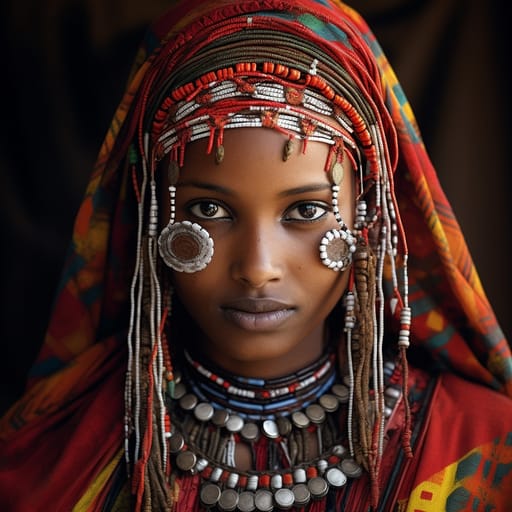
Typical El Molo Phenotypes
Reference for AI generation: hair, eyes, skin, facial structure, build
El Molo Body & Anatomy Reference
Per-feature anatomical profile for AI nude generation: Cushitic / Nilo-Cushitic East African phenotype
El Molo Boobs & Breasts
El Molo boobs follow the Cushitic / Nilo-Cushitic East African profile: small-to-medium-cup, high-set, conical. Areolar diameter is usually 28-38mm, and the coloring is moderate-to-high areolar pigmentation against the brown-to-deep-brown skin tone. Breast shape tracks body composition (lean ectomorph-to-mesomorph, mean adult female BMI 19-22), so El Molo breasts tend to be firmer and less projecting than the African-American or West African norm. Expect a forward-set shape, not the lateral spread of the West African phenotype.
El Molo Ass & Hips
El Molo ass and hip morphology presents as small-to-medium, high-set, rounded, distinctly different from the wide-set heavy-projection West African or African-American norm. The El Molo pelvic profile shows narrow-to-medium iliac crests, longer torso-to-leg ratio, anchored in the Cushitic / Nilo-Cushitic East African skeletal pattern. El Molo butt shots in adult AI imagery should render the small-to-medium, high-set, rounded silhouette with the overall build (lean ectomorph-to-mesomorph) and the fat distribution typical of the Cushitic / Nilo-Cushitic East African phenotype.
El Molo Vagina & Pussy
El Molo pussy anatomy typically shows brown-to-deep-brown labial pigmentation, narrow-to-medium labia minora projection. Pubic hair is usually tightly-coiled coarse texture, densely distributed. In AI-generated El Molo nudes, labial color should blend into the brown to deep brown skin with a gradual transition, and the hair should keep its tightly-coiled coarse texture.
El Molo Dicks & Penis
Penis reference for El Molo men: regional mean ~13.5cm erect, moderate girth, ~12cm circumference. Coloring: deeper-pigmented than the West African norm. An accurate El Molo cock in AI imagery matches the surrounding brown to deep brown skin rather than a generic porn default. Circumcision depends on religion and custom, not ancestry.
El Molo Body, Curves & Build
The El Molo figure is generally lean ectomorph-to-mesomorph, with mean adult female BMI 19-22, characteristic of Cushitic / Nilo-Cushitic East African ancestry. AI image tools tend to flatten regional body types into a few stock shapes; here the El Molo build is kept as its own reference.
El Molo Skin Tone & Hair Texture
Skin: brown to deep brown (Fitzpatrick V-VI). Hair: tight 4A-4C coil, often worn natural or in braided/twisted protective styles. Both are typical of Cushitic / Nilo-Cushitic East African ancestry. The most common mistake in AI nudes of El Molo women is a body rendered lighter than the face.
Explore phenotype categories
Structured taxonomy with peer-reviewed scales · 22 anatomical categories
Erotic Poses & Sex Positions
From the pose catalog: 219 named positions with reference skeletons
Frequently asked questions about El Molo people
Where is the El Molo homeland?
The El Molo homeland is Southeastern shore of Lake Turkana, Marsabit County, northern Kenya in Eastern Africa.
What language do El Molo people speak?
El Molo people primarily speak Samburu (Nilotic) in daily use; ancestral El Molo (Cushitic, Afroasiatic) now nearly extinct.
What religion do El Molo people practice?
The predominant religion among El Molo people is Traditional animism (some Christianity).






Make your own El Molo images
Five a day, free, no credits to buy. The studio starts from this group's phenotype data, so you can set body type, pose and style and keep the traits accurate.
Start with El Molo