No portrait yet
Pokomo Erotic
The Tana River floodplain and delta in southeastern Kenya, from the middle river below Garissa to Kipini on the coast, concentrated in Tana River County.
Pokomo, called Kipfokomo (Sabaki branch of Northeast Coast Bantu), with Swahili widely spoken alongside it.
Islam among the Upper Pokomo, Christianity among the Lower Pokomo (Methodist and Catholic prominent), over older riverine practice.
Two broad divisions, Upper Pokomo and Lower Pokomo, composed of a dozen or so named village groups; part of the Sabaki family alongside the Swahili, Mijikenda and Elwana.
About Pokomo People
The Pokomo are the farmers of the Tana, and that is nearly the whole of their geography: a ribbon of villages strung along Kenya's longest river, from the middle reaches below Garissa down through Tana River County to the delta at Kipini, where the water finally meets the Indian Ocean. Almost everything else follows from that ribbon. Their neighbors are people who move, the Orma with their cattle and the Somali beyond them, crossing a dry country in search of grazing. The Pokomo stayed put on the floodplain and learned to read the river instead, planting bananas, maize, rice and mangoes into the silt as the annual flood pulled back, fishing the oxbows from dugout canoes, keeping a farming calendar tuned to water rather than rain. It is settled, unglamorous, intensely local work, and it has left them a minority in their own county with an unusually precise sense of where their land begins and ends. Dams on the upper Tana have since flattened out the flood that calendar was built around, and the delta has been eyed more than once for sugarcane and biofuel schemes on ground people were already farming.
Their language, Kipfokomo, sits in the Sabaki branch of Bantu, which makes it a close cousin of Swahili, and it runs along the river as a chain of dialects rather than one tidy standard: speakers in the upper villages and speakers near the sea can hear the distance between them. The same north-south split shows in religion. The Upper Pokomo took Islam from the coast and the river trade; the Lower Pokomo were reached by Methodist missionaries in the 1880s and are largely Christian today, with Catholic and other churches since. Older practice did not so much vanish as move underneath, and its clearest emblem is the ngadji, the sacred drum of the Gasa, the council of elders that once held real authority up and down the water. The ngadji was never meant for casual eyes. Colonial officers took it early in the twentieth century, and it now sits in the British Museum in London while Pokomo elders go on asking for it back. Pressure from the herding side has turned lethal more than once, most severely in the delta killings of 2012 and 2013. Around a hundred thousand people identified as Pokomo at Kenya's last census, a small figure for a community whose land question shapes an entire county.
Related ethnic groups
Groups that share Pokomo's homeland, region, language, or religious tradition. These are likely candidates for comparative phenotype reference.
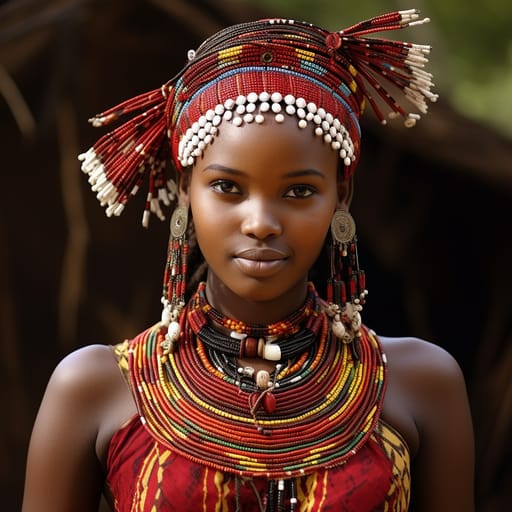
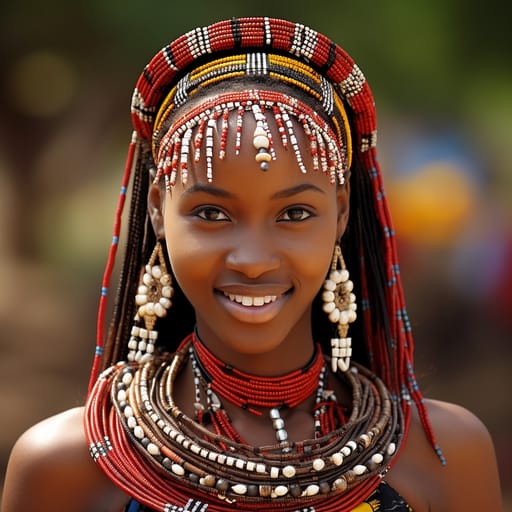
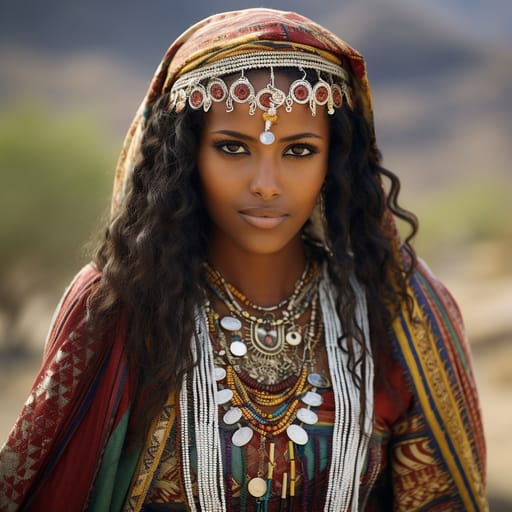
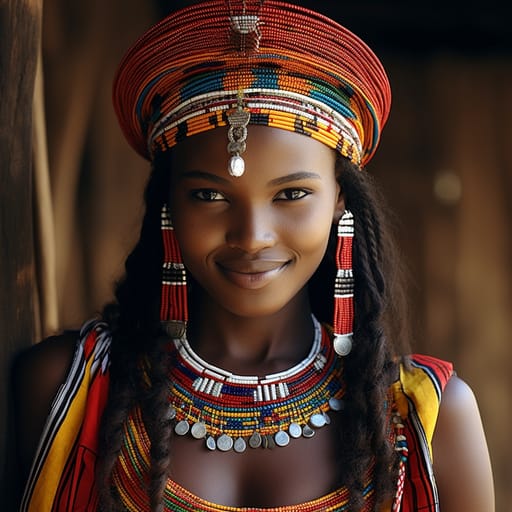
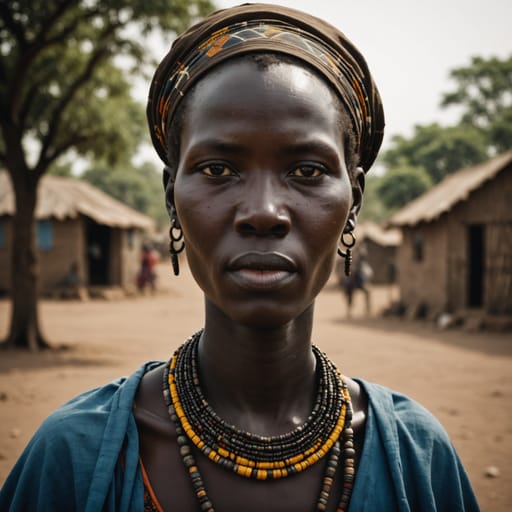
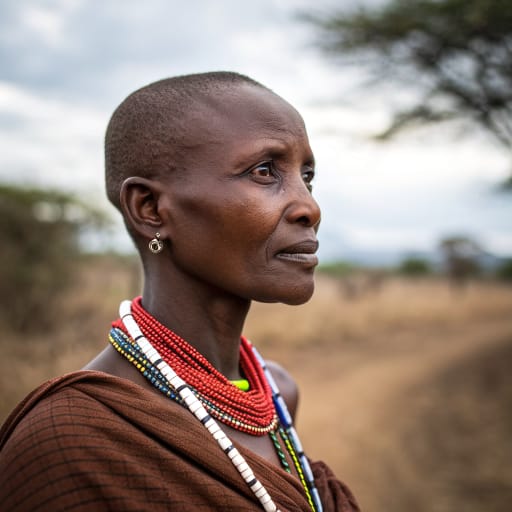
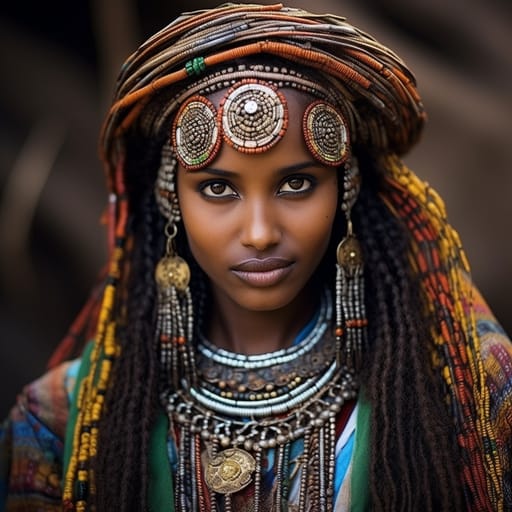
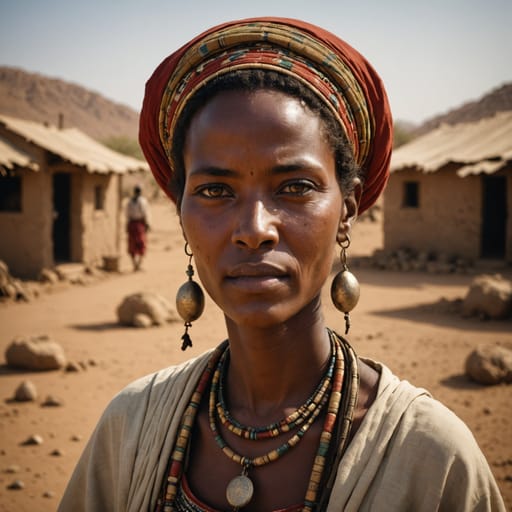
Typical Pokomo Phenotypes
Reference for AI generation: hair, eyes, skin, facial structure, build
Pokomo Body & Anatomy Reference
Per-feature anatomical profile for AI nude generation: Cushitic / Nilo-Cushitic East African phenotype
Pokomo Boobs & Breasts
The typical Pokomo bust is small-to-medium-cup, high-set, conical, in line with the wider Cushitic / Nilo-Cushitic East African pattern. Areolas usually fall in the 28-38mm range, with moderate-to-high areolar pigmentation against the brown-to-deep-brown skin tone. Compared with the lateral spread of the West African phenotype, Pokomo breasts sit forward and are generally firmer and less projecting than the African-American or West African norm. A faithful AI render of Pokomo tits keeps that shape and areola size.
Pokomo Ass & Hips
Butt shape among Pokomo women: small-to-medium, high-set, rounded, over narrow-to-medium iliac crests, longer torso-to-leg ratio. This follows Cushitic / Nilo-Cushitic East African ancestry and looks quite unlike the wide-set heavy-projection West African or African-American norm. An accurate Pokomo ass in adult AI imagery keeps both the silhouette and the overall build (lean ectomorph-to-mesomorph) instead of a generic average.
Pokomo Vagina & Pussy
Vulvar anatomy among Pokomo women: brown-to-deep-brown labial pigmentation, narrow-to-medium labia minora projection. Pubic hair tends to be tightly-coiled coarse texture, densely distributed, in the usual inverted-triangle pattern. Both follow Cushitic / Nilo-Cushitic East African pigmentation, which is why Pokomo pussy renders should not fall back on a pale, sparse Western template.
Pokomo Dicks & Penis
The Pokomo cock profile, from Cushitic / Nilo-Cushitic East African anthropometric data: regional mean ~13.5cm erect; moderate girth, ~12cm circumference; deeper-pigmented than the West African norm. Pubic hair has a tightly-coiled coarse texture and forms the usual inverted-V pattern. Whether Pokomo men are circumcised follows religious and cultural practice rather than phenotype.
Pokomo Body, Curves & Build
Build and curves among Pokomo women follow the Cushitic / Nilo-Cushitic East African pattern: lean ectomorph-to-mesomorph, mean adult female BMI 19-22. Proportions matter as much as skin tone, so Pokomo figures should keep their regional height and limb ratios.
Pokomo Skin Tone & Hair Texture
The Pokomo skin range is brown to deep brown (Fitzpatrick V-VI), and hair tends to be tight 4A-4C coil, often worn natural or in braided/twisted protective styles. That combination marks the Cushitic / Nilo-Cushitic East African phenotype, and skin tone is the trait AI generators most often get wrong for Pokomo women.
Explore phenotype categories
Structured taxonomy with peer-reviewed scales · 22 anatomical categories
Erotic Poses & Sex Positions
From the pose catalog: 219 named positions with reference skeletons
Frequently asked questions about Pokomo people
Where is the Pokomo homeland?
The Pokomo homeland is The Tana River floodplain and delta in southeastern Kenya, from the middle river below Garissa to Kipini on the coast, concentrated in Tana River County. in Eastern Africa.
What language do Pokomo people speak?
Pokomo people primarily speak Pokomo, called Kipfokomo (Sabaki branch of Northeast Coast Bantu), with Swahili widely spoken alongside it..
What religion do Pokomo people practice?
The predominant religion among Pokomo people is Islam among the Upper Pokomo, Christianity among the Lower Pokomo (Methodist and Catholic prominent), over older riverine practice..






Make your own Pokomo images
Five a day, free, no credits to buy. The studio starts from this group's phenotype data, so you can set body type, pose and style and keep the traits accurate.
Start with Pokomo