No image yet

Doe Erotic

Homeland

Bagamoyo District, Pwani (Coast) Region, in the coastal hinterland north and inland of Bagamoyo toward the lower Wami River, Tanzania

Language

Doe, or Kidoe (Niger-Congo, Bantu, Northeast Coast Bantu, Ruvu group); Swahili (Bantu) widely spoken as a second language

Part of the Niger-Congo language family · Bantu peoples

Religion

Mostly Muslim, with a Christian minority and some lasting beliefs about ancestors and spirits

Subgroups

Ruvu branch of the Northeast Coast Bantu peoples, closely related to the Zigua, Kwere, Zaramo and Luguru

About Doe People

The Doe are a small Bantu-speaking people of Tanzania's coastal hinterland. What sets them apart is not their numbers but a language of their own and a home ground they have kept while living beside much larger neighbors. That ground is Bagamoyo District in Pwani Region, a stretch of bush, farmland and river country north and inland of the old port town of Bagamoyo, reaching toward the lower Wami River. Most Doe live in villages and farm, and the Indian Ocean is close enough to have shaped both their trade and their faith.

Their language, Kidoe, belongs to the Ruvu group of Northeast Coast Bantu. Zigua, Kwere, Zaramo and Luguru are in the same group, and Kidoe is closely related to the speech of the neighboring Kwere and Zigua. Nearly every Doe also speaks Swahili, and that is the source of the pressure. Swahili runs the school, the radio, the market and the district office. For a language with this few speakers, the steady drift toward Swahili is the obvious long-term threat.

Islam came inland with coastal trade, and today most Doe are Muslim. Friday prayers, the Ramadan fast and Islamic names are part of ordinary life, and a smaller number are Christian. As among many coastal Tanzanian peoples, older ideas about ancestors and spirits have not simply disappeared. They tend to live on quietly inside a Muslim frame rather than compete with it.

In the nineteenth century the Doe lived near one of East Africa's great trade routes. Bagamoyo was the coastal end of the caravan road to Lake Tanganyika, and ivory and enslaved captives moved through the region under the sway of the Zanzibar sultanate. European travelers of the period passed along rumors that the Doe ate their enemies. Today that hearsay reads more like caravan gossip about an independent inland people than like evidence. German colonial rule followed, then British administration, then independent Tanzania. The new nation's Swahili-first policies have drawn the Doe, like every small community in the country, into a shared national life.

What is still distinctly Doe is local and specific: the language, in the homes where it is still spoken, family and clan ties across a cluster of villages, and a sense of belonging to one particular stretch of the coast's back country. In public they are often Tanzanians first. Among themselves, they are Doe.

Typical Doe Phenotypes

Reference for AI generation — hair, eyes, skin, facial structure, build

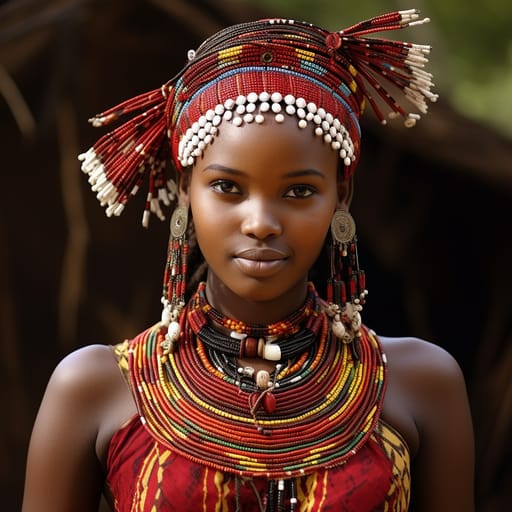
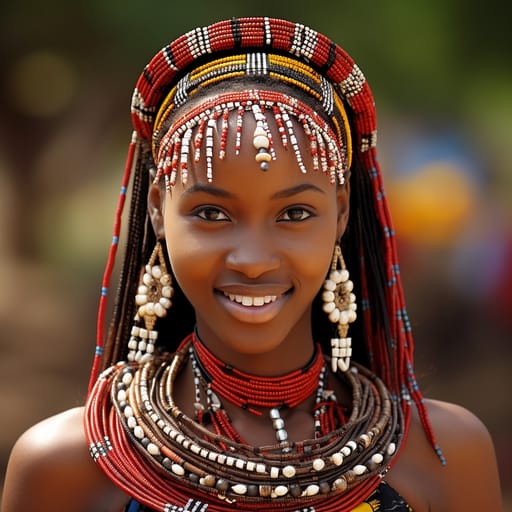
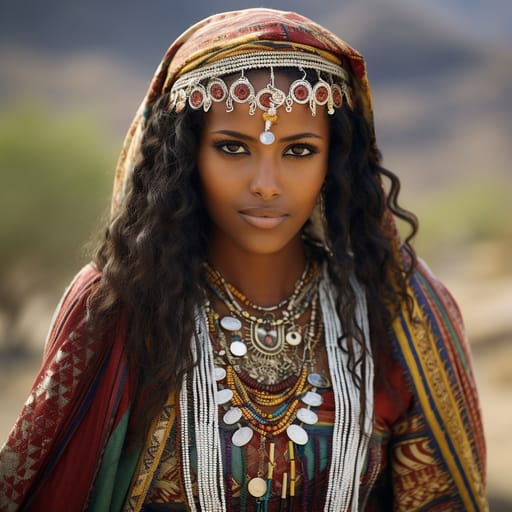
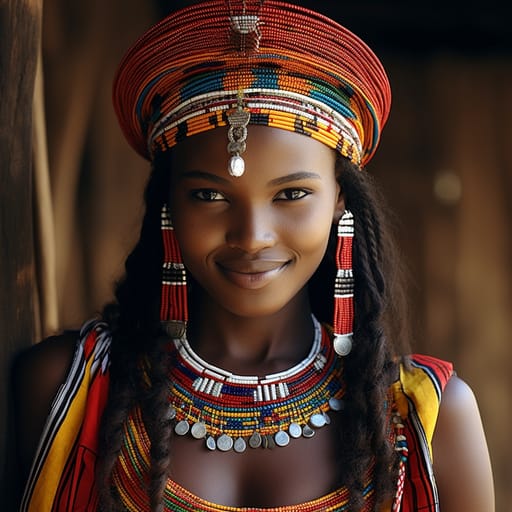
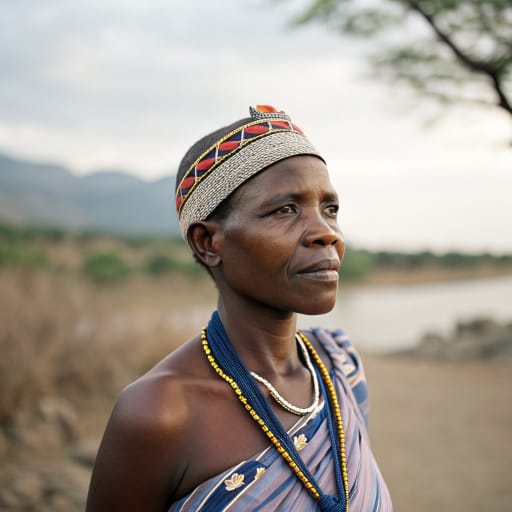
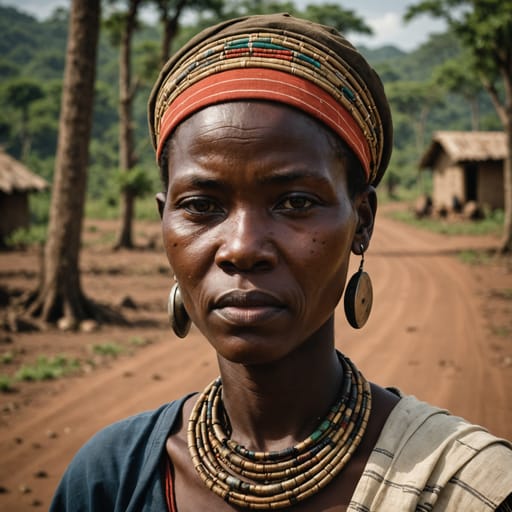
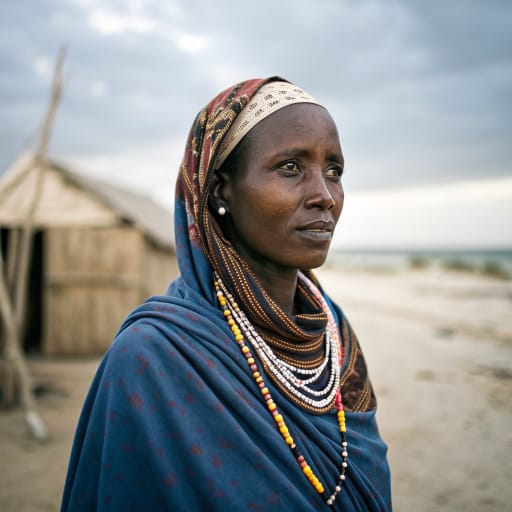
Dark brown skin, typical of East African Bantu-speaking populations, with tightly coiled hair that men usually wear short and women often braid or cover. Everyday dress follows coastal Tanzanian norms: women wear printed kanga and kitenge cloth, often with a headscarf, and men wear shirts and trousers. For Friday prayers and religious occasions, men commonly wear the long white kanzu and an embroidered kofia cap.

Doe Body & Anatomy Reference

Per-feature anatomical profile for AI nude generation — Cushitic / Nilo-Cushitic East African phenotype

Doe Boobs & Breasts

Doe tits and boobs run small-to-medium-cup, high-set, conical — the classic Cushitic / Nilo-Cushitic East African bust profile. Doe nipples and areolas show moderate-to-high areolar pigmentation against the brown-to-deep-brown skin tone, with areolar diameter typically in the 28-38mm range and forward-set positioning rather than the lateral spread of the West African phenotype. Doe breasts trend firmer and less projecting than the African-American or West African norm, a function of the lean ectomorph-to-mesomorph body habitus and the mean adult female BMI 19-22. For anatomically-accurate AI-generated Doe nudes the render preserves: small-to-medium-cup, high-set, conical shape, 28-38mm areolas with moderate-to-high pigmentation, and the torso proportions of the Cushitic / Nilo-Cushitic East African phenotype.

Doe Ass & Hips

Doe ass and hip morphology presents as small-to-medium, high-set, rounded — distinctly different from the wide-set heavy-projection West African or African-American norm. The Doe pelvic profile shows narrow-to-medium iliac crests, longer torso-to-leg ratio, anchored in the Cushitic / Nilo-Cushitic East African skeletal pattern. Doe butt shots in adult AI imagery should render the small-to-medium, high-set, rounded silhouette with the lean ectomorph-to-mesomorph build and the gluteal-femoral fat distribution typical of the Cushitic / Nilo-Cushitic East African phenotype rather than defaulting to a globally-averaged "ethnic" butt that generic AI generators produce. The hip-to-waist ratio characteristic of Doe women is one of the identifying features of the Cushitic / Nilo-Cushitic East African regional phenotype.

Doe Vagina & Pussy

Doe pussy and vulvar anatomy presents brown-to-deep-brown labial pigmentation, narrow-to-medium labia minora projection — consistent with the Cushitic / Nilo-Cushitic East African phenotype's pigmentation pattern. Doe pubic hair is typically tightly-coiled coarse texture, densely distributed, distributed in the inverted-triangle pattern with regional-typical density. AI-generated Doe nude imagery should preserve the brown-to-deep-brown labial pigmentation and the tightly-coiled coarse texture hair texture rather than defaulting to a Western-European pink-and-sparse template. For anatomically-accurate Doe pussy renders the labial pigmentation and coloration should match the surrounding brown to deep brown skin tone of the Cushitic / Nilo-Cushitic East African phenotype, with continuous gradient rather than an abrupt color transition.

Doe Dicks & Penis

Doe dick and penile anatomy in adult AI generation should anchor on the regional reference data: regional mean ~13.5cm erect, moderate girth, ~12cm circumference, and deeper-pigmented than the West African norm. The Doe cock profile reflects the Cushitic / Nilo-Cushitic East African ancestral population's anthropometric measurements rather than a globally-averaged Western-pornography default. For anatomically-accurate Doe nude male imagery the shaft pigmentation should track the surrounding brown to deep brown skin tone, the glans-to-shaft pigmentation transition should be continuous, and the pubic hair pattern should match tightly-coiled coarse texture texture distributed in the typical inverted-V escutcheon. Circumcision status in Doe populations varies by religious-cultural tradition rather than ancestral phenotype.

Doe Body, Curves & Build

Doe body type and overall build presents as lean ectomorph-to-mesomorph, with mean adult female BMI 19-22 — the characteristic Cushitic / Nilo-Cushitic East African habitus. Doe curves and proportions in adult AI imagery should preserve the regional skeletal frame (height, shoulder-to-hip ratio, limb proportions) rather than scaling to a Western-European mesomorph default. The Doe nude female form, when rendered with anatomical fidelity, shows the height range, frame width, and adipose distribution pattern typical of the Cushitic / Nilo-Cushitic East African phenotype. Generic AI image generators tend to collapse regional body types into a few default shapes; the EthnicErotic phenotype-anchored approach preserves the Doe build as its own reference category.

Doe Skin Tone & Hair Texture

Doe skin tone falls in the brown to deep brown (Fitzpatrick V-VI) band — the surface signal most often miscalibrated by generic AI nude generators trained on Western-photographic datasets. Doe hair texture is typically tight 4A-4C coil, often worn natural or in braided/twisted protective styles, characteristic of the Cushitic / Nilo-Cushitic East African phenotype. For anatomically-accurate Doe nude renders the skin should hold the Fitzpatrick band consistently across body surface rather than showing the lighter-than-face body shading that AI generators default to. Doe hair pigmentation and texture on body, pubic, and head should match across the figure rather than mixing textures (a common AI artefact).

Get notified when there’s a new post about Doe.

Discussion Board

Have a view on this? Sign in to post — your first one earns 2 generation credits.

No posts on this board yet

Log in to start the conversation.

See what’s active across the community →

Erotic Poses & Sex Positions

From the pose catalog — 219 named positions with reference skeletons

Frequently asked questions about Doe people

Where is the Doe homeland?

The Doe homeland is Bagamoyo District, Pwani (Coast) Region, in the coastal hinterland north and inland of Bagamoyo toward the lower Wami River, Tanzania in Eastern Africa.

What language do Doe people speak?

Doe people primarily speak Doe, or Kidoe (Niger-Congo, Bantu, Northeast Coast Bantu, Ruvu group); Swahili (Bantu) widely spoken as a second language.

What religion do Doe people practice?

The predominant religion among Doe people is Mostly Muslim, with a Christian minority and some lasting beliefs about ancestors and spirits.


What does a typical Doe woman look like?

Dark brown skin, typical of East African Bantu-speaking populations, with tightly coiled hair that men usually wear short and women often braid or cover. Everyday dress follows coastal Tanzanian norms: women wear printed kanga and kitenge cloth, often with a headscarf, and men wear shirts and trousers.