- Home/
- World/
- Eastern Africa/
- Bajuni
Bajuni Erotic
The Bajuni Islands and adjacent mainland of southern Somalia, from Kismayo south to the Kenyan border, and the northern Kenyan coast around the Lamu archipelago and Mombasa
Kibajuni, also called Kitikuu, a northern Swahili dialect (Niger-Congo, Bantu, Sabaki); also Somali, standard Swahili and English depending on country of residence
Sunni Islam, Shafi'i school
Counted among the Swahili peoples of the East African coast; organized in island and village lineages, closely tied to the Amu and Pate Swahili of the Lamu archipelago
About Bajuni People
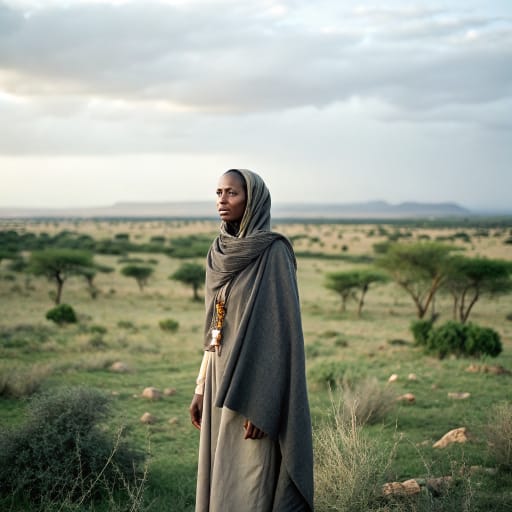
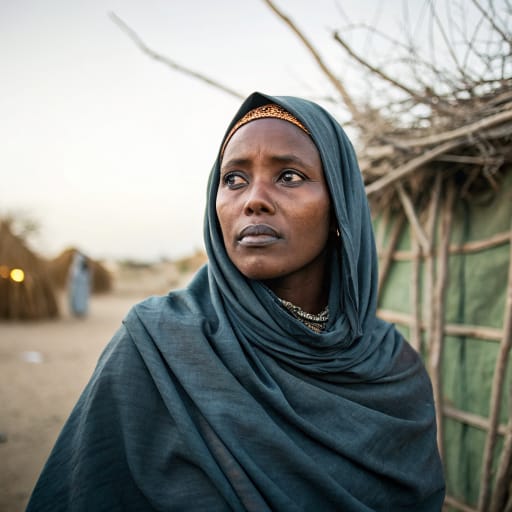
The Bajuni are a Swahili-speaking Muslim people of the far northern Swahili coast, and their homeland is less a territory than an archipelago: a low chain of coral islands and sandspits running from Kismayo in southern Somalia down to the Kenyan border, along with the facing mainland villages and the creeks behind them. Chula, Koyama, Ngumi are names that appear on most maps as specks, if at all. Life there is organized around the sea and the monsoon calendar: fishing from small sailing craft, shark and reef fish dried and traded inland, mangrove poles cut in the creeks and shipped north to roof houses in Arabia, coconut and sesame on the sandier ground. Boatbuilding is a Bajuni skill with a long reputation here. The mtepe, a sewn boat stitched together with coir rather than nailed, was built and sailed on this stretch of coast into the early twentieth century, among the last of its kind in the Indian Ocean. Islam is Sunni of the Shafi'i school, and it is not a separate compartment of life: the mosque, the Quran school, the naming of children, the timing of a marriage, the etiquette of a funeral all run through institutions that have organized Swahili coastal towns for a thousand years.
Their language, Kibajuni, also called Kitikuu, is a northern dialect of Swahili in the Sabaki branch of Bantu, close kin to the speech of Lamu and Pate and far enough from standard Swahili that outsiders regularly mishear it as something else. That detail has had consequences. When Britain handed Jubaland to Italy in 1925, the new border cut the Bajuni world in two, and the split has shaped everything since. In Somalia the Bajuni are a minority without the clan backing that structures Somali politics, so when the state collapsed in 1991 they were among the most exposed: islands raided, boats and land seized, thousands pushed to Mombasa, to Kenyan camps, and eventually to Britain, the United States and the Gulf. Many of those asylum cases turned on linguistics. Officials used language testing to decide who was really Bajuni, often measuring claimants against standard Swahili or Somali rather than their own dialect, so people were disbelieved for speaking their mother tongue correctly. Villages that once filled the islands are thin now or gone. The people are not: they are on the Kenyan coast, in Kismayo, and abroad, and Kibajuni is still spoken, though fluent speakers grow fewer.
Related ethnic groups
Groups that share Bajuni's homeland, region, language, or religious tradition — likely candidates for comparative phenotype reference.
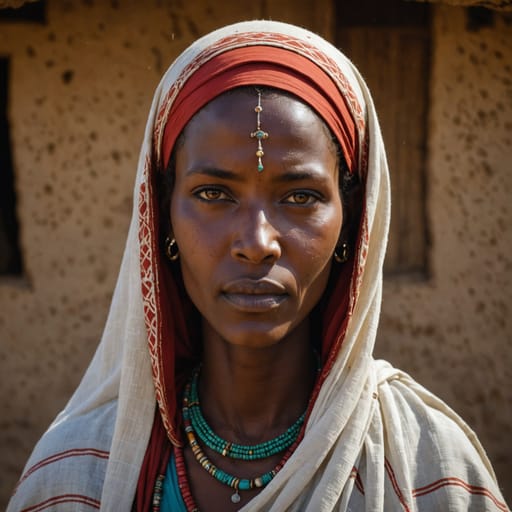
Typical Bajuni Phenotypes
Reference for AI generation — hair, eyes, skin, facial structure, build
Bajuni Body & Anatomy Reference
Per-feature anatomical profile for AI nude generation — Cushitic / Nilo-Cushitic East African phenotype
Bajuni Boobs & Breasts
Bajuni tits and boobs run small-to-medium-cup, high-set, conical — the classic Cushitic / Nilo-Cushitic East African bust profile. Bajuni nipples and areolas show moderate-to-high areolar pigmentation against the brown-to-deep-brown skin tone, with areolar diameter typically in the 28-38mm range and forward-set positioning rather than the lateral spread of the West African phenotype. Bajuni breasts trend firmer and less projecting than the African-American or West African norm, a function of the lean ectomorph-to-mesomorph body habitus and the mean adult female BMI 19-22. For anatomically-accurate AI-generated Bajuni nudes the render preserves: small-to-medium-cup, high-set, conical shape, 28-38mm areolas with moderate-to-high pigmentation, and the torso proportions of the Cushitic / Nilo-Cushitic East African phenotype.
Bajuni Ass & Hips
Bajuni ass and hip morphology presents as small-to-medium, high-set, rounded — distinctly different from the wide-set heavy-projection West African or African-American norm. The Bajuni pelvic profile shows narrow-to-medium iliac crests, longer torso-to-leg ratio, anchored in the Cushitic / Nilo-Cushitic East African skeletal pattern. Bajuni butt shots in adult AI imagery should render the small-to-medium, high-set, rounded silhouette with the lean ectomorph-to-mesomorph build and the gluteal-femoral fat distribution typical of the Cushitic / Nilo-Cushitic East African phenotype rather than defaulting to a globally-averaged "ethnic" butt that generic AI generators produce. The hip-to-waist ratio characteristic of Bajuni women is one of the identifying features of the Cushitic / Nilo-Cushitic East African regional phenotype.
Bajuni Vagina & Pussy
Bajuni pussy and vulvar anatomy presents brown-to-deep-brown labial pigmentation, narrow-to-medium labia minora projection — consistent with the Cushitic / Nilo-Cushitic East African phenotype's pigmentation pattern. Bajuni pubic hair is typically tightly-coiled coarse texture, densely distributed, distributed in the inverted-triangle pattern with regional-typical density. AI-generated Bajuni nude imagery should preserve the brown-to-deep-brown labial pigmentation and the tightly-coiled coarse texture hair texture rather than defaulting to a Western-European pink-and-sparse template. For anatomically-accurate Bajuni pussy renders the labial pigmentation and coloration should match the surrounding brown to deep brown skin tone of the Cushitic / Nilo-Cushitic East African phenotype, with continuous gradient rather than an abrupt color transition.
Bajuni Dicks & Penis
Bajuni dick and penile anatomy in adult AI generation should anchor on the regional reference data: regional mean ~13.5cm erect, moderate girth, ~12cm circumference, and deeper-pigmented than the West African norm. The Bajuni cock profile reflects the Cushitic / Nilo-Cushitic East African ancestral population's anthropometric measurements rather than a globally-averaged Western-pornography default. For anatomically-accurate Bajuni nude male imagery the shaft pigmentation should track the surrounding brown to deep brown skin tone, the glans-to-shaft pigmentation transition should be continuous, and the pubic hair pattern should match tightly-coiled coarse texture texture distributed in the typical inverted-V escutcheon. Circumcision status in Bajuni populations varies by religious-cultural tradition rather than ancestral phenotype.
Bajuni Body, Curves & Build
Bajuni body type and overall build presents as lean ectomorph-to-mesomorph, with mean adult female BMI 19-22 — the characteristic Cushitic / Nilo-Cushitic East African habitus. Bajuni curves and proportions in adult AI imagery should preserve the regional skeletal frame (height, shoulder-to-hip ratio, limb proportions) rather than scaling to a Western-European mesomorph default. The Bajuni nude female form, when rendered with anatomical fidelity, shows the height range, frame width, and adipose distribution pattern typical of the Cushitic / Nilo-Cushitic East African phenotype. Generic AI image generators tend to collapse regional body types into a few default shapes; the EthnicErotic phenotype-anchored approach preserves the Bajuni build as its own reference category.
Bajuni Skin Tone & Hair Texture
Bajuni skin tone falls in the brown to deep brown (Fitzpatrick V-VI) band — the surface signal most often miscalibrated by generic AI nude generators trained on Western-photographic datasets. Bajuni hair texture is typically tight 4A-4C coil, often worn natural or in braided/twisted protective styles, characteristic of the Cushitic / Nilo-Cushitic East African phenotype. For anatomically-accurate Bajuni nude renders the skin should hold the Fitzpatrick band consistently across body surface rather than showing the lighter-than-face body shading that AI generators default to. Bajuni hair pigmentation and texture on body, pubic, and head should match across the figure rather than mixing textures (a common AI artefact).
Explore phenotype categories
Structured taxonomy with peer-reviewed scales · 22 anatomical categories
Erotic Poses & Sex Positions
From the pose catalog — 219 named positions with reference skeletons
Frequently asked questions about Bajuni people
Where is the Bajuni homeland?
The Bajuni homeland is The Bajuni Islands and adjacent mainland of southern Somalia, from Kismayo south to the Kenyan border, and the northern Kenyan coast around the Lamu archipelago and Mombasa in Eastern Africa.
What language do Bajuni people speak?
Bajuni people primarily speak Kibajuni, also called Kitikuu, a northern Swahili dialect (Niger-Congo, Bantu, Sabaki); also Somali, standard Swahili and English depending on country of residence.
What religion do Bajuni people practice?
The predominant religion among Bajuni people is Sunni Islam, Shafi'i school.

What does a typical Bajuni woman look like?
Skin tones range from deep brown to light brown, and hair from tightly coiled to wavy, reflecting long intermarriage among Bantu coastal populations, Somali neighbors, and Arab and Persian settlers along the Indian Ocean trade routes. Build is generally slight to medium.
Make your own Bajuni images
Five a day, free, no credits to buy. The studio starts from this group's phenotype data, so you can set body type, pose and style and keep the traits accurate.
Start with Bajuni