Help us get this right
Does this portrait look right for Hawiye?
Nobody has judged this one yet. You would be the first.
Hawiye Erotic
Central and southern Somalia, chiefly Hiiraan, Galguduud, Middle and Lower Shabelle and Banaadir, with branches in Ethiopia's Somali Region and northeastern Kenya.
Somali, mainly Benaadir and Northern dialects (Cushitic, Afroasiatic)
Sunni Islam, Shafi'i school, with strong Qadiriyya Sufi presence on the Benadir coast.
One of the major Somali clan families, traced to Irir and Samaale. Branches include the Hiraab confederation (Abgaal, Habr Gidir, Duduble), plus Hawadle, Murusade, Gaaljecel, Ajuran, Degodia and the affiliated Sheekhaal.
About Hawiye People
Hawiye is not a place, it is a line of descent. Like every Somali clan family, it is held together by agnatic genealogy rather than by borders: a Hawiye child learns abtirsiimo, the recitation of paternal ancestors, and can run the chain back through Hawiye to Irir and to Samaale. That chain is the passport. It tells other Somalis which diya-paying group you belong to, whose blood debts you help settle, and who is obliged to help settle yours. The land the Hawiye actually occupy sits across the middle of Somalia: the Hiiraan and Galguduud rangelands, the Shabelle valley through Beledweyne and Jowhar, the Banaadir coast and Mogadishu itself, with Ajuran and Degodia branches spilling west into Ethiopia's Somali Region and northeastern Kenya. The largest grouping is the Hiraab confederation, which takes in the Abgaal, the Habr Gidir and the Duduble, alongside the Hawadle, Murusade, Gaaljecel and others.
They surface early in the written record: the Andalusian geographer Ibn Sa'id al-Maghribi placed them near Merca in the thirteenth century, one of the oldest datable references to any Somali clan. From the Hawiye Gareen lineage came the Ajuran Sultanate, which held the Shabelle valley and stretches of the Indian Ocean coast for several centuries and is remembered above all for its waterworks: stone wells, cisterns and irrigation channels, some of them still standing. Control of the wells hardened into extortion, revolts pulled the sultanate apart, and the Hiraab Imamate rose in its place in the Mogadishu hinterland. The twentieth century put Hawiye men at the center of Somali nationalism and then at the center of its unravelling. Aden Abdullah Osman Daar was independent Somalia's first president; the United Somali Congress that drove out Siad Barre in 1991 then split along Abgaal and Habr Gidir lines and turned Mogadishu into a front line. Faith is Sunni Islam of the Shafi'i school, with the Qadiriyya order long rooted along the Benadir coast, and religious law works beside xeer, the unwritten customary code argued out in the shir, an open assembly of adult men that runs until it reaches consensus or exhaustion. Livelihoods now divide between camel and cattle herding on the central plains, farming along the Shabelle, trade in Mogadishu, and remittances sent home from Eastleigh, London and Minneapolis.
Related ethnic groups
Groups that share Hawiye's homeland, region, language, or religious tradition. These are likely candidates for comparative phenotype reference.
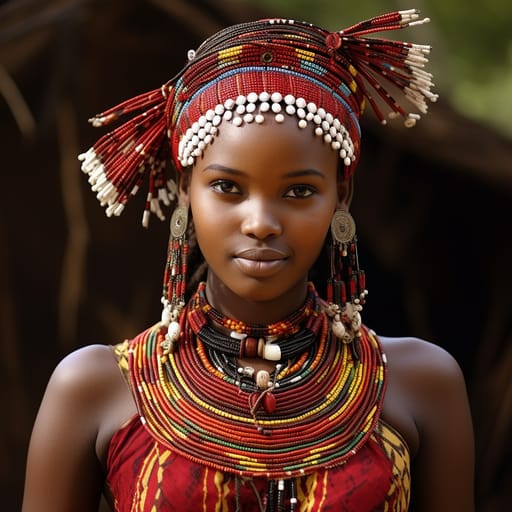
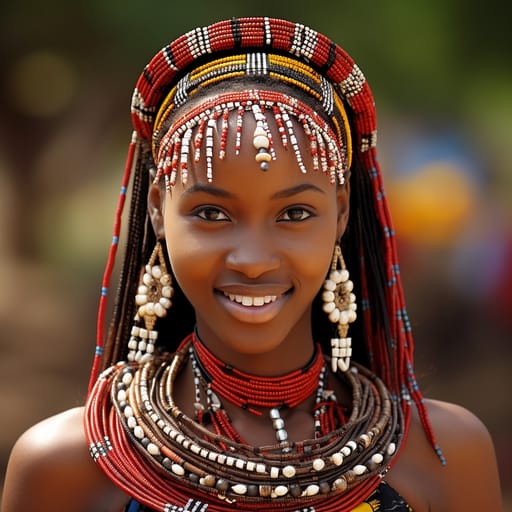
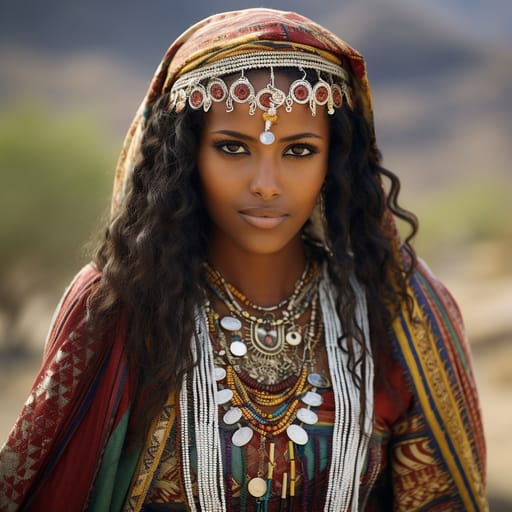
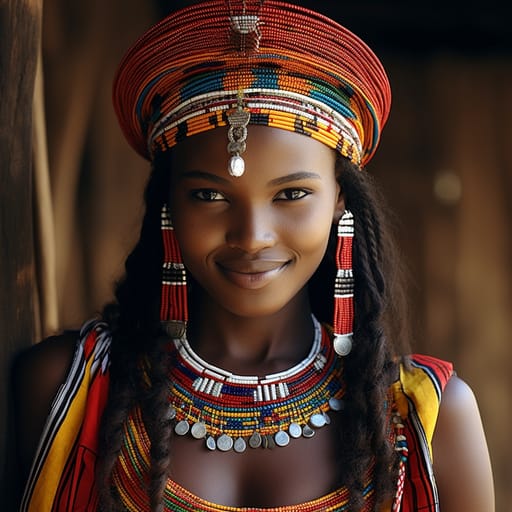
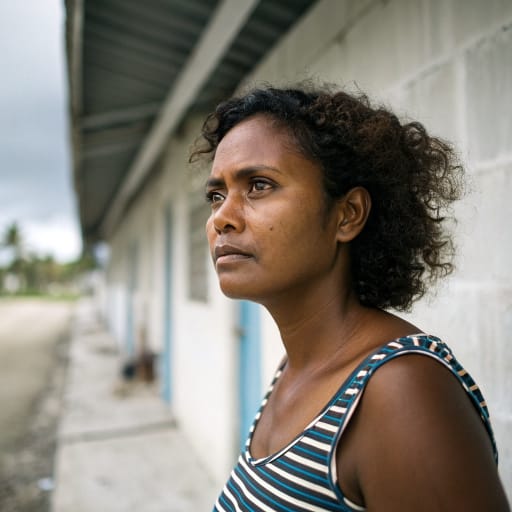
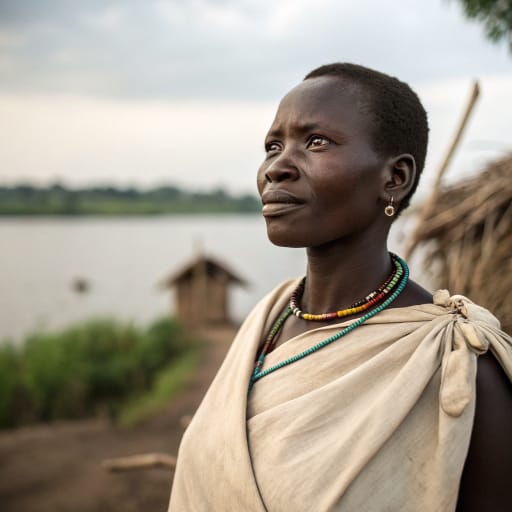
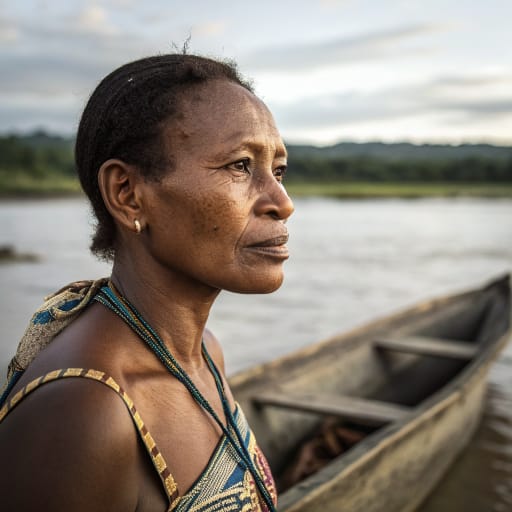
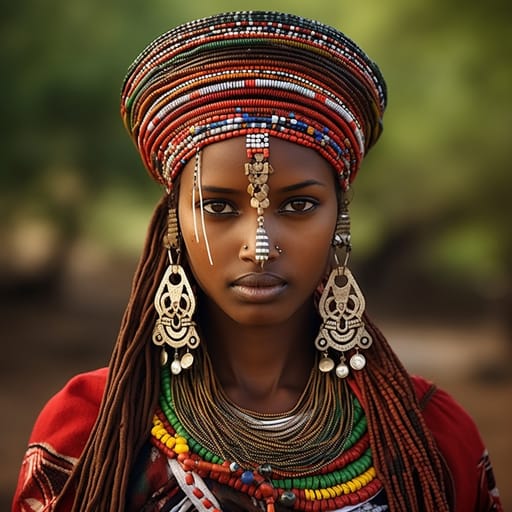
Typical Hawiye Phenotypes
Reference for AI generation: hair, eyes, skin, facial structure, build
Hawiye Body & Anatomy Reference
Anatomy by feature, Cushitic / Nilo-Cushitic East African phenotype
Hawiye Boobs & Breasts
Bust reference for Hawiye women: small-to-medium-cup, high-set, conical, which is typical of Cushitic / Nilo-Cushitic East African ancestry. Areolas measure about 28-38mm across, with moderate-to-high pigmentation. Body type (lean ectomorph-to-mesomorph) shapes the bust as well, so Hawiye tits are usually firmer and less projecting than the African-American or West African norm. In AI imagery, keep the forward-set shape rather than drifting toward the lateral spread of the West African phenotype.
Hawiye Ass & Hips
The Hawiye ass is typically small-to-medium, high-set, rounded, which sets it apart from the wide-set heavy-projection West African or African-American norm. Underneath, the pelvis shows narrow-to-medium iliac crests, longer torso-to-leg ratio, part of the Cushitic / Nilo-Cushitic East African skeletal pattern. For Hawiye butt pics and AI renders, match that silhouette and the overall build (lean ectomorph-to-mesomorph).
Hawiye Vagina & Pussy
Hawiye pussy and vulvar anatomy presents brown-to-deep-brown labial pigmentation, narrow-to-medium labia minora projection, consistent with the Cushitic / Nilo-Cushitic East African phenotype's pigmentation pattern. Hawiye pubic hair is typically tightly-coiled coarse texture, densely distributed, in the inverted-triangle pattern. For anatomically accurate Hawiye pussy renders the labial coloration should match the surrounding brown to deep brown skin tone with a continuous gradient, and the hair should keep its tightly-coiled coarse texture.
Hawiye Dicks & Penis
Hawiye dicks follow the Cushitic / Nilo-Cushitic East African reference data: regional mean ~13.5cm erect; moderate girth, ~12cm circumference; deeper-pigmented than the West African norm. Shaft color should track the brown to deep brown skin tone with a smooth change toward the glans, and Hawiye pubic hair keeps its tightly-coiled coarse texture.
Hawiye Body, Curves & Build
Hawiye body type and overall build presents as lean ectomorph-to-mesomorph, with mean adult female BMI 19-22: the characteristic Cushitic / Nilo-Cushitic East African habitus. Hawiye curves and proportions should keep the regional skeletal frame (height, shoulder-to-hip ratio, limb proportions) rather than a generic mesomorph default.
Hawiye Skin Tone & Hair Texture
Hawiye skin sits in the brown to deep brown (Fitzpatrick V-VI) band. Hair is typically tight 4A-4C coil, often worn natural or in braided/twisted protective styles, in keeping with the Cushitic / Nilo-Cushitic East African phenotype. In nude renders the skin should stay one even tone from face to body, and body, pubic and head hair should match.
Explore phenotype categories
Structured taxonomy with peer-reviewed scales · 22 anatomical categories
Erotic Poses & Sex Positions
From the pose catalog: 219 named positions with reference skeletons
Frequently asked questions about Hawiye people
Where is the Hawiye homeland?
The Hawiye homeland is Central and southern Somalia, chiefly Hiiraan, Galguduud, Middle and Lower Shabelle and Banaadir, with branches in Ethiopia's Somali Region and northeastern Kenya. in Eastern Africa.
What language do Hawiye people speak?
Hawiye people primarily speak Somali, mainly Benaadir and Northern dialects (Cushitic, Afroasiatic).
What religion do Hawiye people practice?
The predominant religion among Hawiye people is Sunni Islam, Shafi'i school, with strong Qadiriyya Sufi presence on the Benadir coast..






Make your own Hawiye images
Five a day, free, no credits to buy. The studio starts from this group's phenotype data, so you can set body type, pose and style and keep the traits accurate.
Start with Hawiye