Help us get this right
Does this portrait look right for Kumam?
Nobody has judged this one yet. You would be the first.
Kumam Erotic
Northern shore of Lake Kyoga in eastern Uganda, mainly Kaberamaido and Kalaki districts, with smaller communities in neighboring districts
Kumam (Nilotic, Western Nilotic, Luo branch), closely related to Lango; many also speak Ateso (Nilotic, Eastern Nilotic)
Mostly Christian, mainly Roman Catholic and Anglican, with clan and ancestral customs still kept alongside
Nilotic peoples; Luo-speaking and closest to the Lango by language, with deep Ateker (Iteso) ties; organized in clans traced on the father's side
About Kumam People
The Kumam are a people shaped by the line they live on. Their homeland is the flat, swampy country along the northern shore of Lake Kyoga in eastern Uganda, mostly today's Kaberamaido and Kalaki districts. The Lango live on one side of them and the Iteso on the other. Colonial administrators folded the area into Teso District, and outsiders still tend to count the Kumam as part of one neighbor or the other. The Kumam do not, and Uganda's constitution lists them as an indigenous community in their own right. Their language shows the same mix of roots. Linguists place Kumam in the Luo branch of the Western Nilotic languages, alongside Lango and Acholi. But generations of trade and marriage with Ateso speakers have brought a large share of Ateso words into it, and many Kumam switch between the two languages easily. Oral histories tell a similar story: Luo-speaking and Ateker-speaking families settled together near the lake and became one people.
Life here is mostly rural and built around fields, herds and the lake. Families grow millet, sorghum, cassava, groundnuts and simsim, keep cattle and goats, and fish Lake Kyoga from landing sites along the shore. Cotton was the colonial cash crop here, as it was across Teso. Family ties run through clans traced on the father's side, and those clans decide who may marry whom. Bridewealth has traditionally been paid in cattle, so a herd matters socially far beyond what it would sell for. Most Kumam are Christian, mainly Catholic or Anglican, and the parish church is a fixture of village life. Clan duties and respect for the dead still shape funerals and marriages, and they sit alongside church ritual rather than against it. The late twentieth century hit hard. Armed cattle raids in the 1980s took much of the region's livestock, and insurgency followed. In 2003 the Lord's Resistance Army pushed into the area and drove thousands of people into displacement camps. Kaberamaido had become its own district in 2001, and it was later split to create Kalaki. Recovery since then has been slow, practical work: restocking herds, rebuilding farms, and holding on to an identity that doesn't fit neatly into anyone else's category.
Related ethnic groups
Groups that share Kumam's homeland, region, language, or religious tradition. These are likely candidates for comparative phenotype reference.
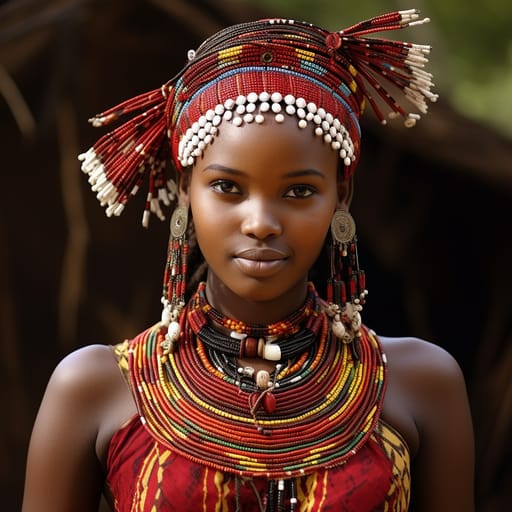
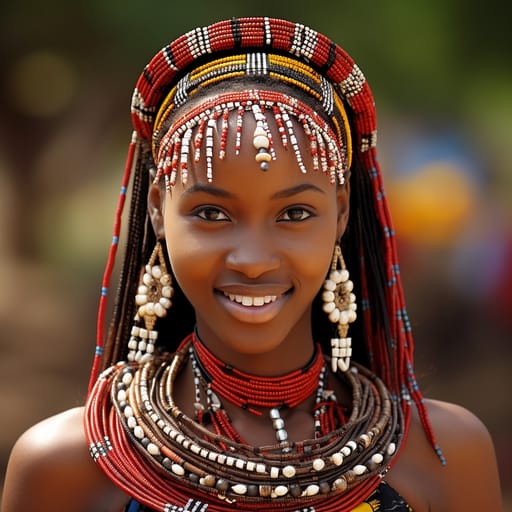
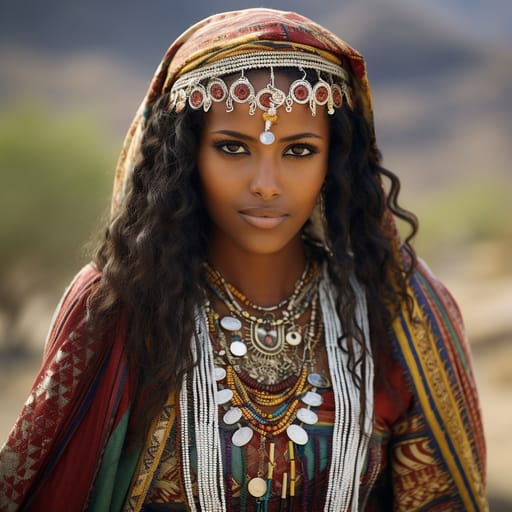
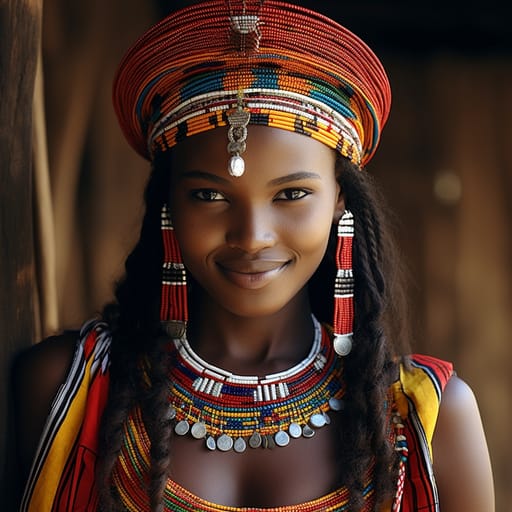
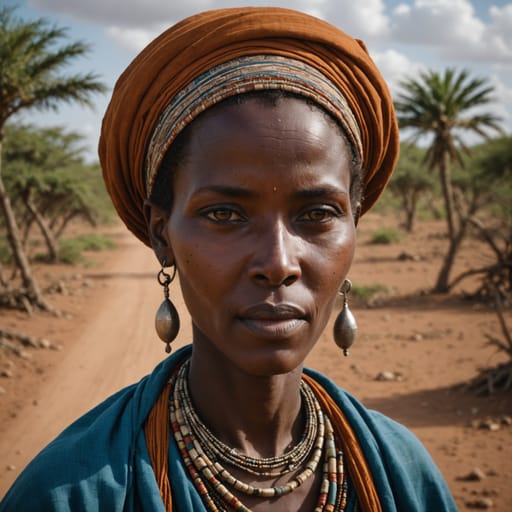
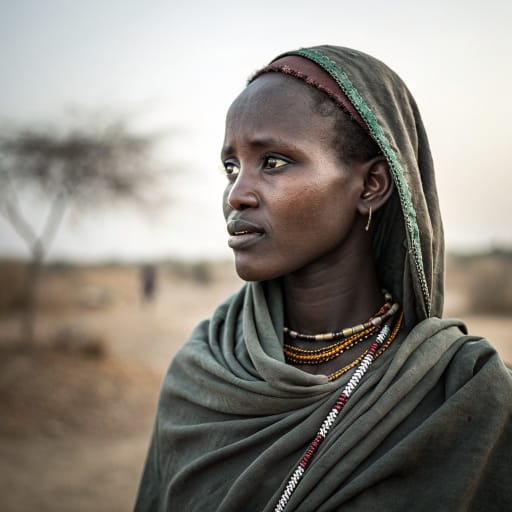
Typical Kumam Phenotypes
Reference for AI generation: hair, eyes, skin, facial structure, build
Kumam Body & Anatomy Reference
Per-feature anatomical profile for AI nude generation: Cushitic / Nilo-Cushitic East African phenotype
Kumam Boobs & Breasts
The typical Kumam bust is small-to-medium-cup, high-set, conical, in line with the wider Cushitic / Nilo-Cushitic East African pattern. Areolas usually fall in the 28-38mm range, with moderate-to-high areolar pigmentation against the brown-to-deep-brown skin tone. Compared with the lateral spread of the West African phenotype, Kumam breasts sit forward and are generally firmer and less projecting than the African-American or West African norm. A faithful AI render of Kumam tits keeps that shape and areola size.
Kumam Ass & Hips
Butt shape among Kumam women: small-to-medium, high-set, rounded, over narrow-to-medium iliac crests, longer torso-to-leg ratio. This follows Cushitic / Nilo-Cushitic East African ancestry and looks quite unlike the wide-set heavy-projection West African or African-American norm. An accurate Kumam ass in adult AI imagery keeps both the silhouette and the overall build (lean ectomorph-to-mesomorph) instead of a generic average.
Kumam Vagina & Pussy
Vulvar anatomy among Kumam women: brown-to-deep-brown labial pigmentation, narrow-to-medium labia minora projection. Pubic hair tends to be tightly-coiled coarse texture, densely distributed, in the usual inverted-triangle pattern. Both follow Cushitic / Nilo-Cushitic East African pigmentation, which is why Kumam pussy renders should not fall back on a pale, sparse Western template.
Kumam Dicks & Penis
The Kumam cock profile, from Cushitic / Nilo-Cushitic East African anthropometric data: regional mean ~13.5cm erect; moderate girth, ~12cm circumference; deeper-pigmented than the West African norm. Pubic hair has a tightly-coiled coarse texture and forms the usual inverted-V pattern. Whether Kumam men are circumcised follows religious and cultural practice rather than phenotype.
Kumam Body, Curves & Build
Build and curves among Kumam women follow the Cushitic / Nilo-Cushitic East African pattern: lean ectomorph-to-mesomorph, mean adult female BMI 19-22. Proportions matter as much as skin tone, so Kumam figures should keep their regional height and limb ratios.
Kumam Skin Tone & Hair Texture
The Kumam skin range is brown to deep brown (Fitzpatrick V-VI), and hair tends to be tight 4A-4C coil, often worn natural or in braided/twisted protective styles. That combination marks the Cushitic / Nilo-Cushitic East African phenotype, and skin tone is the trait AI generators most often get wrong for Kumam women.
Explore phenotype categories
Structured taxonomy with peer-reviewed scales · 22 anatomical categories
Erotic Poses & Sex Positions
From the pose catalog: 219 named positions with reference skeletons
Frequently asked questions about Kumam people
Where is the Kumam homeland?
The Kumam homeland is Northern shore of Lake Kyoga in eastern Uganda, mainly Kaberamaido and Kalaki districts, with smaller communities in neighboring districts in Eastern Africa.
What language do Kumam people speak?
Kumam people primarily speak Kumam (Nilotic, Western Nilotic, Luo branch), closely related to Lango; many also speak Ateso (Nilotic, Eastern Nilotic).
What religion do Kumam people practice?
The predominant religion among Kumam people is Mostly Christian, mainly Roman Catholic and Anglican, with clan and ancestral customs still kept alongside.






Make your own Kumam images
Five a day, free, no credits to buy. The studio starts from this group's phenotype data, so you can set body type, pose and style and keep the traits accurate.
Start with Kumam