No portrait yet
Gros Ventre Erotic
North central Montana, chiefly the Fort Belknap Indian Reservation between the Milk River and the Little Rocky Mountains; earlier the plains north into Saskatchewan
Gros Ventre, also called Aaniiih or Atsina (Algonquian, Arapahoan branch), and English
Traditional Aaniiih ceremony centered on the Flat Pipe and Feathered Pipe bundles, alongside Catholicism dating from the mission at Hays
Arapahoan branch of the Algonquian family, closest kin to the Arapaho; enrolled with the Assiniboine as the Aaniiih Nakoda of Fort Belknap
About Gros Ventre People
The Gros Ventre call themselves Aaniiih, the White Clay People, and nearly every other name attached to them came from outside. French traders on the northern plains misread a hand sign for the nation as a gesture across the stomach and wrote down Gros Ventre, big bellies, then hung the same label on the unrelated Hidatsa down on the Missouri, which is why older records bother to specify Gros Ventres of the Prairie as against Gros Ventres of the Missouri. English traders knew them as the Fall or Rapid Indians, after a stretch of the Saskatchewan River. The Blackfeet called them Atsina. Their country is the high, dry, wind scoured north of Montana and, earlier, the plains running up into Saskatchewan: shortgrass, coulees, the Milk River, and the Little Rocky Mountains standing out of flat land like an island, ground still used for fasting. Their language is Algonquian, a family whose weight sits far to the east around the Great Lakes, and within it belongs to the small Arapahoan branch. Gros Ventre and Arapaho are close relatives, two halves of one older community that parted before the eighteenth century, the Arapaho drifting south toward the Colorado plains while the Aaniiih held the north.
Religious life turns on the Flat Pipe, a bundle that appears in their account of the beginning of the world, when earth was drawn up from under water, and which has a designated keeper. A second bundle, the Feathered Pipe, sits beside it. Men once moved up a ladder of age graded societies, each one purchased from the men just older, a structure shared with the Arapaho that organized how authority worked. Jesuits established a mission at Hays below the Little Rockies in the 1880s, and for many families Catholic practice and pipe ceremony have run alongside each other ever since. The nineteenth century did its damage in the usual order: smallpox in the 1780s and again in the 1830s, the bison gone, alliance with and then war against the Blackfoot Confederacy. In 1888 they were confined to Fort Belknap, sharing a reservation with the Assiniboine, who had been enemies. In 1895 the tribes were pressed into selling the gold bearing portion of the Little Rockies, and a century on the cyanide heap leach mine there went bankrupt and left acid drainage in local water, a cleanup fight that has outlasted the company. Fluent first language speakers thinned to a handful by the end of the last century; the answer was an immersion school where children get Aaniiih first.
Related ethnic groups
Groups that share Gros Ventre's homeland, region, language, or religious tradition. These are likely candidates for comparative phenotype reference.
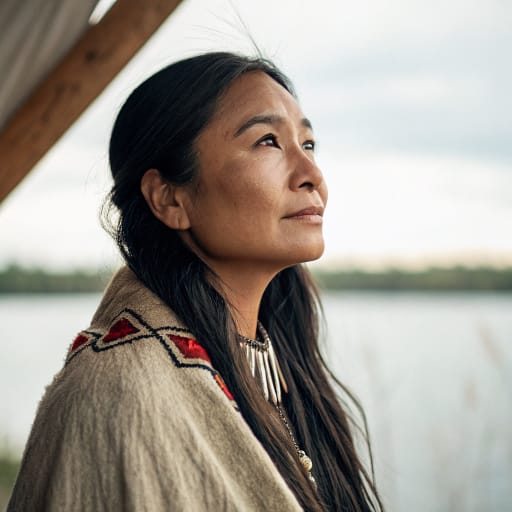
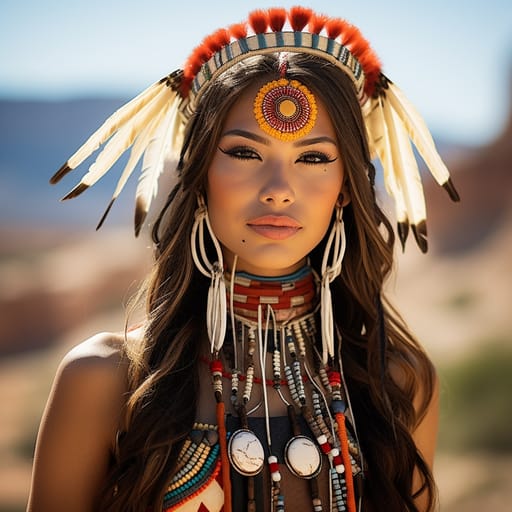
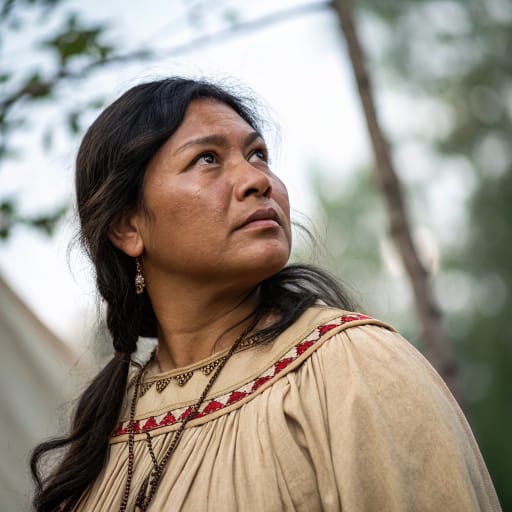
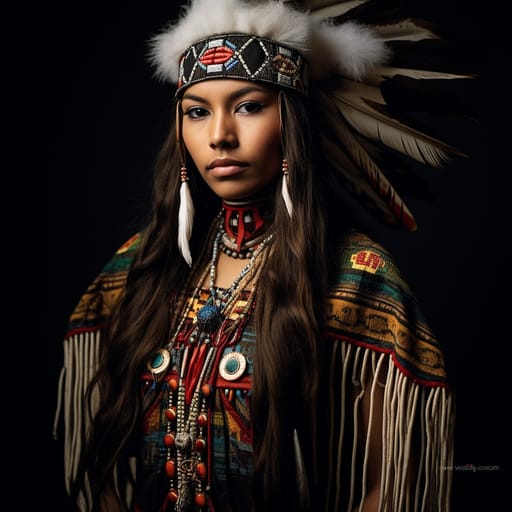
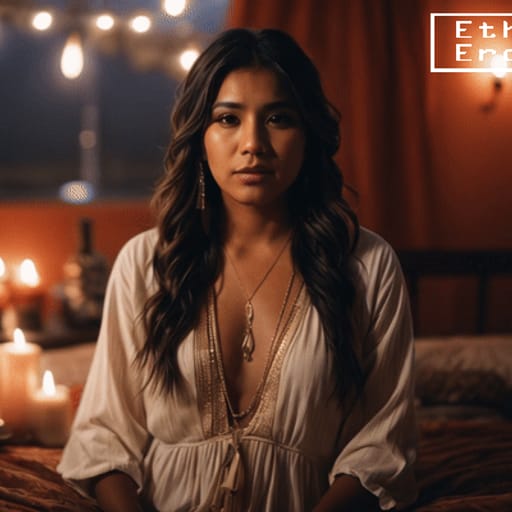
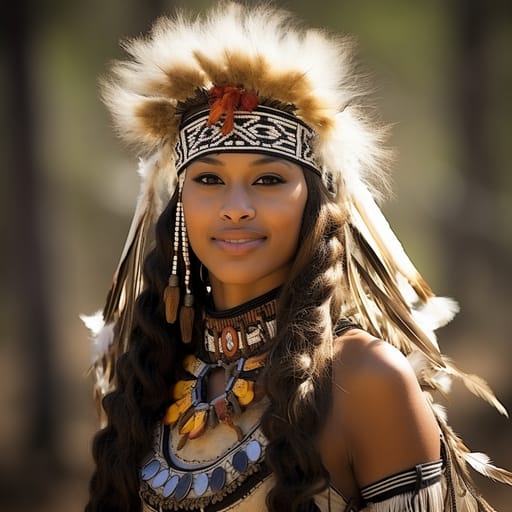
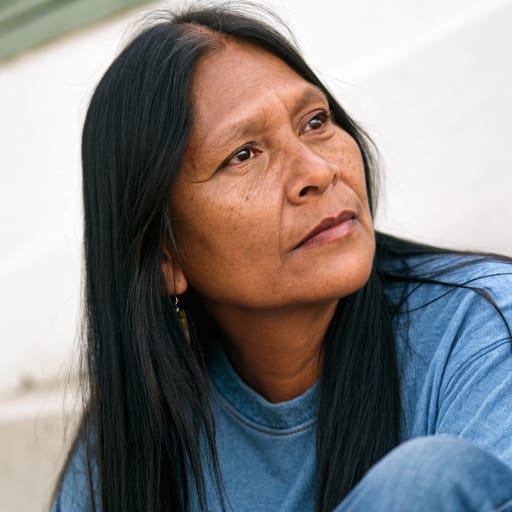
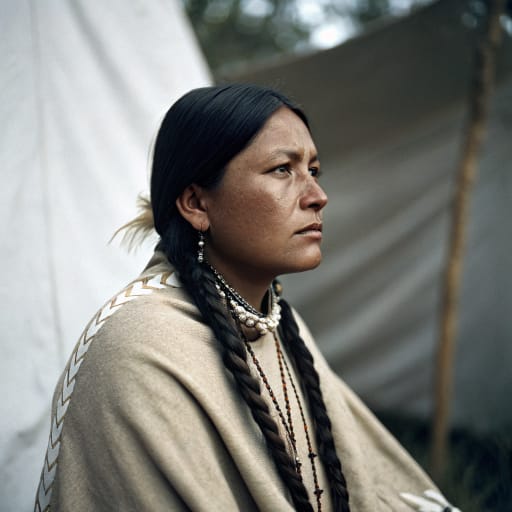
Typical Gros Ventre Phenotypes
Reference for AI generation: hair, eyes, skin, facial structure, build
Gros Ventre Body & Anatomy Reference
Anatomy by feature, Indigenous Northern American / Algonquian-Iroquoian phenotype
Gros Ventre Boobs & Breasts
Bust reference for Gros Ventre women: medium cup, moderate projection, which is typical of Indigenous Northern American / Algonquian-Iroquoian ancestry. Areolas measure about 30-44mm across, with medium-brown pigmentation. Body type (mesomorph, broader frame in northern Indigenous populations) shapes the bust as well, so Gros Ventre tits are usually full and moderate projection. In AI imagery, keep the forward-set shape rather than drifting toward the smaller East Asian bust.
Gros Ventre Ass & Hips
The Gros Ventre ass is typically medium, moderate-to-full projection, which sets it apart from the slim East Asian narrow-hip profile. Underneath, the pelvis shows medium iliac crests, part of the Indigenous Northern American / Algonquian-Iroquoian skeletal pattern. For Gros Ventre butt pics and AI renders, match that silhouette and the overall build (mesomorph, broader frame in northern Indigenous populations).
Gros Ventre Vagina & Pussy
Gros Ventre pussy and vulvar anatomy presents medium-brown labial pigmentation, consistent with the Indigenous Northern American / Algonquian-Iroquoian phenotype's pigmentation pattern. Gros Ventre pubic hair is typically straight medium-coarse texture, in the inverted-triangle pattern. For anatomically accurate Gros Ventre pussy renders the labial coloration should match the surrounding copper to medium-brown skin tone with a continuous gradient, and the hair should keep its straight medium-coarse texture.
Gros Ventre Dicks & Penis
Gros Ventre dicks follow the Indigenous Northern American / Algonquian-Iroquoian reference data: regional mean ~13cm erect; moderate girth; medium-brown shaft pigmentation. Shaft color should track the copper to medium-brown skin tone with a smooth change toward the glans, and Gros Ventre pubic hair keeps its straight medium-coarse texture.
Gros Ventre Body, Curves & Build
Gros Ventre body type and overall build presents as mesomorph, broader frame in northern Indigenous populations, with mean adult female BMI 25-28: the characteristic Indigenous Northern American / Algonquian-Iroquoian habitus. Gros Ventre curves and proportions should keep the regional skeletal frame (height, shoulder-to-hip ratio, limb proportions) rather than a generic mesomorph default.
Gros Ventre Skin Tone & Hair Texture
Gros Ventre skin sits in the copper to medium-brown (Fitzpatrick III-V) band. Hair is typically straight 1A, dark-brown to black, often thick and dense, in keeping with the Indigenous Northern American / Algonquian-Iroquoian phenotype. In nude renders the skin should stay one even tone from face to body, and body, pubic and head hair should match.
Explore phenotype categories
Structured taxonomy with peer-reviewed scales · 22 anatomical categories
Erotic Poses & Sex Positions
From the pose catalog: 219 named positions with reference skeletons
Frequently asked questions about Gros Ventre people
Where is the Gros Ventre homeland?
The Gros Ventre homeland is North central Montana, chiefly the Fort Belknap Indian Reservation between the Milk River and the Little Rocky Mountains; earlier the plains north into Saskatchewan in North America.
What language do Gros Ventre people speak?
Gros Ventre people primarily speak Gros Ventre, also called Aaniiih or Atsina (Algonquian, Arapahoan branch), and English.
What religion do Gros Ventre people practice?
The predominant religion among Gros Ventre people is Traditional Aaniiih ceremony centered on the Flat Pipe and Feathered Pipe bundles, alongside Catholicism dating from the mission at Hays.






Make your own Gros Ventre images
Five a day, free, no credits to buy. The studio starts from this group's phenotype data, so you can set body type, pose and style and keep the traits accurate.
Start with Gros Ventre