Help us get this right
Does this portrait look right for Christian Munsee?
One tap. It takes a second and it is recorded.
1 says it looks right, 0 say it looks off.
Christian Munsee Erotic
Moravian mission towns in eastern Pennsylvania and the Tuscarawas valley of Ohio (United States), later Fairfield and Moraviantown on the Thames River, Ontario (Canada), and Franklin County, Kansas.
Munsee (Eastern Algonquian, Algic); Unami and Mahican were also spoken among early converts, with German and English used in the missions.
Moravian Christianity (Unitas Fratrum); descendants later Methodist and other Christian denominations.
A branch of the Munsee division of the Lenape (Delaware). Descendant communities: Delaware Nation at Moraviantown (Moravian of the Thames), Stockbridge-Munsee Community, and the Christian Munsee of Kansas.
About Christian Munsee People
The Christian Munsee were the Munsee-speaking Lenape, or Delaware, who joined Moravian mission towns from the 1740s onward, moving with them from Pennsylvania to Ohio and on to Ontario and Kansas; their descendants live today at the Delaware Nation at Moraviantown in Ontario, among the Stockbridge-Munsee in Wisconsin, and in Franklin County, Kansas. What set them apart was a choice, not a territory. A convert accepted baptism, took a new name, and moved into a town run by written rules: no liquor, no going to war, no running up debts with traders. German-speaking missionaries, David Zeisberger above all, lived in those towns for decades, but daily authority rested heavily on Native helpers who counseled, preached and kept order. Mahican converts and Unami-speaking Delaware shared the same congregations, so the label was always looser than it sounds.
Munsee belongs to the Eastern Algonquian branch of the Algic family and is the northern of the two Lenape languages, close to Unami but not interchangeable with it. The missions put Delaware speech into print early, in spelling books, hymnals and scripture, and the congregations sang in it. The mission diaries, kept daily in German, are among the most detailed records of Native community life from the eighteenth century.
Refusing to fight protected them from no one. During the American Revolution their Ohio towns, Schoenbrunn, Gnadenhutten and Salem, sat between British Detroit and American Fort Pitt, suspected by both. In 1781 British-allied Wyandot and Delaware forced the congregations north to the Sandusky River. When a hungry party went back to gather the corn left standing in their fields, Pennsylvania militia under David Williamson took them captive, held a vote, and on March 8, 1782 killed 96 people, most of them women and children. The condemned spent their last night praying and singing hymns.
The survivors kept moving: Michigan, Ohio again, then in 1792 Fairfield on the Thames River in Upper Canada. American troops burned Fairfield in 1813 after the Battle of the Thames, and the town was rebuilt across the river. In 1837 part of the congregation left for the United States. Some stopped with the Stockbridge in Wisconsin; others reached Kansas, where an 1859 treaty joined them to a small band of Swan Creek and Black River Chippewa. That tribe was dissolved in 1900 and its members made citizens, though descendants in Kansas still identify as Munsee. Descendants now belong to several Christian denominations, the Moravian Church having handed its Ontario mission to the Methodists in the early 1900s. Moraviantown is the last community where Munsee survived as a mother tongue, which puts this mission offshoot at the center of efforts to revive the language.
Related ethnic groups
Groups that share Christian Munsee's homeland, region, language, or religious tradition. These are likely candidates for comparative phenotype reference.
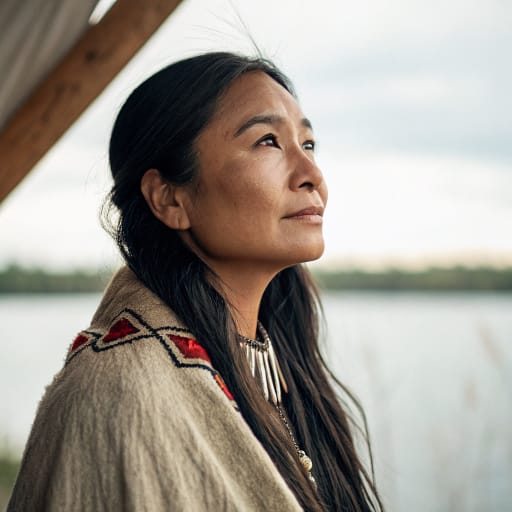
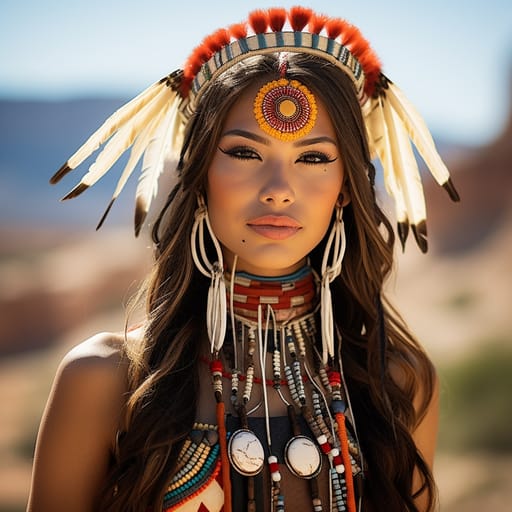
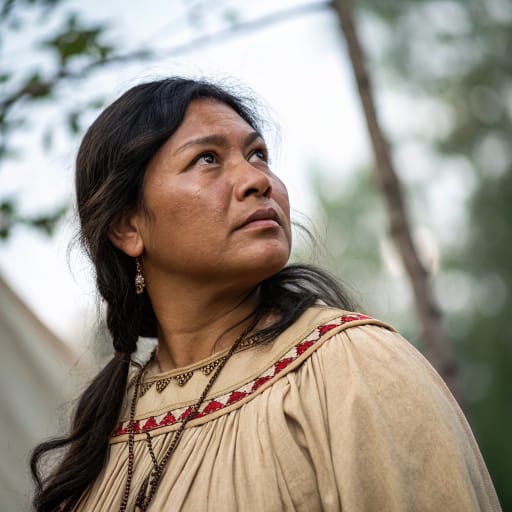
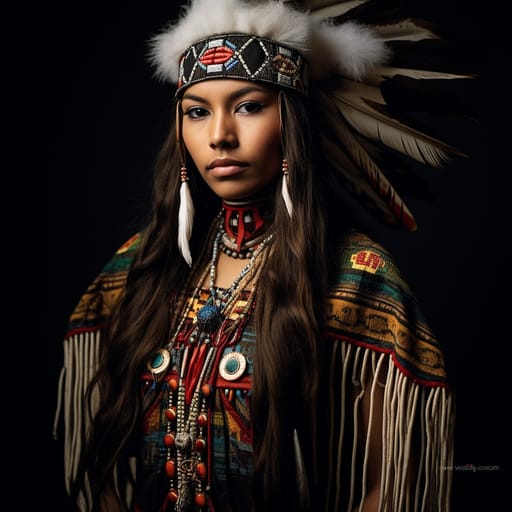
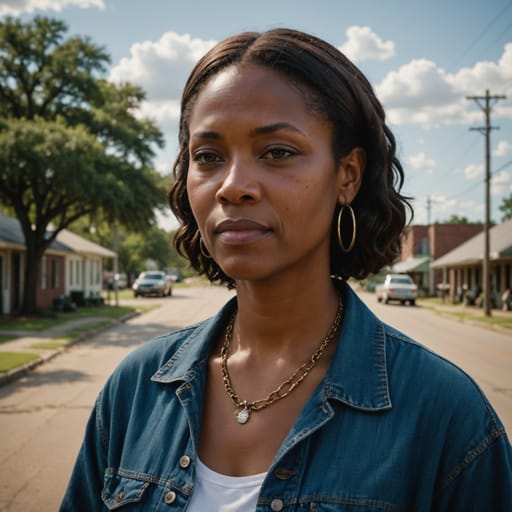
Typical Christian Munsee Phenotypes
Reference for AI generation: hair, eyes, skin, facial structure, build
Christian Munsee Body & Anatomy Reference
Anatomy by feature, Indigenous Northern American / Algonquian-Iroquoian phenotype
Christian Munsee Boobs & Breasts
Christian Munsee tits and boobs run medium cup, moderate projection, the classic Indigenous Northern American / Algonquian-Iroquoian bust profile. Christian Munsee nipples and areolas show medium-brown areolar pigmentation against the copper-to-medium-brown skin tone, with areolar diameter typically in the 30-44mm range and forward-set positioning rather than the smaller East Asian bust. Christian Munsee breasts trend full and moderate projection, a function of the mesomorph, broader frame in northern Indigenous populations body habitus and the mean adult female BMI 25-28. For anatomically accurate AI-generated Christian Munsee nudes the render preserves the medium cup, moderate projection shape, 30-44mm areolas with medium-brown pigmentation, and the torso proportions of the Indigenous Northern American / Algonquian-Iroquoian phenotype.
Christian Munsee Ass & Hips
Christian Munsee hips and butt usually read as medium, moderate-to-full projection. The skeletal base is medium iliac crests, the Indigenous Northern American / Algonquian-Iroquoian pattern. Set against the slim East Asian narrow-hip profile, the difference is easy to see, and the hip-to-waist ratio is often what identifies Christian Munsee women in photos.
Christian Munsee Vagina & Pussy
Expect medium-brown labial pigmentation on Christian Munsee women, in keeping with Indigenous Northern American / Algonquian-Iroquoian ancestry. The pubic hair is straight medium-coarse texture. Coloring should run evenly from the copper to medium-brown skin of the thighs to the labia, and Christian Munsee nude imagery should keep the hair's straight medium-coarse texture.
Christian Munsee Dicks & Penis
Christian Munsee dick and penile anatomy in adult AI generation should anchor on the regional reference data: regional mean ~13cm erect, moderate girth, and medium-brown shaft pigmentation. The Christian Munsee cock profile reflects the Indigenous Northern American / Algonquian-Iroquoian population's anthropometric measurements. The shaft pigmentation should track the surrounding copper to medium-brown skin tone, and the pubic hair should keep its straight medium-coarse texture in the typical inverted-V escutcheon.
Christian Munsee Body, Curves & Build
Christian Munsee body type: mesomorph, broader frame in northern Indigenous populations, with mean adult female BMI 25-28. This is the typical Indigenous Northern American / Algonquian-Iroquoian build. Height range, shoulder-to-hip ratio and fat distribution all follow from it, which is what an accurate Christian Munsee nude body should show.
Christian Munsee Skin Tone & Hair Texture
Christian Munsee skin tone falls in the copper to medium-brown (Fitzpatrick III-V) band, the surface signal most often miscalibrated by generic AI nude generators. Christian Munsee hair texture is typically straight 1A, dark-brown to black, often thick and dense, characteristic of the Indigenous Northern American / Algonquian-Iroquoian phenotype. In Christian Munsee nude renders the skin should hold that band consistently across the body.
Explore phenotype categories
Structured taxonomy with peer-reviewed scales · 22 anatomical categories
Erotic Poses & Sex Positions
From the pose catalog: 219 named positions with reference skeletons
Frequently asked questions about Christian Munsee people
Where is the Christian Munsee homeland?
The Christian Munsee homeland is Moravian mission towns in eastern Pennsylvania and the Tuscarawas valley of Ohio (United States), later Fairfield and Moraviantown on the Thames River, Ontario (Canada), and Franklin County, Kansas. in North America.
What language do Christian Munsee people speak?
Christian Munsee people primarily speak Munsee (Eastern Algonquian, Algic); Unami and Mahican were also spoken among early converts, with German and English used in the missions..
What religion do Christian Munsee people practice?
The predominant religion among Christian Munsee people is Moravian Christianity (Unitas Fratrum); descendants later Methodist and other Christian denominations..






Make your own Christian Munsee images
Five a day, free, no credits to buy. The studio starts from this group's phenotype data, so you can set body type, pose and style and keep the traits accurate.
Start with Christian Munsee