No portrait yet
Sekani Erotic
The northern Rocky Mountain Trench and the Finlay, Parsnip and upper Peace drainages of north-central British Columbia, Canada.
Sekani, also written Tsek'ene (Northern Athabaskan, Na-Dene), severely endangered; English is the everyday language.
Roman Catholic, largely through Oblate missions, alongside continuing Dene practice: dreaming, prophecy and respect obligations toward hunted animals.
Northern Athabaskan (Dene), closely tied to Dane-zaa and Dakelh; today Tsay Keh Dene, Kwadacha and McLeod Lake, with Sekani ancestry also at Takla Lake.
About Sekani People
The Sekani call themselves Tsek'ehne, roughly people of the rocks or people on the mountains, and the name is not decoration. Their country is the northern Rocky Mountain Trench in north-central British Columbia, the long straight valley of the Finlay and Parsnip rivers with the Rockies on one side and the Omineca ranges on the other. It is high, cold, thinly stocked land. Sekani life was built around moving through it: small family groups following moose, caribou, mountain sheep and goat across enormous territories, gathering seasonally, then splitting apart again. Unlike their neighbors on the salmon rivers to the west and south, they had no single fat run to carry them through winter, and that shaped nearly everything, including group size and a style of leadership earned through competence and generosity rather than inherited.
The language, Sekani or Tsek'ene, is Northern Athabaskan, part of the Dene family that runs from Alaska across the Subarctic and turns up far to the south as Navajo and Apache. It sits so close to Dane-zaa, the Beaver language, that linguists argue about where one ends and the other starts, and it shades into Dakelh, or Carrier, at the southern edge. Fluent speakers now number in the dozens, almost all of them elders, and community language work is a race against that arithmetic.
Two events cut deepest. The first was the fur trade. Simon Fraser built Fort McLeod in Sekani country in 1805, the first permanent European post west of the Rockies in what became British Columbia, and debt, trade goods and Oblate Catholic missions followed. Most Sekani today are nominally Catholic, though the older ground of dreaming, prophecy and obligation toward the animals a hunter takes never disappeared and is claimed openly again. The second was the W. A. C. Bennett Dam. When its reservoir filled in the late 1960s, Williston Lake swallowed the floor of the Trench: villages, trails, traplines, cabins and graves along the Finlay and Parsnip. Nobody asked the people who lived there. Families were moved, then moved again, once onto ground where no houses were waiting. The three Sekani nations that came through, Tsay Keh Dene, Kwadacha at Fort Ware, and McLeod Lake, have spent the decades since in litigation, negotiation and rebuilding. McLeod Lake finally adhered to Treaty 8 in 2000, after a long argument over whether the treaty covered them at all. Younger Sekani work in a mixed economy of forestry, mining and band administration and still go out on the land, which in this country is less nostalgia than plain logistics: the store is very far away.
Related ethnic groups
Groups that share Sekani's homeland, region, language, or religious tradition. These are likely candidates for comparative phenotype reference.
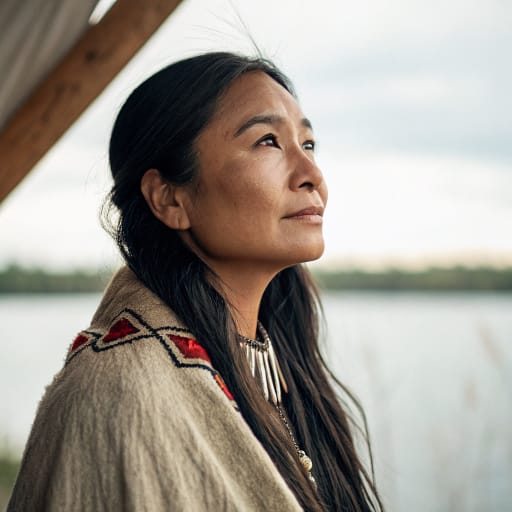
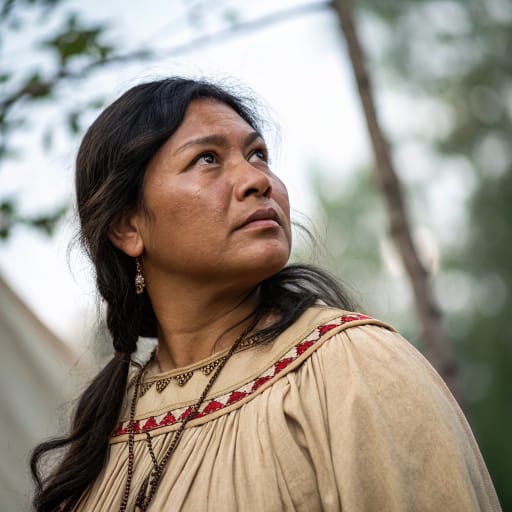
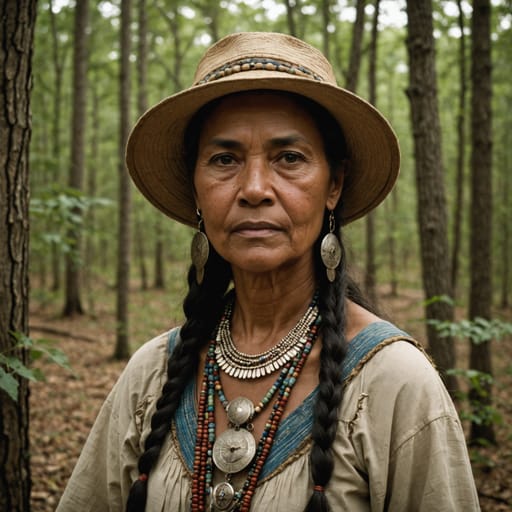
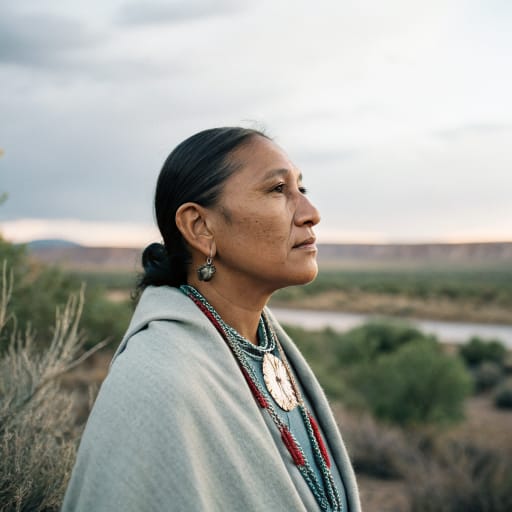
Typical Sekani Phenotypes
Reference for AI generation: hair, eyes, skin, facial structure, build
Sekani Body & Anatomy Reference
Per-feature anatomical profile for AI nude generation: Indigenous Northern American / Algonquian-Iroquoian phenotype
Sekani Boobs & Breasts
Bust reference for Sekani women: medium cup, moderate projection, which is typical of Indigenous Northern American / Algonquian-Iroquoian ancestry. Areolas measure about 30-44mm across, with medium-brown pigmentation. Body type (mesomorph, broader frame in northern Indigenous populations) shapes the bust as well, so Sekani tits are usually full and moderate projection. In AI imagery, keep the forward-set shape rather than drifting toward the smaller East Asian bust.
Sekani Ass & Hips
The Sekani ass is typically medium, moderate-to-full projection, which sets it apart from the slim East Asian narrow-hip profile. Underneath, the pelvis shows medium iliac crests, part of the Indigenous Northern American / Algonquian-Iroquoian skeletal pattern. For Sekani butt pics and AI renders, match that silhouette and the overall build (mesomorph, broader frame in northern Indigenous populations).
Sekani Vagina & Pussy
Sekani pussy and vulvar anatomy presents medium-brown labial pigmentation, consistent with the Indigenous Northern American / Algonquian-Iroquoian phenotype's pigmentation pattern. Sekani pubic hair is typically straight medium-coarse texture, in the inverted-triangle pattern. For anatomically accurate Sekani pussy renders the labial coloration should match the surrounding copper to medium-brown skin tone with a continuous gradient, and the hair should keep its straight medium-coarse texture.
Sekani Dicks & Penis
Sekani dicks follow the Indigenous Northern American / Algonquian-Iroquoian reference data: regional mean ~13cm erect; moderate girth; medium-brown shaft pigmentation. Shaft color should track the copper to medium-brown skin tone with a smooth change toward the glans, and Sekani pubic hair keeps its straight medium-coarse texture.
Sekani Body, Curves & Build
Sekani body type and overall build presents as mesomorph, broader frame in northern Indigenous populations, with mean adult female BMI 25-28: the characteristic Indigenous Northern American / Algonquian-Iroquoian habitus. Sekani curves and proportions should keep the regional skeletal frame (height, shoulder-to-hip ratio, limb proportions) rather than a generic mesomorph default.
Sekani Skin Tone & Hair Texture
Sekani skin sits in the copper to medium-brown (Fitzpatrick III-V) band. Hair is typically straight 1A, dark-brown to black, often thick and dense, in keeping with the Indigenous Northern American / Algonquian-Iroquoian phenotype. In nude renders the skin should stay one even tone from face to body, and body, pubic and head hair should match.
Explore phenotype categories
Structured taxonomy with peer-reviewed scales · 22 anatomical categories
Erotic Poses & Sex Positions
From the pose catalog: 219 named positions with reference skeletons
Frequently asked questions about Sekani people
Where is the Sekani homeland?
The Sekani homeland is The northern Rocky Mountain Trench and the Finlay, Parsnip and upper Peace drainages of north-central British Columbia, Canada. in North America.
What language do Sekani people speak?
Sekani people primarily speak Sekani, also written Tsek'ene (Northern Athabaskan, Na-Dene), severely endangered; English is the everyday language..
What religion do Sekani people practice?
The predominant religion among Sekani people is Roman Catholic, largely through Oblate missions, alongside continuing Dene practice: dreaming, prophecy and respect obligations toward hunted animals..






Make your own Sekani images
Five a day, free, no credits to buy. The studio starts from this group's phenotype data, so you can set body type, pose and style and keep the traits accurate.
Start with Sekani