Help us get this right
Does this portrait look right for Coushatta?
One tap. It takes a second and it is recorded.
1 says it looks right, 0 say it looks off.
Coushatta Erotic
Elton in Allen Parish, Louisiana, and the Big Thicket near Livingston, Texas, with a community in eastern Oklahoma; originally the Tennessee River valley of northern Alabama, United States
Koasati, also called Coushatta (Eastern Muskogean, Muskogean family); English
Protestant Christianity, largely Congregational and Presbyterian mission churches, with Koasati-language hymn singing
Eastern Muskogean, historically a Creek confederacy town; today the Coushatta Tribe of Louisiana, the Alabama-Coushatta Tribe of Texas, and the Alabama-Quassarte Tribal Town of Oklahoma
About Coushatta People
The Coushatta call themselves Koasati, and the shortest honest description of them is a people who moved a great deal and stayed themselves through it. Their older country was the Tennessee River valley, in what is now northern Alabama, where they lived as one of the towns loosely gathered into the Creek confederacy. Through the eighteenth century they shifted south and then west under colonial pressure, settling along the Alabama River, then crossing into Spanish Louisiana and spreading along the Sabine, the Red, and the Calcasieu. That head start meant many Coushatta families were already west of the Mississippi when removal came for their eastern relatives, which is part of why the people exist today in three separate places: Elton, in the prairie and pine flatwoods of southwest Louisiana, the Big Thicket country north of Livingston in East Texas, where they share a reservation and a hyphenated name with the Alabama, and eastern Oklahoma, in the Alabama-Quassarte Tribal Town.
Koasati is Muskogean, in the eastern branch alongside Alabama, close enough to that language that speakers can follow one another and far enough from Creek to be plainly its own. It held on unusually well: into the late twentieth century it was still a first language for many in the Louisiana community, at a point when most southeastern Native languages had gone quiet. It is also the source of one of the more cited findings in American linguistics. In the 1930s Mary Haas documented systematically different word endings used by men and by women, a distinction already narrowing to older speakers when she recorded it. The communities are Protestant, and the mission churches founded around the turn of the century still anchor a great deal of ordinary social life, funerals and Koasati-language hymn singing included. The best known Coushatta craft is pine needle basketry: coiled longleaf pine needles stitched with raffia into trays, lidded jars, and effigy baskets shaped like birds, crawfish, armadillos, and alligators, made for sale since the early 1900s and still made. Federal recognition was stripped in the termination era and won back twice over, in 1973 for the Louisiana Coushatta and in 1987 for the Alabama-Coushatta in Texas. The casino the Louisiana tribe opened at Kinder in 1995 rebuilt its economy and remains one of the largest in the Gulf South.
Related ethnic groups
Groups that share Coushatta's homeland, region, language, or religious tradition. These are likely candidates for comparative phenotype reference.
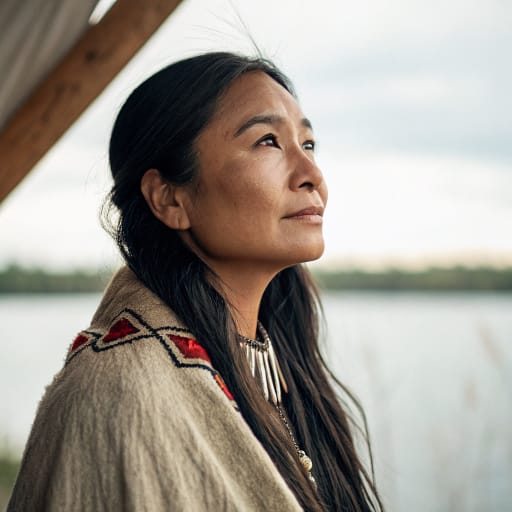
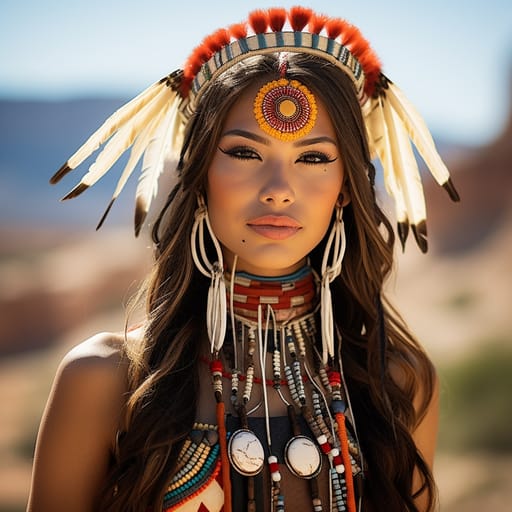
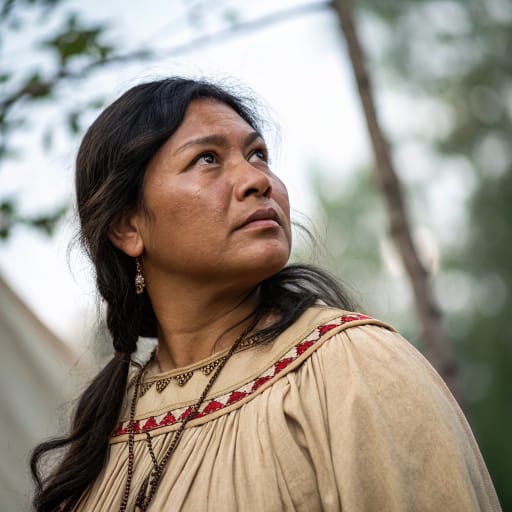
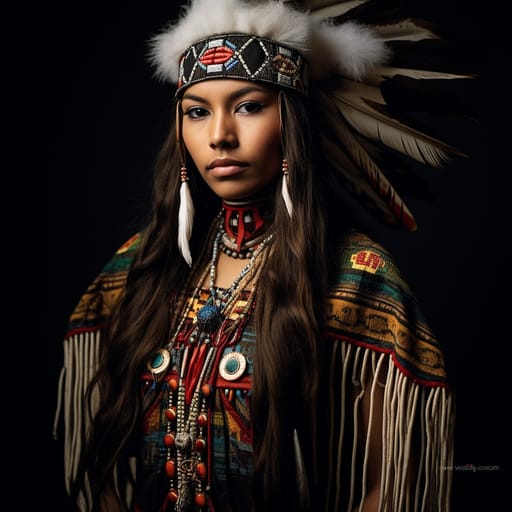

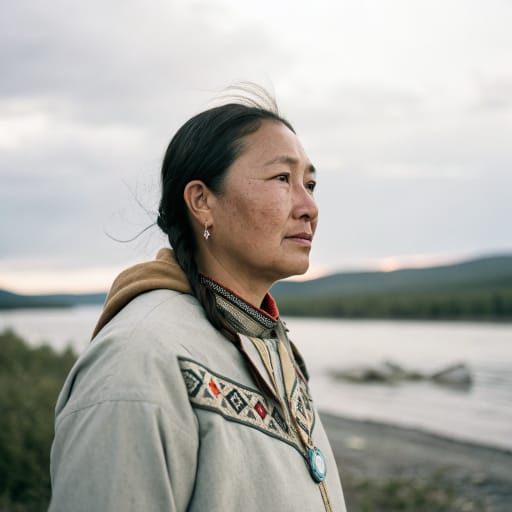
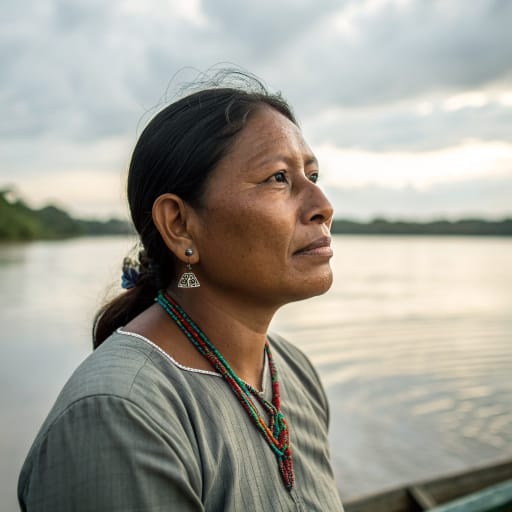
Typical Coushatta Phenotypes
Reference for AI generation: hair, eyes, skin, facial structure, build
Coushatta Body & Anatomy Reference
Anatomy by feature, Indigenous Northern American / Algonquian-Iroquoian phenotype
Coushatta Boobs & Breasts
Coushatta tits and boobs run medium cup, moderate projection, the classic Indigenous Northern American / Algonquian-Iroquoian bust profile. Coushatta nipples and areolas show medium-brown areolar pigmentation against the copper-to-medium-brown skin tone, with areolar diameter typically in the 30-44mm range and forward-set positioning rather than the smaller East Asian bust. Coushatta breasts trend full and moderate projection, a function of the mesomorph, broader frame in northern Indigenous populations body habitus and the mean adult female BMI 25-28. For anatomically accurate AI-generated Coushatta nudes the render preserves the medium cup, moderate projection shape, 30-44mm areolas with medium-brown pigmentation, and the torso proportions of the Indigenous Northern American / Algonquian-Iroquoian phenotype.
Coushatta Ass & Hips
Coushatta hips and butt usually read as medium, moderate-to-full projection. The skeletal base is medium iliac crests, the Indigenous Northern American / Algonquian-Iroquoian pattern. Set against the slim East Asian narrow-hip profile, the difference is easy to see, and the hip-to-waist ratio is often what identifies Coushatta women in photos.
Coushatta Vagina & Pussy
Expect medium-brown labial pigmentation on Coushatta women, in keeping with Indigenous Northern American / Algonquian-Iroquoian ancestry. The pubic hair is straight medium-coarse texture. Coloring should run evenly from the copper to medium-brown skin of the thighs to the labia, and Coushatta nude imagery should keep the hair's straight medium-coarse texture.
Coushatta Dicks & Penis
Coushatta dick and penile anatomy in adult AI generation should anchor on the regional reference data: regional mean ~13cm erect, moderate girth, and medium-brown shaft pigmentation. The Coushatta cock profile reflects the Indigenous Northern American / Algonquian-Iroquoian population's anthropometric measurements. The shaft pigmentation should track the surrounding copper to medium-brown skin tone, and the pubic hair should keep its straight medium-coarse texture in the typical inverted-V escutcheon.
Coushatta Body, Curves & Build
Coushatta body type: mesomorph, broader frame in northern Indigenous populations, with mean adult female BMI 25-28. This is the typical Indigenous Northern American / Algonquian-Iroquoian build. Height range, shoulder-to-hip ratio and fat distribution all follow from it, which is what an accurate Coushatta nude body should show.
Coushatta Skin Tone & Hair Texture
Coushatta skin tone falls in the copper to medium-brown (Fitzpatrick III-V) band, the surface signal most often miscalibrated by generic AI nude generators. Coushatta hair texture is typically straight 1A, dark-brown to black, often thick and dense, characteristic of the Indigenous Northern American / Algonquian-Iroquoian phenotype. In Coushatta nude renders the skin should hold that band consistently across the body.
Explore phenotype categories
Structured taxonomy with peer-reviewed scales · 22 anatomical categories
Erotic Poses & Sex Positions
From the pose catalog: 219 named positions with reference skeletons
Frequently asked questions about Coushatta people
Where is the Coushatta homeland?
The Coushatta homeland is Elton in Allen Parish, Louisiana, and the Big Thicket near Livingston, Texas, with a community in eastern Oklahoma; originally the Tennessee River valley of northern Alabama, United States in North America.
What language do Coushatta people speak?
Coushatta people primarily speak Koasati, also called Coushatta (Eastern Muskogean, Muskogean family); English.
What religion do Coushatta people practice?
The predominant religion among Coushatta people is Protestant Christianity, largely Congregational and Presbyterian mission churches, with Koasati-language hymn singing.






Make your own Coushatta images
Five a day, free, no credits to buy. The studio starts from this group's phenotype data, so you can set body type, pose and style and keep the traits accurate.
Start with Coushatta