Help us get this right
Does this portrait look right for Chontal Maya?
One tap. It takes a second and it is recorded.
1 says it looks right, 0 say it looks off.
Chontal Maya Erotic
The Grijalva and Usumacinta delta wetlands of Tabasco, Mexico, chiefly Nacajuca, Centla, Jonuta, Macuspana and Centro; historically also Acalan in southwestern Campeche.
Yokot'an, also called Chontal de Tabasco (Mayan, Cholan branch); Spanish is universal alongside it
Catholic, with strong household and agricultural folk practice; a growing Protestant and Pentecostal minority
Cholan branch of the Mayan family, with Ch'ol and Ch'orti'; historically the Acalan and Potonchán polities. Unrelated to the Chontal of Oaxaca and of Nicaragua despite the shared Nahuatl name.
About Chontal Maya People
Chontal is not their word. It is Nahuatl, chontalli, roughly "foreigner," a label the Aztecs applied loosely enough that unrelated peoples in Oaxaca and Nicaragua ended up carrying it too, sharing the name and nothing else. In Tabasco the people call themselves Yokot'an, after their own name for their speech. Their country is the delta: the flood-prone lowland where the Grijalva and the Usumacinta break apart into channels, lagoons and marsh before reaching the Gulf, in Nacajuca, Centla, Jonuta and Macuspana. Tabasco is among the wettest places in Mexico, and Chontal life is built around that fact. Ground rises and falls with the season, the dugout canoe is a working vehicle rather than a heritage object, and farmland has often had to be built up out of the swamp by hand, a technique revived at scale around Nacajuca in the 1970s. The language belongs to the Cholan branch of Mayan, alongside Ch'ol and Ch'orti', which places it in the immediate neighborhood of the language most Classic period hieroglyphic texts were written in.
Water made them traders. Before the Spanish, Chontal merchants moved cacao, salt, cotton and obsidian by canoe along the coast from Tabasco around the Yucatan peninsula toward Honduras, and their polity of Acalan was a commercial power rather than a monumental one. That position put them in the path of the invasion early. Cortés fought the Chontal at Potonchán in 1519, and among the twenty women handed over afterward was the interpreter later known as Malintzin, who had learned Chontal in captivity and whose Nahuatl made the rest of the conquest workable. Cortés crossed Acalan again in 1525 on the march to Honduras and hanged Cuauhtémoc there. Some of that history survives in Chontal hands: the Paxbolón papers preserve a dynastic account set down in the language by the family that ruled Acalan, which is rare anywhere in the Americas. Catholicism arrived and settled in, then was violently interrupted in the 1920s and 1930s when the state government closed the churches and ran off the priests, pushing practice into houses and yards where a good deal of it already lived. Offerings still go to the yumká, the small guardian of the fields; the Baila Viejo dancers still put on carved wooden masks; and pozol, ground maize and cacao drunk cold, is still what you hand a visitor. Since the 1970s the other constant has been oil, and Chontal communities have spent decades arguing with Pemex over polluted water and lost land.
Related ethnic groups
Groups that share Chontal Maya's homeland, region, language, or religious tradition. These are likely candidates for comparative phenotype reference.
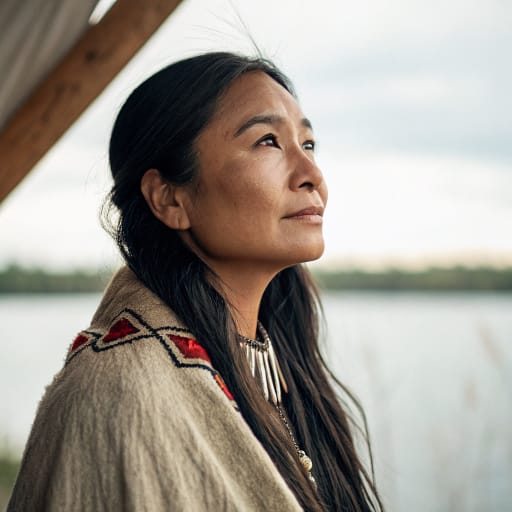
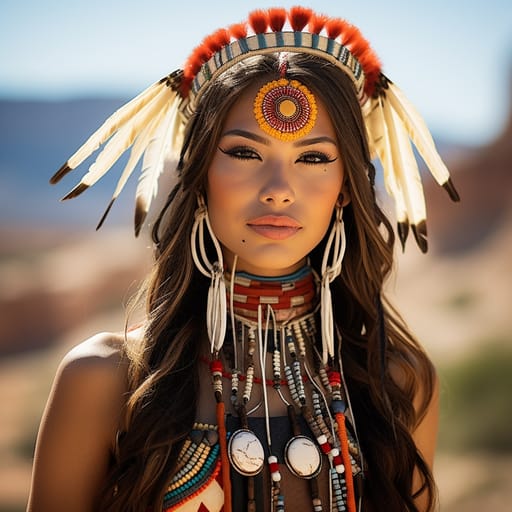
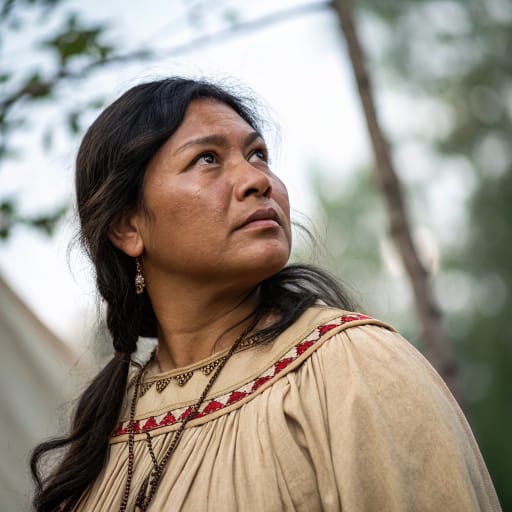
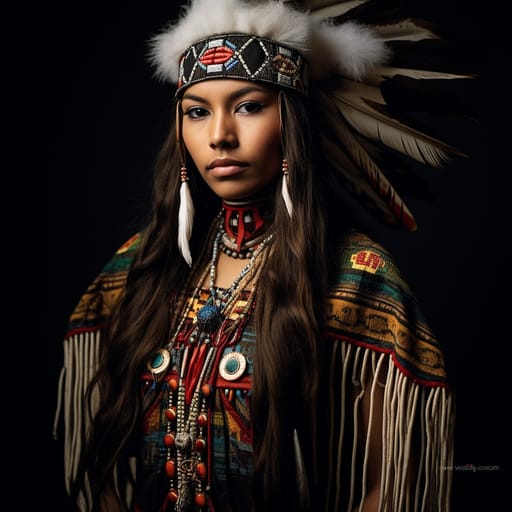

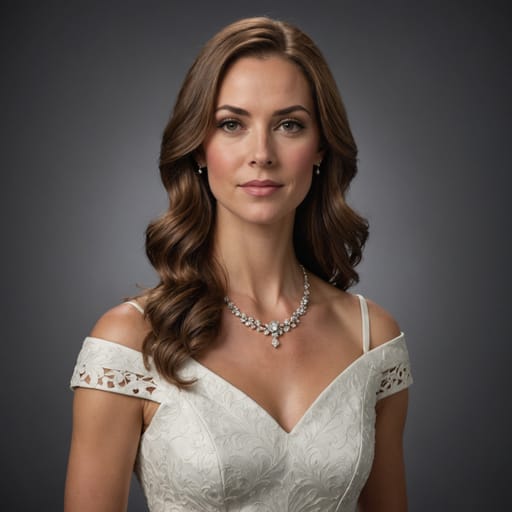
Typical Chontal Maya Phenotypes
Reference for AI generation: hair, eyes, skin, facial structure, build
Chontal Maya Body & Anatomy Reference
Indigenous Northern American / Algonquian-Iroquoian phenotype: anatomy reference for AI nude generation
Chontal Maya Boobs & Breasts
Bust reference for Chontal Maya women: medium cup, moderate projection, which is typical of Indigenous Northern American / Algonquian-Iroquoian ancestry. Areolas measure about 30-44mm across, with medium-brown pigmentation. Body type (mesomorph, broader frame in northern Indigenous populations) shapes the bust as well, so Chontal Maya tits are usually full and moderate projection. In AI imagery, keep the forward-set shape rather than drifting toward the smaller East Asian bust.
Chontal Maya Ass & Hips
The Chontal Maya ass is typically medium, moderate-to-full projection, which sets it apart from the slim East Asian narrow-hip profile. Underneath, the pelvis shows medium iliac crests, part of the Indigenous Northern American / Algonquian-Iroquoian skeletal pattern. For Chontal Maya butt pics and AI renders, match that silhouette and the overall build (mesomorph, broader frame in northern Indigenous populations).
Chontal Maya Vagina & Pussy
Chontal Maya pussy and vulvar anatomy presents medium-brown labial pigmentation, consistent with the Indigenous Northern American / Algonquian-Iroquoian phenotype's pigmentation pattern. Chontal Maya pubic hair is typically straight medium-coarse texture, in the inverted-triangle pattern. For anatomically accurate Chontal Maya pussy renders the labial coloration should match the surrounding copper to medium-brown skin tone with a continuous gradient, and the hair should keep its straight medium-coarse texture.
Chontal Maya Dicks & Penis
Chontal Maya dicks follow the Indigenous Northern American / Algonquian-Iroquoian reference data: regional mean ~13cm erect; moderate girth; medium-brown shaft pigmentation. Shaft color should track the copper to medium-brown skin tone with a smooth change toward the glans, and Chontal Maya pubic hair keeps its straight medium-coarse texture.
Chontal Maya Body, Curves & Build
Chontal Maya body type and overall build presents as mesomorph, broader frame in northern Indigenous populations, with mean adult female BMI 25-28: the characteristic Indigenous Northern American / Algonquian-Iroquoian habitus. Chontal Maya curves and proportions should keep the regional skeletal frame (height, shoulder-to-hip ratio, limb proportions) rather than a generic mesomorph default.
Chontal Maya Skin Tone & Hair Texture
Chontal Maya skin sits in the copper to medium-brown (Fitzpatrick III-V) band. Hair is typically straight 1A, dark-brown to black, often thick and dense, in keeping with the Indigenous Northern American / Algonquian-Iroquoian phenotype. In nude renders the skin should stay one even tone from face to body, and body, pubic and head hair should match.
Explore phenotype categories
Structured taxonomy with peer-reviewed scales · 22 anatomical categories
Erotic Poses & Sex Positions
From the pose catalog: 219 named positions with reference skeletons
Frequently asked questions about Chontal Maya people
Where is the Chontal Maya homeland?
The Chontal Maya homeland is The Grijalva and Usumacinta delta wetlands of Tabasco, Mexico, chiefly Nacajuca, Centla, Jonuta, Macuspana and Centro; historically also Acalan in southwestern Campeche. in North America.
What language do Chontal Maya people speak?
Chontal Maya people primarily speak Yokot'an, also called Chontal de Tabasco (Mayan, Cholan branch); Spanish is universal alongside it.
What religion do Chontal Maya people practice?
The predominant religion among Chontal Maya people is Catholic, with strong household and agricultural folk practice; a growing Protestant and Pentecostal minority.






Make your own Chontal Maya images
Five a day, free, no credits to buy. The studio starts from this group's phenotype data, so you can set body type, pose and style and keep the traits accurate.
Start with Chontal Maya