No portrait yet
Alaskan Creoles Erotic
Coastal southern Alaska, United States: the Kodiak Archipelago, Aleutian and Pribilof Islands, the Kenai Peninsula (Ninilchik, Kenai) and Sitka
English today; historically Russian (Indo-European, Slavic), including the Ninilchik Russian dialect, alongside Aleut and Alutiiq (Eskimo-Aleut)
Russian Orthodox Christianity (Orthodox Church in America, Diocese of Alaska)
Descendants of Russian-American Company men and Unangan (Aleut), Sugpiaq (Alutiiq), Dena'ina and other Alaska Native women; today largely counted within those Native communities
About Alaskan Creoles People
Alaskan Creoles began as a legal class before they became a community. In Russian America, company and church records listed the children of Russian and Siberian fur traders and Alaska Native women as kreoly. The Russian-American Company's charters set that class apart from both Russians and Natives, and the difference mattered. Creoles did not have to join the forced sea otter hunts imposed on Unangan and Alutiiq men, and many went to school at company expense in exchange for years of service. They became the clerks, navigators, shipbuilders, medics and priests who kept a small colonial staff working along thousands of miles of coast. Some went far. Alexander Kashevarov, born on Kodiak, charted part of the Arctic coast in 1838 and finished his career as a general in Russian naval service. Jacob Netsvetov was born on St. George Island to a Russian father and an Unangan mother. He served as a priest on Atka and later on the Yukon River, and the Orthodox Church now venerates him as a saint.
The sale of Alaska in 1867 took away the class's legal meaning. American census takers used the label for a few more decades, but officials mostly grouped Creoles with Natives, and by the twentieth century the word had faded. That grouping mattered later: under the Alaska Native Claims Settlement Act of 1971, many Creole descendants enrolled as Alaska Natives. Most now identify as Alutiiq, Unangan or Dena'ina, or simply as Alaskan. Still, the Russian layer never left. Russian surnames with the old -off spelling are common across Kodiak, the Aleutians and the Kenai Peninsula. Orthodox parishes with onion-domed churches are still at the center of many coastal towns and villages, and the church calendar still sets the pace of the year.
In January, around Orthodox Christmas, parishioners go starring. They carry a spinning, decorated star from house to house and sing carols in Slavonic, English and Native languages, a custom Alutiiq and Yup'ik villages call Slaviq. Home kitchens still make pirok, a salmon and rice pie that comes from the Russian pirog. In Ninilchik, a village founded in the 1840s by retired company men and their Native and Creole families, a few elders still speak a local Russian dialect. It has been cut off from Russia for more than a century and a half and mixes older Russian with words borrowed from nearby languages and English. The Creoles never really disappeared. They merged into the Native communities their mothers came from and brought Russia with them.
Related ethnic groups
Groups that share Alaskan Creoles's homeland, region, language, or religious tradition. These are likely candidates for comparative phenotype reference.
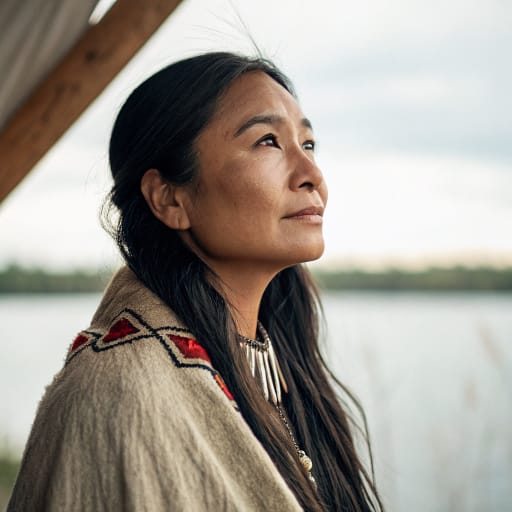
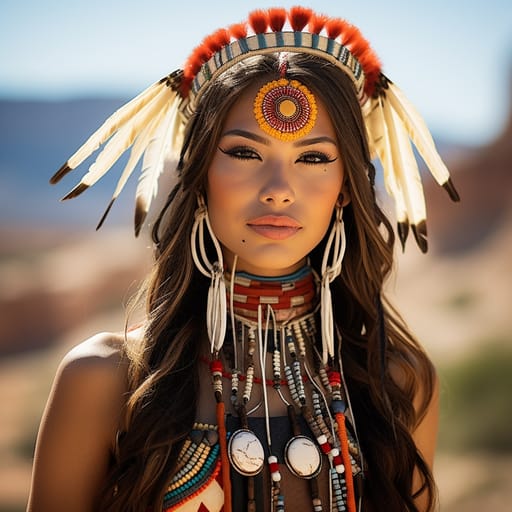
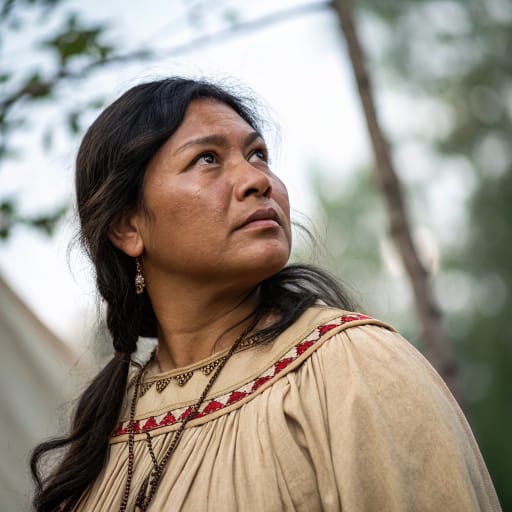
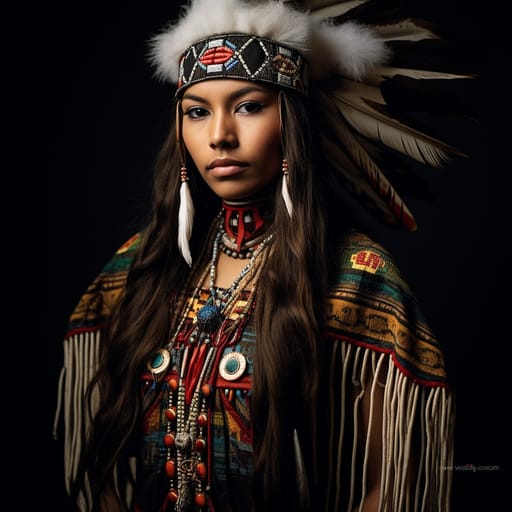

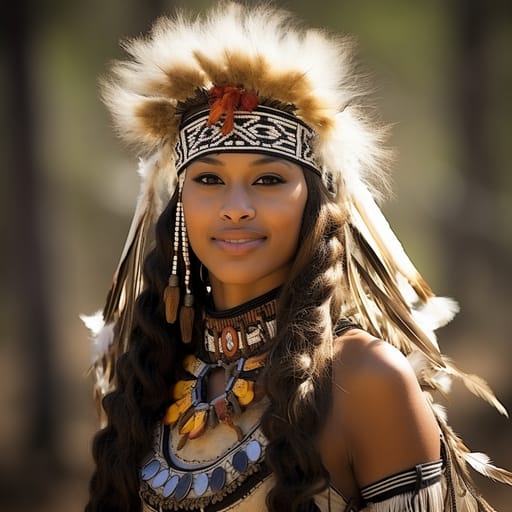
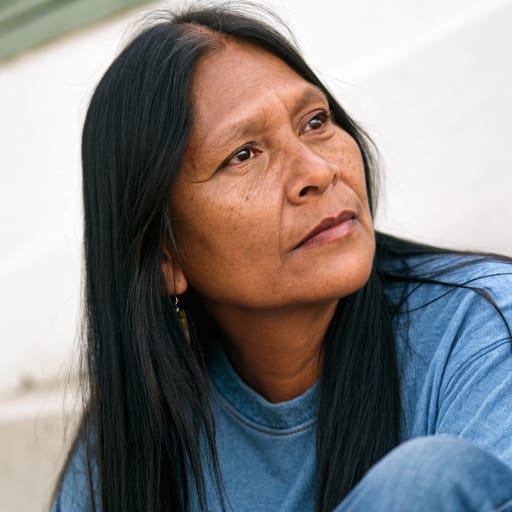
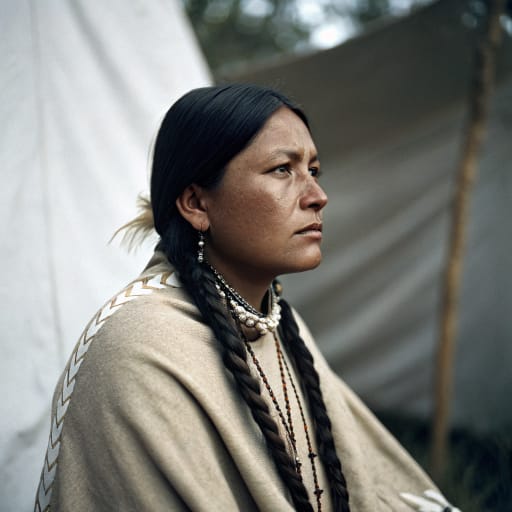
Typical Alaskan Creoles Phenotypes
Reference for AI generation: hair, eyes, skin, facial structure, build
Alaskan Creoles Body & Anatomy Reference
Anatomy by feature, Indigenous Northern American / Algonquian-Iroquoian phenotype
Alaskan Creoles Boobs & Breasts
Alaskan Creoles boobs follow the Indigenous Northern American / Algonquian-Iroquoian profile: medium cup, moderate projection. Areolar diameter is usually 30-44mm, and the coloring is medium-brown areolar pigmentation against the copper-to-medium-brown skin tone. Breast shape tracks body composition (mesomorph, broader frame in northern Indigenous populations, mean adult female BMI 25-28), so Alaskan Creoles breasts tend to be full and moderate projection. Expect a forward-set shape, not the smaller East Asian bust.
Alaskan Creoles Ass & Hips
Alaskan Creoles ass and hip morphology presents as medium, moderate-to-full projection, distinctly different from the slim East Asian narrow-hip profile. The Alaskan Creoles pelvic profile shows medium iliac crests, anchored in the Indigenous Northern American / Algonquian-Iroquoian skeletal pattern. Alaskan Creoles butt shots in adult AI imagery should render the medium, moderate-to-full projection silhouette with the overall build (mesomorph, broader frame in northern Indigenous populations) and the fat distribution typical of the Indigenous Northern American / Algonquian-Iroquoian phenotype.
Alaskan Creoles Vagina & Pussy
Alaskan Creoles pussy anatomy typically shows medium-brown labial pigmentation. Pubic hair is usually straight medium-coarse texture. In AI-generated Alaskan Creoles nudes, labial color should blend into the copper to medium-brown skin with a gradual transition, and the hair should keep its straight medium-coarse texture.
Alaskan Creoles Dicks & Penis
Penis reference for Alaskan Creoles men: regional mean ~13cm erect, moderate girth. Coloring: medium-brown shaft pigmentation. An accurate Alaskan Creoles cock in AI imagery matches the surrounding copper to medium-brown skin rather than a generic porn default. Circumcision depends on religion and custom, not ancestry.
Alaskan Creoles Body, Curves & Build
The Alaskan Creoles figure is generally mesomorph, broader frame in northern Indigenous populations, with mean adult female BMI 25-28, characteristic of Indigenous Northern American / Algonquian-Iroquoian ancestry. AI image tools tend to flatten regional body types into a few stock shapes; here the Alaskan Creoles build is kept as its own reference.
Alaskan Creoles Skin Tone & Hair Texture
Skin: copper to medium-brown (Fitzpatrick III-V). Hair: straight 1A, dark-brown to black, often thick and dense. Both are typical of Indigenous Northern American / Algonquian-Iroquoian ancestry. The most common mistake in AI nudes of Alaskan Creoles women is a body rendered lighter than the face.
Explore phenotype categories
Structured taxonomy with peer-reviewed scales · 22 anatomical categories
Erotic Poses & Sex Positions
From the pose catalog: 219 named positions with reference skeletons
Frequently asked questions about Alaskan Creoles people
Where is the Alaskan Creoles homeland?
The Alaskan Creoles homeland is Coastal southern Alaska, United States: the Kodiak Archipelago, Aleutian and Pribilof Islands, the Kenai Peninsula (Ninilchik, Kenai) and Sitka in North America.
What language do Alaskan Creoles people speak?
Alaskan Creoles people primarily speak English today; historically Russian (Indo-European, Slavic), including the Ninilchik Russian dialect, alongside Aleut and Alutiiq (Eskimo-Aleut).
What religion do Alaskan Creoles people practice?
The predominant religion among Alaskan Creoles people is Russian Orthodox Christianity (Orthodox Church in America, Diocese of Alaska).






Make your own Alaskan Creoles images
Five a day, free, no credits to buy. The studio starts from this group's phenotype data, so you can set body type, pose and style and keep the traits accurate.
Start with Alaskan Creoles