No portrait yet
Akimel O'odham Erotic
Middle Gila and lower Salt River valleys of south-central Arizona, United States, chiefly the Gila River and Salt River reservations around Phoenix.
O'odham, Akimel dialect (Uto-Aztecan, Tepiman branch); English.
Christianity, mainly Presbyterian and Catholic, alongside traditional O'odham belief centered on Earth Doctor and Elder Brother (Se'ehe).
Keli Akimel O'odham (Gila River) and Onk Akimel O'odham (Salt River), plus the Ak-Chin community shared with Tohono O'odham; the Sobaipuri merged into them in the 1700s and 1800s. Part of the wider O'odham family with the Tohono O'odham, Hia C-ed O'odham,
About Akimel O'odham People
The Akimel O'odham are the River People, and the river is the whole point. They and the Huhugam before them cut canals off the Gila and Salt Rivers in what is now south-central Arizona and farmed the desert floor for well over a thousand years, with a skill that impressed every outsider who passed through. The Spanish called them Pima, a name that stuck on maps and treaties but that they never chose. Today they make up most of the Gila River Indian Community south of Phoenix and share the Salt River Pima-Maricopa Indian Community, hard against Scottsdale, with the Piipaash, a Yuman-speaking people who settled among them in the 1700s and 1800s and fought beside them against Apache and Quechan raiders.
Their language is O'odham, a Uto-Aztecan tongue of the Tepiman branch, shared with the Tohono O'odham to the south and, across the border, with the Pima Bajo of Sonora. Akimel and Tohono speech are dialects of one language with their own quirks: the Akimel call the Elder Brother of the creation story Se'ehe where the Tohono say I'itoi. Fluent speakers are aging, and both communities run language programs to change that. Religion sits in layers. Presbyterian missionaries reached Gila River in 1870 and their congregations are still the strongest there, with Catholic and other churches alongside, but the creation account of Earth Doctor and Elder Brother, the man in the maze design, and the old song cycles have not gone anywhere.
The hinge of their modern history is water. In the 1850s and 1860s Akimel O'odham farmers grew enough wheat to feed the Butterfield stage line, the US Army, and the wagon trains bound for California. Then settlers upstream diverted the Gila, and by the 1890s the river arrived at the reservation as a dry bed. Farms failed, people went hungry, and diets shifted to government flour, lard, and sugar. Gila River went on to record some of the highest rates of type 2 diabetes ever documented, which the community understands as a direct inheritance of the water loss. The 2004 Arizona Water Settlements Act returned a large share of that water, and the tribe has spent the years since rebuilding canals and fields. Less known: keepers once recorded each year's events as notches on mesquite calendar sticks, and the oldest surviving ones begin with the meteor storm of 1833, the year the stars fell. Their coiled willow and devil's claw baskets rank among the finest in the Southwest. Ira Hayes, one of the Marines raising the flag at Iwo Jima, grew up at Gila River. The government also put a wartime internment camp for Japanese Americans on Gila River land, over the tribe's objections.
Related ethnic groups
Groups that share Akimel O'odham's homeland, region, language, or religious tradition. These are likely candidates for comparative phenotype reference.
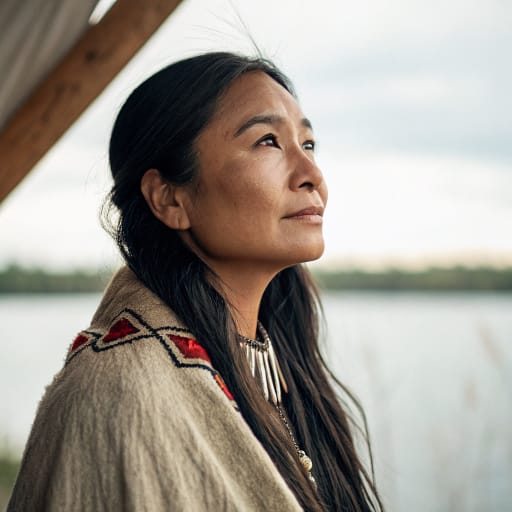
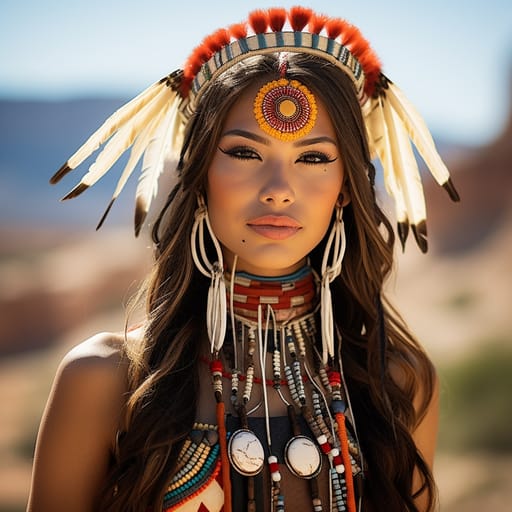
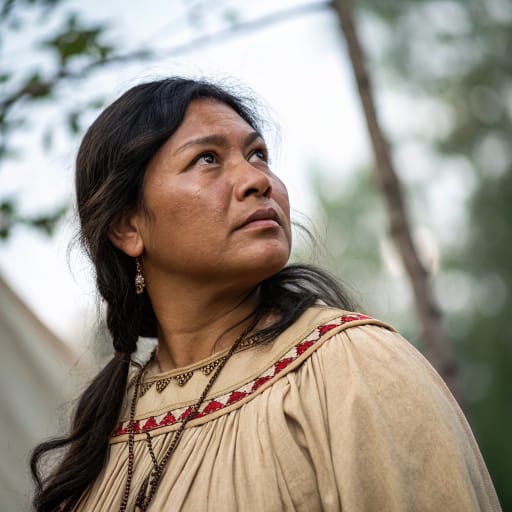
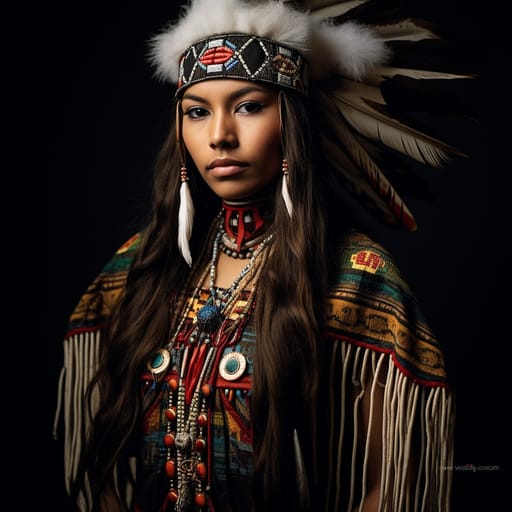

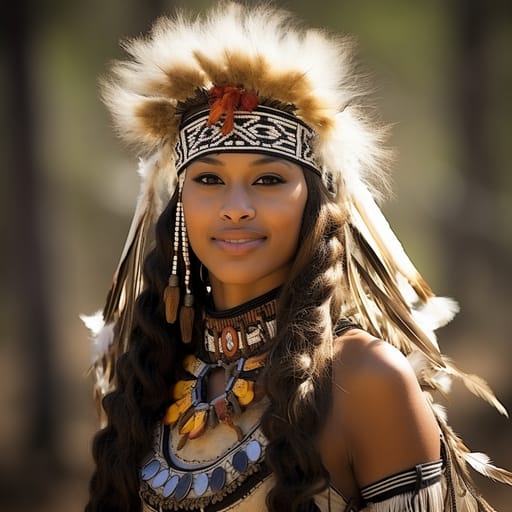
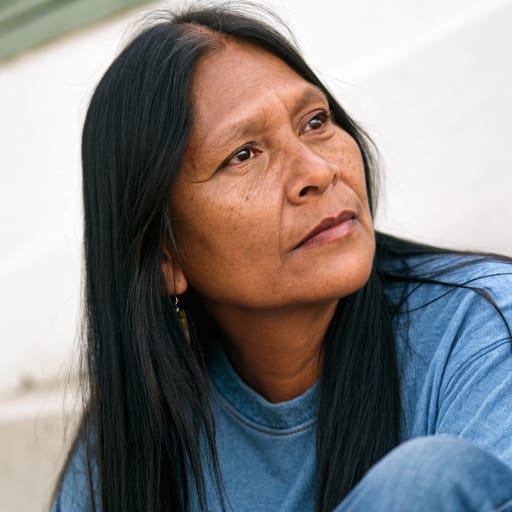
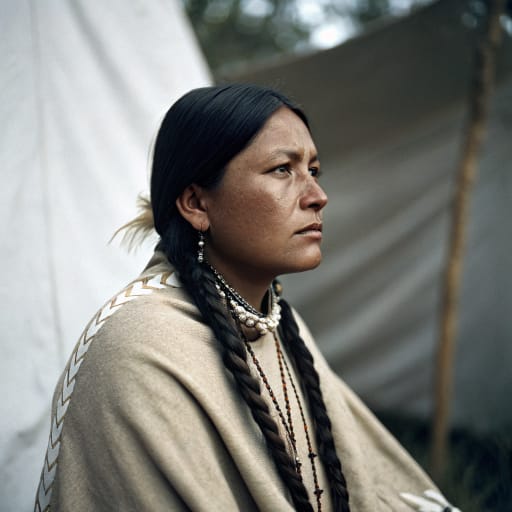
Typical Akimel O'odham Phenotypes
Reference for AI generation: hair, eyes, skin, facial structure, build
Akimel O'odham Body & Anatomy Reference
Anatomy by feature, Indigenous Northern American / Algonquian-Iroquoian phenotype
Akimel O'odham Boobs & Breasts
Akimel O'odham tits and boobs run medium cup, moderate projection, the classic Indigenous Northern American / Algonquian-Iroquoian bust profile. Akimel O'odham nipples and areolas show medium-brown areolar pigmentation against the copper-to-medium-brown skin tone, with areolar diameter typically in the 30-44mm range and forward-set positioning rather than the smaller East Asian bust. Akimel O'odham breasts trend full and moderate projection, a function of the mesomorph, broader frame in northern Indigenous populations body habitus and the mean adult female BMI 25-28. For anatomically accurate AI-generated Akimel O'odham nudes the render preserves the medium cup, moderate projection shape, 30-44mm areolas with medium-brown pigmentation, and the torso proportions of the Indigenous Northern American / Algonquian-Iroquoian phenotype.
Akimel O'odham Ass & Hips
Akimel O'odham hips and butt usually read as medium, moderate-to-full projection. The skeletal base is medium iliac crests, the Indigenous Northern American / Algonquian-Iroquoian pattern. Set against the slim East Asian narrow-hip profile, the difference is easy to see, and the hip-to-waist ratio is often what identifies Akimel O'odham women in photos.
Akimel O'odham Vagina & Pussy
Expect medium-brown labial pigmentation on Akimel O'odham women, in keeping with Indigenous Northern American / Algonquian-Iroquoian ancestry. The pubic hair is straight medium-coarse texture. Coloring should run evenly from the copper to medium-brown skin of the thighs to the labia, and Akimel O'odham nude imagery should keep the hair's straight medium-coarse texture.
Akimel O'odham Dicks & Penis
Akimel O'odham dick and penile anatomy in adult AI generation should anchor on the regional reference data: regional mean ~13cm erect, moderate girth, and medium-brown shaft pigmentation. The Akimel O'odham cock profile reflects the Indigenous Northern American / Algonquian-Iroquoian population's anthropometric measurements. The shaft pigmentation should track the surrounding copper to medium-brown skin tone, and the pubic hair should keep its straight medium-coarse texture in the typical inverted-V escutcheon.
Akimel O'odham Body, Curves & Build
Akimel O'odham body type: mesomorph, broader frame in northern Indigenous populations, with mean adult female BMI 25-28. This is the typical Indigenous Northern American / Algonquian-Iroquoian build. Height range, shoulder-to-hip ratio and fat distribution all follow from it, which is what an accurate Akimel O'odham nude body should show.
Akimel O'odham Skin Tone & Hair Texture
Akimel O'odham skin tone falls in the copper to medium-brown (Fitzpatrick III-V) band, the surface signal most often miscalibrated by generic AI nude generators. Akimel O'odham hair texture is typically straight 1A, dark-brown to black, often thick and dense, characteristic of the Indigenous Northern American / Algonquian-Iroquoian phenotype. In Akimel O'odham nude renders the skin should hold that band consistently across the body.
Explore phenotype categories
Structured taxonomy with peer-reviewed scales · 22 anatomical categories
Erotic Poses & Sex Positions
From the pose catalog: 219 named positions with reference skeletons
Frequently asked questions about Akimel O'odham people
Where is the Akimel O'odham homeland?
The Akimel O'odham homeland is Middle Gila and lower Salt River valleys of south-central Arizona, United States, chiefly the Gila River and Salt River reservations around Phoenix. in North America.
What language do Akimel O'odham people speak?
Akimel O'odham people primarily speak O'odham, Akimel dialect (Uto-Aztecan, Tepiman branch); English..
What religion do Akimel O'odham people practice?
The predominant religion among Akimel O'odham people is Christianity, mainly Presbyterian and Catholic, alongside traditional O'odham belief centered on Earth Doctor and Elder Brother (Se'ehe)..






Make your own Akimel O'odham images
Five a day, free, no credits to buy. The studio starts from this group's phenotype data, so you can set body type, pose and style and keep the traits accurate.
Start with Akimel O'odham