No portrait yet
Zyoba Erotic
Northwestern shore of Lake Tanganyika in South Kivu, eastern Democratic Republic of the Congo: Uvira Territory and the lakeshore south toward Fizi.
Zyoba, also called Joba, with Vira and Masanze dialects (Bantu, Niger-Congo); Congo Swahili and French are widely used alongside it.
Mostly Christian, Catholic and Protestant, with a Muslim minority around Uvira and continuing customary beliefs tied to chiefship.
Vira (Bavira) and Masanze; linguistically part of the Shi-Havu cluster of Great Lakes Bantu, alongside the Fuliiru, Shi and Havu.
About Zyoba People
The Zyoba are lake people. The name, also written Joba or Zoba, covers a cluster of Bantu communities on the northwestern shore of Lake Tanganyika, in South Kivu in the eastern Democratic Republic of the Congo, and the language they share. In everyday use the community names matter more than the umbrella one, and the two that linguists record are the Vira and the Masanze. The Vira are the better known. The port city of Uvira carries their name, and the Bavira chiefdom, headed by a hereditary mwami, is still one of the customary authorities of Uvira Territory. The Masanze live farther south along the shore, in country otherwise dominated by the much larger Bembe. The setting explains most of daily life: a narrow strip between deep water and the wall of the Mitumba Mountains, with the Ruzizi plain opening to the north and Bujumbura, in Burundi, a short drive across the border. People fish the lake, often at night with lamps for the small sardines that are sold dried across the region, farm cassava, bananas and beans on the slopes, and trade. Their language belongs to the Shi-Havu cluster of Great Lakes Bantu and sits close to Fuliiru, spoken by the Vira's immediate neighbors. In practice Congo Swahili is the language of the market, the street and the church, French the language of school and paperwork, and the home language has to compete with both, especially in town.
Most Zyoba are Christian, Catholic or Protestant, and Uvira also has a long-established Muslim minority, a legacy of the Swahili caravan trade that reached this end of the lake from Ujiji in the nineteenth century. Burton and Speke landed at Uvira in 1858 and found it already a trading station. Older ideas have not vanished: the mwami carries a ritual weight that no government appointment does, and questions of land, succession and who counts as native to the soil still run through customary channels. Those questions have been dangerous ones. The war that toppled Mobutu began in these hills in 1996, and the decades since have brought militias, displacement and recurring disputes among Vira, Fuliiru, Rundi and Banyamulenge communities over territory and chiefly rights. Water has added its own strain: floods in 2020 destroyed whole neighborhoods of Uvira, and the rising lake has taken more of the shoreline since. Through all of it the Vira have kept a clear sense of being the people of this particular shore, hosts in a city that has long since outgrown them.
Related ethnic groups
Groups that share Zyoba's homeland, region, language, or religious tradition. These are likely candidates for comparative phenotype reference.
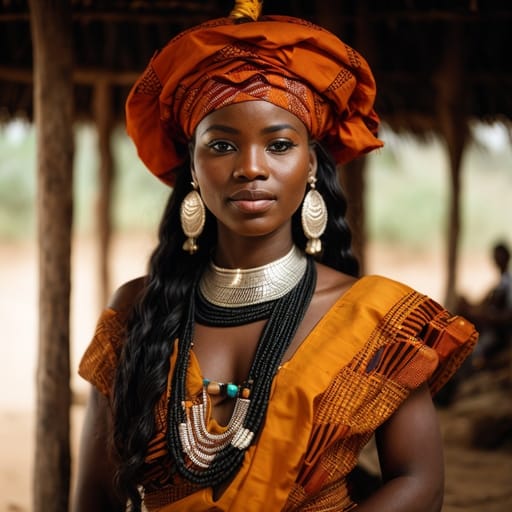
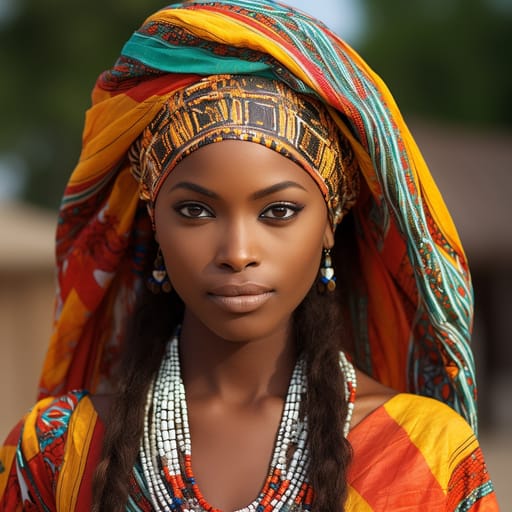
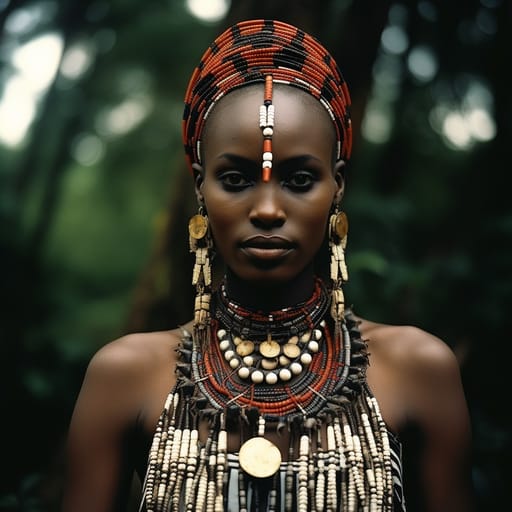
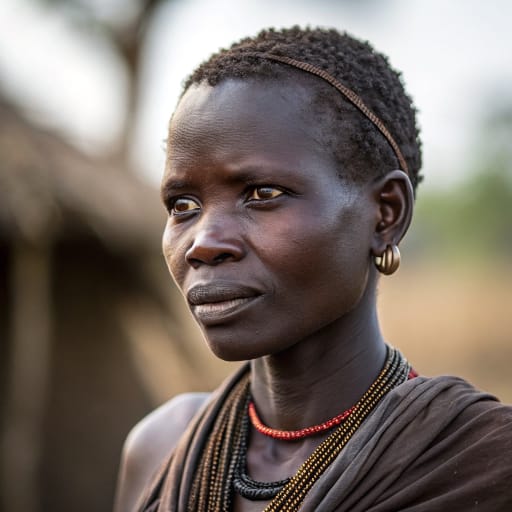
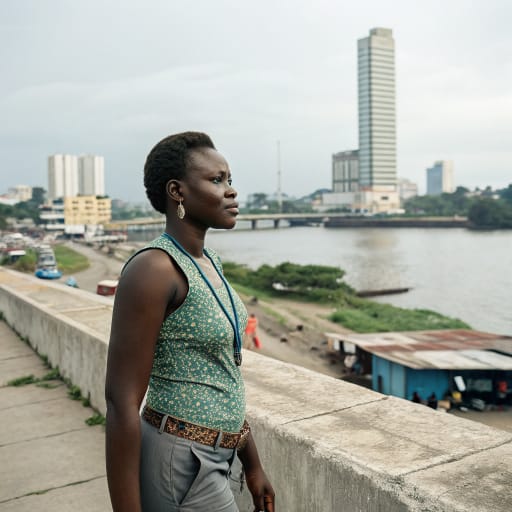
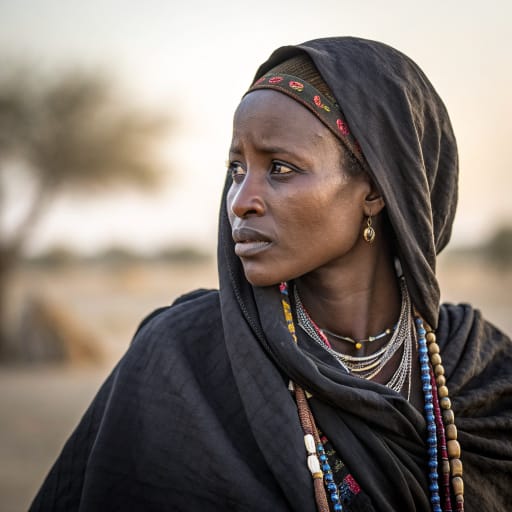
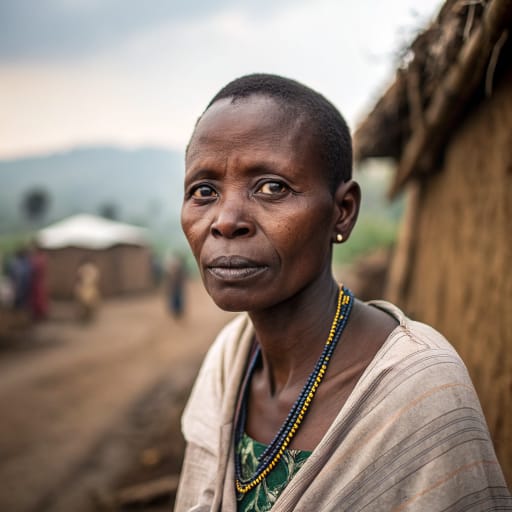
Typical Zyoba Phenotypes
Reference for AI generation: hair, eyes, skin, facial structure, build
Zyoba Body & Anatomy Reference
Bantu / Central African Niger-Congo phenotype: anatomy reference for AI nude generation
Zyoba Boobs & Breasts
Bust reference for Zyoba women: medium-to-large cup, full, projecting, which is typical of Bantu / Central African Niger-Congo ancestry. Areolas measure about 32-48mm across, with deep-brown pigmentation. Body type (mesomorph with strong gluteal-femoral fat deposition) shapes the bust as well, so Zyoba tits are usually fuller projection than East African; comparable to West African norm. In AI imagery, keep the forward-set shape rather than drifting toward the smaller East African conical profile.
Zyoba Ass & Hips
The Zyoba ass is typically full, projected, wide-set glutes, which sets it apart from the slim narrow-hip Cushitic East African profile. Underneath, the pelvis shows broad iliac crests, gynoid pelvic pattern, part of the Bantu / Central African Niger-Congo skeletal pattern. For Zyoba butt pics and AI renders, match that silhouette and the overall build (mesomorph with strong gluteal-femoral fat deposition).
Zyoba Vagina & Pussy
Zyoba pussy and vulvar anatomy presents deep-brown labial pigmentation, fuller labia minora, consistent with the Bantu / Central African Niger-Congo phenotype's pigmentation pattern. Zyoba pubic hair is typically tightly-coiled coarse texture, dense distribution, in the inverted-triangle pattern. For anatomically accurate Zyoba pussy renders the labial coloration should match the surrounding deep-brown skin tone with a continuous gradient, and the hair should keep its tightly-coiled coarse texture.
Zyoba Dicks & Penis
Zyoba dicks follow the Bantu / Central African Niger-Congo reference data: regional mean ~14cm erect; above-average girth; deep-brown shaft pigmentation. Shaft color should track the deep-brown skin tone with a smooth change toward the glans, and Zyoba pubic hair keeps its tightly-coiled coarse texture.
Zyoba Body, Curves & Build
Zyoba body type and overall build presents as mesomorph with strong gluteal-femoral fat deposition, with mean adult female BMI 23-26: the characteristic Bantu / Central African Niger-Congo habitus. Zyoba curves and proportions should keep the regional skeletal frame (height, shoulder-to-hip ratio, limb proportions) rather than a generic mesomorph default.
Zyoba Skin Tone & Hair Texture
Zyoba skin sits in the deep-brown (Fitzpatrick VI) band. Hair is typically tight 4A-4C coil, in keeping with the Bantu / Central African Niger-Congo phenotype. In nude renders the skin should stay one even tone from face to body, and body, pubic and head hair should match.
Explore phenotype categories
Structured taxonomy with peer-reviewed scales · 22 anatomical categories
Erotic Poses & Sex Positions
From the pose catalog: 219 named positions with reference skeletons
Frequently asked questions about Zyoba people
Where is the Zyoba homeland?
The Zyoba homeland is Northwestern shore of Lake Tanganyika in South Kivu, eastern Democratic Republic of the Congo: Uvira Territory and the lakeshore south toward Fizi. in Central Africa.
What language do Zyoba people speak?
Zyoba people primarily speak Zyoba, also called Joba, with Vira and Masanze dialects (Bantu, Niger-Congo); Congo Swahili and French are widely used alongside it..
What religion do Zyoba people practice?
The predominant religion among Zyoba people is Mostly Christian, Catholic and Protestant, with a Muslim minority around Uvira and continuing customary beliefs tied to chiefship..






Make your own Zyoba images
Five a day, free, no credits to buy. The studio starts from this group's phenotype data, so you can set body type, pose and style and keep the traits accurate.
Start with Zyoba