No portrait yet
Woyo Erotic
Coast at and north of the Congo River mouth: Muanda territory in Kongo Central, Democratic Republic of the Congo, and Cabinda Province, Angola.
Iwoyo (Kiwoyo), a Kikongo variety (Niger-Congo, Bantu); also French and Kituba in the DRC, Portuguese in Angola.
Mostly Christian, largely Roman Catholic, with older beliefs about ancestors and spirits still held alongside.
A Kongo (Bakongo) people of the Loango coast, historically the people of the Kingdom of Ngoyo; closely related to the Vili and Yombe.
About Woyo People
The Woyo live where the Congo River finally reaches the Atlantic, on a coast of mangroves, sandbars and fishing villages that a colonial border split in two. Part of their country lies in Muanda territory, in the Democratic Republic of the Congo's Kongo Central province. The rest is in Cabinda, the Angolan exclave pressed between the two Congos. A shared kingdom and a shared language still hold them together across that line. Ngoyo was one of three kingdoms on the Loango coast, beside Loango and Kakongo, and its ruler held the title Mangoyo. For centuries its anchorage at Cabinda drew Portuguese, Dutch, French and English ships, and much of that trade was in enslaved people bound for the Americas. The 1880s redrew the map: the Treaty of Simulambuco put Cabinda under Portuguese protection, and the land to the south went to King Leopold's Congo Free State. The coast has since become oil country. Offshore fields near Cabinda supply much of Angola's crude, and the DRC's modest production is centered near Muanda, so the Woyo homeland sits close to hard arguments about who profits and who governs.
Iwoyo, their language, is a Kikongo variety in the Bantu family. It is close kin to the speech of the Vili, Yombe and other Kongo neighbors and shares their deep store of proverbs. Public life runs in French and Kituba on the Congolese side and in Portuguese on the Angolan side. Most Woyo are Christian, largely Catholic after a long missionary presence on the coast, but older beliefs about ancestors and the spirits of land and water live on beside the church. Those proverbs show up in the custom the Woyo are best known for outside the region: carved wooden pot lids. A bride traditionally received a set of them, each topped with small figures that stand for a saying. If her husband neglected or wronged her, she could serve his meal under the lid that made her point, often while he was eating with other men, who would read the carving and talk it over. A private grievance became a public conversation without anyone raising a voice. Woyo carvers also made the painted masks of the ndunga society, worn by dancers at major community rites. Today both the lids and the masks sit in museum collections far from the river mouth where they were made.
Related ethnic groups
Groups that share Woyo's homeland, region, language, or religious tradition. These are likely candidates for comparative phenotype reference.
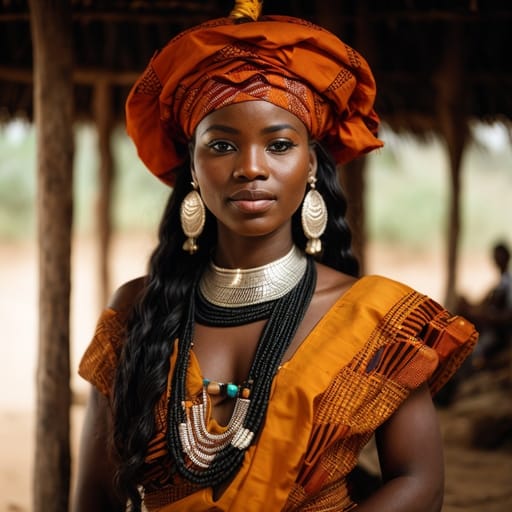
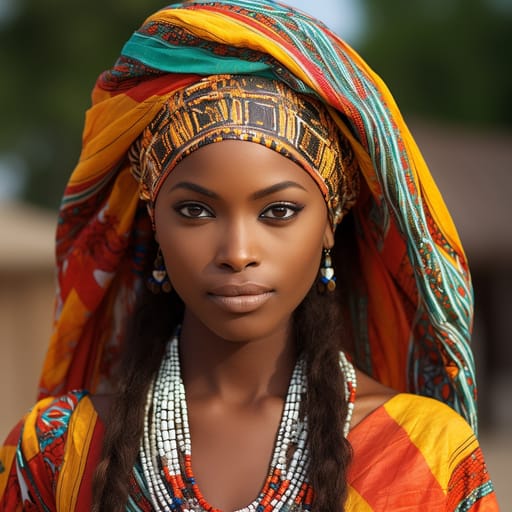
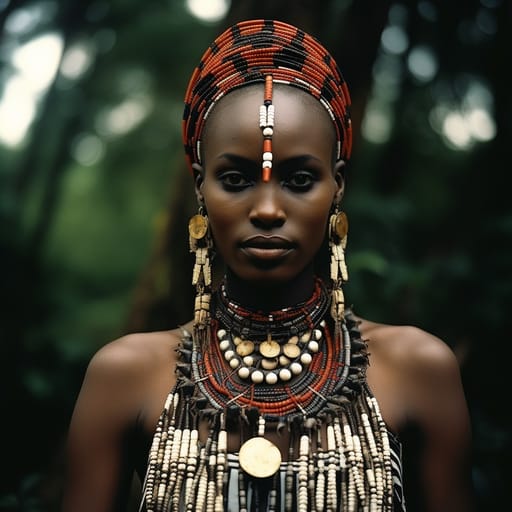
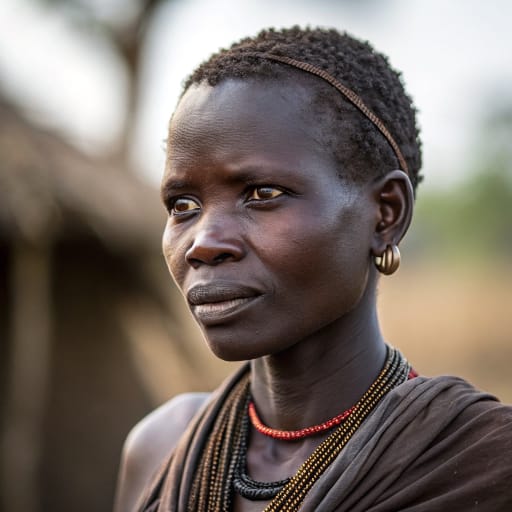
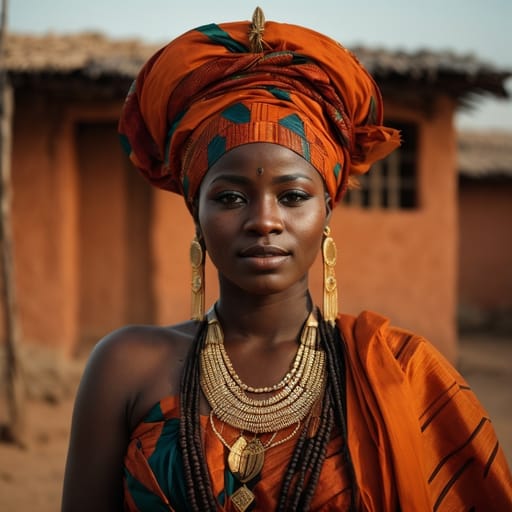
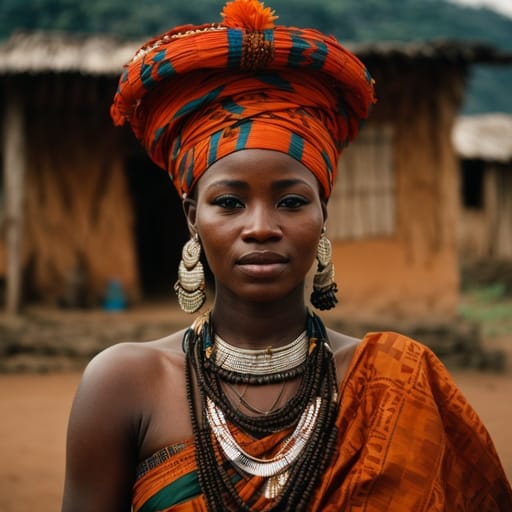
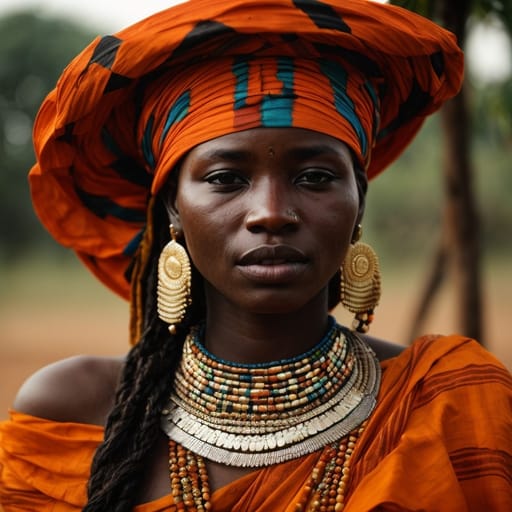
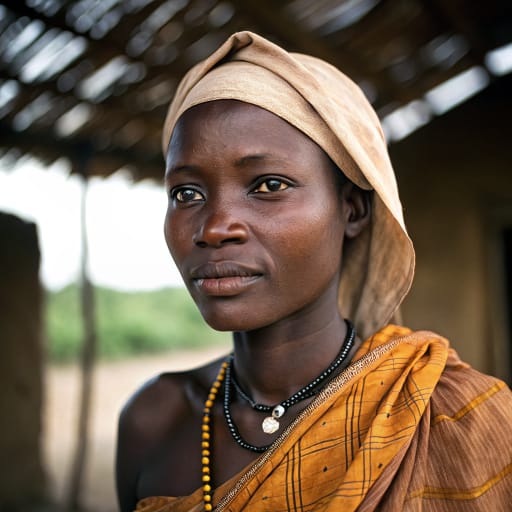
Typical Woyo Phenotypes
Reference for AI generation: hair, eyes, skin, facial structure, build
Woyo Body & Anatomy Reference
Anatomy by feature, Bantu / Central African Niger-Congo phenotype
Woyo Boobs & Breasts
Woyo tits and boobs run medium-to-large cup, full, projecting, the classic Bantu / Central African Niger-Congo bust profile. Woyo nipples and areolas show deep-brown areolar pigmentation against the deep-brown skin tone, with areolar diameter typically in the 32-48mm range and forward-set positioning rather than the smaller East African conical profile. Woyo breasts trend fuller projection than East African; comparable to West African norm, a function of the mesomorph with strong gluteal-femoral fat deposition body habitus and the mean adult female BMI 23-26. For anatomically accurate AI-generated Woyo nudes the render preserves the medium-to-large cup, full, projecting shape, 32-48mm areolas with deep-brown pigmentation, and the torso proportions of the Bantu / Central African Niger-Congo phenotype.
Woyo Ass & Hips
Woyo hips and butt usually read as full, projected, wide-set glutes. The skeletal base is broad iliac crests, gynoid pelvic pattern, the Bantu / Central African Niger-Congo pattern. Set against the slim narrow-hip Cushitic East African profile, the difference is easy to see, and the hip-to-waist ratio is often what identifies Woyo women in photos.
Woyo Vagina & Pussy
Expect deep-brown labial pigmentation, fuller labia minora on Woyo women, in keeping with Bantu / Central African Niger-Congo ancestry. The pubic hair is tightly-coiled coarse texture, dense distribution. Coloring should run evenly from the deep-brown skin of the thighs to the labia, and Woyo nude imagery should keep the hair's tightly-coiled coarse texture.
Woyo Dicks & Penis
Woyo dick and penile anatomy in adult AI generation should anchor on the regional reference data: regional mean ~14cm erect, above-average girth, and deep-brown shaft pigmentation. The Woyo cock profile reflects the Bantu / Central African Niger-Congo population's anthropometric measurements. The shaft pigmentation should track the surrounding deep-brown skin tone, and the pubic hair should keep its tightly-coiled coarse texture in the typical inverted-V escutcheon.
Woyo Body, Curves & Build
Woyo body type: mesomorph with strong gluteal-femoral fat deposition, with mean adult female BMI 23-26. This is the typical Bantu / Central African Niger-Congo build. Height range, shoulder-to-hip ratio and fat distribution all follow from it, which is what an accurate Woyo nude body should show.
Woyo Skin Tone & Hair Texture
Woyo skin tone falls in the deep-brown (Fitzpatrick VI) band, the surface signal most often miscalibrated by generic AI nude generators. Woyo hair texture is typically tight 4A-4C coil, characteristic of the Bantu / Central African Niger-Congo phenotype. In Woyo nude renders the skin should hold that band consistently across the body.
Explore phenotype categories
Structured taxonomy with peer-reviewed scales · 22 anatomical categories
Erotic Poses & Sex Positions
From the pose catalog: 219 named positions with reference skeletons
Frequently asked questions about Woyo people
Where is the Woyo homeland?
The Woyo homeland is Coast at and north of the Congo River mouth: Muanda territory in Kongo Central, Democratic Republic of the Congo, and Cabinda Province, Angola. in Central Africa.
What language do Woyo people speak?
Woyo people primarily speak Iwoyo (Kiwoyo), a Kikongo variety (Niger-Congo, Bantu); also French and Kituba in the DRC, Portuguese in Angola..
What religion do Woyo people practice?
The predominant religion among Woyo people is Mostly Christian, largely Roman Catholic, with older beliefs about ancestors and spirits still held alongside..






Make your own Woyo images
Five a day, free, no credits to buy. The studio starts from this group's phenotype data, so you can set body type, pose and style and keep the traits accurate.
Start with Woyo