No portrait yet
Nkundu Erotic
Équateur province, Democratic Republic of the Congo: the forest south and east of Mbandaka, along the Ruki and Momboyo rivers and toward Lake Tumba.
Lonkundo, the western variety of Lomongo (Bantu, Niger-Congo); Lingala is the regional lingua franca, and French is used in school and administration.
Christianity, Catholic and Protestant (notably Disciples of Christ), alongside respect for ancestors and forest spirits.
A major western branch of the Mongo peoples, closely related to the Ekonda, Ntomba and Bolia. Twa communities live attached to Nkundu villages.
About Nkundu People
The Nkundu, also spelled Nkundo, are forest people of the central Congo Basin and one of the largest branches of the wider Mongo family. Their country lies in Équateur province of the Democratic Republic of the Congo, south and east of the river port of Mbandaka, along the Ruki and Momboyo rivers and out toward Lake Tumba. It is flat, wet, heavily forested land, cut by blackwater streams, where the equator runs through the villages and a canoe is often more use than a road.
No king or state ever held the Nkundu together. A language and a story did. The language is Lonkundo, the western form of Lomongo, a Bantu tongue close enough to the speech of the neighboring Ekonda, Ntomba and Bolia that the borders between them blur. Lingala rules the river and the market in Mbandaka, but Lonkundo holds in the village. It also had a long run as a church and school language, because both the Catholic Sacred Heart fathers at Bamanya and the Protestant Disciples of Christ at Bolenge chose to work in it. Two of those priests, Gustaaf Hulstaert and Edmond Boelaert, spent decades recording it. The story is the epic of Lianja. His father dies fetching safou fruit for his pregnant wife. Lianja is born fully armed, avenges the death, and then leads his people toward the great river with his sister Nsongo. A good bard with a chorus can fill a night with it.
Daily life runs on cassava, plantain, oil palm, fishing and trapping. Villages are built from patrilineal lineages, and authority sits with elders rather than a paramount chief. Marriage traditionally joined two lineages through bridewealth handed over in stages, once in copper and brass valuables, now in cash and goods. Twa communities live alongside Nkundu villages in an old, unequal arrangement of hunting and labor owed to patron families, and the discrimination built into it is still a live grievance.
The worst rupture came with the Congo Free State. Forced rubber collection in the 1890s and 1900s brought hostage taking, flight into the forest and hunger, and sleeping sickness followed. For decades afterward births ran so low that colonial doctors and missionaries wrote openly about the Nkundu dying out. They did not. Numbers recovered from the middle of the twentieth century. Most Nkundu today are Christian, Catholic or Protestant, and many keep a working respect for ancestors, forest spirits and the healers who deal with them.
Related ethnic groups
Groups that share Nkundu's homeland, region, language, or religious tradition. These are likely candidates for comparative phenotype reference.
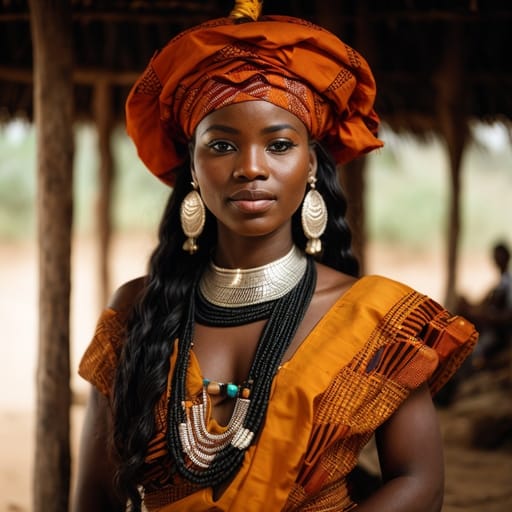
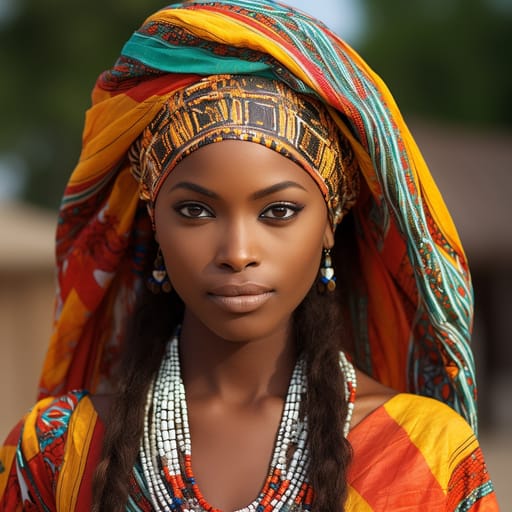
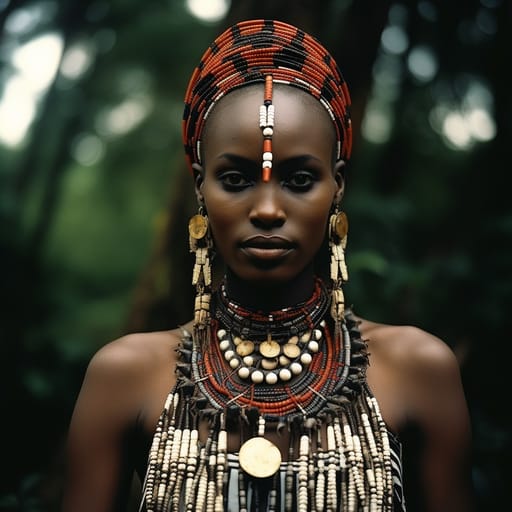
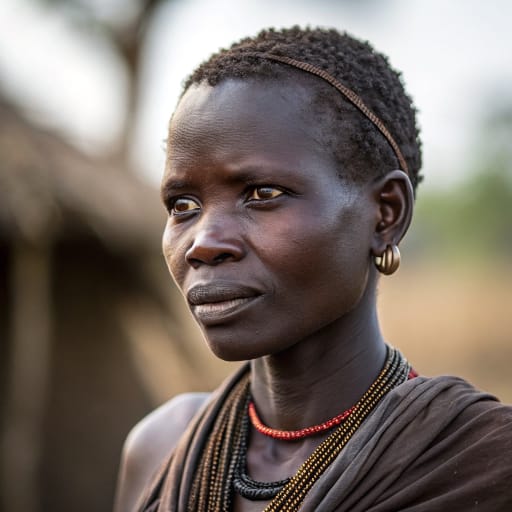
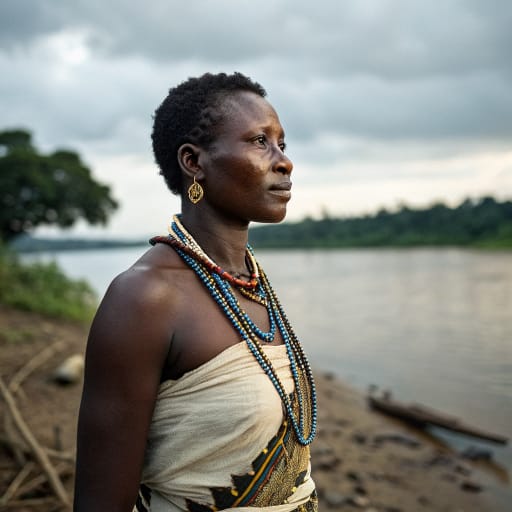
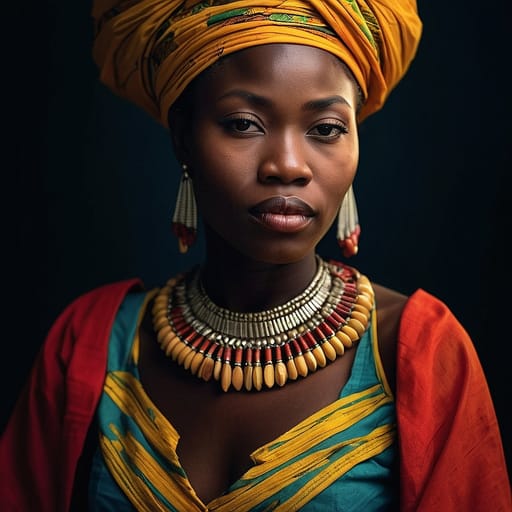
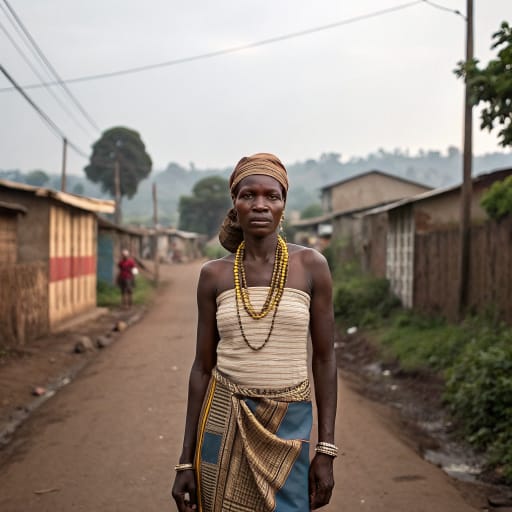
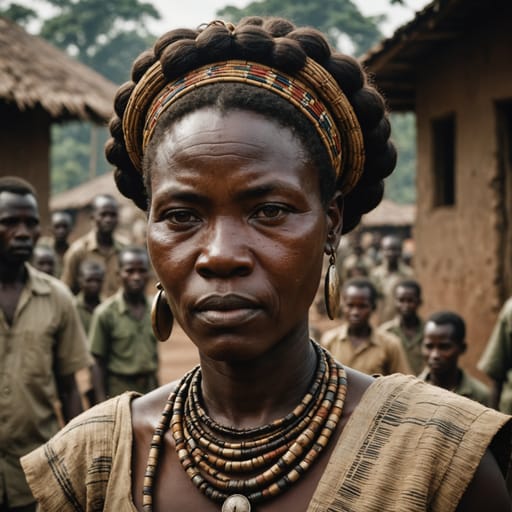
Typical Nkundu Phenotypes
Reference for AI generation: hair, eyes, skin, facial structure, build
Nkundu Body & Anatomy Reference
Anatomy by feature, Bantu / Central African Niger-Congo phenotype
Nkundu Boobs & Breasts
The typical Nkundu bust is medium-to-large cup, full, projecting, in line with the wider Bantu / Central African Niger-Congo pattern. Areolas usually fall in the 32-48mm range, with deep-brown areolar pigmentation against the deep-brown skin tone. Compared with the smaller East African conical profile, Nkundu breasts sit forward and are generally fuller projection than East African; comparable to West African norm. A faithful AI render of Nkundu tits keeps that shape and areola size.
Nkundu Ass & Hips
Butt shape among Nkundu women: full, projected, wide-set glutes, over broad iliac crests, gynoid pelvic pattern. This follows Bantu / Central African Niger-Congo ancestry and looks quite unlike the slim narrow-hip Cushitic East African profile. An accurate Nkundu ass in adult AI imagery keeps both the silhouette and the overall build (mesomorph with strong gluteal-femoral fat deposition) instead of a generic average.
Nkundu Vagina & Pussy
Vulvar anatomy among Nkundu women: deep-brown labial pigmentation, fuller labia minora. Pubic hair tends to be tightly-coiled coarse texture, dense distribution, in the usual inverted-triangle pattern. Both follow Bantu / Central African Niger-Congo pigmentation, which is why Nkundu pussy renders should not fall back on a pale, sparse Western template.
Nkundu Dicks & Penis
The Nkundu cock profile, from Bantu / Central African Niger-Congo anthropometric data: regional mean ~14cm erect; above-average girth; deep-brown shaft pigmentation. Pubic hair has a tightly-coiled coarse texture and forms the usual inverted-V pattern. Whether Nkundu men are circumcised follows religious and cultural practice rather than phenotype.
Nkundu Body, Curves & Build
Build and curves among Nkundu women follow the Bantu / Central African Niger-Congo pattern: mesomorph with strong gluteal-femoral fat deposition, mean adult female BMI 23-26. Proportions matter as much as skin tone, so Nkundu figures should keep their regional height and limb ratios.
Nkundu Skin Tone & Hair Texture
The Nkundu skin range is deep-brown (Fitzpatrick VI), and hair tends to be tight 4A-4C coil. That combination marks the Bantu / Central African Niger-Congo phenotype, and skin tone is the trait AI generators most often get wrong for Nkundu women.
Explore phenotype categories
Structured taxonomy with peer-reviewed scales · 22 anatomical categories
Erotic Poses & Sex Positions
From the pose catalog: 219 named positions with reference skeletons
Frequently asked questions about Nkundu people
Where is the Nkundu homeland?
The Nkundu homeland is Équateur province, Democratic Republic of the Congo: the forest south and east of Mbandaka, along the Ruki and Momboyo rivers and toward Lake Tumba. in Central Africa.
What language do Nkundu people speak?
Nkundu people primarily speak Lonkundo, the western variety of Lomongo (Bantu, Niger-Congo); Lingala is the regional lingua franca, and French is used in school and administration..
What religion do Nkundu people practice?
The predominant religion among Nkundu people is Christianity, Catholic and Protestant (notably Disciples of Christ), alongside respect for ancestors and forest spirits..






Make your own Nkundu images
Five a day, free, no credits to buy. The studio starts from this group's phenotype data, so you can set body type, pose and style and keep the traits accurate.
Start with Nkundu