Help us get this right
Does this portrait look right for Mpongwe?
Nobody has judged this one yet. You would be the first.
Mpongwe Erotic
The Gabon Estuary and the lower Komo River, around Libreville, Gabon.
Myene, Mpongwe dialect (Bantu, Niger-Congo)
Christianity, both Catholic and Protestant, coexisting with clan ritual and the Ndjembe women's society.
One of the Myene-speaking peoples, with the Orungu, Nkomi, Galwa, Adyumba and Enenga; part of the wider Bantu population of northwestern Central Africa. Internally organized by clan and, historically, by trading house.
About Mpongwe People
The Mpongwe are the people of the Gabon Estuary, the wide brackish mouth where the Komo River meets the Atlantic, and their history is essentially the history of that doorway. They settled the estuary's banks well before European ships arrived, and when the Portuguese, then the Dutch, English and French began working the coast, the Mpongwe made themselves the hinge. Little moved inland or out, ivory, dyewood, ebony, wax, captives, without passing through Mpongwe hands on Mpongwe terms. They rarely went into the forest themselves. They did not have to. They held the water.
They speak Myene, a Bantu language of the northwest, shared in dialect form with the Orungu, Nkomi, Galwa, Adyumba and Enenga, their close kin along the coast and the lower Ogooue. Myene sits apart from the Fang speech that now surrounds and vastly outnumbers it in Libreville. Society was organized by clan and by trading house: chiefs known to Europeans under working names, King Denis, King Louis, King Glass, ran compounds that were part household, part warehouse, part diplomatic post. Those names stuck to the ground. Quartier Louis and Glass are still Libreville neighborhoods, and Pointe Denis is still the spit of sand across the bay.
The treaties Mpongwe chiefs signed with French naval officers in 1839 and 1842 gave France its first real hold in Gabon. In 1849 the French put a shipload of liberated captives ashore on the estuary and named the settlement Libreville. The capital of the country sits on Mpongwe land, and the Mpongwe are a small minority in it. American Protestant missionaries reached Baraka in 1842 and Catholic priests followed two years later, so the Mpongwe were reading and writing early, which produced a clerk and interpreter class that carried weight in the colonial administration and later in the professions far out of proportion to its numbers. Epidemics, low birth rates and Fang migration cut those numbers hard across the nineteenth and twentieth centuries.
Christianity is near universal now, Catholic and Protestant both, and it runs alongside older practice rather than having erased it. Ndjembe, the women's society that nineteenth century missionaries wrote about with visible frustration because they could not get inside it, has not disappeared. Myene is the fragile thing: French is the working language of the city the Mpongwe built the ground under.
Related ethnic groups
Groups that share Mpongwe's homeland, region, language, or religious tradition. These are likely candidates for comparative phenotype reference.
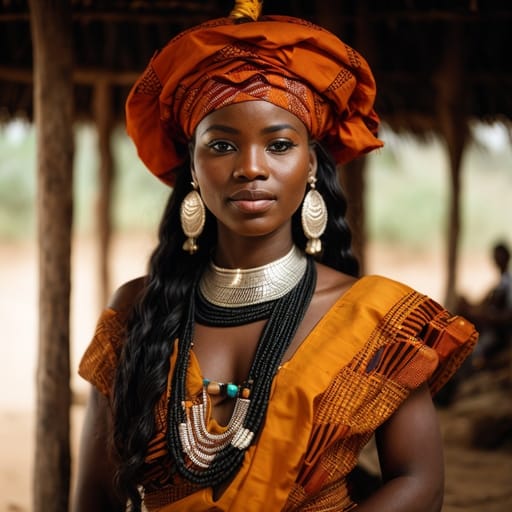
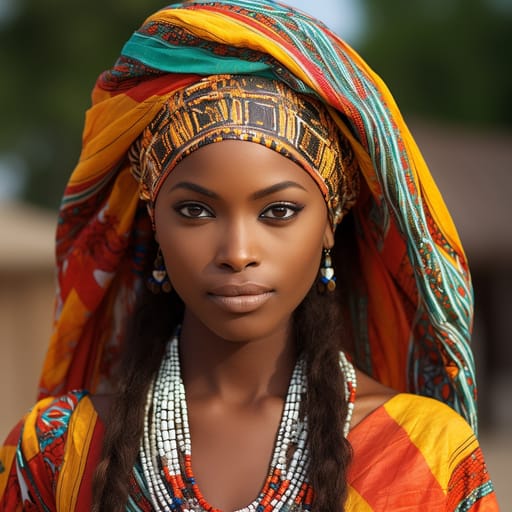
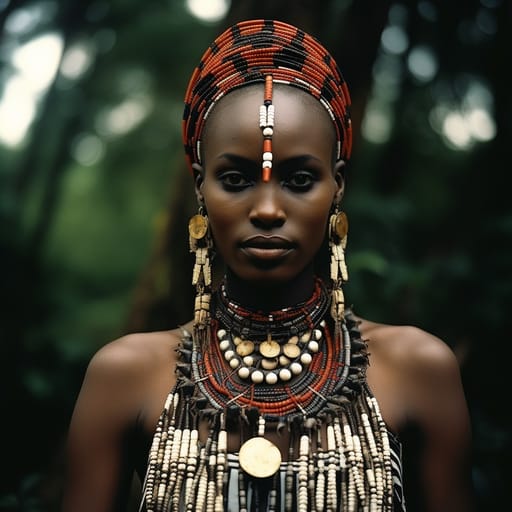
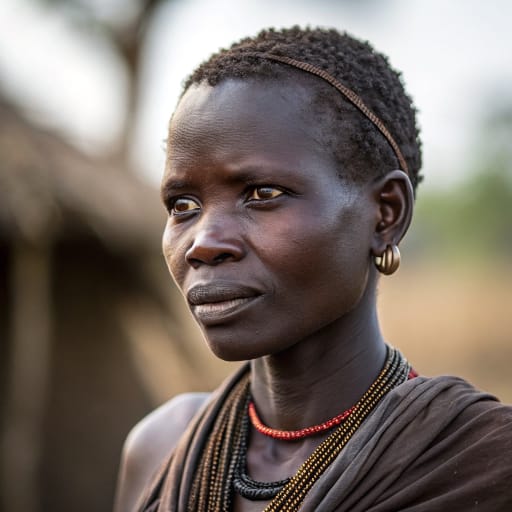
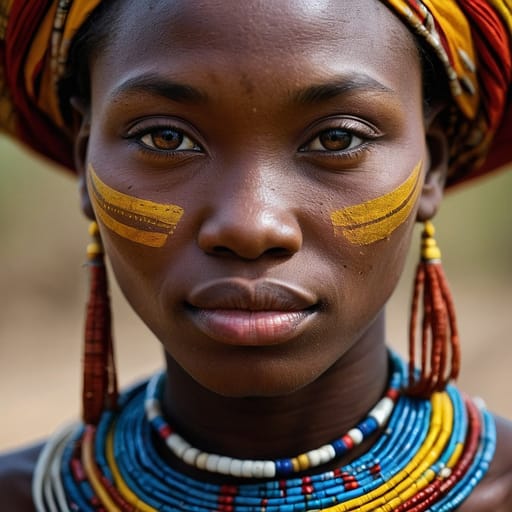
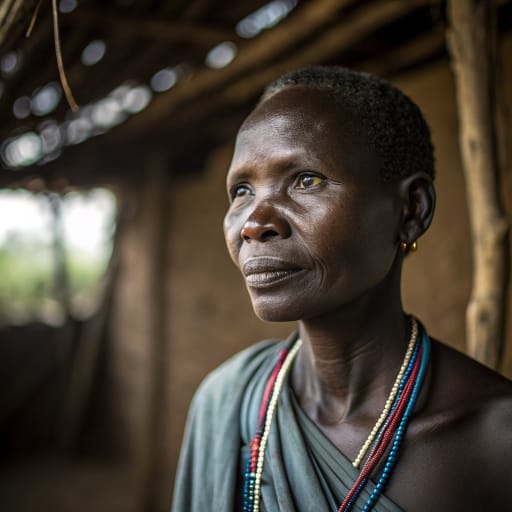
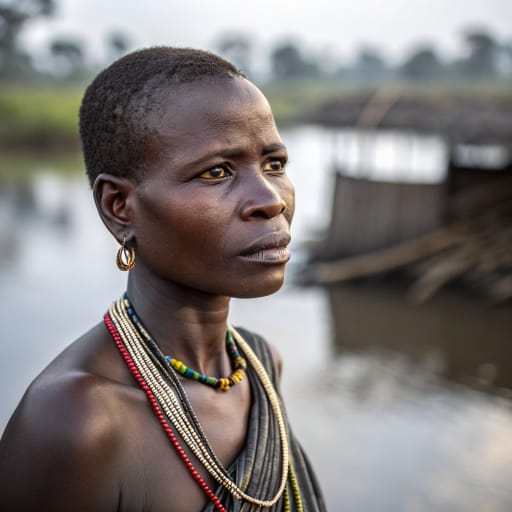
Typical Mpongwe Phenotypes
Reference for AI generation: hair, eyes, skin, facial structure, build
Mpongwe Body & Anatomy Reference
Bantu / Central African Niger-Congo phenotype: anatomy reference for AI nude generation
Mpongwe Boobs & Breasts
The typical Mpongwe bust is medium-to-large cup, full, projecting, in line with the wider Bantu / Central African Niger-Congo pattern. Areolas usually fall in the 32-48mm range, with deep-brown areolar pigmentation against the deep-brown skin tone. Compared with the smaller East African conical profile, Mpongwe breasts sit forward and are generally fuller projection than East African; comparable to West African norm. A faithful AI render of Mpongwe tits keeps that shape and areola size.
Mpongwe Ass & Hips
Butt shape among Mpongwe women: full, projected, wide-set glutes, over broad iliac crests, gynoid pelvic pattern. This follows Bantu / Central African Niger-Congo ancestry and looks quite unlike the slim narrow-hip Cushitic East African profile. An accurate Mpongwe ass in adult AI imagery keeps both the silhouette and the overall build (mesomorph with strong gluteal-femoral fat deposition) instead of a generic average.
Mpongwe Vagina & Pussy
Vulvar anatomy among Mpongwe women: deep-brown labial pigmentation, fuller labia minora. Pubic hair tends to be tightly-coiled coarse texture, dense distribution, in the usual inverted-triangle pattern. Both follow Bantu / Central African Niger-Congo pigmentation, which is why Mpongwe pussy renders should not fall back on a pale, sparse Western template.
Mpongwe Dicks & Penis
The Mpongwe cock profile, from Bantu / Central African Niger-Congo anthropometric data: regional mean ~14cm erect; above-average girth; deep-brown shaft pigmentation. Pubic hair has a tightly-coiled coarse texture and forms the usual inverted-V pattern. Whether Mpongwe men are circumcised follows religious and cultural practice rather than phenotype.
Mpongwe Body, Curves & Build
Build and curves among Mpongwe women follow the Bantu / Central African Niger-Congo pattern: mesomorph with strong gluteal-femoral fat deposition, mean adult female BMI 23-26. Proportions matter as much as skin tone, so Mpongwe figures should keep their regional height and limb ratios.
Mpongwe Skin Tone & Hair Texture
The Mpongwe skin range is deep-brown (Fitzpatrick VI), and hair tends to be tight 4A-4C coil. That combination marks the Bantu / Central African Niger-Congo phenotype, and skin tone is the trait AI generators most often get wrong for Mpongwe women.
Explore phenotype categories
Structured taxonomy with peer-reviewed scales · 22 anatomical categories
Erotic Poses & Sex Positions
From the pose catalog: 219 named positions with reference skeletons
Frequently asked questions about Mpongwe people
Where is the Mpongwe homeland?
The Mpongwe homeland is The Gabon Estuary and the lower Komo River, around Libreville, Gabon. in Central Africa.
What language do Mpongwe people speak?
Mpongwe people primarily speak Myene, Mpongwe dialect (Bantu, Niger-Congo).
What religion do Mpongwe people practice?
The predominant religion among Mpongwe people is Christianity, both Catholic and Protestant, coexisting with clan ritual and the Ndjembe women's society..






Make your own Mpongwe images
Five a day, free, no credits to buy. The studio starts from this group's phenotype data, so you can set body type, pose and style and keep the traits accurate.
Start with Mpongwe