Help us get this right
Does this portrait look right for Banyamulenge?
Nobody has judged this one yet. You would be the first.
Banyamulenge Erotic
The high plateaus of South Kivu, in Uvira, Fizi and Mwenga territories, eastern Democratic Republic of the Congo, with large refugee and displaced communities in Burundi, Rwanda, Kenya and further abroad.
Kinyamulenge, a variety of Kinyarwanda (Niger-Congo, Bantu, Rwanda-Rundi); Swahili as the regional lingua franca and French as the national language.
Predominantly Christian, with a strong Pentecostal presence and a Catholic minority.
Kinyarwanda-speaking Tutsi of eastern Congo; part of the wider Banyarwanda population of the Kivus, and distinct from the Banyarwanda of North Kivu.
About Banyamulenge People
The Banyamulenge are cattle people of the high plateau, and most of their situation follows from that. Their country is the grassland above the Itombwe forest in South Kivu, in the far east of the Democratic Republic of the Congo, spread across the territories of Uvira, Fizi and Mwenga at altitudes where the nights are cold and the tsetse fly cannot live. That last detail is the reason they are there at all. Herders moving west out of what is now Rwanda and Burundi, in waves through the eighteenth and nineteenth centuries, found pasture their long-horned cattle could survive on, well above the valleys where Bembe, Fuliiru and Vira farmers had their fields. The name is much younger than the settlement: Mulenge is a locality near Uvira, and the community took it up collectively around the 1970s as a deliberate act of self-definition, a name that says we are from here and here is Congo.
That claim is the central fact of their lives, because other Congolese have not always granted it. Their citizenship has been legislated away and back: a 1972 law recognized long-resident families of Rwandan and Burundian origin as Congolese, a 1981 law revoked it, and in October 1996 provincial authorities in South Kivu ordered them out of the country within a week, an order that helped detonate the First Congo War. Banyamulenge fighters were central to the rebellions of 1996 and 1998, which hardened a suspicion still common in Congo that they answer to Kigali; the 2002 revolt of Patrick Masunzu against the Rwandan-backed RCD, fought from the plateau itself, is one of the more direct answers to that. In 2004, around 160 Banyamulenge refugees, most of them women and children, were killed in a single night at the Gatumba transit camp in Burundi. Since 2017 the plateau has been at war again, villages burned and herds destroyed on all sides. Underneath the politics the ordinary life is legible enough. They speak Kinyamulenge, close enough to Kinyarwanda and Kirundi for mutual understanding, with Bembe, Fuliiru and Swahili worked through it. Most are Christian and a large share Pentecostal, a legacy of Swedish mission work around Uvira from the 1920s, and the churches now function as the community's strongest organizing structure, especially in exile. Cattle remain wealth, bridewealth and the ordinary currency of obligation between families, a running record of who owes what to whom, which is why a raided herd registers as something nearer to erasure than to theft.
Related ethnic groups
Groups that share Banyamulenge's homeland, region, language, or religious tradition. These are likely candidates for comparative phenotype reference.
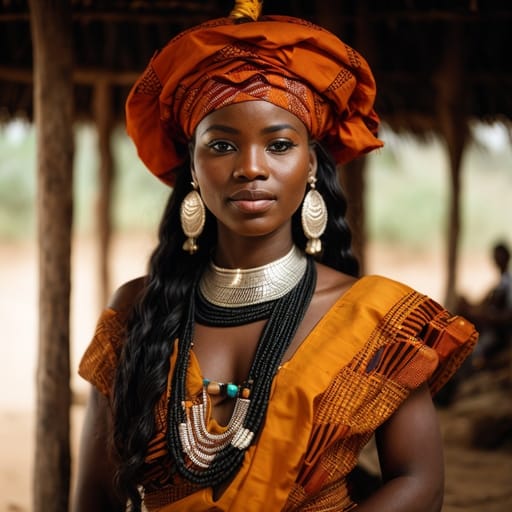
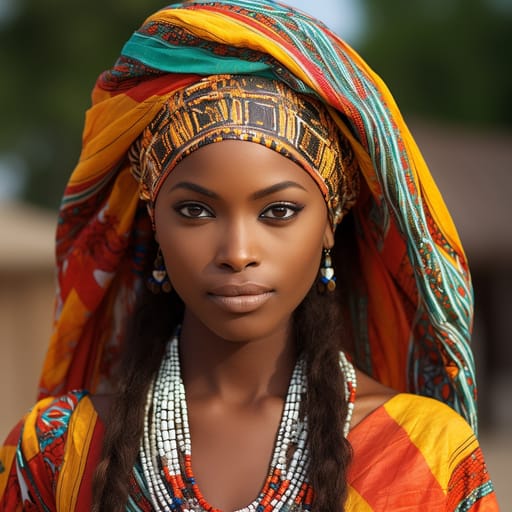
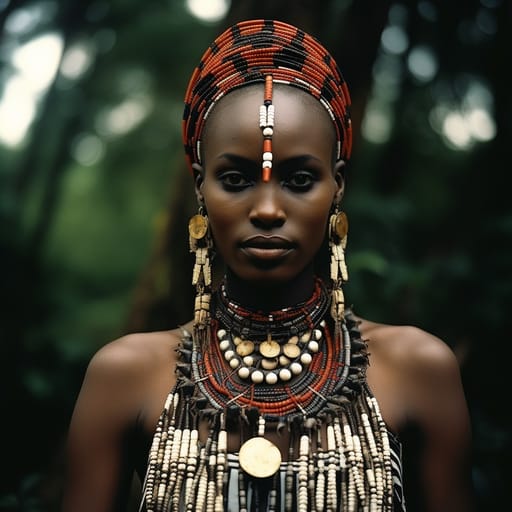
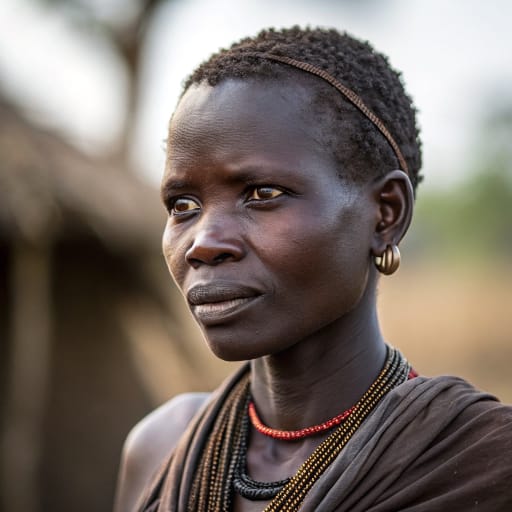
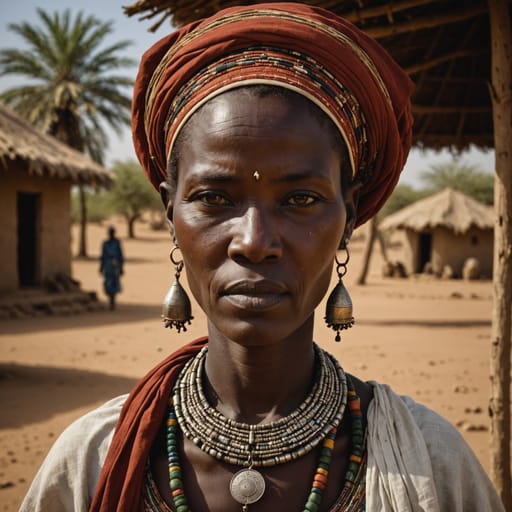
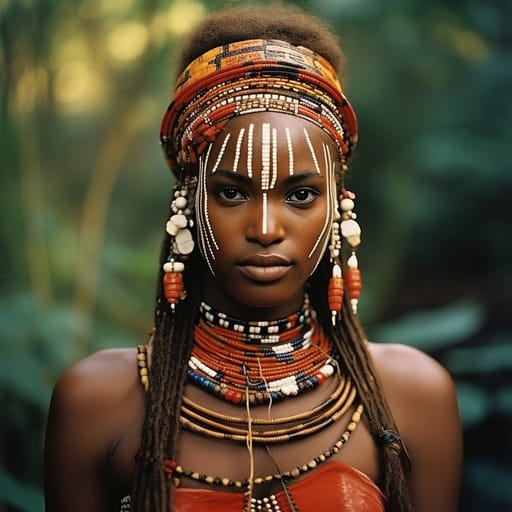
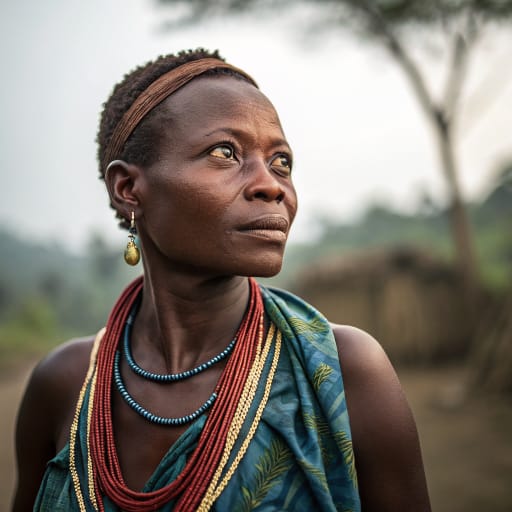
Typical Banyamulenge Phenotypes
Reference for AI generation: hair, eyes, skin, facial structure, build
Banyamulenge Body & Anatomy Reference
Per-feature anatomical profile for AI nude generation: Bantu / Central African Niger-Congo phenotype
Banyamulenge Boobs & Breasts
Banyamulenge boobs follow the Bantu / Central African Niger-Congo profile: medium-to-large cup, full, projecting. Areolar diameter is usually 32-48mm, and the coloring is deep-brown areolar pigmentation against the deep-brown skin tone. Breast shape tracks body composition (mesomorph with strong gluteal-femoral fat deposition, mean adult female BMI 23-26), so Banyamulenge breasts tend to be fuller projection than East African; comparable to West African norm. Expect a forward-set shape, not the smaller East African conical profile.
Banyamulenge Ass & Hips
Banyamulenge ass and hip morphology presents as full, projected, wide-set glutes, distinctly different from the slim narrow-hip Cushitic East African profile. The Banyamulenge pelvic profile shows broad iliac crests, gynoid pelvic pattern, anchored in the Bantu / Central African Niger-Congo skeletal pattern. Banyamulenge butt shots in adult AI imagery should render the full, projected, wide-set glutes silhouette with the overall build (mesomorph with strong gluteal-femoral fat deposition) and the fat distribution typical of the Bantu / Central African Niger-Congo phenotype.
Banyamulenge Vagina & Pussy
Banyamulenge pussy anatomy typically shows deep-brown labial pigmentation, fuller labia minora. Pubic hair is usually tightly-coiled coarse texture, dense distribution. In AI-generated Banyamulenge nudes, labial color should blend into the deep-brown skin with a gradual transition, and the hair should keep its tightly-coiled coarse texture.
Banyamulenge Dicks & Penis
Penis reference for Banyamulenge men: regional mean ~14cm erect, above-average girth. Coloring: deep-brown shaft pigmentation. An accurate Banyamulenge cock in AI imagery matches the surrounding deep-brown skin rather than a generic porn default. Circumcision depends on religion and custom, not ancestry.
Banyamulenge Body, Curves & Build
The Banyamulenge figure is generally mesomorph with strong gluteal-femoral fat deposition, with mean adult female BMI 23-26, characteristic of Bantu / Central African Niger-Congo ancestry. AI image tools tend to flatten regional body types into a few stock shapes; here the Banyamulenge build is kept as its own reference.
Banyamulenge Skin Tone & Hair Texture
Skin: deep-brown (Fitzpatrick VI). Hair: tight 4A-4C coil. Both are typical of Bantu / Central African Niger-Congo ancestry. The most common mistake in AI nudes of Banyamulenge women is a body rendered lighter than the face.
Explore phenotype categories
Structured taxonomy with peer-reviewed scales · 22 anatomical categories
Erotic Poses & Sex Positions
From the pose catalog: 219 named positions with reference skeletons
Frequently asked questions about Banyamulenge people
Where is the Banyamulenge homeland?
The Banyamulenge homeland is The high plateaus of South Kivu, in Uvira, Fizi and Mwenga territories, eastern Democratic Republic of the Congo, with large refugee and displaced communities in Burundi, Rwanda, Kenya and further abroad. in Central Africa.
What language do Banyamulenge people speak?
Banyamulenge people primarily speak Kinyamulenge, a variety of Kinyarwanda (Niger-Congo, Bantu, Rwanda-Rundi); Swahili as the regional lingua franca and French as the national language..
What religion do Banyamulenge people practice?
The predominant religion among Banyamulenge people is Predominantly Christian, with a strong Pentecostal presence and a Catholic minority..






Make your own Banyamulenge images
Five a day, free, no credits to buy. The studio starts from this group's phenotype data, so you can set body type, pose and style and keep the traits accurate.
Start with Banyamulenge