No portrait yet
Weapemeoc Erotic
North shore of Albemarle Sound in northeastern North Carolina, United States, roughly today's Currituck, Camden, Pasquotank and Perquimans counties
Carolina Algonquian, now extinct (Algonquian, Eastern Algonquian branch)
Traditional Carolina Algonquian religion: many gods, carved images kept in temples, priests, belief in an afterlife
Carolina Algonquian peoples; later colonial records name the Yeopim, Perquimans, Pasquotank and Poteskeet as their communities
About Weapemeoc People
The Weapemeoc were an Algonquian-speaking people who held the north shore of Albemarle Sound, in what is now northeastern North Carolina, when English colonists first wrote about them in the 1580s. By the early 1700s they had shrunk to a few small bands, and their descendants were absorbed into neighboring Native communities and the colonial population. Their country was low and wet, cut by rivers draining south into the sound, and their towns stayed close to the water. They spoke a Carolina Algonquian dialect closely related to the speech of the Roanoke, Secotan and Chowanoc, at the southern edge of the Eastern Algonquian world. To the west and northwest lived Iroquoian speakers, among them the Tuscarora, Meherrin and Nottoway, so the Weapemeoc lived right against a language frontier. Like their neighbors, they planted maize, beans and squash, fished the rivers and the sound with weirs, and hunted deer in the woods behind their fields. Thomas Harriot studied the coastal Algonquians for the Roanoke venture. He described a religion of many gods, carved images kept in temple houses, priests who spoke for those gods, and a soul that faced reward or punishment after death. His account is the best guide there is to Weapemeoc belief, since no one recorded their own ceremonies separately.
From Weapemeoc to Yeopim
Ralph Lane's account of the Roanoke colony of 1585 to 1586 names Okisco as the Weapemeoc leader. It shows him choosing his position carefully between the English and powerful neighbors such as Menatonon of the Chowanoc. The Roanoke colony failed. Lasting English settlement came later and overland, as Virginians pushed south into the Albemarle country in the 1650s. By then the English called the local people Yeopim, and records also name related communities as the Perquimans, Pasquotank and Poteskeet. In the early 1660s a Yeopim leader signed a deed to the settler George Durant, one of the oldest recorded land transfers in North Carolina. It began a steady handover of Weapemeoc land into colonial hands, and disease and displacement did the rest. When John Lawson listed the colony's Native peoples in the early 1700s, these communities were only small remnant villages. As a distinct people they did not outlast the colonial era, but the map still carries them: the Pasquotank, Perquimans and Yeopim rivers, and two counties, keep names drawn from Weapemeoc communities.
Related ethnic groups
Groups that share Weapemeoc's homeland, region, language, or religious tradition. These are likely candidates for comparative phenotype reference.
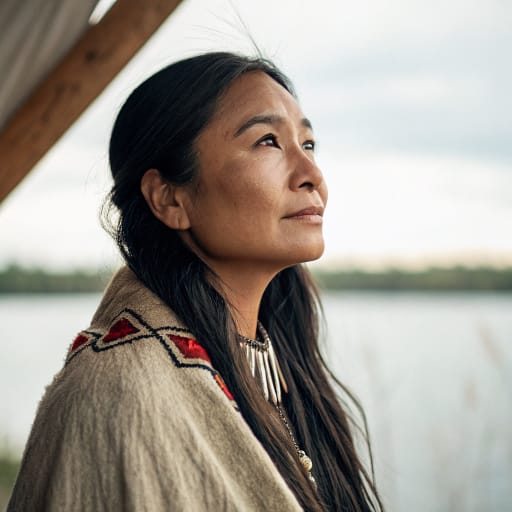
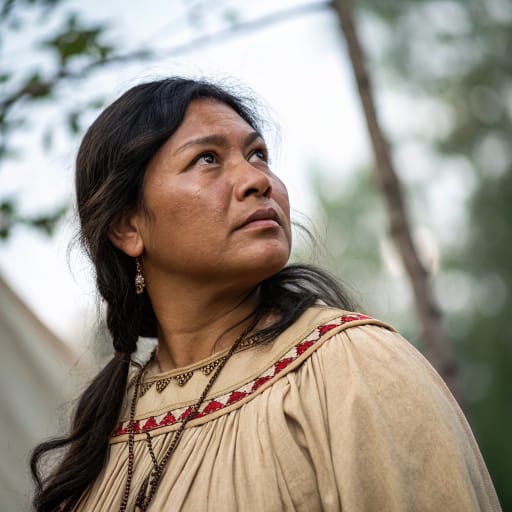
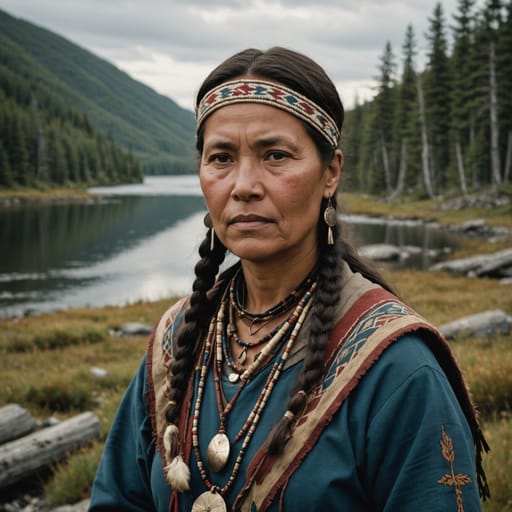
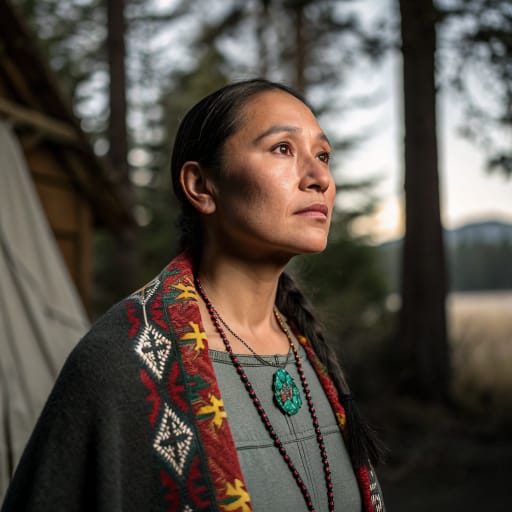
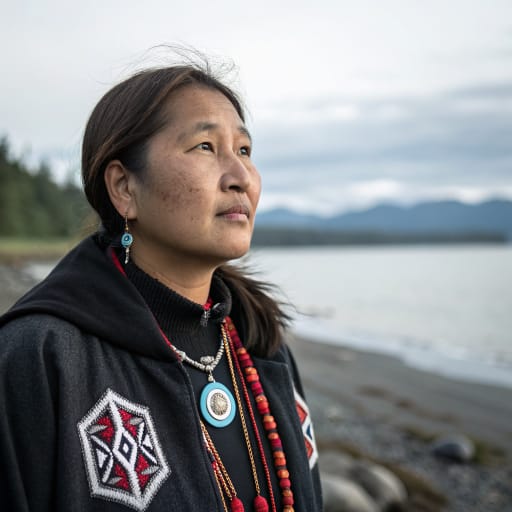
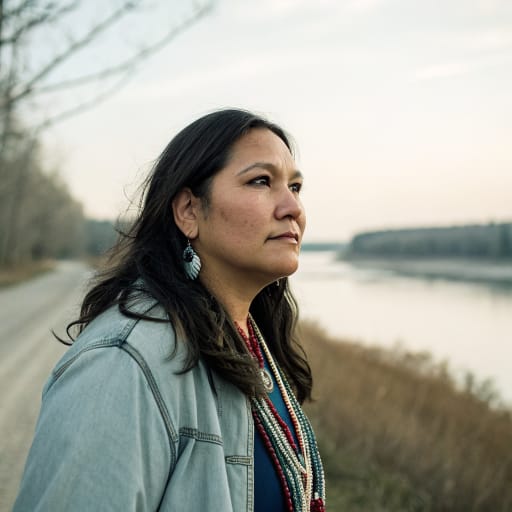
Typical Weapemeoc Phenotypes
Reference for AI generation: hair, eyes, skin, facial structure, build
Weapemeoc Body & Anatomy Reference
Anatomy by feature, Indigenous Northern American / Algonquian-Iroquoian phenotype
Weapemeoc Boobs & Breasts
Weapemeoc tits and boobs run medium cup, moderate projection, the classic Indigenous Northern American / Algonquian-Iroquoian bust profile. Weapemeoc nipples and areolas show medium-brown areolar pigmentation against the copper-to-medium-brown skin tone, with areolar diameter typically in the 30-44mm range and forward-set positioning rather than the smaller East Asian bust. Weapemeoc breasts trend full and moderate projection, a function of the mesomorph, broader frame in northern Indigenous populations body habitus and the mean adult female BMI 25-28. For anatomically accurate AI-generated Weapemeoc nudes the render preserves the medium cup, moderate projection shape, 30-44mm areolas with medium-brown pigmentation, and the torso proportions of the Indigenous Northern American / Algonquian-Iroquoian phenotype.
Weapemeoc Ass & Hips
Weapemeoc hips and butt usually read as medium, moderate-to-full projection. The skeletal base is medium iliac crests, the Indigenous Northern American / Algonquian-Iroquoian pattern. Set against the slim East Asian narrow-hip profile, the difference is easy to see, and the hip-to-waist ratio is often what identifies Weapemeoc women in photos.
Weapemeoc Vagina & Pussy
Expect medium-brown labial pigmentation on Weapemeoc women, in keeping with Indigenous Northern American / Algonquian-Iroquoian ancestry. The pubic hair is straight medium-coarse texture. Coloring should run evenly from the copper to medium-brown skin of the thighs to the labia, and Weapemeoc nude imagery should keep the hair's straight medium-coarse texture.
Weapemeoc Dicks & Penis
Weapemeoc dick and penile anatomy in adult AI generation should anchor on the regional reference data: regional mean ~13cm erect, moderate girth, and medium-brown shaft pigmentation. The Weapemeoc cock profile reflects the Indigenous Northern American / Algonquian-Iroquoian population's anthropometric measurements. The shaft pigmentation should track the surrounding copper to medium-brown skin tone, and the pubic hair should keep its straight medium-coarse texture in the typical inverted-V escutcheon.
Weapemeoc Body, Curves & Build
Weapemeoc body type: mesomorph, broader frame in northern Indigenous populations, with mean adult female BMI 25-28. This is the typical Indigenous Northern American / Algonquian-Iroquoian build. Height range, shoulder-to-hip ratio and fat distribution all follow from it, which is what an accurate Weapemeoc nude body should show.
Weapemeoc Skin Tone & Hair Texture
Weapemeoc skin tone falls in the copper to medium-brown (Fitzpatrick III-V) band, the surface signal most often miscalibrated by generic AI nude generators. Weapemeoc hair texture is typically straight 1A, dark-brown to black, often thick and dense, characteristic of the Indigenous Northern American / Algonquian-Iroquoian phenotype. In Weapemeoc nude renders the skin should hold that band consistently across the body.
Explore phenotype categories
Structured taxonomy with peer-reviewed scales · 22 anatomical categories
Erotic Poses & Sex Positions
From the pose catalog: 219 named positions with reference skeletons
Frequently asked questions about Weapemeoc people
Where is the Weapemeoc homeland?
The Weapemeoc homeland is North shore of Albemarle Sound in northeastern North Carolina, United States, roughly today's Currituck, Camden, Pasquotank and Perquimans counties in North America.
What language do Weapemeoc people speak?
Weapemeoc people primarily speak Carolina Algonquian, now extinct (Algonquian, Eastern Algonquian branch).
What religion do Weapemeoc people practice?
The predominant religion among Weapemeoc people is Traditional Carolina Algonquian religion: many gods, carved images kept in temples, priests, belief in an afterlife.






Make your own Weapemeoc images
Five a day, free, no credits to buy. The studio starts from this group's phenotype data, so you can set body type, pose and style and keep the traits accurate.
Start with Weapemeoc