Help us get this right
Does this portrait look right for Wolastoqiyik?
One tap. It takes a second and it is recorded.
1 says it looks right, 0 say it looks off.
Wolastoqiyik Erotic
The Saint John River (Wolastoq) valley of New Brunswick, with communities in Quebec and northern Maine, Canada and the United States
Wolastoqey, also written Maliseet, a dialect of Passamaquoddy-Maliseet (Eastern Algonquian, Algic); English and French in daily use
Predominantly Roman Catholic since seventeenth-century French missions, alongside revived Wabanaki ceremonial practice
One of the five nations of the Wabanaki Confederacy, paired most closely with the Passamaquoddy; communities include Neqotkuk (Tobique), Sitansisk (St. Mary's), Pilick (Kingsclear), Welamukotuk (Oromocto), Wotstak (Woodstock) and Madawaska in New Brunswic
About Wolastoqiyik People
The name is a location. Wolastoq is the river the maps call the Saint John, and Wolastoqiyik means the people who belong to it: more than four hundred miles of water running out of northern Maine, through New Brunswick, into the Bay of Fundy. The river was not scenery. It was the road, the calendar and the pantry, and every winter hunting territory and summer village was described by its position on the water. Most outside references still call them Maliseet, which is not their word at all. It came from Mi'kmaq neighbors and carried a mild insult, something on the order of "talks badly," because Wolastoqey sounded to Mi'kmaq speakers like their own language spoken wrong. It stuck for three hundred years and is now being set aside. Wolastoqey is Eastern Algonquian and sits so close to Passamaquoddy that linguists generally handle the two as dialects of a single language. It is verb-driven and heavily built, sorting the world into animate and inanimate rather than masculine and feminine. Fluent speakers are counted in the hundreds now, most of them elders, and a shared dictionary project and school immersion programs are the counterweight.
They farmed as well as hunted, which set them apart from most of their northern neighbors. Corn, beans and squash grew in the intervale soils of the upper valley near the northern limit of the crop, and the harvest sat alongside spring runs of salmon and sturgeon and winter moose. Birchbark canoes carried families up the Wolastoq to portages that opened onto the St. Lawrence, making the nation a hinge between the French north and the Atlantic coast. They are one of the five nations of the Wabanaki Confederacy, with the Mi'kmaq, Passamaquoddy, Penobscot and Abenaki. Jesuit missions arrived in the 1600s and Catholicism took hold and stayed, layered over older practice rather than cleanly replacing it. The Peace and Friendship treaties signed with the British between the 1720s and 1760s surrendered no land, a point Canadian courts have since had to reckon with, and a Wolastoqey title claim filed in 2020 covers a large share of New Brunswick. Two modern injuries stand out: the Loyalist influx after 1783, which took the lower river, and the Mactaquac Dam of 1968, which drowned village land and ended the salmon. Brown ash basketry, the most recognizable Wolastoqey craft, is now threatened by the emerald ash borer killing the trees it depends on.
Related ethnic groups
Groups that share Wolastoqiyik's homeland, region, language, or religious tradition. These are likely candidates for comparative phenotype reference.
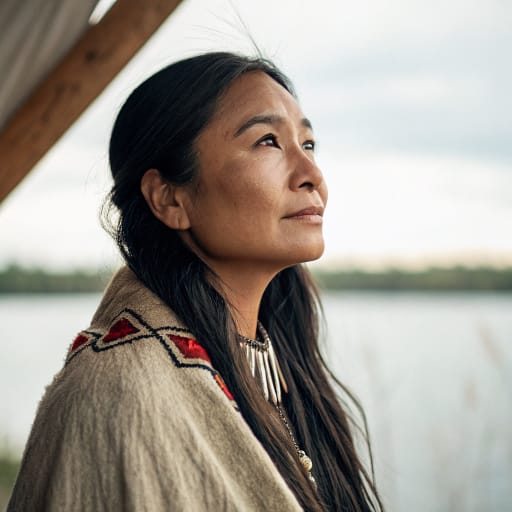
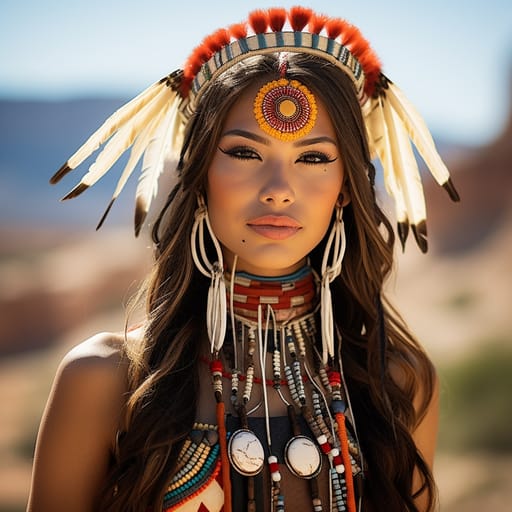
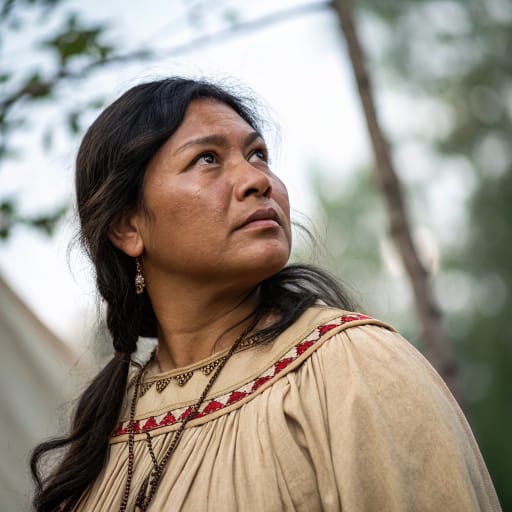
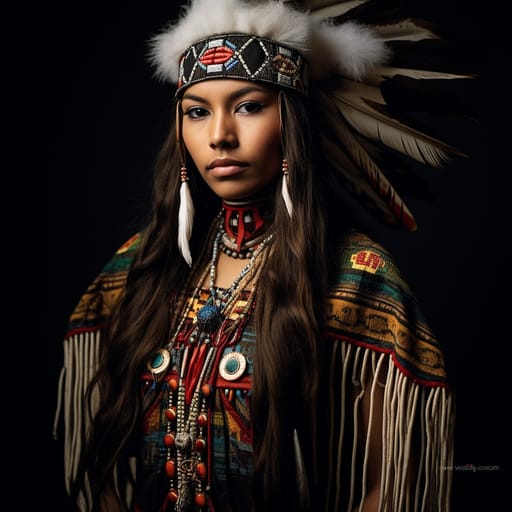
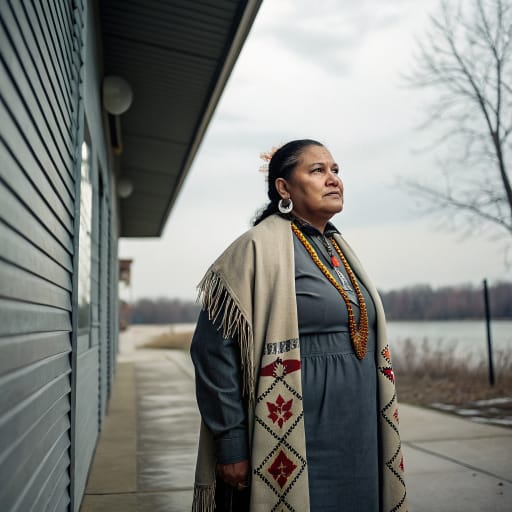
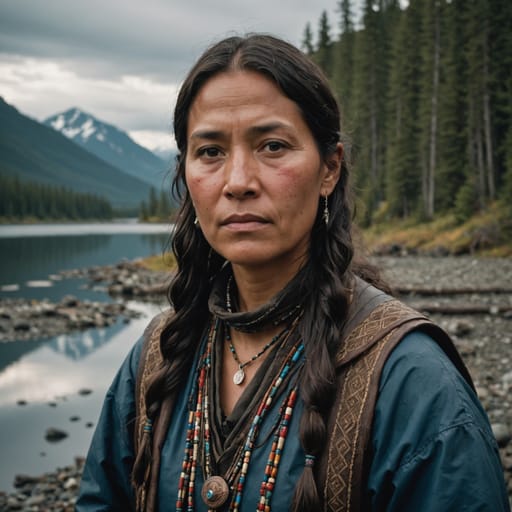
Typical Wolastoqiyik Phenotypes
Reference for AI generation: hair, eyes, skin, facial structure, build
Wolastoqiyik Body & Anatomy Reference
Anatomy by feature, Indigenous Northern American / Algonquian-Iroquoian phenotype
Wolastoqiyik Boobs & Breasts
Wolastoqiyik boobs follow the Indigenous Northern American / Algonquian-Iroquoian profile: medium cup, moderate projection. Areolar diameter is usually 30-44mm, and the coloring is medium-brown areolar pigmentation against the copper-to-medium-brown skin tone. Breast shape tracks body composition (mesomorph, broader frame in northern Indigenous populations, mean adult female BMI 25-28), so Wolastoqiyik breasts tend to be full and moderate projection. Expect a forward-set shape, not the smaller East Asian bust.
Wolastoqiyik Ass & Hips
Wolastoqiyik ass and hip morphology presents as medium, moderate-to-full projection, distinctly different from the slim East Asian narrow-hip profile. The Wolastoqiyik pelvic profile shows medium iliac crests, anchored in the Indigenous Northern American / Algonquian-Iroquoian skeletal pattern. Wolastoqiyik butt shots in adult AI imagery should render the medium, moderate-to-full projection silhouette with the overall build (mesomorph, broader frame in northern Indigenous populations) and the fat distribution typical of the Indigenous Northern American / Algonquian-Iroquoian phenotype.
Wolastoqiyik Vagina & Pussy
Wolastoqiyik pussy anatomy typically shows medium-brown labial pigmentation. Pubic hair is usually straight medium-coarse texture. In AI-generated Wolastoqiyik nudes, labial color should blend into the copper to medium-brown skin with a gradual transition, and the hair should keep its straight medium-coarse texture.
Wolastoqiyik Dicks & Penis
Penis reference for Wolastoqiyik men: regional mean ~13cm erect, moderate girth. Coloring: medium-brown shaft pigmentation. An accurate Wolastoqiyik cock in AI imagery matches the surrounding copper to medium-brown skin rather than a generic porn default. Circumcision depends on religion and custom, not ancestry.
Wolastoqiyik Body, Curves & Build
The Wolastoqiyik figure is generally mesomorph, broader frame in northern Indigenous populations, with mean adult female BMI 25-28, characteristic of Indigenous Northern American / Algonquian-Iroquoian ancestry. AI image tools tend to flatten regional body types into a few stock shapes; here the Wolastoqiyik build is kept as its own reference.
Wolastoqiyik Skin Tone & Hair Texture
Skin: copper to medium-brown (Fitzpatrick III-V). Hair: straight 1A, dark-brown to black, often thick and dense. Both are typical of Indigenous Northern American / Algonquian-Iroquoian ancestry. The most common mistake in AI nudes of Wolastoqiyik women is a body rendered lighter than the face.
Explore phenotype categories
Structured taxonomy with peer-reviewed scales · 22 anatomical categories
Erotic Poses & Sex Positions
From the pose catalog: 219 named positions with reference skeletons
Frequently asked questions about Wolastoqiyik people
Where is the Wolastoqiyik homeland?
The Wolastoqiyik homeland is The Saint John River (Wolastoq) valley of New Brunswick, with communities in Quebec and northern Maine, Canada and the United States in North America.
What language do Wolastoqiyik people speak?
Wolastoqiyik people primarily speak Wolastoqey, also written Maliseet, a dialect of Passamaquoddy-Maliseet (Eastern Algonquian, Algic); English and French in daily use.
What religion do Wolastoqiyik people practice?
The predominant religion among Wolastoqiyik people is Predominantly Roman Catholic since seventeenth-century French missions, alongside revived Wabanaki ceremonial practice.






Make your own Wolastoqiyik images
Five a day, free, no credits to buy. The studio starts from this group's phenotype data, so you can set body type, pose and style and keep the traits accurate.
Start with Wolastoqiyik