No portrait yet
Métis Erotic
Canadian Prairies centered on the Red River (Manitoba, Saskatchewan, Alberta), extending into Ontario, British Columbia, the Northwest Territories and the northern plains of the United States (North Dakota, Montana, Minnesota)
Michif (mixed Plains Cree and French), Métis French (Romance), Cree and Saulteaux (Algonquian), English (Germanic); Bungi, a Scots-Cree creole, is nearly extinct
Predominantly Roman Catholic, with Anglican and other Protestant minorities and some Indigenous spiritual practice
Red River Métis, Northwest and Alberta Settlement Métis, Great Lakes and Ontario Métis, and Métis descendants within the Turtle Mountain and Little Shell Chippewa in the United States; one of Canada's three constitutionally recognized Aboriginal peoples
About Métis People
The Métis are the people the fur trade made and then could not sort back into either side of it. From the early 1700s, French, Scottish and English traders working the rivers west of the Great Lakes married Cree, Saulteaux, Dene and other First Nations women, and their children grew up as neither settlers nor band members. By the Battle of Seven Oaks in 1816 those descendants had a name for themselves, a flag carrying a white infinity loop, and a homeland centered on the Red River near present-day Winnipeg. That homeland spans Manitoba, Saskatchewan and Alberta and reaches into Ontario, British Columbia, the Northwest Territories and the northern plains of the United States, where many Métis descendants belong to the Turtle Mountain and Little Shell Chippewa nations. Louis Riel led the 1869 resistance that produced the province of Manitoba and the 1885 North-West Resistance that ended at Batoche and on a gallows in Regina. The scrip system that followed stripped most Métis of the land they had been promised, and for decades many families lived as road allowance people, squatting on strips of Crown land beside country roads, recognized by no government. Canada's constitution has counted them among the country's three Aboriginal peoples since 1982, and the Métis themselves draw a sharp line: mixed ancestry alone does not make someone Métis. Belonging comes from descent from the historic Métis Nation and acceptance by its communities.
The clearest marker of that nation is Michif, a language that grammarians still find hard to believe. Its verbs are Plains Cree, while its nouns and articles are French, and the two systems sit side by side in one sentence rather than blending. Only a few hundred fluent speakers remain, though revival programs run on both sides of the border. Religion followed the French side of the family: the Métis were and largely remain Roman Catholic, with Anglican threads among families of Orkney descent, and the church shaped everything from the long river lots of Red River to Riel's politics. Material culture is where the nation is most visible today. The finger-woven arrow sash, tied at the waist, is the national garment. Floral beadwork so dense that the neighboring Dakota called the Métis the Flower Beadwork People still covers jackets, bags and moccasins. A syncopated fiddle style drives the Red River Jig, and the screech of the all-wood Red River cart, built without a nail, is remembered as the sound of the old trade routes. Most Métis now live in Prairie cities, Winnipeg above all, while the eight Métis Settlements in northern Alberta remain the only Métis land base in the country.
Related ethnic groups
Groups that share Métis's homeland, region, language, or religious tradition. These are likely candidates for comparative phenotype reference.
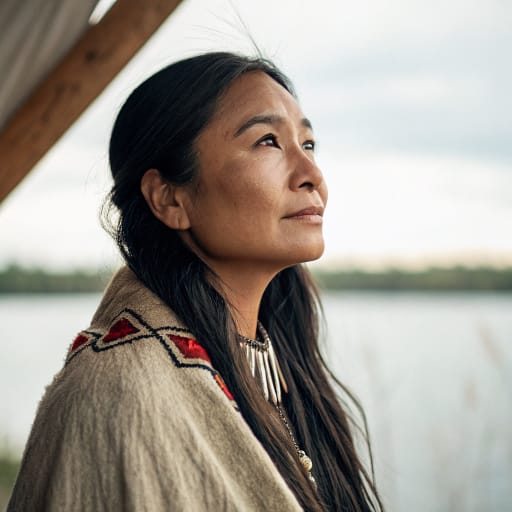
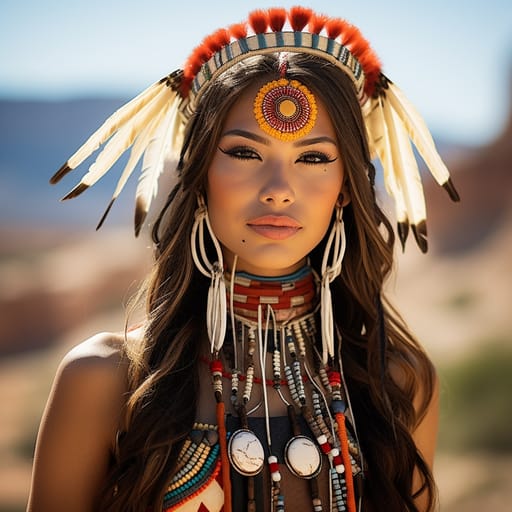
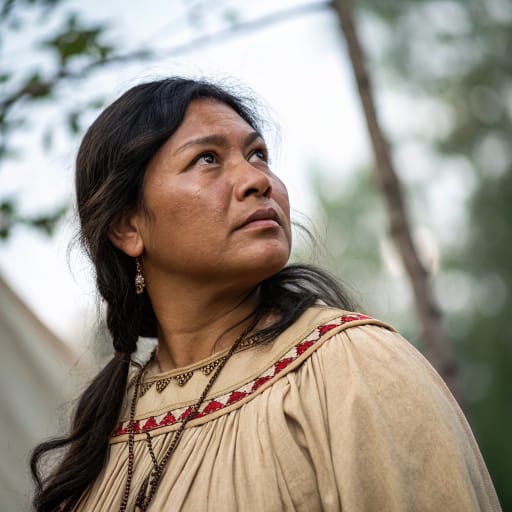
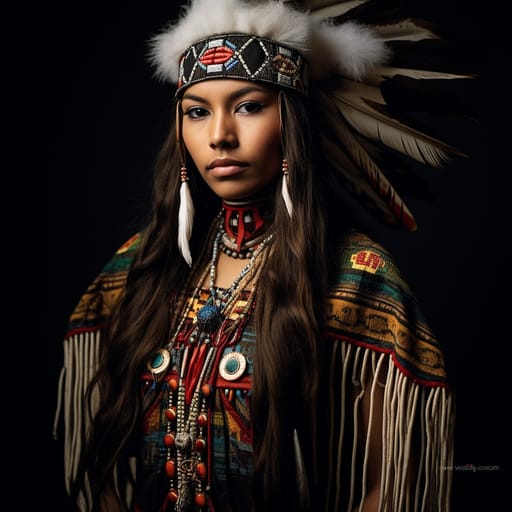

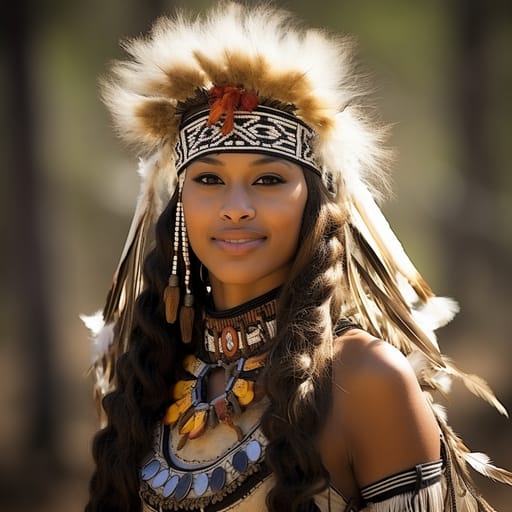
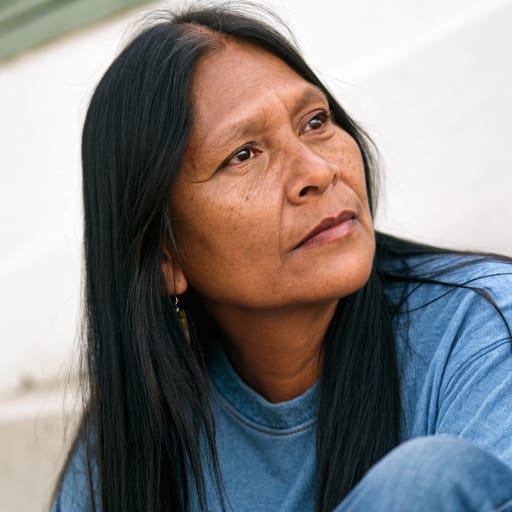
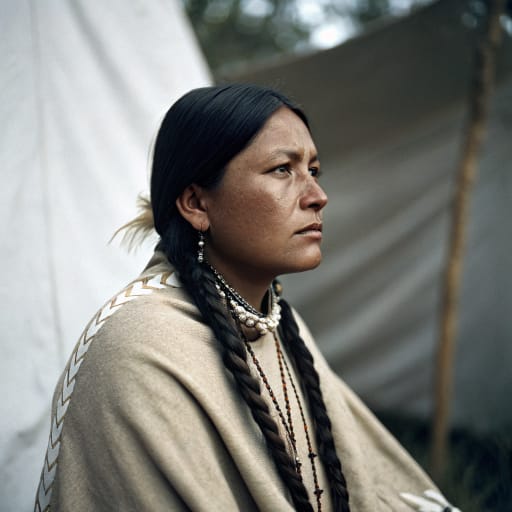
Typical Métis Phenotypes
Reference for AI generation: hair, eyes, skin, facial structure, build
Métis Body & Anatomy Reference
Per-feature anatomical profile for AI nude generation: Indigenous Northern American / Algonquian-Iroquoian phenotype
Métis Boobs & Breasts
Métis boobs follow the Indigenous Northern American / Algonquian-Iroquoian profile: medium cup, moderate projection. Areolar diameter is usually 30-44mm, and the coloring is medium-brown areolar pigmentation against the copper-to-medium-brown skin tone. Breast shape tracks body composition (mesomorph, broader frame in northern Indigenous populations, mean adult female BMI 25-28), so Métis breasts tend to be full and moderate projection. Expect a forward-set shape, not the smaller East Asian bust.
Métis Ass & Hips
Métis ass and hip morphology presents as medium, moderate-to-full projection, distinctly different from the slim East Asian narrow-hip profile. The Métis pelvic profile shows medium iliac crests, anchored in the Indigenous Northern American / Algonquian-Iroquoian skeletal pattern. Métis butt shots in adult AI imagery should render the medium, moderate-to-full projection silhouette with the overall build (mesomorph, broader frame in northern Indigenous populations) and the fat distribution typical of the Indigenous Northern American / Algonquian-Iroquoian phenotype.
Métis Vagina & Pussy
Métis pussy anatomy typically shows medium-brown labial pigmentation. Pubic hair is usually straight medium-coarse texture. In AI-generated Métis nudes, labial color should blend into the copper to medium-brown skin with a gradual transition, and the hair should keep its straight medium-coarse texture.
Métis Dicks & Penis
Penis reference for Métis men: regional mean ~13cm erect, moderate girth. Coloring: medium-brown shaft pigmentation. An accurate Métis cock in AI imagery matches the surrounding copper to medium-brown skin rather than a generic porn default. Circumcision depends on religion and custom, not ancestry.
Métis Body, Curves & Build
The Métis figure is generally mesomorph, broader frame in northern Indigenous populations, with mean adult female BMI 25-28, characteristic of Indigenous Northern American / Algonquian-Iroquoian ancestry. AI image tools tend to flatten regional body types into a few stock shapes; here the Métis build is kept as its own reference.
Métis Skin Tone & Hair Texture
Skin: copper to medium-brown (Fitzpatrick III-V). Hair: straight 1A, dark-brown to black, often thick and dense. Both are typical of Indigenous Northern American / Algonquian-Iroquoian ancestry. The most common mistake in AI nudes of Métis women is a body rendered lighter than the face.
Explore phenotype categories
Structured taxonomy with peer-reviewed scales · 22 anatomical categories
Erotic Poses & Sex Positions
From the pose catalog: 219 named positions with reference skeletons
Frequently asked questions about Métis people
Where is the Métis homeland?
The Métis homeland is Canadian Prairies centered on the Red River (Manitoba, Saskatchewan, Alberta), extending into Ontario, British Columbia, the Northwest Territories and the northern plains of the United States (North Dakota, Montana, Minnesota) in North America.
What language do Métis people speak?
Métis people primarily speak Michif (mixed Plains Cree and French), Métis French (Romance), Cree and Saulteaux (Algonquian), English (Germanic); Bungi, a Scots-Cree creole, is nearly extinct.
What religion do Métis people practice?
The predominant religion among Métis people is Predominantly Roman Catholic, with Anglican and other Protestant minorities and some Indigenous spiritual practice.






Make your own Métis images
Five a day, free, no credits to buy. The studio starts from this group's phenotype data, so you can set body type, pose and style and keep the traits accurate.
Start with Métis