No portrait yet
Piankeshaw Erotic
The Wabash River valley and tributaries such as the Vermilion, in present-day western Indiana and eastern Illinois, United States; later Missouri, eastern Kansas and northeastern Oklahoma
Piankeshaw dialect of Miami-Illinois (Algonquian)
Traditional Algonquian religion, with Catholic contact through French Jesuit priests at Vincennes
A division of the Miami, closely allied with the Wea; confederated with the Peoria, Kaskaskia and Wea in 1854; descendants are part of the Peoria Tribe of Indians of Oklahoma
About Piankeshaw People
The Piankeshaw were a division of the Miami who lived along the Wabash River, in what is now western Indiana and eastern Illinois, when the French reached the region in the 1600s. American settlement pushed them west in the nineteenth century. They merged with related peoples, and their descendants today belong to the Peoria Tribe of Indians of Oklahoma. In their own language they were Peeyankihšiaki, a name tied to the fact that they lived apart from the main body of the Miami. That separateness is the key to understanding them. They shared the Miami language and customs but kept their own towns, alliances and politics. The Wea upriver were their closest partners, and the Kickapoo lived to the south.
They spoke a dialect of Miami-Illinois, an Algonquian language that the Miami, Wea, Peoria and Kaskaskia also spoke with local differences. A Piankeshaw could deal with Illinois towns to the west and Wea allies upstream without an interpreter. Life followed the river bottoms and the prairie: villages with fields of corn, beans and squash, and seasonal hunts for deer and bison across the tallgrass. In the 1730s the French founded a post at Vincennes beside a Piankeshaw town. It pulled them deep into the fur trade and brought Jesuit priests to the Wabash.
Two episodes put the Piankeshaw at the center of larger events. In the late 1740s the chief Memeskia, called La Demoiselle by the French and Old Briton by the English, led followers east to Pickawillany on the Great Miami River and opened trade with Pennsylvania merchants. A French-allied war party destroyed the town in 1752 and killed him, one of the clashes that led to the war for the Ohio Country. Then in 1775, Piankeshaw leaders at Vincennes sold enormous tracts of land to speculators. That sale never stood. In Johnson v. M'Intosh (1823) the Supreme Court ruled that private buyers could not get title to land directly from Native nations, a decision that still anchors federal Indian law.
Settlers kept squeezing them out. Some had crossed into Missouri by the end of the 1700s, and treaties in the early 1800s signed away the Wabash country. By the 1830s the remaining Piankeshaw and Wea held a reservation in eastern Kansas. There, in 1854, they formally joined the Peoria and Kaskaskia, and after the Civil War the combined tribes were moved to northeastern Indian Territory. The Piankeshaw no longer exist as a separate tribe, but their family lines run through the Peoria today. The Miami-Illinois language went unspoken for decades and is now being brought back from colonial-era dictionaries and tribal records.
Related ethnic groups
Groups that share Piankeshaw's homeland, region, language, or religious tradition. These are likely candidates for comparative phenotype reference.
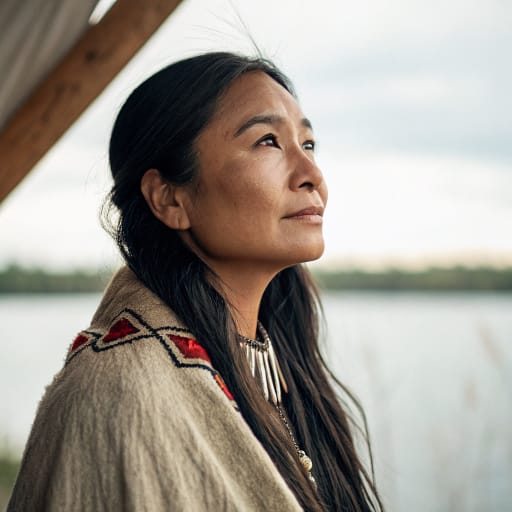
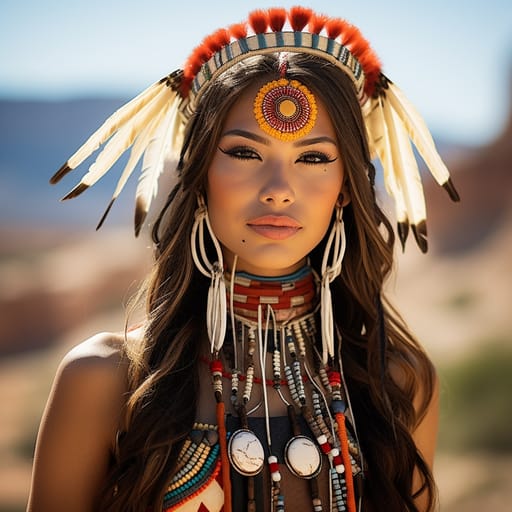
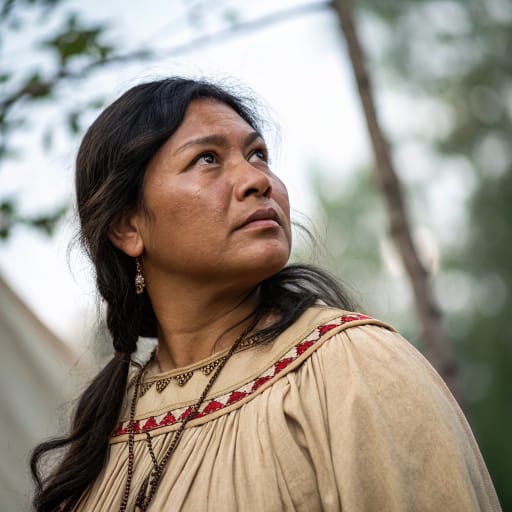
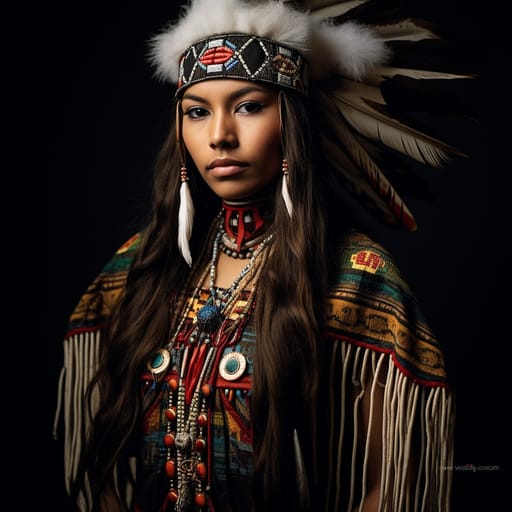
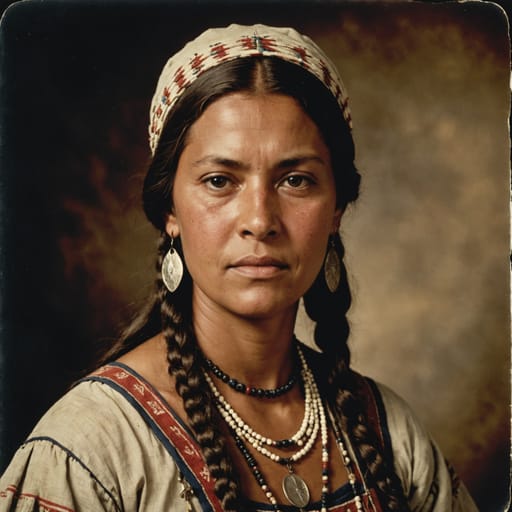
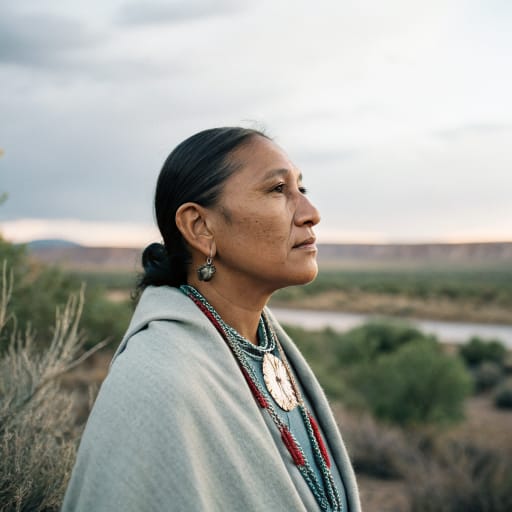
Typical Piankeshaw Phenotypes
Reference for AI generation: hair, eyes, skin, facial structure, build
Piankeshaw Body & Anatomy Reference
Anatomy by feature, Indigenous Northern American / Algonquian-Iroquoian phenotype
Piankeshaw Boobs & Breasts
The typical Piankeshaw bust is medium cup, moderate projection, in line with the wider Indigenous Northern American / Algonquian-Iroquoian pattern. Areolas usually fall in the 30-44mm range, with medium-brown areolar pigmentation against the copper-to-medium-brown skin tone. Compared with the smaller East Asian bust, Piankeshaw breasts sit forward and are generally full and moderate projection. A faithful AI render of Piankeshaw tits keeps that shape and areola size.
Piankeshaw Ass & Hips
Butt shape among Piankeshaw women: medium, moderate-to-full projection, over medium iliac crests. This follows Indigenous Northern American / Algonquian-Iroquoian ancestry and looks quite unlike the slim East Asian narrow-hip profile. An accurate Piankeshaw ass in adult AI imagery keeps both the silhouette and the overall build (mesomorph, broader frame in northern Indigenous populations) instead of a generic average.
Piankeshaw Vagina & Pussy
Vulvar anatomy among Piankeshaw women: medium-brown labial pigmentation. Pubic hair tends to be straight medium-coarse texture, in the usual inverted-triangle pattern. Both follow Indigenous Northern American / Algonquian-Iroquoian pigmentation, which is why Piankeshaw pussy renders should not fall back on a pale, sparse Western template.
Piankeshaw Dicks & Penis
The Piankeshaw cock profile, from Indigenous Northern American / Algonquian-Iroquoian anthropometric data: regional mean ~13cm erect; moderate girth; medium-brown shaft pigmentation. Pubic hair has a straight medium-coarse texture and forms the usual inverted-V pattern. Whether Piankeshaw men are circumcised follows religious and cultural practice rather than phenotype.
Piankeshaw Body, Curves & Build
Build and curves among Piankeshaw women follow the Indigenous Northern American / Algonquian-Iroquoian pattern: mesomorph, broader frame in northern Indigenous populations, mean adult female BMI 25-28. Proportions matter as much as skin tone, so Piankeshaw figures should keep their regional height and limb ratios.
Piankeshaw Skin Tone & Hair Texture
The Piankeshaw skin range is copper to medium-brown (Fitzpatrick III-V), and hair tends to be straight 1A, dark-brown to black, often thick and dense. That combination marks the Indigenous Northern American / Algonquian-Iroquoian phenotype, and skin tone is the trait AI generators most often get wrong for Piankeshaw women.
Explore phenotype categories
Structured taxonomy with peer-reviewed scales · 22 anatomical categories
Erotic Poses & Sex Positions
From the pose catalog: 219 named positions with reference skeletons
Frequently asked questions about Piankeshaw people
Where is the Piankeshaw homeland?
The Piankeshaw homeland is The Wabash River valley and tributaries such as the Vermilion, in present-day western Indiana and eastern Illinois, United States; later Missouri, eastern Kansas and northeastern Oklahoma in North America.
What language do Piankeshaw people speak?
Piankeshaw people primarily speak Piankeshaw dialect of Miami-Illinois (Algonquian).
What religion do Piankeshaw people practice?
The predominant religion among Piankeshaw people is Traditional Algonquian religion, with Catholic contact through French Jesuit priests at Vincennes.






Make your own Piankeshaw images
Five a day, free, no credits to buy. The studio starts from this group's phenotype data, so you can set body type, pose and style and keep the traits accurate.
Start with Piankeshaw