Help us get this right
Does this portrait look right for Kaskaskia?
Nobody has judged this one yet. You would be the first.
Kaskaskia Erotic
The Illinois and middle Mississippi river valleys, in what is now Illinois and eastern Missouri; after removal, eastern Kansas and then northeastern Oklahoma
Kaskaskia dialect of Miami-Illinois (Algonquian branch of Algic), dormant since the mid-twentieth century and now under revitalization
Algonquian manitou belief and calumet ceremony, then Roman Catholicism from the Jesuit mission of 1675 onward
One of the tribes of the Illinois Confederation, alongside the Peoria, Cahokia, Tamaroa, and Michigamea; later merged into the Confederated Peoria, today the Peoria Tribe of Indians of Oklahoma
About Kaskaskia People
The Kaskaskia were an Algonquian people of the Illinois and middle Mississippi valleys, one of the tribes that French writers grouped together as the Illinois, or Illiniwek. They enter the written record in the 1660s, they were pushed south and west for the next century and a half, and by the 1830s the survivors had been removed to Kansas and then to Indian Territory. Their descendants are enrolled today in the Peoria Tribe of Indians of Oklahoma. They lived where the eastern forest gave out and the tallgrass prairie began, and they worked both. Summer villages stood along the rivers, with corn, beans, and squash in the women's fields, and in the colder months families went west after bison, hunting on foot and using fire to turn the herds. Their largest town, the Grand Village near present-day Utica, Illinois, may have held several thousand people when Jacques Marquette and Louis Jolliet passed through in 1673. An Iroquois war party burned it in 1680. The Kaskaskia moved downriver in stages after that and settled near the mouth of the Kaskaskia River around 1703, with a French mission and a French village attached.
Catholicism took hold among them more thoroughly than among their neighbors, and it did not stay a mission project for long. Kaskaskia women married French traders and soldiers in numbers, and the parish registers of the Illinois country are full of the resulting families. Marie Rouensa, a chief's daughter baptized in the 1690s, pushed her own household and much of her village toward the church, and the will she left in 1725 is one of the earliest surviving wills by a Native woman in North America. The mission also produced something its authors did not intend: two large manuscript dictionaries of the Illinois language, compiled by Jesuits who needed to preach in it. Miami-Illinois fell silent in the middle of the twentieth century, and those dictionaries are now the backbone of the work to bring it back. The political end came faster. Jean Baptiste Ducoigne, who traveled to Virginia in 1781 to talk with Thomas Jefferson, signed away most of what remained of Kaskaskia land in 1803. Removal followed, then confederation with the Peoria, Piankeshaw, and Wea, then federal termination in the 1950s and restoration in 1978. The state of Illinois carries a version of their name, taken from a word meaning roughly he speaks the ordinary way. The town of Kaskaskia was that state's first capital; the Mississippi later cut a new channel and left it stranded on the Missouri side of the river, where its last few residents still live.
Related ethnic groups
Groups that share Kaskaskia's homeland, region, language, or religious tradition. These are likely candidates for comparative phenotype reference.
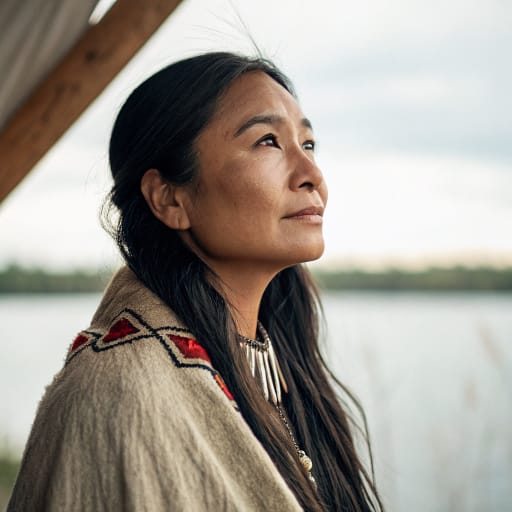
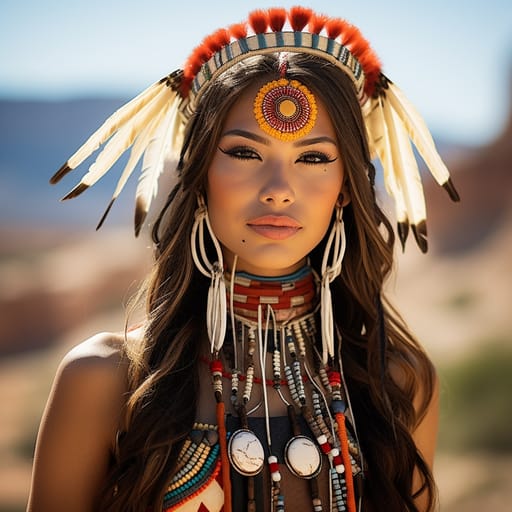
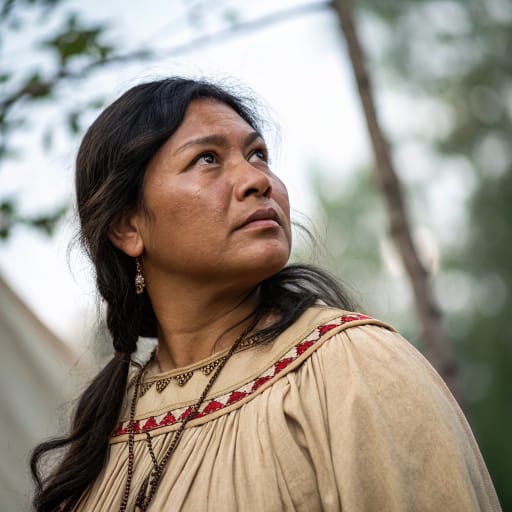
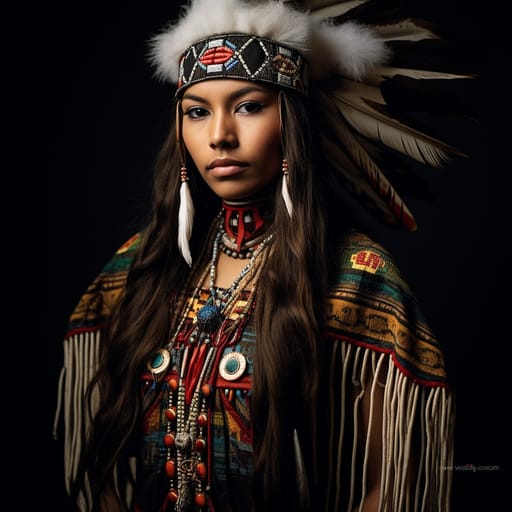
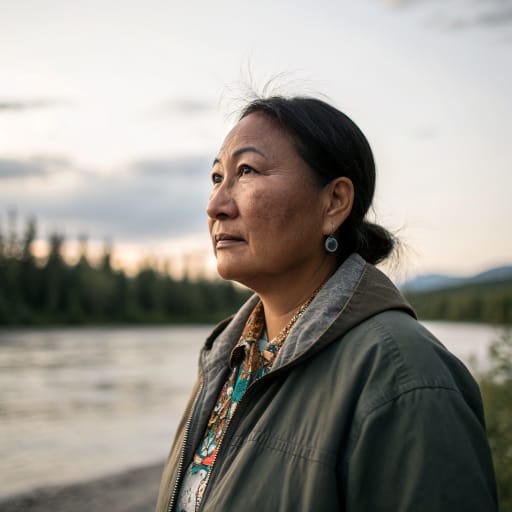
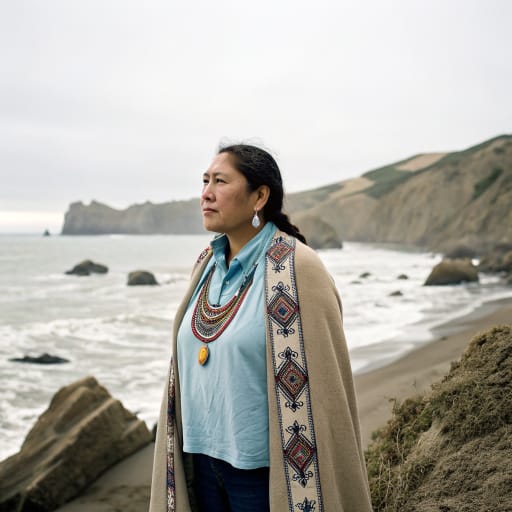
Typical Kaskaskia Phenotypes
Reference for AI generation: hair, eyes, skin, facial structure, build
Kaskaskia Body & Anatomy Reference
Anatomy by feature, Indigenous Northern American / Algonquian-Iroquoian phenotype
Kaskaskia Boobs & Breasts
The typical Kaskaskia bust is medium cup, moderate projection, in line with the wider Indigenous Northern American / Algonquian-Iroquoian pattern. Areolas usually fall in the 30-44mm range, with medium-brown areolar pigmentation against the copper-to-medium-brown skin tone. Compared with the smaller East Asian bust, Kaskaskia breasts sit forward and are generally full and moderate projection. A faithful AI render of Kaskaskia tits keeps that shape and areola size.
Kaskaskia Ass & Hips
Butt shape among Kaskaskia women: medium, moderate-to-full projection, over medium iliac crests. This follows Indigenous Northern American / Algonquian-Iroquoian ancestry and looks quite unlike the slim East Asian narrow-hip profile. An accurate Kaskaskia ass in adult AI imagery keeps both the silhouette and the overall build (mesomorph, broader frame in northern Indigenous populations) instead of a generic average.
Kaskaskia Vagina & Pussy
Vulvar anatomy among Kaskaskia women: medium-brown labial pigmentation. Pubic hair tends to be straight medium-coarse texture, in the usual inverted-triangle pattern. Both follow Indigenous Northern American / Algonquian-Iroquoian pigmentation, which is why Kaskaskia pussy renders should not fall back on a pale, sparse Western template.
Kaskaskia Dicks & Penis
The Kaskaskia cock profile, from Indigenous Northern American / Algonquian-Iroquoian anthropometric data: regional mean ~13cm erect; moderate girth; medium-brown shaft pigmentation. Pubic hair has a straight medium-coarse texture and forms the usual inverted-V pattern. Whether Kaskaskia men are circumcised follows religious and cultural practice rather than phenotype.
Kaskaskia Body, Curves & Build
Build and curves among Kaskaskia women follow the Indigenous Northern American / Algonquian-Iroquoian pattern: mesomorph, broader frame in northern Indigenous populations, mean adult female BMI 25-28. Proportions matter as much as skin tone, so Kaskaskia figures should keep their regional height and limb ratios.
Kaskaskia Skin Tone & Hair Texture
The Kaskaskia skin range is copper to medium-brown (Fitzpatrick III-V), and hair tends to be straight 1A, dark-brown to black, often thick and dense. That combination marks the Indigenous Northern American / Algonquian-Iroquoian phenotype, and skin tone is the trait AI generators most often get wrong for Kaskaskia women.
Explore phenotype categories
Structured taxonomy with peer-reviewed scales · 22 anatomical categories
Erotic Poses & Sex Positions
From the pose catalog: 219 named positions with reference skeletons
Frequently asked questions about Kaskaskia people
Where is the Kaskaskia homeland?
The Kaskaskia homeland is The Illinois and middle Mississippi river valleys, in what is now Illinois and eastern Missouri; after removal, eastern Kansas and then northeastern Oklahoma in North America.
What language do Kaskaskia people speak?
Kaskaskia people primarily speak Kaskaskia dialect of Miami-Illinois (Algonquian branch of Algic), dormant since the mid-twentieth century and now under revitalization.
What religion do Kaskaskia people practice?
The predominant religion among Kaskaskia people is Algonquian manitou belief and calumet ceremony, then Roman Catholicism from the Jesuit mission of 1675 onward.






Make your own Kaskaskia images
Five a day, free, no credits to buy. The studio starts from this group's phenotype data, so you can set body type, pose and style and keep the traits accurate.
Start with Kaskaskia