No portrait yet
Skagit Erotic
Skagit River valley, Skagit delta and northern Whidbey Island in northwest Washington State, United States
Lushootseed, northern dialect (Salishan); English
Christianity (Catholic and Indian Shaker Church) alongside Coast Salish winter spirit dancing and guardian spirit traditions
Upper Skagit and Lower Skagit, part of the Coast Salish; Lower Skagit descendants largely within the Swinomish Indian Tribal Community; closely related to the Sauk-Suiattle
About Skagit People
The Skagit are river people. Who they are is tied to one watershed, the Skagit River, which runs out of the North Cascades into Puget Sound. It is also tied to the salmon that crowd that river, one of the few in the region that still carries all five Pacific species. A county and a spring tulip festival took the name much later. It first belonged to the Coast Salish communities along that water, usually counted as two peoples: the Upper Skagit of the valley and foothills, and the Lower Skagit of the delta and northern Whidbey Island. Both belong to the northern dialect of Lushootseed, a Salishan language once heard around much of Puget Sound. It is close to the speech of the Snohomish and Sauk-Suiattle and further from the Straits Salish spoken by the Lummi and Samish to the north. Few if any first-language speakers remain. Still, Vi Hilbert, an Upper Skagit elder, spent decades recording elders and building the dictionary and story collections that tribal language classes use today. Villages spent the winter in cedar plank houses and spread out in warmer months to fishing, berry and root camps. Standing came from lineage and inherited names, and names are still given at public gatherings where witnesses are called and paid to remember the occasion.
The Treaty of Point Elliott in 1855 took most of their land. Lower Skagit descendants are now largely part of the Swinomish Indian Tribal Community near La Conner, alongside Swinomish, Kikiallus and Samish families. The Upper Skagit stayed in their valley without a reservation for more than a century. They won federal recognition in the 1970s, around the time the Boldt decision confirmed treaty fishing rights, and a small reservation near Sedro-Woolley followed. Fishing is still both a livelihood and an ongoing fight over dams, water and habitat. Religious life has layered new faiths on top of old ones rather than replacing them. Catholic missionaries arrived in the nineteenth century, and the Indian Shaker Church spread through Puget Sound communities after them. The winter spirit dances of the smokehouse, grounded in personal guardian spirit power, outlasted both and still carry families through the dark months.
Related ethnic groups
Groups that share Skagit's homeland, region, language, or religious tradition. These are likely candidates for comparative phenotype reference.
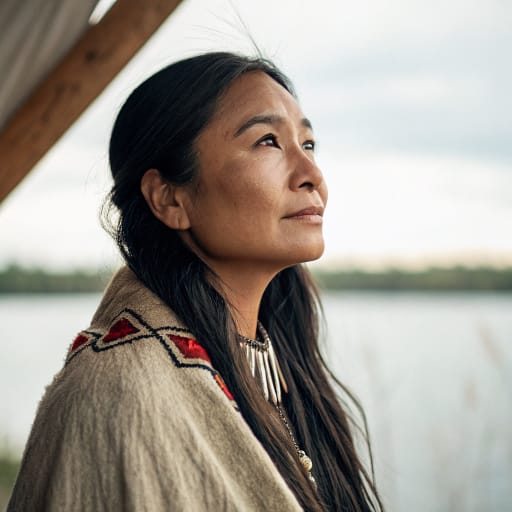
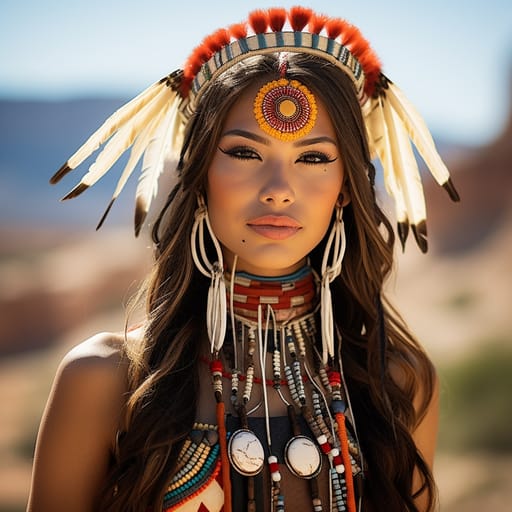
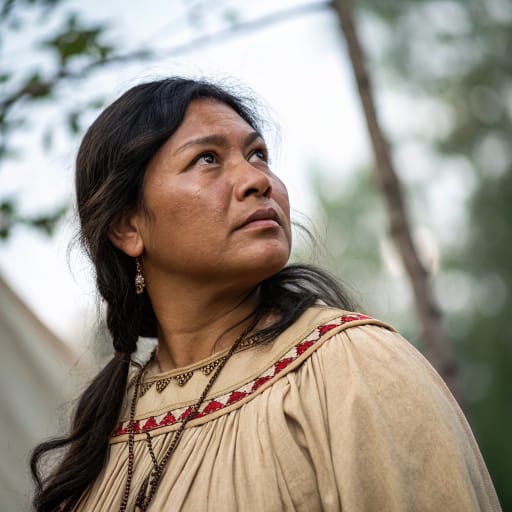
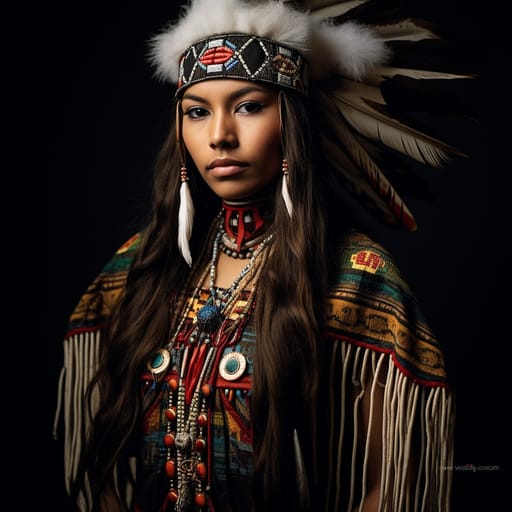
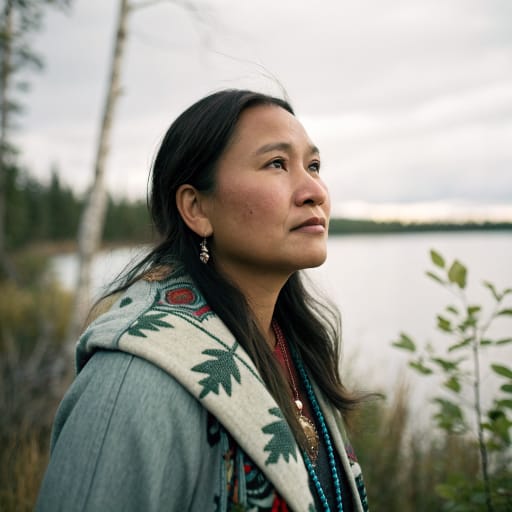
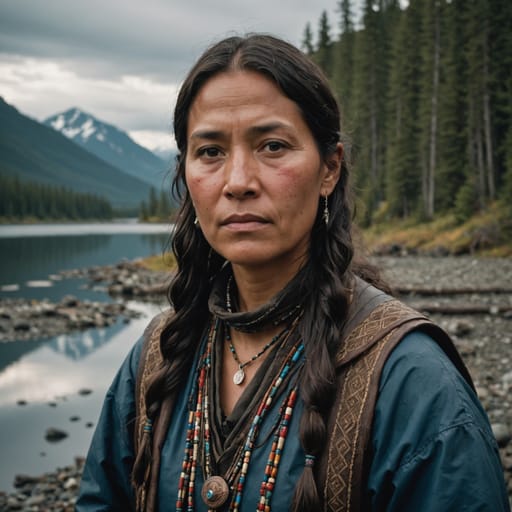
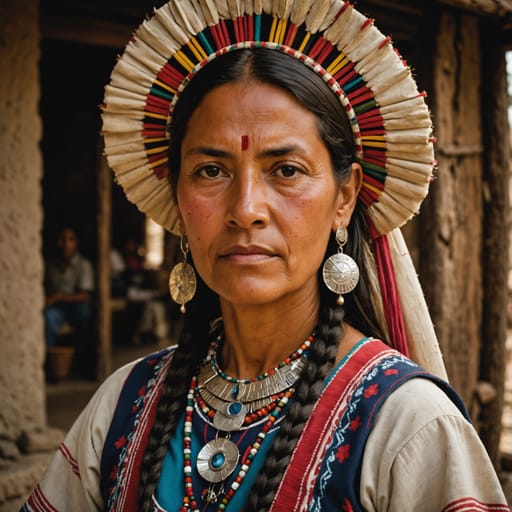
Typical Skagit Phenotypes
Reference for AI generation: hair, eyes, skin, facial structure, build
Skagit Body & Anatomy Reference
Anatomy by feature, Indigenous Northern American / Algonquian-Iroquoian phenotype
Skagit Boobs & Breasts
The typical Skagit bust is medium cup, moderate projection, in line with the wider Indigenous Northern American / Algonquian-Iroquoian pattern. Areolas usually fall in the 30-44mm range, with medium-brown areolar pigmentation against the copper-to-medium-brown skin tone. Compared with the smaller East Asian bust, Skagit breasts sit forward and are generally full and moderate projection. A faithful AI render of Skagit tits keeps that shape and areola size.
Skagit Ass & Hips
Butt shape among Skagit women: medium, moderate-to-full projection, over medium iliac crests. This follows Indigenous Northern American / Algonquian-Iroquoian ancestry and looks quite unlike the slim East Asian narrow-hip profile. An accurate Skagit ass in adult AI imagery keeps both the silhouette and the overall build (mesomorph, broader frame in northern Indigenous populations) instead of a generic average.
Skagit Vagina & Pussy
Vulvar anatomy among Skagit women: medium-brown labial pigmentation. Pubic hair tends to be straight medium-coarse texture, in the usual inverted-triangle pattern. Both follow Indigenous Northern American / Algonquian-Iroquoian pigmentation, which is why Skagit pussy renders should not fall back on a pale, sparse Western template.
Skagit Dicks & Penis
The Skagit cock profile, from Indigenous Northern American / Algonquian-Iroquoian anthropometric data: regional mean ~13cm erect; moderate girth; medium-brown shaft pigmentation. Pubic hair has a straight medium-coarse texture and forms the usual inverted-V pattern. Whether Skagit men are circumcised follows religious and cultural practice rather than phenotype.
Skagit Body, Curves & Build
Build and curves among Skagit women follow the Indigenous Northern American / Algonquian-Iroquoian pattern: mesomorph, broader frame in northern Indigenous populations, mean adult female BMI 25-28. Proportions matter as much as skin tone, so Skagit figures should keep their regional height and limb ratios.
Skagit Skin Tone & Hair Texture
The Skagit skin range is copper to medium-brown (Fitzpatrick III-V), and hair tends to be straight 1A, dark-brown to black, often thick and dense. That combination marks the Indigenous Northern American / Algonquian-Iroquoian phenotype, and skin tone is the trait AI generators most often get wrong for Skagit women.
Explore phenotype categories
Structured taxonomy with peer-reviewed scales · 22 anatomical categories
Erotic Poses & Sex Positions
From the pose catalog: 219 named positions with reference skeletons
Frequently asked questions about Skagit people
Where is the Skagit homeland?
The Skagit homeland is Skagit River valley, Skagit delta and northern Whidbey Island in northwest Washington State, United States in North America.
What language do Skagit people speak?
Skagit people primarily speak Lushootseed, northern dialect (Salishan); English.
What religion do Skagit people practice?
The predominant religion among Skagit people is Christianity (Catholic and Indian Shaker Church) alongside Coast Salish winter spirit dancing and guardian spirit traditions.






Make your own Skagit images
Five a day, free, no credits to buy. The studio starts from this group's phenotype data, so you can set body type, pose and style and keep the traits accurate.
Start with Skagit