No portrait yet
Chipewyan Erotic
Subarctic forest and barrenlands from Great Slave Lake to Hudson Bay: northern Saskatchewan, northern Manitoba, northeastern Alberta and the southern Northwest Territories, Canada
Denesuline, also called Dene Suline or Chipewyan (Northern Athabaskan, Na-Dene family); English
Predominantly Roman Catholic, alongside traditional Dene spirituality including drum dances, feeding the fire and respect owed to animals
Dene (Northern Athabaskan) peoples; historic regional bands include the Etthen-eldeli (Caribou Eaters), Thilanottine, Kesyehot'ine, Sayisi Dene, Athabasca Denesuline and Cold Lake Denesuline; the Yellowknives are sometimes counted with them
About Chipewyan People
The Chipewyan call themselves Denesuline, a name they translate as something close to the real people, and the map of where they live is drawn by caribou. Their country is the long band of spruce forest and open barrens running from Great Slave Lake east toward Hudson Bay, across northern Saskatchewan, northern Manitoba, northeastern Alberta and the southern Northwest Territories. For centuries the year followed the barren-ground herds north onto the tundra in summer and back into the treeline in winter, and hunters still travel long distances to meet them. One of the old regional names, Etthen-eldeli, simply means caribou eaters. The word Chipewyan is not theirs at all. It is Cree, usually glossed as pointed skins, after the caribou-hide shirts that hung to a point at front and back.
Denesuline is a Northern Athabaskan language, close kin to Dogrib, Slavey and Gwich'in and a distant cousin of Navajo and Apache in the American Southwest. It is one of the official languages of the Northwest Territories and one of the more widely spoken Indigenous languages in Canada, still heard at home in communities such as Black Lake, Fond du Lac, Wollaston Lake, La Loche and Lutsel K'e. Most Denesuline are Roman Catholic, a legacy of Oblate missions that arrived in the mid-1800s. Catholic practice sits alongside older obligations: feeding the fire before a gathering, respect owed to the animals that feed you, drum dances that run late into the night, and the hand game, a loud, fast guessing contest played to drums that draws crowds at summer assemblies across Dene country.
Two figures from the fur trade era still get talked about. In 1715 a young Chipewyan woman named Thanadelthur, escaped from Cree captivity, brokered a peace between her people and the Cree that opened Hudson's Bay Company trade at Churchill. Half a century later the leader Matonabbee guided Samuel Hearne overland to the Arctic coast. Smallpox in 1781 and 1782 killed a large share of the population and reshuffled the bands. The twentieth century brought Treaties 8 and 10, residential schools, and in 1956 the forced removal of the Sayisi Dene from their caribou grounds to a bleak camp outside Churchill, a relocation so damaging that Canada formally apologized in 2016. Today Denesuline communities sit on top of the Athabasca Basin uranium deposits and downstream from the Alberta oil sands, and much of their public life is about asserting jurisdiction over that land. The 2019 creation of Thaidene Nëné, a vast protected area co-managed by Lutsel K'e, is the clearest recent statement of that intent.
Related ethnic groups
Groups that share Chipewyan's homeland, region, language, or religious tradition. These are likely candidates for comparative phenotype reference.
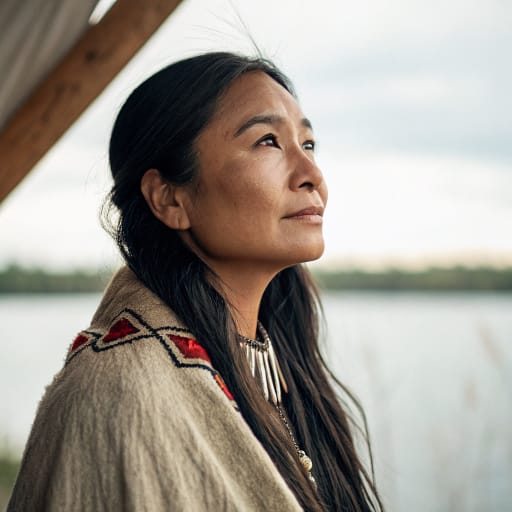
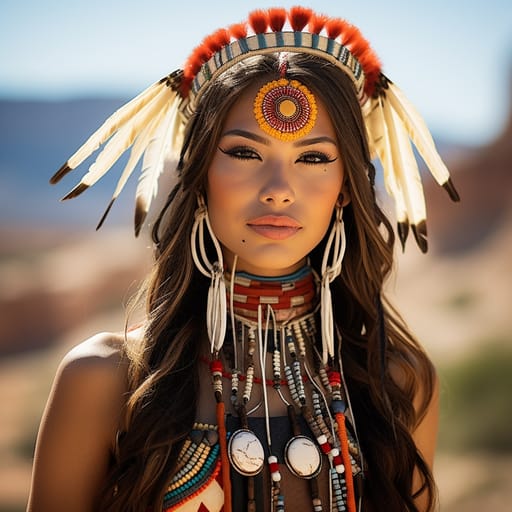
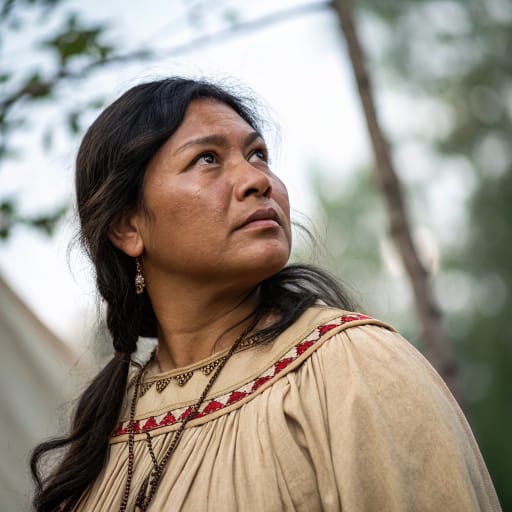
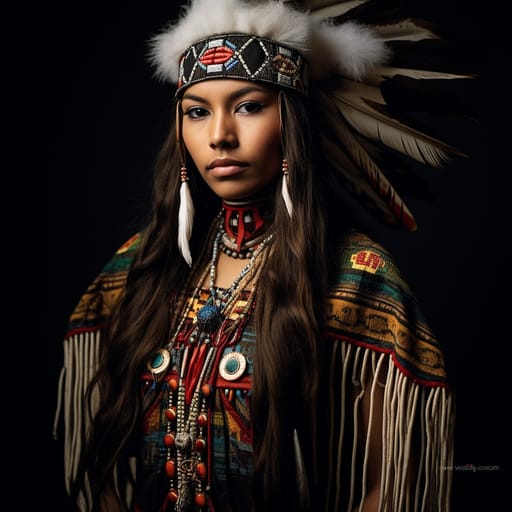
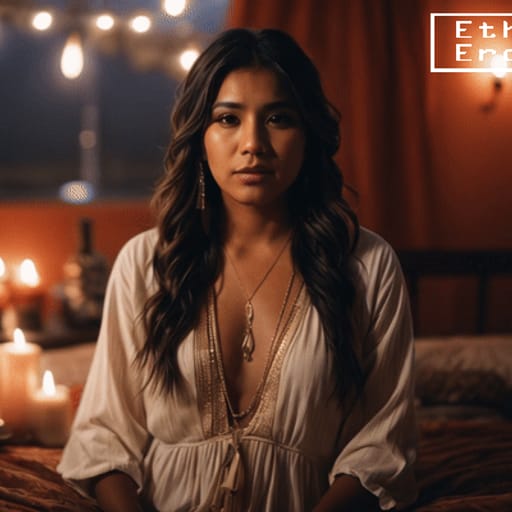
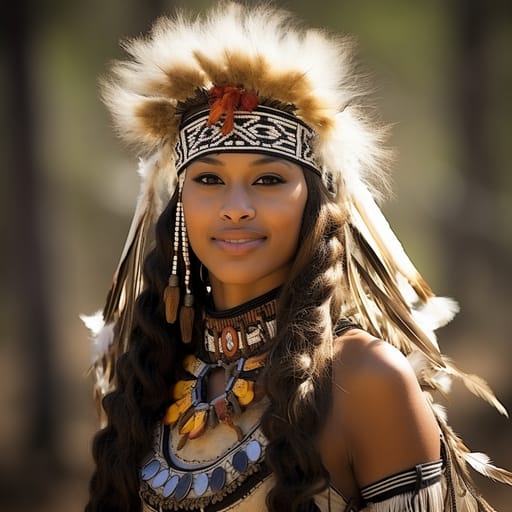
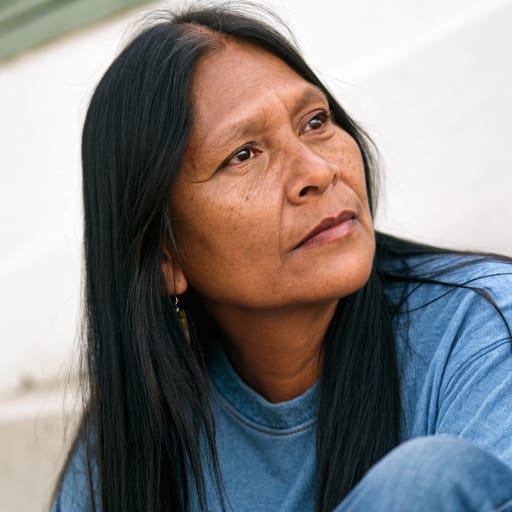
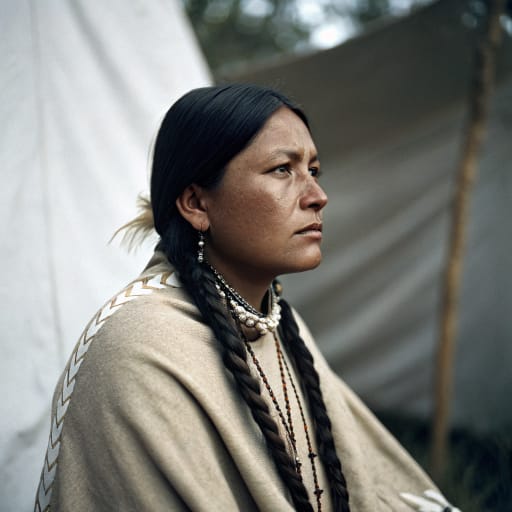
Typical Chipewyan Phenotypes
Reference for AI generation: hair, eyes, skin, facial structure, build
Chipewyan Body & Anatomy Reference
Indigenous Northern American / Algonquian-Iroquoian phenotype: anatomy reference for AI nude generation
Chipewyan Boobs & Breasts
Chipewyan boobs follow the Indigenous Northern American / Algonquian-Iroquoian profile: medium cup, moderate projection. Areolar diameter is usually 30-44mm, and the coloring is medium-brown areolar pigmentation against the copper-to-medium-brown skin tone. Breast shape tracks body composition (mesomorph, broader frame in northern Indigenous populations, mean adult female BMI 25-28), so Chipewyan breasts tend to be full and moderate projection. Expect a forward-set shape, not the smaller East Asian bust.
Chipewyan Ass & Hips
Chipewyan ass and hip morphology presents as medium, moderate-to-full projection, distinctly different from the slim East Asian narrow-hip profile. The Chipewyan pelvic profile shows medium iliac crests, anchored in the Indigenous Northern American / Algonquian-Iroquoian skeletal pattern. Chipewyan butt shots in adult AI imagery should render the medium, moderate-to-full projection silhouette with the overall build (mesomorph, broader frame in northern Indigenous populations) and the fat distribution typical of the Indigenous Northern American / Algonquian-Iroquoian phenotype.
Chipewyan Vagina & Pussy
Chipewyan pussy anatomy typically shows medium-brown labial pigmentation. Pubic hair is usually straight medium-coarse texture. In AI-generated Chipewyan nudes, labial color should blend into the copper to medium-brown skin with a gradual transition, and the hair should keep its straight medium-coarse texture.
Chipewyan Dicks & Penis
Penis reference for Chipewyan men: regional mean ~13cm erect, moderate girth. Coloring: medium-brown shaft pigmentation. An accurate Chipewyan cock in AI imagery matches the surrounding copper to medium-brown skin rather than a generic porn default. Circumcision depends on religion and custom, not ancestry.
Chipewyan Body, Curves & Build
The Chipewyan figure is generally mesomorph, broader frame in northern Indigenous populations, with mean adult female BMI 25-28, characteristic of Indigenous Northern American / Algonquian-Iroquoian ancestry. AI image tools tend to flatten regional body types into a few stock shapes; here the Chipewyan build is kept as its own reference.
Chipewyan Skin Tone & Hair Texture
Skin: copper to medium-brown (Fitzpatrick III-V). Hair: straight 1A, dark-brown to black, often thick and dense. Both are typical of Indigenous Northern American / Algonquian-Iroquoian ancestry. The most common mistake in AI nudes of Chipewyan women is a body rendered lighter than the face.
Explore phenotype categories
Structured taxonomy with peer-reviewed scales · 22 anatomical categories
Erotic Poses & Sex Positions
From the pose catalog: 219 named positions with reference skeletons
Frequently asked questions about Chipewyan people
Where is the Chipewyan homeland?
The Chipewyan homeland is Subarctic forest and barrenlands from Great Slave Lake to Hudson Bay: northern Saskatchewan, northern Manitoba, northeastern Alberta and the southern Northwest Territories, Canada in North America.
What language do Chipewyan people speak?
Chipewyan people primarily speak Denesuline, also called Dene Suline or Chipewyan (Northern Athabaskan, Na-Dene family); English.
What religion do Chipewyan people practice?
The predominant religion among Chipewyan people is Predominantly Roman Catholic, alongside traditional Dene spirituality including drum dances, feeding the fire and respect owed to animals.






Make your own Chipewyan images
Five a day, free, no credits to buy. The studio starts from this group's phenotype data, so you can set body type, pose and style and keep the traits accurate.
Start with Chipewyan