Help us get this right
Does this portrait look right for Cahto?
Nobody has judged this one yet. You would be the first.
Cahto Erotic
Cahto Valley and Long Valley near Laytonville, Mendocino County, northern California, United States
Cahto, also written Kato (Pacific Coast Athabaskan, Na-Dene), dormant since the mid twentieth century; English today
Historically the Kuksu-derived ceremonial complex shared with Pomo and Yuki neighbors; Christianity, largely Protestant, from the reservation era onward, with traditional practice continuing
Southernmost of the Pacific Coast Athabaskan peoples, grouped with the Eel River Athabaskans such as the Wailaki, Sinkyone and Lassik; organized today as the Cahto Tribe of the Laytonville Rancheria
About Cahto People
The Cahto are identifiable first by a mismatch. They speak, or spoke, an Athabaskan language in a pocket of northern California where nobody else did. Their neighbors to the south were Pomo, whose languages belong to a completely separate stock, and to the east were the Yuki, a family unto themselves. Cahto sits at the far southern end of a broken chain of Pacific Coast Athabaskan tongues, which makes it a distant cousin of Navajo, Apache, and the Dene languages of the Canadian north, none of which anyone in Mendocino County was talking to. Even the name is on loan: Cahto is Northern Pomo for lake, a description of the wet valley floor these people lived on rather than anything they called themselves. The mismatch is only linguistic, though. In practice the Cahto lived very much like the neighbors they married into, bilingually and constantly, borrowing Pomo basketry technique and the initiation societies and feathered dancers that anthropologists group under the name Kuksu.
The homeland is Cahto Valley and Long Valley, prairie and oak woodland near the headwaters of the South Fork Eel River, west of the Coast Range crest and short of the big redwoods. Tanoak acorns were the staple, salmon and steelhead ran the creeks, and the grasslands were kept open by deliberate burning. The oldest stories center on Nagaicho, the traveler who propped up the corners of the sky and walked the new world into shape, and they describe the earth itself as a living animal whose shifting is what an earthquake is. Settler stock raising arrived in the 1850s and the collapse that followed was fast and violent: militia campaigns, then removal east over the ridge to the Round Valley Reservation. Survivors walked back and took ranch and field work on ground their families had always used. In 1908 the federal government bought a small parcel outside Laytonville for landless Indians there, and that became the Laytonville Rancheria, where the federally recognized Cahto Tribe is headquartered today. The last fluent speakers died in the twentieth century, leaving Pliny Earle Goddard's 1909 Kato texts as the fullest record of the language, and that record is what current revival work has to build on.
Related ethnic groups
Groups that share Cahto's homeland, region, language, or religious tradition. These are likely candidates for comparative phenotype reference.
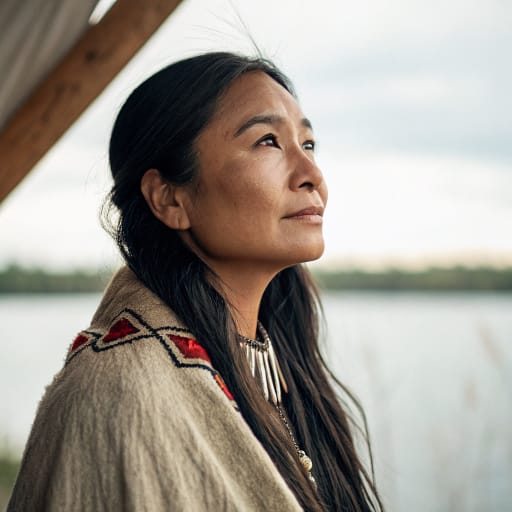
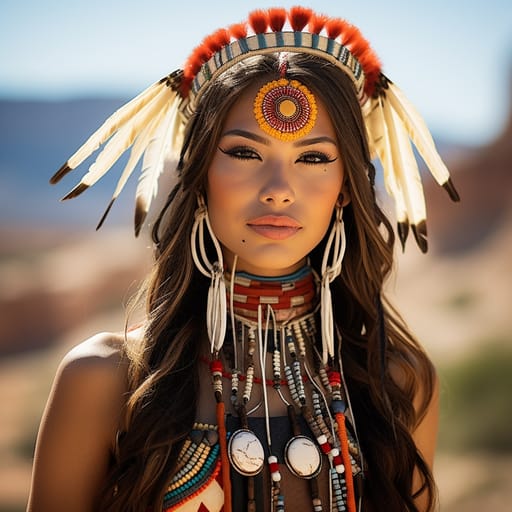
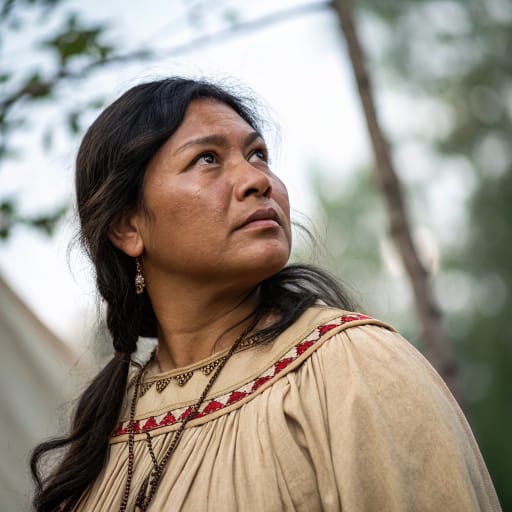
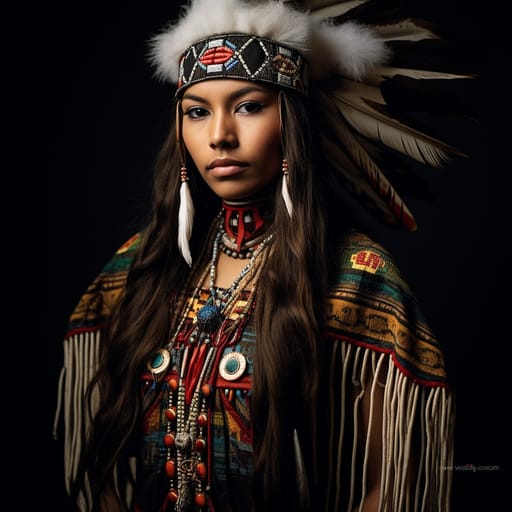
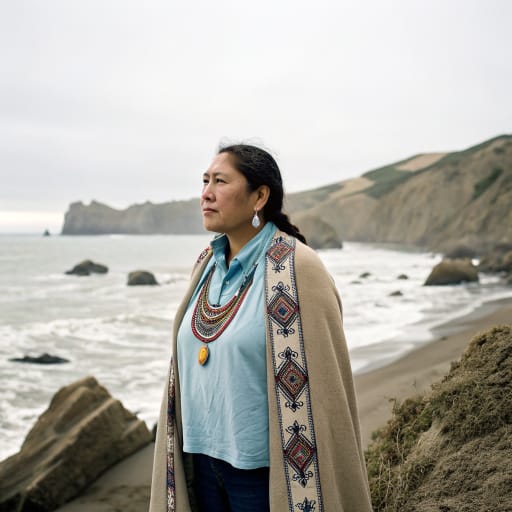
Typical Cahto Phenotypes
Reference for AI generation: hair, eyes, skin, facial structure, build
Cahto Body & Anatomy Reference
Indigenous Northern American / Algonquian-Iroquoian phenotype: anatomy reference for AI nude generation
Cahto Boobs & Breasts
The typical Cahto bust is medium cup, moderate projection, in line with the wider Indigenous Northern American / Algonquian-Iroquoian pattern. Areolas usually fall in the 30-44mm range, with medium-brown areolar pigmentation against the copper-to-medium-brown skin tone. Compared with the smaller East Asian bust, Cahto breasts sit forward and are generally full and moderate projection. A faithful AI render of Cahto tits keeps that shape and areola size.
Cahto Ass & Hips
Butt shape among Cahto women: medium, moderate-to-full projection, over medium iliac crests. This follows Indigenous Northern American / Algonquian-Iroquoian ancestry and looks quite unlike the slim East Asian narrow-hip profile. An accurate Cahto ass in adult AI imagery keeps both the silhouette and the overall build (mesomorph, broader frame in northern Indigenous populations) instead of a generic average.
Cahto Vagina & Pussy
Vulvar anatomy among Cahto women: medium-brown labial pigmentation. Pubic hair tends to be straight medium-coarse texture, in the usual inverted-triangle pattern. Both follow Indigenous Northern American / Algonquian-Iroquoian pigmentation, which is why Cahto pussy renders should not fall back on a pale, sparse Western template.
Cahto Dicks & Penis
The Cahto cock profile, from Indigenous Northern American / Algonquian-Iroquoian anthropometric data: regional mean ~13cm erect; moderate girth; medium-brown shaft pigmentation. Pubic hair has a straight medium-coarse texture and forms the usual inverted-V pattern. Whether Cahto men are circumcised follows religious and cultural practice rather than phenotype.
Cahto Body, Curves & Build
Build and curves among Cahto women follow the Indigenous Northern American / Algonquian-Iroquoian pattern: mesomorph, broader frame in northern Indigenous populations, mean adult female BMI 25-28. Proportions matter as much as skin tone, so Cahto figures should keep their regional height and limb ratios.
Cahto Skin Tone & Hair Texture
The Cahto skin range is copper to medium-brown (Fitzpatrick III-V), and hair tends to be straight 1A, dark-brown to black, often thick and dense. That combination marks the Indigenous Northern American / Algonquian-Iroquoian phenotype, and skin tone is the trait AI generators most often get wrong for Cahto women.
Explore phenotype categories
Structured taxonomy with peer-reviewed scales · 22 anatomical categories
Erotic Poses & Sex Positions
From the pose catalog: 219 named positions with reference skeletons
Frequently asked questions about Cahto people
Where is the Cahto homeland?
The Cahto homeland is Cahto Valley and Long Valley near Laytonville, Mendocino County, northern California, United States in North America.
What language do Cahto people speak?
Cahto people primarily speak Cahto, also written Kato (Pacific Coast Athabaskan, Na-Dene), dormant since the mid twentieth century; English today.
What religion do Cahto people practice?
The predominant religion among Cahto people is Historically the Kuksu-derived ceremonial complex shared with Pomo and Yuki neighbors; Christianity, largely Protestant, from the reservation era onward, with traditional practice continuing.






Make your own Cahto images
Five a day, free, no credits to buy. The studio starts from this group's phenotype data, so you can set body type, pose and style and keep the traits accurate.
Start with Cahto