Help us get this right
Does this portrait look right for Esselen?
Nobody has judged this one yet. You would be the first.
Esselen Erotic
Santa Lucia Mountains and Big Sur coast south of the Big Sur River, inland to the upper Carmel River and Arroyo Seco, Monterey County, California, United States
Esselen (proposed Hokan family, often treated as an isolate), no longer spoken; descendants speak English
Traditional Indigenous beliefs; Roman Catholicism since the Carmel and Soledad missions
Local village districts in the Santa Lucia range; descendants organize today as the Esselen Tribe of Monterey County and within the Ohlone/Costanoan-Esselen Nation, neither federally recognized
About Esselen People
The Esselen are the people of the Big Sur backcountry, a small nation whose territory was some of the steepest ground in California: the Santa Lucia Mountains where they drop into the Pacific south of the Big Sur River, and the oak valleys and creek canyons behind them, reaching inland toward the upper Carmel River and Arroyo Seco. What set them apart from their neighbors was, above all, language. To the north the Rumsen spoke an Ohlone tongue, to the south the Salinan spoke their own, and Esselen matched neither. Linguists file it under the proposed Hokan family, but the link is thin enough that some treat it as an isolate. What survives is a short record of words and phrases taken down by Spanish missionaries, by a French scientific expedition that called at Monterey in 1786, and by later collectors working from the memories of elderly descendants.
Life ran on a seasonal round. Summer meant the coast, with mussels, abalone and other shellfish pried from the rocks. Autumn drew families back into the hills for acorns, the staple food, pounded in bedrock mortars and leached into meal, and the colder months added deer, rabbit and wild seeds. Rough terrain kept communities small and scattered, and estimates of the population before contact run from several hundred to over a thousand. Painted handprints on the walls of backcountry rock shelters are among the few marks of that life still standing.
Spanish colonization reached them early and hit hard. Mission San Carlos Borromeo was founded at Monterey in 1770 and moved to Carmel a year later, and Mission Soledad opened in 1791. Esselen families entered both, some by choice and many under pressure, and disease, forced labor and baptism remade their world within a generation. By the early twentieth century, anthropologists were writing the Esselen off as extinct, among the first California peoples said to have disappeared entirely. Their descendants never accepted that verdict. Mission baptism and marriage registers, which trace lineages through generations of intermarriage with Rumsen, Salinan and Yokuts people, give families a documented line back to Esselen villages.
Today people of Esselen ancestry organize through the Esselen Tribe of Monterey County and the Ohlone/Costanoan-Esselen Nation, neither of them federally recognized. In 2020 the Esselen Tribe of Monterey County took title to roughly 1,200 acres of ranchland along the Little Sur River, near Pico Blanco, a pale limestone peak the tribe holds sacred. It was their first land base in about two and a half centuries, and the tribe has spoken of using it for ceremony and cultural education.
Related ethnic groups
Groups that share Esselen's homeland, region, language, or religious tradition. These are likely candidates for comparative phenotype reference.
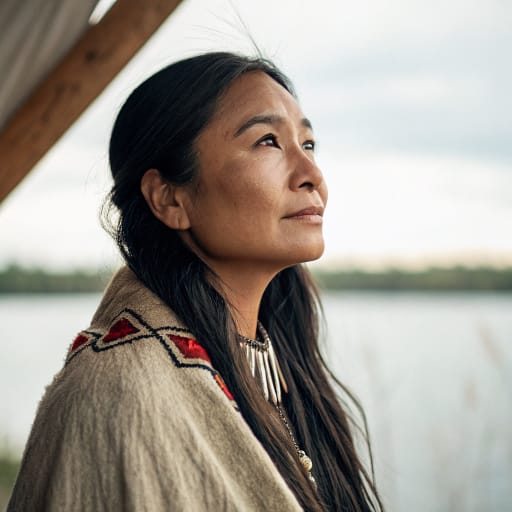
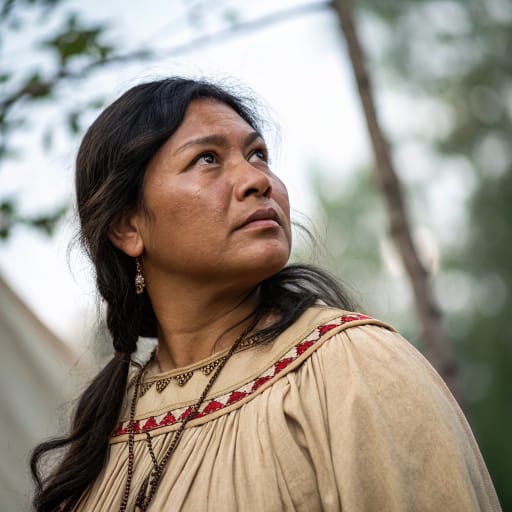
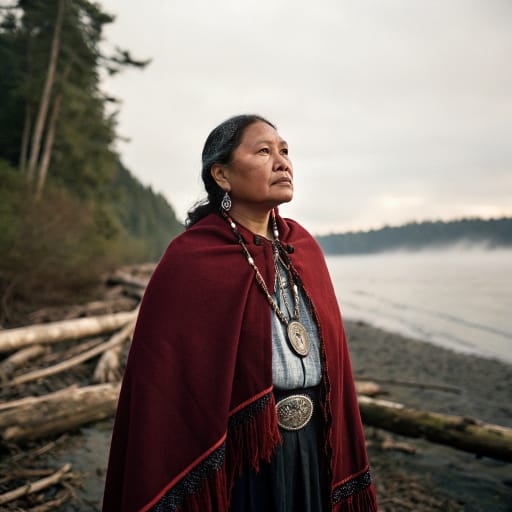
Typical Esselen Phenotypes
Reference for AI generation: hair, eyes, skin, facial structure, build
Esselen Body & Anatomy Reference
Indigenous Northern American / Algonquian-Iroquoian phenotype: anatomy reference for AI nude generation
Esselen Boobs & Breasts
Bust reference for Esselen women: medium cup, moderate projection, which is typical of Indigenous Northern American / Algonquian-Iroquoian ancestry. Areolas measure about 30-44mm across, with medium-brown pigmentation. Body type (mesomorph, broader frame in northern Indigenous populations) shapes the bust as well, so Esselen tits are usually full and moderate projection. In AI imagery, keep the forward-set shape rather than drifting toward the smaller East Asian bust.
Esselen Ass & Hips
The Esselen ass is typically medium, moderate-to-full projection, which sets it apart from the slim East Asian narrow-hip profile. Underneath, the pelvis shows medium iliac crests, part of the Indigenous Northern American / Algonquian-Iroquoian skeletal pattern. For Esselen butt pics and AI renders, match that silhouette and the overall build (mesomorph, broader frame in northern Indigenous populations).
Esselen Vagina & Pussy
Esselen pussy and vulvar anatomy presents medium-brown labial pigmentation, consistent with the Indigenous Northern American / Algonquian-Iroquoian phenotype's pigmentation pattern. Esselen pubic hair is typically straight medium-coarse texture, in the inverted-triangle pattern. For anatomically accurate Esselen pussy renders the labial coloration should match the surrounding copper to medium-brown skin tone with a continuous gradient, and the hair should keep its straight medium-coarse texture.
Esselen Dicks & Penis
Esselen dicks follow the Indigenous Northern American / Algonquian-Iroquoian reference data: regional mean ~13cm erect; moderate girth; medium-brown shaft pigmentation. Shaft color should track the copper to medium-brown skin tone with a smooth change toward the glans, and Esselen pubic hair keeps its straight medium-coarse texture.
Esselen Body, Curves & Build
Esselen body type and overall build presents as mesomorph, broader frame in northern Indigenous populations, with mean adult female BMI 25-28: the characteristic Indigenous Northern American / Algonquian-Iroquoian habitus. Esselen curves and proportions should keep the regional skeletal frame (height, shoulder-to-hip ratio, limb proportions) rather than a generic mesomorph default.
Esselen Skin Tone & Hair Texture
Esselen skin sits in the copper to medium-brown (Fitzpatrick III-V) band. Hair is typically straight 1A, dark-brown to black, often thick and dense, in keeping with the Indigenous Northern American / Algonquian-Iroquoian phenotype. In nude renders the skin should stay one even tone from face to body, and body, pubic and head hair should match.
Explore phenotype categories
Structured taxonomy with peer-reviewed scales · 22 anatomical categories
Erotic Poses & Sex Positions
From the pose catalog: 219 named positions with reference skeletons
Frequently asked questions about Esselen people
Where is the Esselen homeland?
The Esselen homeland is Santa Lucia Mountains and Big Sur coast south of the Big Sur River, inland to the upper Carmel River and Arroyo Seco, Monterey County, California, United States in North America.
What language do Esselen people speak?
Esselen people primarily speak Esselen (proposed Hokan family, often treated as an isolate), no longer spoken; descendants speak English.
What religion do Esselen people practice?
The predominant religion among Esselen people is Traditional Indigenous beliefs; Roman Catholicism since the Carmel and Soledad missions.






Make your own Esselen images
Five a day, free, no credits to buy. The studio starts from this group's phenotype data, so you can set body type, pose and style and keep the traits accurate.
Start with Esselen