No portrait yet
Tututni Erotic
Lower Rogue River and the southern Oregon coast from around the Sixes River south to Pistol River, United States; descendants now live mainly in the Siletz and Grand Ronde communities of Oregon
Tututni, or Lower Rogue River Athabaskan (Oregon Athabaskan, Na-Dene), now largely dormant; English; Siletz Dee-ni taught at Siletz
Traditional beliefs with shamans who treated illness and ceremonial dances; mostly Christian since the reservation era, with world-renewal dancing revived at Siletz
Village communities including Tututunne, Mikonotunne, Shasta Costa, Kwatami (Sixes River), Euchre Creek, Joshua and Pistol River; Oregon Athabaskan peoples, related to Chetco and Tolowa
About Tututni People
The Tututni are the Athabaskan-speaking people of the lower Rogue River, where the river cuts out of the Klamath Mountains and reaches the Pacific at what is now Gold Beach, Oregon. The name first belonged to one village near the river mouth. Outsiders later used it for a whole set of related communities, from Shasta Costa and Mikonotunne upriver to Euchre Creek, Pistol River and the Sixes River people on the coast. No single chief ruled them. Each village looked to its wealthiest household head. Wealth was counted in strings of dentalium shell, and injuries and killings were settled by payment. Those customs tie the Tututni as closely to the Yurok and Hupa of northwestern California as to the Oregon coast. Their language points the same way. It belongs to a chain of Athabaskan languages running from southern Oregon into California. Its closest relatives are Chetco and Tolowa, and it is distantly related to Navajo, Apache and the Dene languages of the far north. Their neighbors spoke unrelated languages: the Takelma upriver and the Coosan-speaking peoples farther north. Salmon from the Rogue, smelt and shellfish from the beaches, and acorns from the hills fed families who spent the winter in plank houses dug partly into the ground.
That world came apart in the 1850s. Gold in the beach sands and a new settlement at Port Orford brought miners in fast, and killings on both sides grew into the Rogue River Wars of 1855 and 1856. When the fighting ended, the survivors were removed north to the Coast Reservation. Some were shipped out of Port Orford and others were marched up the coast, and villages that had stood for generations were left empty. Most of their descendants are enrolled in the Confederated Tribes of Siletz Indians, and some belong to Grand Ronde. Congress terminated both tribes in 1954. Siletz won back federal recognition in 1977 and Grand Ronde in 1983. The Tututni language has fallen out of daily use, but Siletz keeps a closely related Athabaskan language, Siletz Dee-ni, alive through classes and an online talking dictionary. Its dance house also hosts Nee-Dash, a world-renewal dance their Tolowa relatives in California hold as well. The people are no longer on the lower Rogue, but they are still here, and they still identify with the villages their families came from.
Related ethnic groups
Groups that share Tututni's homeland, region, language, or religious tradition. These are likely candidates for comparative phenotype reference.

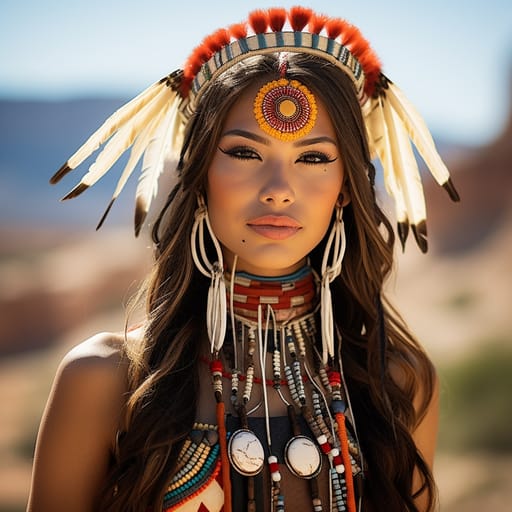
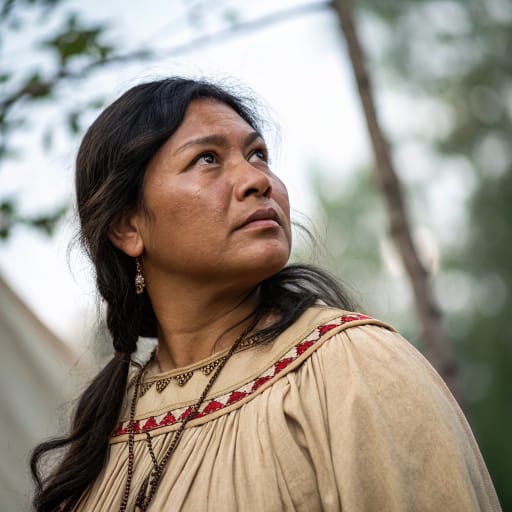
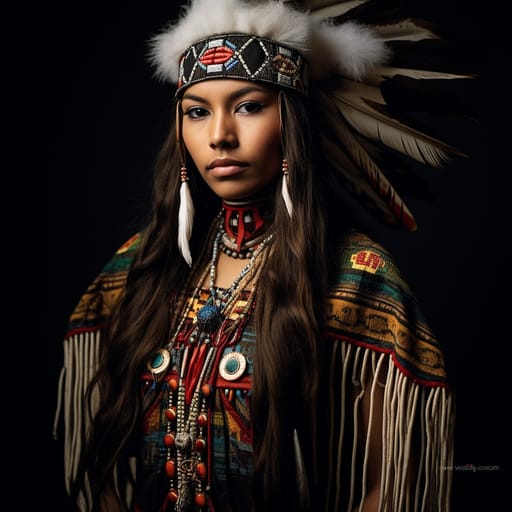
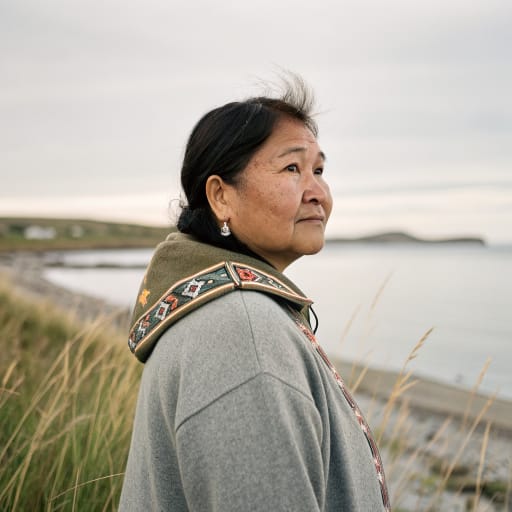
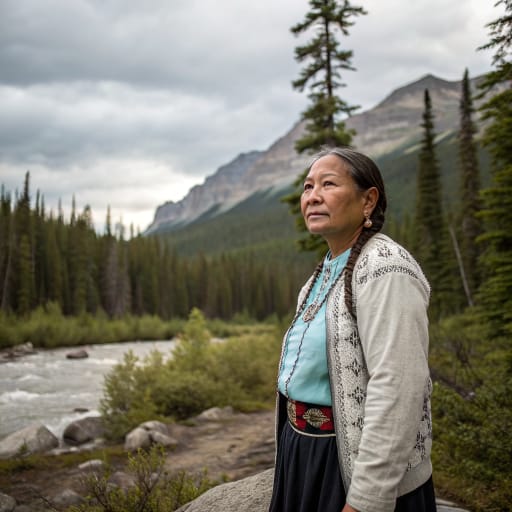
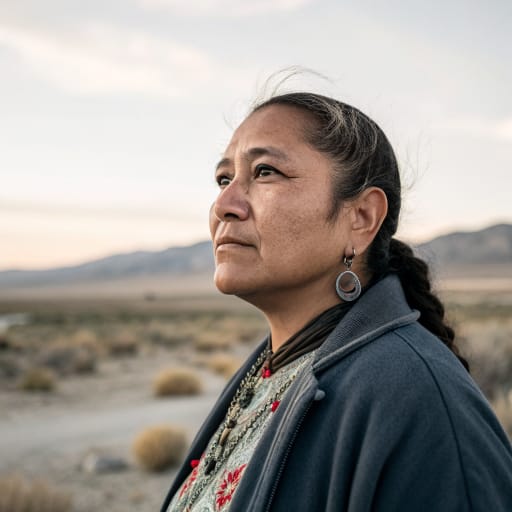
Typical Tututni Phenotypes
Reference for AI generation: hair, eyes, skin, facial structure, build
Tututni Body & Anatomy Reference
Per-feature anatomical profile for AI nude generation: Indigenous Northern American / Algonquian-Iroquoian phenotype
Tututni Boobs & Breasts
The typical Tututni bust is medium cup, moderate projection, in line with the wider Indigenous Northern American / Algonquian-Iroquoian pattern. Areolas usually fall in the 30-44mm range, with medium-brown areolar pigmentation against the copper-to-medium-brown skin tone. Compared with the smaller East Asian bust, Tututni breasts sit forward and are generally full and moderate projection. A faithful AI render of Tututni tits keeps that shape and areola size.
Tututni Ass & Hips
Butt shape among Tututni women: medium, moderate-to-full projection, over medium iliac crests. This follows Indigenous Northern American / Algonquian-Iroquoian ancestry and looks quite unlike the slim East Asian narrow-hip profile. An accurate Tututni ass in adult AI imagery keeps both the silhouette and the overall build (mesomorph, broader frame in northern Indigenous populations) instead of a generic average.
Tututni Vagina & Pussy
Vulvar anatomy among Tututni women: medium-brown labial pigmentation. Pubic hair tends to be straight medium-coarse texture, in the usual inverted-triangle pattern. Both follow Indigenous Northern American / Algonquian-Iroquoian pigmentation, which is why Tututni pussy renders should not fall back on a pale, sparse Western template.
Tututni Dicks & Penis
The Tututni cock profile, from Indigenous Northern American / Algonquian-Iroquoian anthropometric data: regional mean ~13cm erect; moderate girth; medium-brown shaft pigmentation. Pubic hair has a straight medium-coarse texture and forms the usual inverted-V pattern. Whether Tututni men are circumcised follows religious and cultural practice rather than phenotype.
Tututni Body, Curves & Build
Build and curves among Tututni women follow the Indigenous Northern American / Algonquian-Iroquoian pattern: mesomorph, broader frame in northern Indigenous populations, mean adult female BMI 25-28. Proportions matter as much as skin tone, so Tututni figures should keep their regional height and limb ratios.
Tututni Skin Tone & Hair Texture
The Tututni skin range is copper to medium-brown (Fitzpatrick III-V), and hair tends to be straight 1A, dark-brown to black, often thick and dense. That combination marks the Indigenous Northern American / Algonquian-Iroquoian phenotype, and skin tone is the trait AI generators most often get wrong for Tututni women.
Explore phenotype categories
Structured taxonomy with peer-reviewed scales · 22 anatomical categories
Erotic Poses & Sex Positions
From the pose catalog: 219 named positions with reference skeletons
Frequently asked questions about Tututni people
Where is the Tututni homeland?
The Tututni homeland is Lower Rogue River and the southern Oregon coast from around the Sixes River south to Pistol River, United States; descendants now live mainly in the Siletz and Grand Ronde communities of Oregon in North America.
What language do Tututni people speak?
Tututni people primarily speak Tututni, or Lower Rogue River Athabaskan (Oregon Athabaskan, Na-Dene), now largely dormant; English; Siletz Dee-ni taught at Siletz.
What religion do Tututni people practice?
The predominant religion among Tututni people is Traditional beliefs with shamans who treated illness and ceremonial dances; mostly Christian since the reservation era, with world-renewal dancing revived at Siletz.






Make your own Tututni images
Five a day, free, no credits to buy. The studio starts from this group's phenotype data, so you can set body type, pose and style and keep the traits accurate.
Start with Tututni