Help us get this right
Does this portrait look right for Mono?
Nobody has judged this one yet. You would be the first.
Mono Erotic
Central and southern Sierra Nevada, California, United States: western foothills in Fresno, Madera and Tulare counties, and east of the crest the Mono Basin and Owens Valley
Mono, with Western and Eastern dialects (Uto-Aztecan, Western Numic); English
Christianity and traditional beliefs, often practiced together
Western Mono or Monache (Northfork, Wobonuch, Entimbich, Michahai, Waksachi, Patwisha) and Eastern Mono (Mono Lake Kutzadika'a, Owens Valley Paiute); part of the wider Numic peoples
About Mono People
The Mono are the people on both sides of the central and southern Sierra Nevada. East of the crest they lived around Mono Lake and down the Owens Valley, in dry country under a wall of granite. West of it they settled the oak and pine foothills above the San Joaquin, Kings and Kaweah rivers. What holds the two halves together is a language and a long habit of crossing the mountains on foot. Mono is a Numic language in the Uto-Aztecan family and a close relative of Northern Paiute. On the western slope it is an island, surrounded by the unrelated languages of the Yokuts and Miwok. Linguists have long pointed to this corner of eastern California as a likely starting point for the spread of Numic speech across the Great Basin.
The name is usually traced to a Yokuts word, and it points to trade. At Mono Lake, the Kutzadika'a gathered brine fly pupae from the shoreline and dried them into a food called kutsavi. They carried it west over the passes with obsidian, salt and pine nuts, and brought back acorns, shell beads and baskets. On the western side, life ran on black oak acorns, pounded in bedrock mortars that still dot the granite and leached into meal. Western Mono weavers became some of the most skilled basket makers in California. They coil sedge root, bracken fern root and redbud into patterned bowls, and weavers still make them.
East of the mountains, the Owens Valley bands dug ditches to flood stands of wild seed plants and edible tubers, irrigation that American surveyors recorded in the 1850s. Their name for the valley, Payahuunadü, means land of flowing water. That water later went south. After the Los Angeles Aqueduct opened in 1913, the valley dried out and much of its land passed to the city. Before that, the Gold Rush and the wars of the 1850s and 1860s had broken village life on both slopes, and in 1863 hundreds of Owens Valley people were marched to Fort Tejon.
Today the Mono live mostly in small tribal communities. On the western slope these include the Northfork, Big Sandy and Cold Springs rancherias, and in the east there are Paiute tribes at Bishop, Big Pine and other valley towns. Many are Christian, often alongside older beliefs, and gatherings built around dance, acorn cooking and basketry keep those practices public. The language has few fluent speakers left, and community language programs are working to change that.
Related ethnic groups
Groups that share Mono's homeland, region, language, or religious tradition. These are likely candidates for comparative phenotype reference.
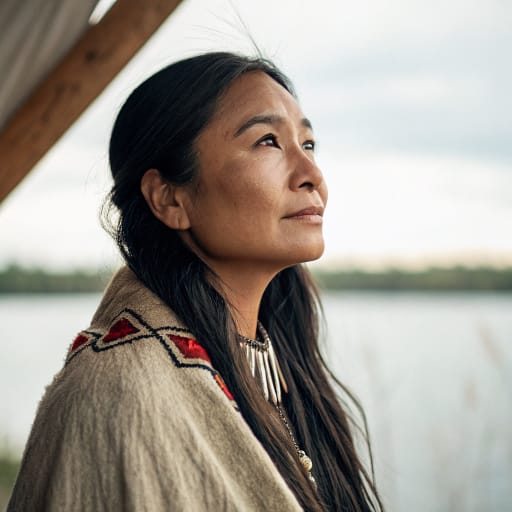
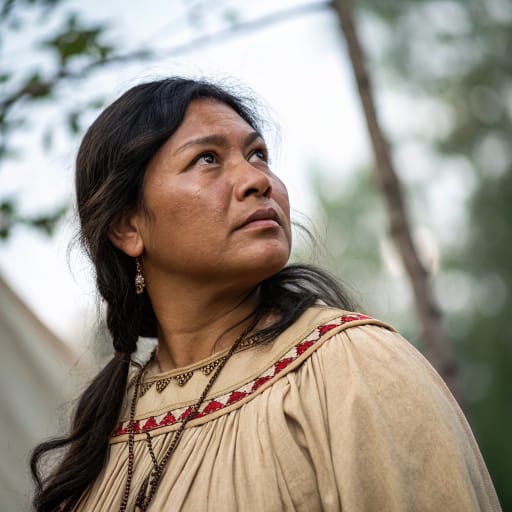
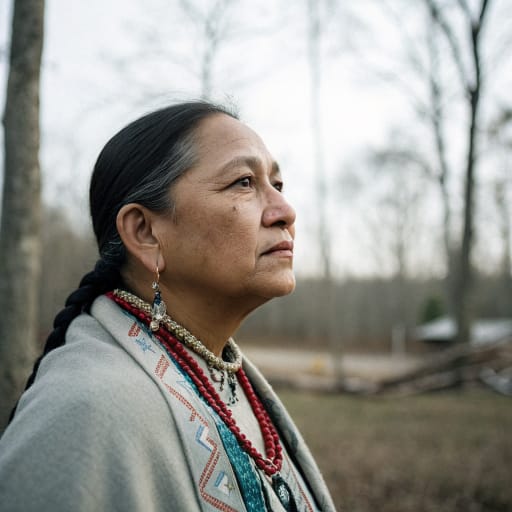
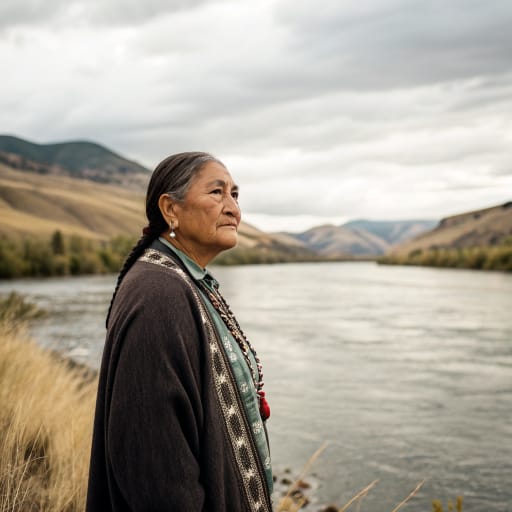
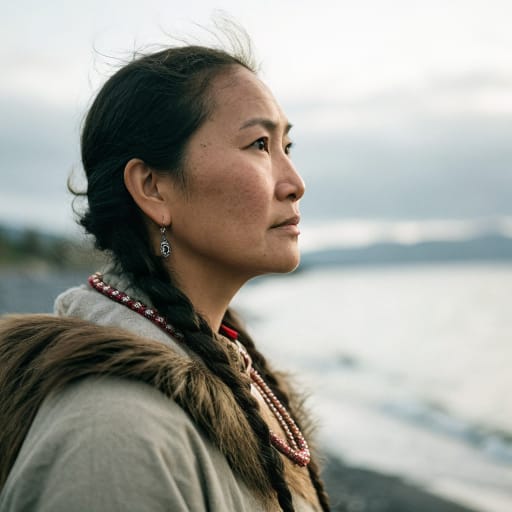
Typical Mono Phenotypes
Reference for AI generation: hair, eyes, skin, facial structure, build
Mono Body & Anatomy Reference
Indigenous Northern American / Algonquian-Iroquoian phenotype: anatomy reference for AI nude generation
Mono Boobs & Breasts
The typical Mono bust is medium cup, moderate projection, in line with the wider Indigenous Northern American / Algonquian-Iroquoian pattern. Areolas usually fall in the 30-44mm range, with medium-brown areolar pigmentation against the copper-to-medium-brown skin tone. Compared with the smaller East Asian bust, Mono breasts sit forward and are generally full and moderate projection. A faithful AI render of Mono tits keeps that shape and areola size.
Mono Ass & Hips
Butt shape among Mono women: medium, moderate-to-full projection, over medium iliac crests. This follows Indigenous Northern American / Algonquian-Iroquoian ancestry and looks quite unlike the slim East Asian narrow-hip profile. An accurate Mono ass in adult AI imagery keeps both the silhouette and the overall build (mesomorph, broader frame in northern Indigenous populations) instead of a generic average.
Mono Vagina & Pussy
Vulvar anatomy among Mono women: medium-brown labial pigmentation. Pubic hair tends to be straight medium-coarse texture, in the usual inverted-triangle pattern. Both follow Indigenous Northern American / Algonquian-Iroquoian pigmentation, which is why Mono pussy renders should not fall back on a pale, sparse Western template.
Mono Dicks & Penis
The Mono cock profile, from Indigenous Northern American / Algonquian-Iroquoian anthropometric data: regional mean ~13cm erect; moderate girth; medium-brown shaft pigmentation. Pubic hair has a straight medium-coarse texture and forms the usual inverted-V pattern. Whether Mono men are circumcised follows religious and cultural practice rather than phenotype.
Mono Body, Curves & Build
Build and curves among Mono women follow the Indigenous Northern American / Algonquian-Iroquoian pattern: mesomorph, broader frame in northern Indigenous populations, mean adult female BMI 25-28. Proportions matter as much as skin tone, so Mono figures should keep their regional height and limb ratios.
Mono Skin Tone & Hair Texture
The Mono skin range is copper to medium-brown (Fitzpatrick III-V), and hair tends to be straight 1A, dark-brown to black, often thick and dense. That combination marks the Indigenous Northern American / Algonquian-Iroquoian phenotype, and skin tone is the trait AI generators most often get wrong for Mono women.
Explore phenotype categories
Structured taxonomy with peer-reviewed scales · 22 anatomical categories
Erotic Poses & Sex Positions
From the pose catalog: 219 named positions with reference skeletons
Frequently asked questions about Mono people
Where is the Mono homeland?
The Mono homeland is Central and southern Sierra Nevada, California, United States: western foothills in Fresno, Madera and Tulare counties, and east of the crest the Mono Basin and Owens Valley in North America.
What language do Mono people speak?
Mono people primarily speak Mono, with Western and Eastern dialects (Uto-Aztecan, Western Numic); English.
What religion do Mono people practice?
The predominant religion among Mono people is Christianity and traditional beliefs, often practiced together.






Make your own Mono images
Five a day, free, no credits to buy. The studio starts from this group's phenotype data, so you can set body type, pose and style and keep the traits accurate.
Start with Mono