Help us get this right
Does this portrait look right for Dane-zaa?
One tap. It takes a second and it is recorded.
1 says it looks right, 0 say it looks off.
Dane-zaa Erotic
Upper Peace River country of northeastern British Columbia and northwestern Alberta, Canada, in boreal forest and parkland east of the Rocky Mountains
Beaver, or the Dane-zaa language (Northern Athabaskan, Na-Dene family); English widely spoken
Christianity alongside the Dreamer prophet tradition, drum dances and personal animal-helper beliefs
Northern Athabaskan (Dene) peoples, close kin to the Sekani and Tsuut'ina; communities include Doig River, Blueberry River, Halfway River and Prophet River in British Columbia, and Beaver First Nation and Horse Lake in Alberta
About Dane-zaa People
The Dane-zaa have hunted the Peace River country for as far back as their stories go. Their name for themselves is usually translated as real people. Outsiders called them the Beaver Indians, after the animal the fur trade was built on, and that label still clings to the language and to some band names. What makes them a people is less a boundary on a map than a way of knowing the land. Small family groups moved with the seasons through boreal forest and open parkland on both sides of the line that now divides British Columbia and Alberta, following moose, caribou and, in older days, wood bison.
Their language belongs to the Northern Athabaskan branch of the Na-Dene family. It is closely related to Sekani, and the Tsuut'ina of southern Alberta are generally thought to have split off from Dane-zaa ancestors. Today most fluent speakers are elders. Communities such as Doig River have worked hard to record songs, place names and stories while the people who carry them are still here to tell them.
The fur trade reshaped the region quickly. Cree bands armed through the trade pushed west in the 1700s, and the fighting drove Dane-zaa groups upriver until the two sides made peace. Tradition credits that settlement with giving the Peace River its English name. Dane-zaa bands entered Treaty 8 in 1899 and 1900. The twentieth century brought homesteaders, highways, oil and gas wells and hydroelectric dams, and in 1945 the original Fort St. John reserve was surrendered. In 2021 the Blueberry River First Nations won a landmark British Columbia court ruling: the sheer build-up of industrial development on their territory had breached their treaty rights.
The Dreamers
The most distinctive thread in Dane-zaa life is the Dreamer tradition. Prophets known as dreamers were said to travel to heaven in their sleep and bring back songs that show the living the trail to follow after death. Those songs are still sung at drum dances, where people dance in a circle to the singers' drums. Charlie Yahey, the last widely recognized dreamer, died in 1976, and song keepers have carried the songs on since. Alongside this runs an older idea of personal power. A child sent alone into the bush might receive a lifelong helper from an animal, and people usually keep that relationship private. Christian missions have worked in the region since the nineteenth century, and many families hold both traditions at once.
Related ethnic groups
Groups that share Dane-zaa's homeland, region, language, or religious tradition. These are likely candidates for comparative phenotype reference.
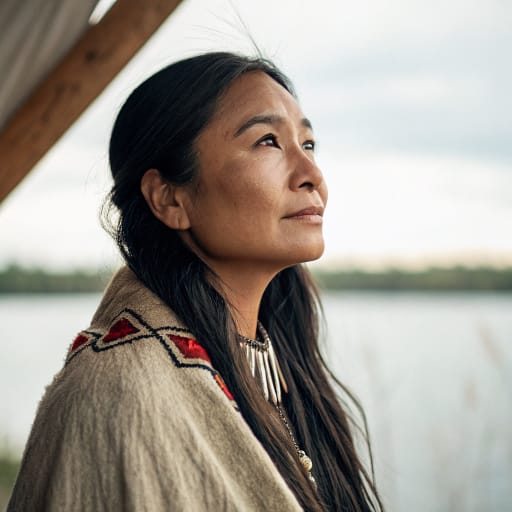
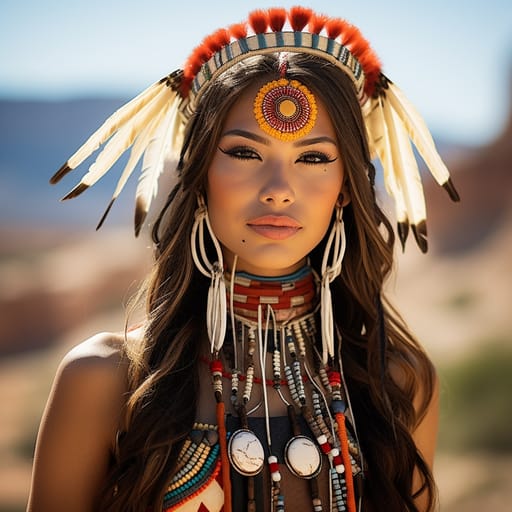
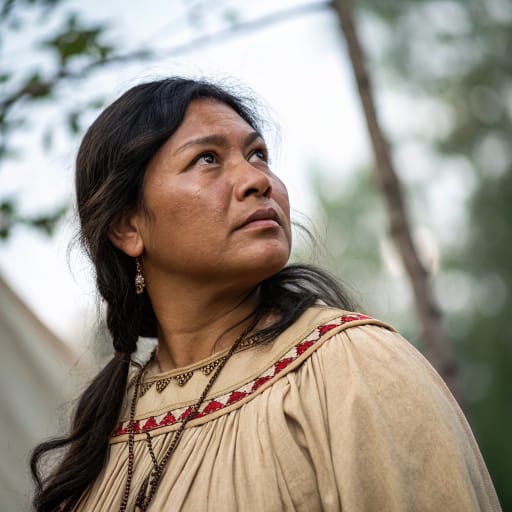
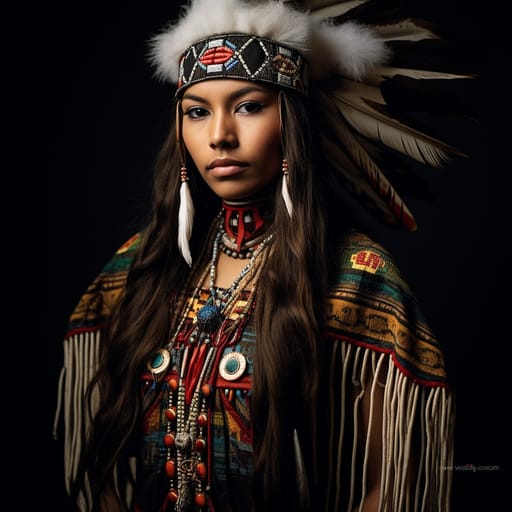
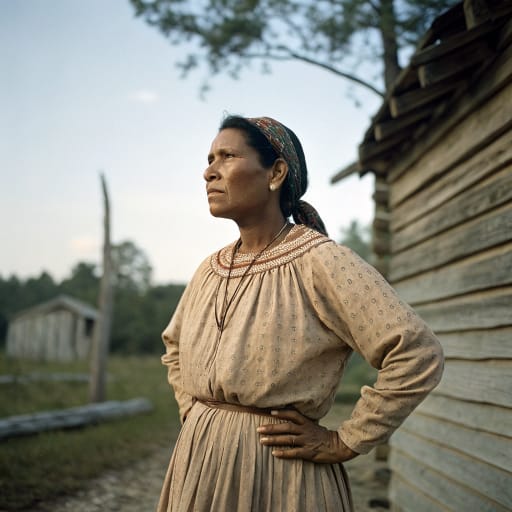
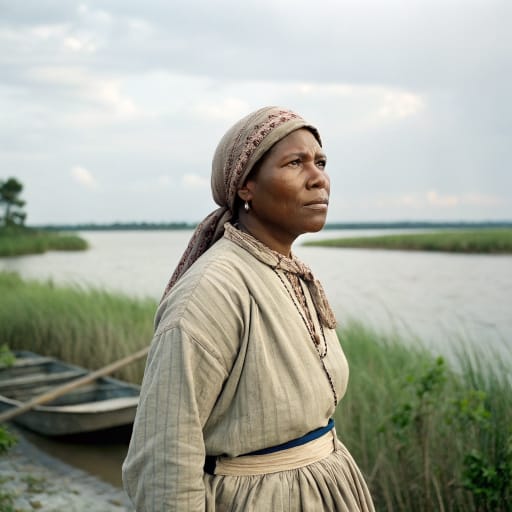
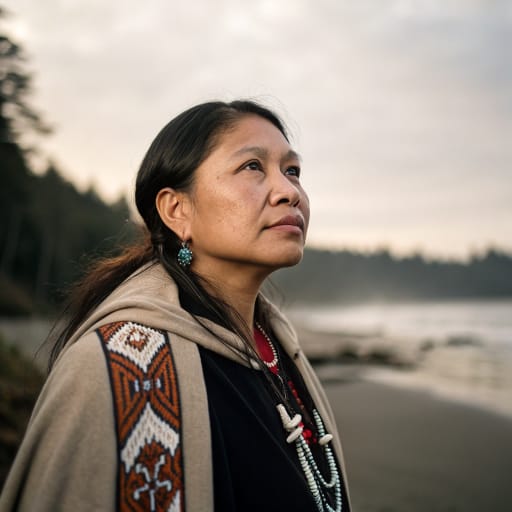
Typical Dane-zaa Phenotypes
Reference for AI generation: hair, eyes, skin, facial structure, build
Dane-zaa Body & Anatomy Reference
Per-feature anatomical profile for AI nude generation: Indigenous Northern American / Algonquian-Iroquoian phenotype
Dane-zaa Boobs & Breasts
The typical Dane-zaa bust is medium cup, moderate projection, in line with the wider Indigenous Northern American / Algonquian-Iroquoian pattern. Areolas usually fall in the 30-44mm range, with medium-brown areolar pigmentation against the copper-to-medium-brown skin tone. Compared with the smaller East Asian bust, Dane-zaa breasts sit forward and are generally full and moderate projection. A faithful AI render of Dane-zaa tits keeps that shape and areola size.
Dane-zaa Ass & Hips
Butt shape among Dane-zaa women: medium, moderate-to-full projection, over medium iliac crests. This follows Indigenous Northern American / Algonquian-Iroquoian ancestry and looks quite unlike the slim East Asian narrow-hip profile. An accurate Dane-zaa ass in adult AI imagery keeps both the silhouette and the overall build (mesomorph, broader frame in northern Indigenous populations) instead of a generic average.
Dane-zaa Vagina & Pussy
Vulvar anatomy among Dane-zaa women: medium-brown labial pigmentation. Pubic hair tends to be straight medium-coarse texture, in the usual inverted-triangle pattern. Both follow Indigenous Northern American / Algonquian-Iroquoian pigmentation, which is why Dane-zaa pussy renders should not fall back on a pale, sparse Western template.
Dane-zaa Dicks & Penis
The Dane-zaa cock profile, from Indigenous Northern American / Algonquian-Iroquoian anthropometric data: regional mean ~13cm erect; moderate girth; medium-brown shaft pigmentation. Pubic hair has a straight medium-coarse texture and forms the usual inverted-V pattern. Whether Dane-zaa men are circumcised follows religious and cultural practice rather than phenotype.
Dane-zaa Body, Curves & Build
Build and curves among Dane-zaa women follow the Indigenous Northern American / Algonquian-Iroquoian pattern: mesomorph, broader frame in northern Indigenous populations, mean adult female BMI 25-28. Proportions matter as much as skin tone, so Dane-zaa figures should keep their regional height and limb ratios.
Dane-zaa Skin Tone & Hair Texture
The Dane-zaa skin range is copper to medium-brown (Fitzpatrick III-V), and hair tends to be straight 1A, dark-brown to black, often thick and dense. That combination marks the Indigenous Northern American / Algonquian-Iroquoian phenotype, and skin tone is the trait AI generators most often get wrong for Dane-zaa women.
Explore phenotype categories
Structured taxonomy with peer-reviewed scales · 22 anatomical categories
Erotic Poses & Sex Positions
From the pose catalog: 219 named positions with reference skeletons
Frequently asked questions about Dane-zaa people
Where is the Dane-zaa homeland?
The Dane-zaa homeland is Upper Peace River country of northeastern British Columbia and northwestern Alberta, Canada, in boreal forest and parkland east of the Rocky Mountains in North America.
What language do Dane-zaa people speak?
Dane-zaa people primarily speak Beaver, or the Dane-zaa language (Northern Athabaskan, Na-Dene family); English widely spoken.
What religion do Dane-zaa people practice?
The predominant religion among Dane-zaa people is Christianity alongside the Dreamer prophet tradition, drum dances and personal animal-helper beliefs.






Make your own Dane-zaa images
Five a day, free, no credits to buy. The studio starts from this group's phenotype data, so you can set body type, pose and style and keep the traits accurate.
Start with Dane-zaa