No portrait yet
Tahltan Erotic
Upper Stikine River watershed of northwestern British Columbia, Canada, centered on Telegraph Creek, Iskut, and Dease Lake.
Tahltan (Northern Athabaskan, part of the Na-Dene family), closely related to Kaska and Tagish; English is now dominant.
Largely Christian, chiefly Anglican since late nineteenth-century missions, alongside continuing Dene spiritual practice tied to land, animals, and clan obligation.
Northern Athabaskan (Dene); two matrilineal clans, Ch'iyone (Wolf) and Tsesk'iye (Crow); organized today through the Tahltan Band, the Iskut Band, and the Tahltan Central Government.
About Tahltan People
The Tahltan are a Dene people of the upper Stikine, the big fast river that cuts through the mountains of northwestern British Columbia before turning toward the Alaskan coast. Their communities sit at Telegraph Creek, Iskut, and Dease Lake, and the territory they claim covers roughly 95,000 square kilometers of plateau, volcanic country, and canyon. Ask a Tahltan person how they are placed and the answer is as likely to begin with a clan as with a town. Everyone belongs to one of two matrilineal halves, Ch'iyone (Wolf) and Tsesk'iye (Crow), inherited from the mother, and marriage traditionally crosses between them. The system does practical work. It decides who cooks and who is fed at a funeral, who has standing to speak, who can give a name.
Position mattered here. The Tahltan held the trade road between the coastal Tlingit and the interior and worked it hard, moving eulachon grease and coastal goods inland and furs back down, and sending out obsidian quarried at Mount Edziza, volcanic glass that turns up in sites hundreds of kilometers from the mountain. Long dealing with the Tlingit left marks: crest regalia, feast protocol, borrowed words. The language itself is Northern Athabaskan, close to Kaska and Tagish and a distant cousin of Navajo. It is severely endangered, held now by a small number of elders and the subject of an urgent recording and immersion effort. Also gone is the Tahltan bear dog, a small, sharp-voiced hunting dog carried into the high country in a hide sack and released to hold a bear at bay.
The nineteenth century arrived first as smallpox and then as the Cassiar gold rush of the 1870s, which dropped thousands of strangers into the Stikine in a few seasons. In 1910 the chief and elders at Telegraph Creek signed the Declaration of the Tahltan Tribe, a short, blunt assertion of ownership that Tahltan negotiators still quote. Mining never left. The territory holds much of the ore of the Golden Triangle, and the Tahltan Central Government has become expert at the politics of that, signing benefit agreements with some projects and fighting others flat out. The Klabona Keepers' defense of the Klappan, the headwaters country where the Stikine, Skeena, and Nass all rise, ended coalbed methane drilling there in 2012. In 2022 the province agreed to consent-based decision-making with the Tahltan over a mine in their territory, a first in British Columbia.
Related ethnic groups
Groups that share Tahltan's homeland, region, language, or religious tradition. These are likely candidates for comparative phenotype reference.
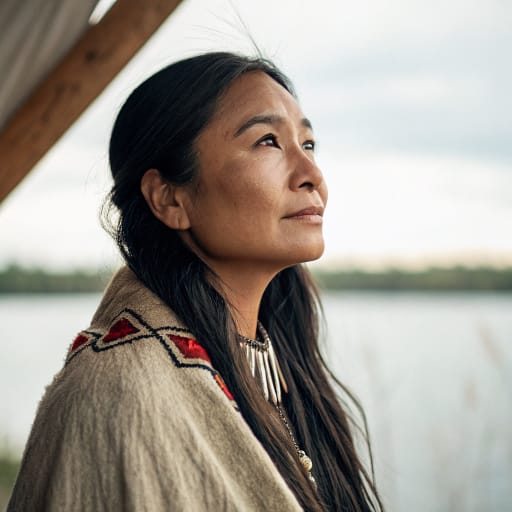
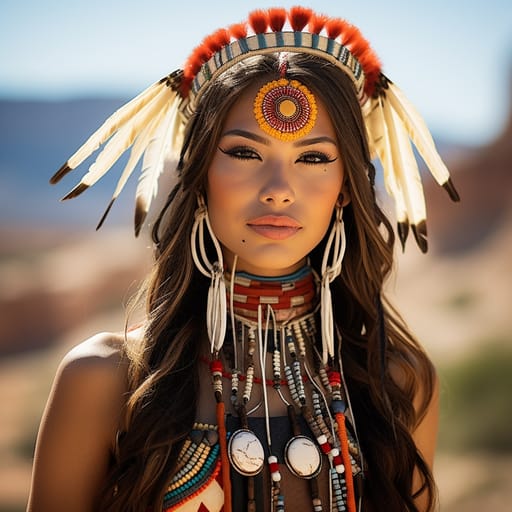
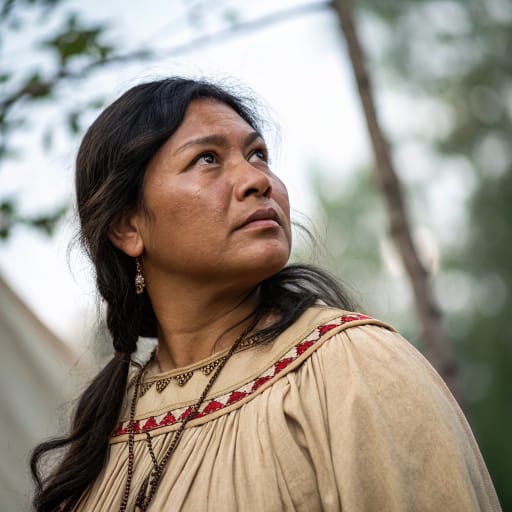
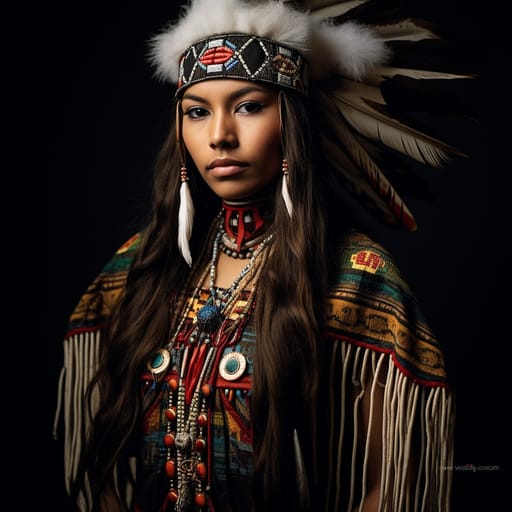
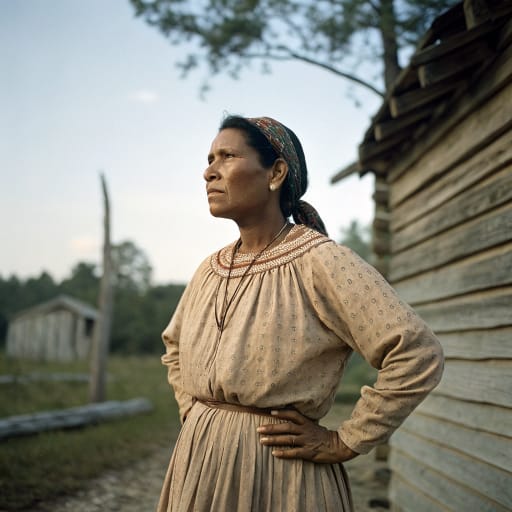
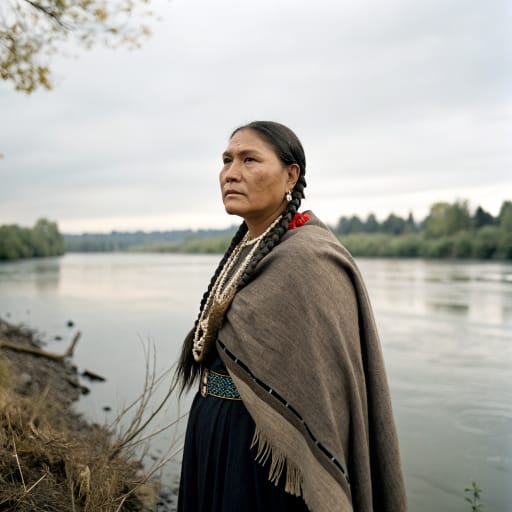
Typical Tahltan Phenotypes
Reference for AI generation: hair, eyes, skin, facial structure, build
Tahltan Body & Anatomy Reference
Anatomy by feature, Indigenous Northern American / Algonquian-Iroquoian phenotype
Tahltan Boobs & Breasts
Tahltan boobs follow the Indigenous Northern American / Algonquian-Iroquoian profile: medium cup, moderate projection. Areolar diameter is usually 30-44mm, and the coloring is medium-brown areolar pigmentation against the copper-to-medium-brown skin tone. Breast shape tracks body composition (mesomorph, broader frame in northern Indigenous populations, mean adult female BMI 25-28), so Tahltan breasts tend to be full and moderate projection. Expect a forward-set shape, not the smaller East Asian bust.
Tahltan Ass & Hips
Tahltan ass and hip morphology presents as medium, moderate-to-full projection, distinctly different from the slim East Asian narrow-hip profile. The Tahltan pelvic profile shows medium iliac crests, anchored in the Indigenous Northern American / Algonquian-Iroquoian skeletal pattern. Tahltan butt shots in adult AI imagery should render the medium, moderate-to-full projection silhouette with the overall build (mesomorph, broader frame in northern Indigenous populations) and the fat distribution typical of the Indigenous Northern American / Algonquian-Iroquoian phenotype.
Tahltan Vagina & Pussy
Tahltan pussy anatomy typically shows medium-brown labial pigmentation. Pubic hair is usually straight medium-coarse texture. In AI-generated Tahltan nudes, labial color should blend into the copper to medium-brown skin with a gradual transition, and the hair should keep its straight medium-coarse texture.
Tahltan Dicks & Penis
Penis reference for Tahltan men: regional mean ~13cm erect, moderate girth. Coloring: medium-brown shaft pigmentation. An accurate Tahltan cock in AI imagery matches the surrounding copper to medium-brown skin rather than a generic porn default. Circumcision depends on religion and custom, not ancestry.
Tahltan Body, Curves & Build
The Tahltan figure is generally mesomorph, broader frame in northern Indigenous populations, with mean adult female BMI 25-28, characteristic of Indigenous Northern American / Algonquian-Iroquoian ancestry. AI image tools tend to flatten regional body types into a few stock shapes; here the Tahltan build is kept as its own reference.
Tahltan Skin Tone & Hair Texture
Skin: copper to medium-brown (Fitzpatrick III-V). Hair: straight 1A, dark-brown to black, often thick and dense. Both are typical of Indigenous Northern American / Algonquian-Iroquoian ancestry. The most common mistake in AI nudes of Tahltan women is a body rendered lighter than the face.
Explore phenotype categories
Structured taxonomy with peer-reviewed scales · 22 anatomical categories
Erotic Poses & Sex Positions
From the pose catalog: 219 named positions with reference skeletons
Frequently asked questions about Tahltan people
Where is the Tahltan homeland?
The Tahltan homeland is Upper Stikine River watershed of northwestern British Columbia, Canada, centered on Telegraph Creek, Iskut, and Dease Lake. in North America.
What language do Tahltan people speak?
Tahltan people primarily speak Tahltan (Northern Athabaskan, part of the Na-Dene family), closely related to Kaska and Tagish; English is now dominant..
What religion do Tahltan people practice?
The predominant religion among Tahltan people is Largely Christian, chiefly Anglican since late nineteenth-century missions, alongside continuing Dene spiritual practice tied to land, animals, and clan obligation..






Make your own Tahltan images
Five a day, free, no credits to buy. The studio starts from this group's phenotype data, so you can set body type, pose and style and keep the traits accurate.
Start with Tahltan