Help us get this right
Does this portrait look right for Chepenafa?
Nobody has judged this one yet. You would be the first.
Chepenafa Erotic
Marys River drainage and its confluence with the Willamette River, around present-day Corvallis, Benton County, Oregon, United States.
Marys River dialect of Central Kalapuya (Kalapuyan family, sometimes placed in the proposed Penutian grouping), now extinct; Chinook Jargon and English after removal to Grand Ronde.
Traditional Kalapuya religion built on personal spirit powers, shamans, and winter dances; Christianity among descendants after removal to the reservation.
One of the Central Kalapuya bands of the Willamette Valley, alongside the Santiam, Luckiamute, and Chelamela; descendants belong to the Confederated Tribes of Grand Ronde and the Confederated Tribes of Siletz Indians.
About Chepenafa People
The Chepenafa were a Kalapuya band of Oregon's Willamette Valley who lived along Marys River, around present-day Corvallis, until treaty and removal in the 1850s ended their life as a separate community. Their descendants are enrolled today in the Confederated Tribes of Grand Ronde and, in smaller numbers, the Confederated Tribes of Siletz Indians. Settlers called them the Marys River Indians, or the Marysville band, after the town that later became Corvallis.
What set them apart from their neighbors was mostly place. The dozen or so Kalapuya bands shared a way of life, but each held its own stretch of river, and the Chepenafa held the country where Marys River comes down from the Coast Range to meet the Willamette. They spoke a dialect of Central Kalapuya, one of three languages in the small Kalapuyan family, which some linguists place in the proposed Penutian grouping. Their speech was close to that of the Santiam and other mid-valley bands, while Tualatin to the north and Yoncalla to the south were separate languages.
The valley they lived in was a managed one. Each fall the Kalapuya burned the prairies, which kept the oak savanna open, made deer easier to hunt, and readied tarweed seeds for gathering. Camas was the staple: bulbs dug in early summer, baked for days in earth ovens, and pressed into cakes that kept through winter. Wapato, acorns, hazelnuts, and berries filled out the diet, and salmon mattered less here than on the Columbia. Families wintered in permanent villages of multi-family houses and scattered to open camps in the warm months. Religion centered on personal spirit powers sought in solitary quests, with shamans treating illness and winter dances where power songs were sung.
The collapse came fast. Malaria, the fever and ague of settler accounts, arrived around 1830, swept the lower Columbia and the Willamette Valley, and killed the great majority of Kalapuya people within a few years. When American settlers filled the valley in the 1840s, the surviving bands were tiny. In January 1855 the Chepenafa signed the Willamette Valley treaty negotiated by Joel Palmer, ceding their land, and in 1856 they were moved to the Grand Ronde reservation. There the bands intermarried and Chinook Jargon became the common tongue.
Their language survives on paper. In 1913 and 1914 William Hartless, a Marys River speaker, dictated myths and accounts to the linguist Leo Frachtenberg, and those texts were later published in Melville Jacobs's Kalapuya Texts. Around Corvallis, camas still blooms each spring in the remnant wet prairies, and Grand Ronde tribal members still dig and bake it.
Related ethnic groups
Groups that share Chepenafa's homeland, region, language, or religious tradition. These are likely candidates for comparative phenotype reference.
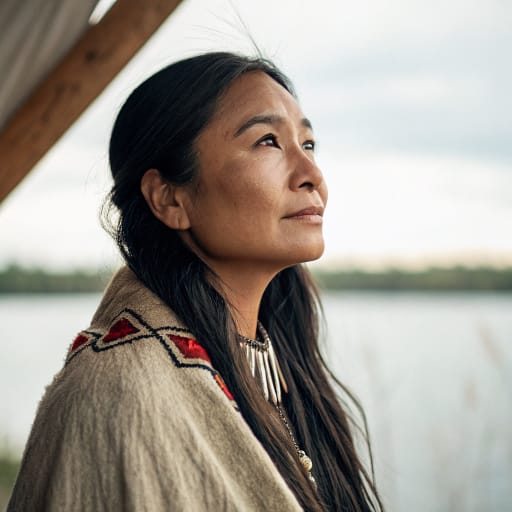
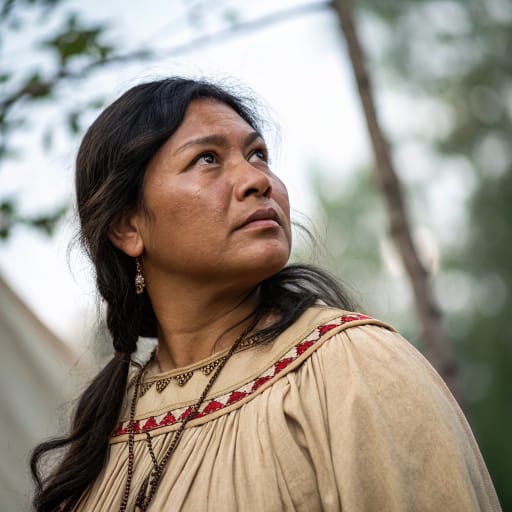
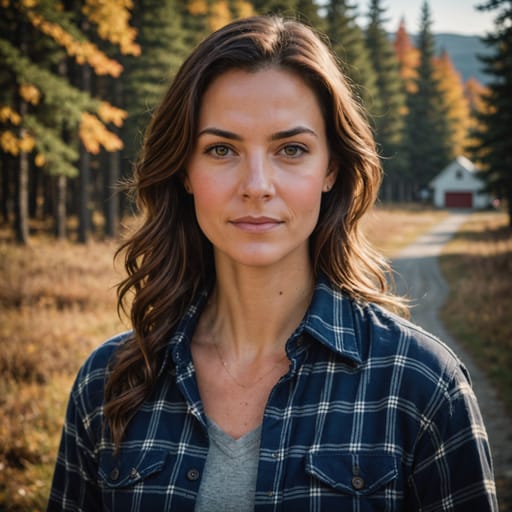
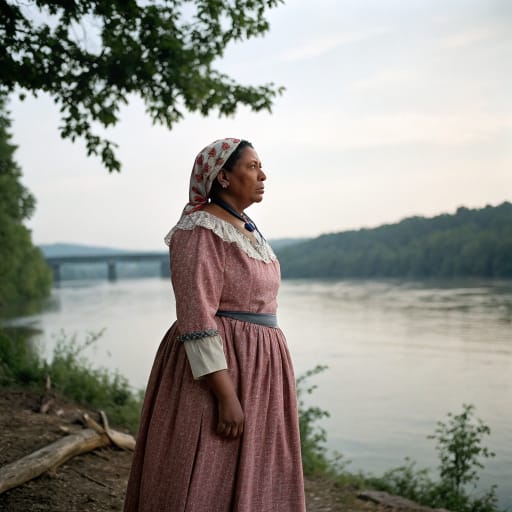
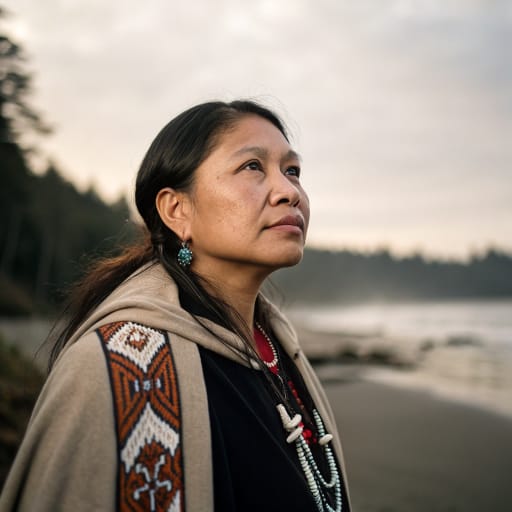
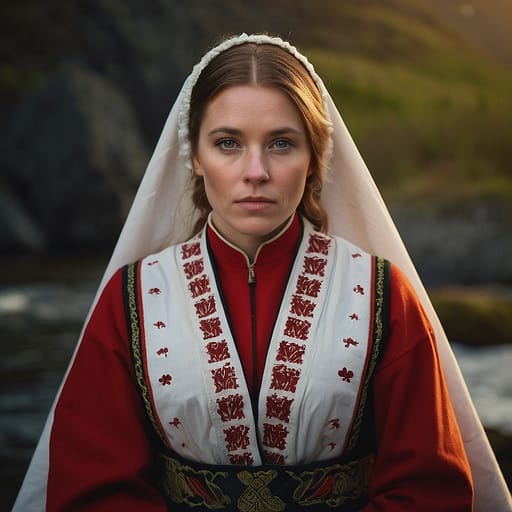
Typical Chepenafa Phenotypes
Reference for AI generation: hair, eyes, skin, facial structure, build
Chepenafa Body & Anatomy Reference
Anatomy by feature, Indigenous Northern American / Algonquian-Iroquoian phenotype
Chepenafa Boobs & Breasts
The typical Chepenafa bust is medium cup, moderate projection, in line with the wider Indigenous Northern American / Algonquian-Iroquoian pattern. Areolas usually fall in the 30-44mm range, with medium-brown areolar pigmentation against the copper-to-medium-brown skin tone. Compared with the smaller East Asian bust, Chepenafa breasts sit forward and are generally full and moderate projection. A faithful AI render of Chepenafa tits keeps that shape and areola size.
Chepenafa Ass & Hips
Butt shape among Chepenafa women: medium, moderate-to-full projection, over medium iliac crests. This follows Indigenous Northern American / Algonquian-Iroquoian ancestry and looks quite unlike the slim East Asian narrow-hip profile. An accurate Chepenafa ass in adult AI imagery keeps both the silhouette and the overall build (mesomorph, broader frame in northern Indigenous populations) instead of a generic average.
Chepenafa Vagina & Pussy
Vulvar anatomy among Chepenafa women: medium-brown labial pigmentation. Pubic hair tends to be straight medium-coarse texture, in the usual inverted-triangle pattern. Both follow Indigenous Northern American / Algonquian-Iroquoian pigmentation, which is why Chepenafa pussy renders should not fall back on a pale, sparse Western template.
Chepenafa Dicks & Penis
The Chepenafa cock profile, from Indigenous Northern American / Algonquian-Iroquoian anthropometric data: regional mean ~13cm erect; moderate girth; medium-brown shaft pigmentation. Pubic hair has a straight medium-coarse texture and forms the usual inverted-V pattern. Whether Chepenafa men are circumcised follows religious and cultural practice rather than phenotype.
Chepenafa Body, Curves & Build
Build and curves among Chepenafa women follow the Indigenous Northern American / Algonquian-Iroquoian pattern: mesomorph, broader frame in northern Indigenous populations, mean adult female BMI 25-28. Proportions matter as much as skin tone, so Chepenafa figures should keep their regional height and limb ratios.
Chepenafa Skin Tone & Hair Texture
The Chepenafa skin range is copper to medium-brown (Fitzpatrick III-V), and hair tends to be straight 1A, dark-brown to black, often thick and dense. That combination marks the Indigenous Northern American / Algonquian-Iroquoian phenotype, and skin tone is the trait AI generators most often get wrong for Chepenafa women.
Explore phenotype categories
Structured taxonomy with peer-reviewed scales · 22 anatomical categories
Erotic Poses & Sex Positions
From the pose catalog: 219 named positions with reference skeletons
Frequently asked questions about Chepenafa people
Where is the Chepenafa homeland?
The Chepenafa homeland is Marys River drainage and its confluence with the Willamette River, around present-day Corvallis, Benton County, Oregon, United States. in North America.
What language do Chepenafa people speak?
Chepenafa people primarily speak Marys River dialect of Central Kalapuya (Kalapuyan family, sometimes placed in the proposed Penutian grouping), now extinct; Chinook Jargon and English after removal to Grand Ronde..
What religion do Chepenafa people practice?
The predominant religion among Chepenafa people is Traditional Kalapuya religion built on personal spirit powers, shamans, and winter dances; Christianity among descendants after removal to the reservation..






Make your own Chepenafa images
Five a day, free, no credits to buy. The studio starts from this group's phenotype data, so you can set body type, pose and style and keep the traits accurate.
Start with Chepenafa