No portrait yet
Üzemchin Erotic
Ujimqin banners of Xilingol League, Inner Mongolia, China; a smaller community in Dornod and Sükhbaatar provinces of eastern Mongolia
Mongolian, Üzemchin (Ujimqin) dialect (Mongolic)
Tibetan Buddhism, alongside ovoo worship and older Mongol folk practice
Southern Mongol group, historically part of the Chakhar; split between the East and West Ujimqin banners in China and a smaller branch in eastern Mongolia
About Üzemchin People
The Üzemchin are a Mongol people shaped by a stretch of grassland and a border that runs through it. Most live in the two Ujimqin banners of Xilingol League in Inner Mongolia, China, on some of the best-preserved steppe left in the country. A smaller community lives across the line in Mongolia's eastern provinces of Dornod and Sükhbaatar. On both sides they count as a group of their own, with their own speech, dress and lineages. They are not simply Mongols who happen to live in the east.
They speak Mongolian. Their dialect belongs with the southern varieties spoken in Inner Mongolia rather than with the Khalkha standard of Mongolia. The border also shows up in writing: Üzemchin in China use the vertical Mongolian script, while their relatives in Mongolia learned Cyrillic. Religious life follows the familiar Mongol pattern of Tibetan Buddhism on top of older practice. People still walk around the ovoo cairns on hilltops, add stones to them and leave offerings of milk and silk scarves.
Their history is one of repeated movement. In the centuries after the Yuan dynasty they were counted among the Chakhar Mongols. In the early seventeenth century the Chakhar ruler Ligdan Khan's drive to centralize power turned violent, and the Üzemchin moved north into Khalkha territory. Later they came back south and submitted to the rising Qing, who organized them into the banners that still carry their name. A second break came at the end of the Second World War, when part of the population crossed into the Mongolian People's Republic and settled in the east. That group is the root of the Üzemchin counted in Mongolia's census today.
Herding is still the center of life. The Ujumqin sheep, a heavy fat-tailed breed named for the banners, is one of the best known livestock breeds in northern China. Horses matter just as much, from the racing and wrestling of summer naadam gatherings to the long songs sung at weddings and feasts. That herding life has also put the Üzemchin at the front of Inner Mongolia's fights over land. Coal mining pushed onto the grasslands in the 2000s. In 2011 a herder was struck and killed by a coal truck in West Ujimqin Banner, and his death set off protests across the region. For many Üzemchin, the question of who controls the pasture is not abstract. It decides whether a herding life that has survived centuries of upheaval makes it through the next one.
Related ethnic groups
Groups that share Üzemchin's homeland, region, language, or religious tradition. These are likely candidates for comparative phenotype reference.
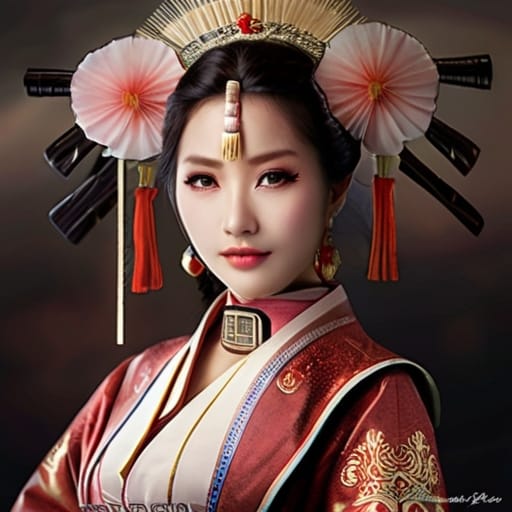
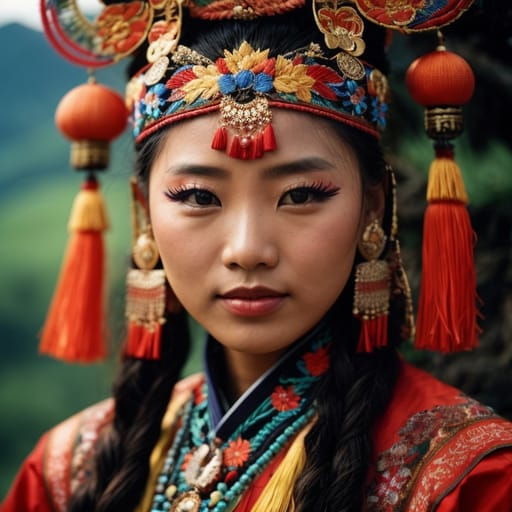
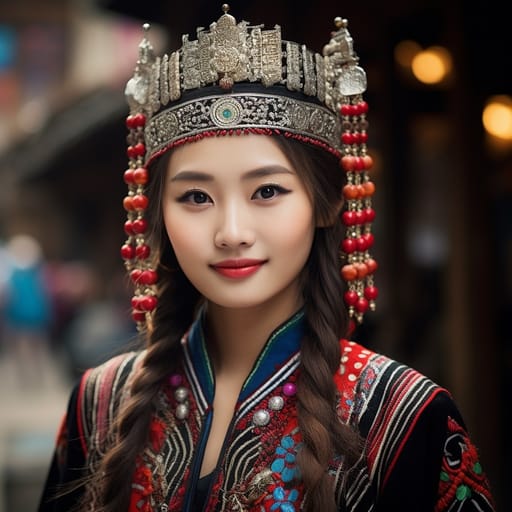
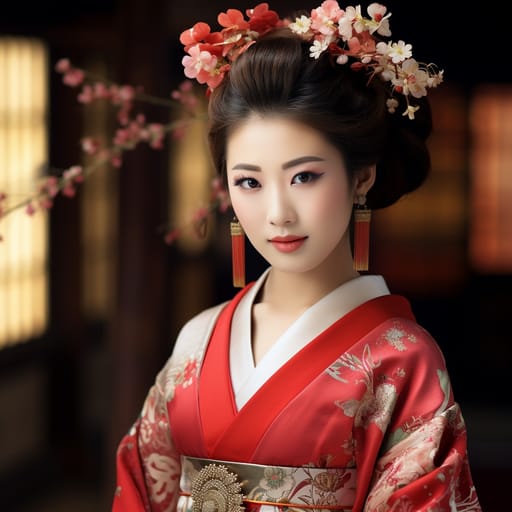
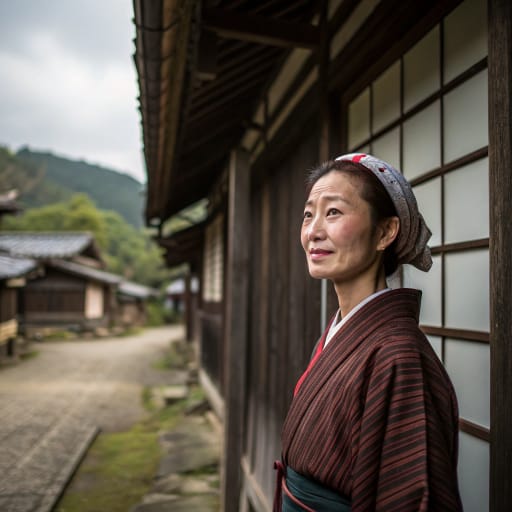
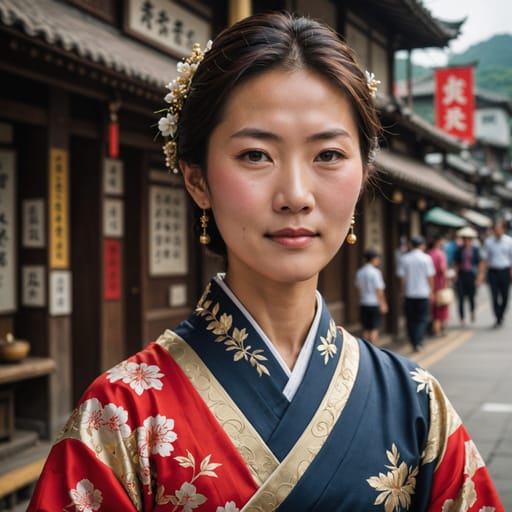
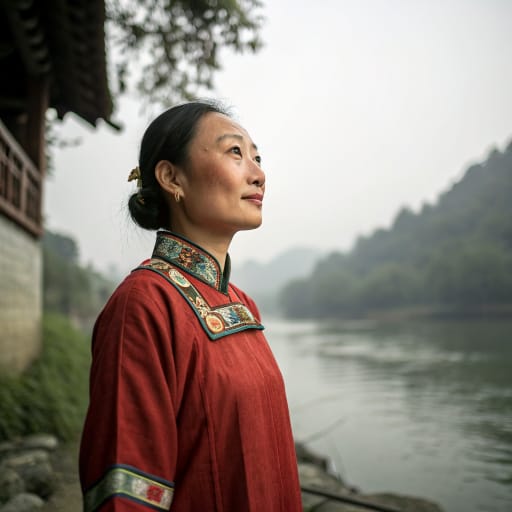
Typical Üzemchin Phenotypes
Reference for AI generation: hair, eyes, skin, facial structure, build
Üzemchin Body & Anatomy Reference
East Asian Sinitic / Mongoloid phenotype: anatomy reference for AI nude generation
Üzemchin Boobs & Breasts
Üzemchin boobs follow the East Asian Sinitic / Mongoloid profile: small-to-medium cup, modest projection. Areolar diameter is usually 26-36mm, and the coloring is light-pink to medium-brown areolar pigmentation against the light-to-medium skin tone. Breast shape tracks body composition (ectomorph-to-mesomorph, lean frame, mean adult female BMI 20-23), so Üzemchin breasts tend to be firm and modestly projecting; smaller cup size than the South Asian or Western Asian average. Expect a forward-set shape, not the fuller South Asian or Levantine bust profile.
Üzemchin Ass & Hips
Üzemchin ass and hip morphology presents as small-to-medium, modest projection, narrower hip profile, distinctly different from the fuller projected glutes of the West African or Polynesian phenotype. The Üzemchin pelvic profile shows narrower iliac crests, less gluteal-femoral fat deposition, anchored in the East Asian Sinitic / Mongoloid skeletal pattern. Üzemchin butt shots in adult AI imagery should render the small-to-medium, modest projection, narrower hip profile silhouette with the overall build (ectomorph-to-mesomorph, lean frame) and the fat distribution typical of the East Asian Sinitic / Mongoloid phenotype.
Üzemchin Vagina & Pussy
Üzemchin pussy anatomy typically shows light-pink to medium-brown labial pigmentation, smaller labia minora. Pubic hair is usually straight fine texture, sparser distribution than the South Asian norm. In AI-generated Üzemchin nudes, labial color should blend into the light to medium skin with a gradual transition, and the hair should keep its straight fine texture.
Üzemchin Dicks & Penis
Penis reference for Üzemchin men: regional mean ~11-12cm erect, moderate girth. Coloring: light-brown shaft pigmentation. An accurate Üzemchin cock in AI imagery matches the surrounding light to medium skin rather than a generic porn default. Circumcision depends on religion and custom, not ancestry.
Üzemchin Body, Curves & Build
The Üzemchin figure is generally ectomorph-to-mesomorph, lean frame, with mean adult female BMI 20-23, characteristic of East Asian Sinitic / Mongoloid ancestry. AI image tools tend to flatten regional body types into a few stock shapes; here the Üzemchin build is kept as its own reference.
Üzemchin Skin Tone & Hair Texture
Skin: light to medium (Fitzpatrick II-IV). Hair: straight 1A, fine-to-medium, predominantly black. Both are typical of East Asian Sinitic / Mongoloid ancestry. The most common mistake in AI nudes of Üzemchin women is a body rendered lighter than the face.
Explore phenotype categories
Structured taxonomy with peer-reviewed scales · 22 anatomical categories
Erotic Poses & Sex Positions
From the pose catalog: 219 named positions with reference skeletons
Frequently asked questions about Üzemchin people
Where is the Üzemchin homeland?
The Üzemchin homeland is Ujimqin banners of Xilingol League, Inner Mongolia, China; a smaller community in Dornod and Sükhbaatar provinces of eastern Mongolia in East Asia.
What language do Üzemchin people speak?
Üzemchin people primarily speak Mongolian, Üzemchin (Ujimqin) dialect (Mongolic).
What religion do Üzemchin people practice?
The predominant religion among Üzemchin people is Tibetan Buddhism, alongside ovoo worship and older Mongol folk practice.






Make your own Üzemchin images
Five a day, free, no credits to buy. The studio starts from this group's phenotype data, so you can set body type, pose and style and keep the traits accurate.
Start with Üzemchin