Help us get this right
Does this portrait look right for Kumaso?
Nobody has judged this one yet. You would be the first.
Kumaso Erotic
Southern Kyushu, Japan: the interior valleys and coasts of what are now Kumamoto, Miyazaki and Kagoshima prefectures.
Unrecorded (no Kumaso vocabulary survives; the names preserved in the chronicles are Old Japanese, and a Japonic or closely related southern speech is the usual assumption)
Not documented. Indigenous pre-Buddhist practice of the archipelago, before either Buddhism or the codified kami cult reached the south.
The name pairs two district names, Kuma and So, and likely covers several communities rather than one nation; commonly identified with, or succeeded by, the Hayato of southern Kyushu.
About Kumaso People
The Kumaso were a people of southern Kyushu, at the far southwest end of the Japanese archipelago, who held the volcanic uplands and river basins of what are now Kumamoto, Miyazaki and Kagoshima prefectures until the Yamato court absorbed the region; by the fifth century the chronicles stop naming them, and the population of southern Kyushu today is what became of them. Nearly everything said about them was said by the winners. The Kojiki and Nihon Shoki, finished in 712 and 720, describe events centuries older, and they describe them for a court that wanted a clean account of how the south had been taken. Even the name may be the court's: Kuma and So were two districts, and both survive on the map as the Kuma River in Kumamoto and the city of Soo in Kagoshima, which suggests that what the chronicles treat as one hostile nation was shorthand for several communities sharing a landscape and a refusal rather than a single identity. No Kumaso word survives, so their speech cannot be recovered, and the old theory that they were a stranded Ainu population has not held up. The archaeology is plainer than the chronicles: southern Kyushu buried its dead in chambers cut sideways into the ash soil, a practice the mound builders to the north did not share.
The chronicles come back to them again and again, which is itself a measure of how long the south held out. Emperor Keiko is said to have campaigned there in person. His son went while still a boy, put on a woman's robe and wore his hair down to get into a feast the Kumaso brothers were holding for a new hall, killed the elder of the two and then ran down the younger. In the Kojiki the younger, held on the sword, asks the boy's name and then grants him one: Takeru, brave. Japan's most celebrated legendary hero carries a title given to him by a man he had just stabbed, which is a strange thing for a conqueror's chronicle to keep, and part of why the Kumaso still hold the Japanese imagination. Emperor Chuai later died on campaign in Kyushu with the work unfinished. From the late seventh century the records for the same country name the Hayato instead, who rose in a final revolt in 720 and lost; most historians read the two names as one people at different dates. What is left is local: place names, a cave near Kirishima shown to visitors as a Kumaso hideout, and a durable sense in southern Kyushu of having been the part of Japan that came in last and under protest.
Related ethnic groups
Groups that share Kumaso's homeland, region, language, or religious tradition. These are likely candidates for comparative phenotype reference.

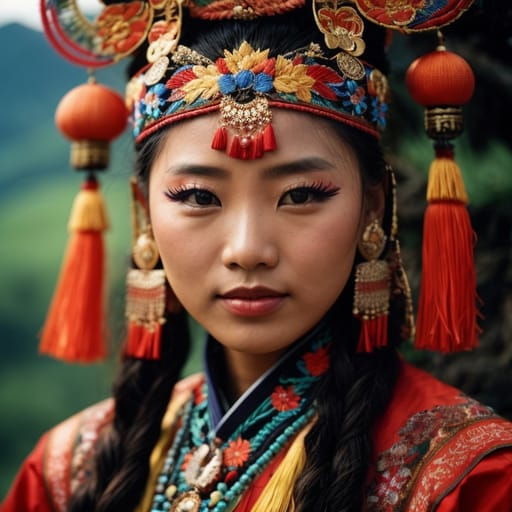
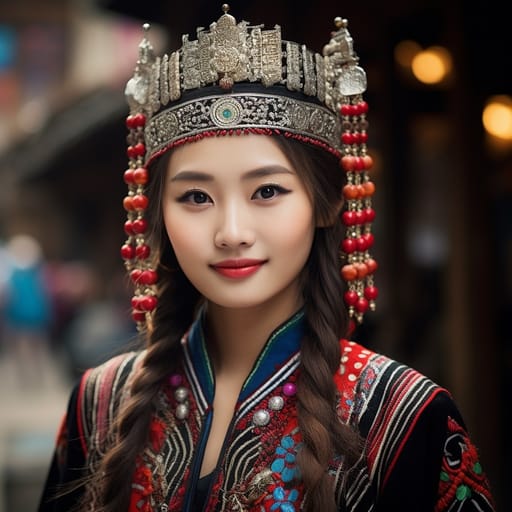

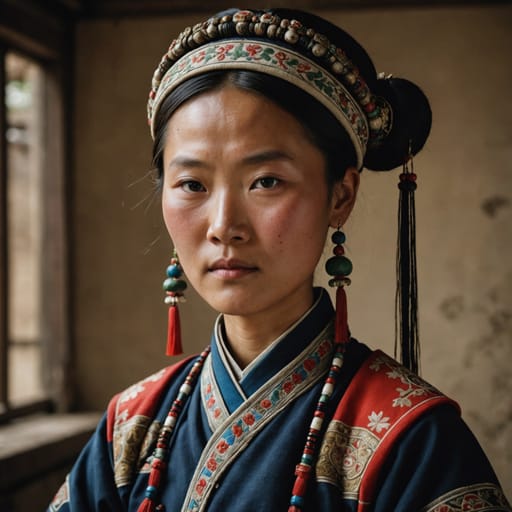
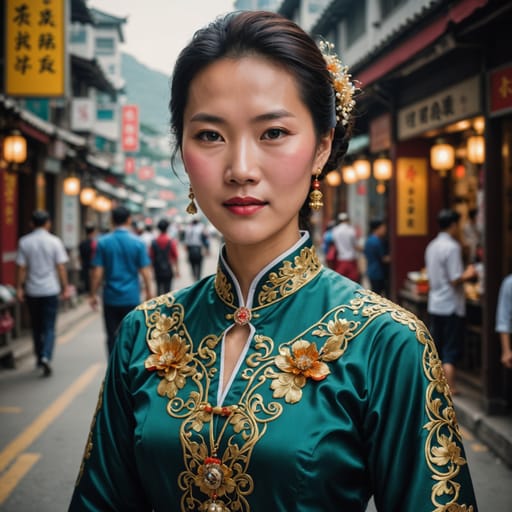
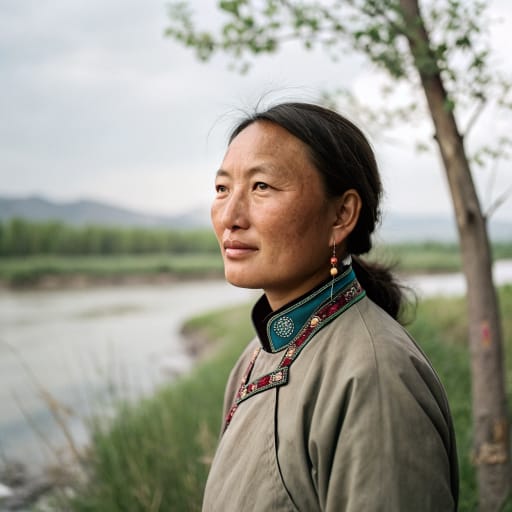
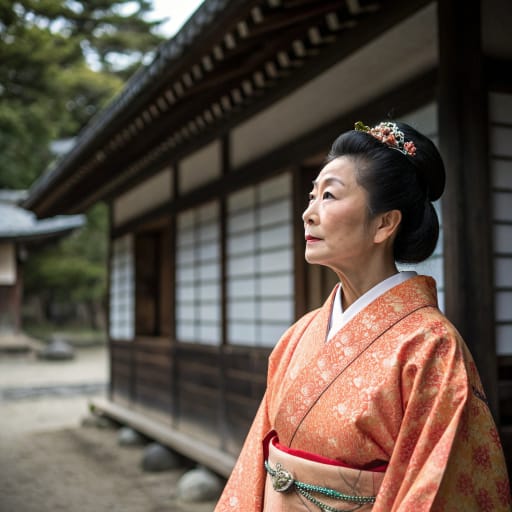
Typical Kumaso Phenotypes
Reference for AI generation: hair, eyes, skin, facial structure, build
Kumaso Body & Anatomy Reference
Anatomy by feature, East Asian Sinitic / Mongoloid phenotype
Kumaso Boobs & Breasts
Kumaso boobs follow the East Asian Sinitic / Mongoloid profile: small-to-medium cup, modest projection. Areolar diameter is usually 26-36mm, and the coloring is light-pink to medium-brown areolar pigmentation against the light-to-medium skin tone. Breast shape tracks body composition (ectomorph-to-mesomorph, lean frame, mean adult female BMI 20-23), so Kumaso breasts tend to be firm and modestly projecting; smaller cup size than the South Asian or Western Asian average. Expect a forward-set shape, not the fuller South Asian or Levantine bust profile.
Kumaso Ass & Hips
Kumaso ass and hip morphology presents as small-to-medium, modest projection, narrower hip profile, distinctly different from the fuller projected glutes of the West African or Polynesian phenotype. The Kumaso pelvic profile shows narrower iliac crests, less gluteal-femoral fat deposition, anchored in the East Asian Sinitic / Mongoloid skeletal pattern. Kumaso butt shots in adult AI imagery should render the small-to-medium, modest projection, narrower hip profile silhouette with the overall build (ectomorph-to-mesomorph, lean frame) and the fat distribution typical of the East Asian Sinitic / Mongoloid phenotype.
Kumaso Vagina & Pussy
Kumaso pussy anatomy typically shows light-pink to medium-brown labial pigmentation, smaller labia minora. Pubic hair is usually straight fine texture, sparser distribution than the South Asian norm. In AI-generated Kumaso nudes, labial color should blend into the light to medium skin with a gradual transition, and the hair should keep its straight fine texture.
Kumaso Dicks & Penis
Penis reference for Kumaso men: regional mean ~11-12cm erect, moderate girth. Coloring: light-brown shaft pigmentation. An accurate Kumaso cock in AI imagery matches the surrounding light to medium skin rather than a generic porn default. Circumcision depends on religion and custom, not ancestry.
Kumaso Body, Curves & Build
The Kumaso figure is generally ectomorph-to-mesomorph, lean frame, with mean adult female BMI 20-23, characteristic of East Asian Sinitic / Mongoloid ancestry. AI image tools tend to flatten regional body types into a few stock shapes; here the Kumaso build is kept as its own reference.
Kumaso Skin Tone & Hair Texture
Skin: light to medium (Fitzpatrick II-IV). Hair: straight 1A, fine-to-medium, predominantly black. Both are typical of East Asian Sinitic / Mongoloid ancestry. The most common mistake in AI nudes of Kumaso women is a body rendered lighter than the face.
Explore phenotype categories
Structured taxonomy with peer-reviewed scales · 22 anatomical categories
Erotic Poses & Sex Positions
From the pose catalog: 219 named positions with reference skeletons
Frequently asked questions about Kumaso people
Where is the Kumaso homeland?
The Kumaso homeland is Southern Kyushu, Japan: the interior valleys and coasts of what are now Kumamoto, Miyazaki and Kagoshima prefectures. in East Asia.
What language do Kumaso people speak?
Kumaso people primarily speak Unrecorded (no Kumaso vocabulary survives; the names preserved in the chronicles are Old Japanese, and a Japonic or closely related southern speech is the usual assumption).
What religion do Kumaso people practice?
The predominant religion among Kumaso people is Not documented. Indigenous pre-Buddhist practice of the archipelago, before either Buddhism or the codified kami cult reached the south..






Make your own Kumaso images
Five a day, free, no credits to buy. The studio starts from this group's phenotype data, so you can set body type, pose and style and keep the traits accurate.
Start with Kumaso