No portrait yet
Umatilla Erotic
Northeastern Oregon and southeastern Washington, along the Umatilla and Columbia rivers; today centered on the Umatilla Indian Reservation near Pendleton, Oregon.
Umatilla Sahaptin, called Ichishkiin (Sahaptian branch of Plateau Penutian); English is now dominant, with school and tribal language programs teaching Ichishkiin.
Washat, the Seven Drums longhouse religion, alongside Catholic and Presbyterian membership, frequently within the same families.
One of the three Confederated Tribes of the Umatilla Indian Reservation, with the Cayuse and Walla Walla; part of the wider Sahaptin-speaking peoples of the Columbia River Plateau.
About Umatilla People
The Umatilla take their name from a village at the mouth of the river that meets the Columbia near the present Oregon and Washington line, and for most of their history that is what they were: a river people, organized around where the salmon ran and where the roots came up. Their country is the dry inland Plateau east of the Cascades, basalt canyons and bunchgrass rising into the Blue Mountains, and the year moved through it in a fixed order. Spring for cous and camas on the uplands, summer for salmon at the falls, late summer for huckleberries in the mountains, fall for deer and elk. That sequence is not only history. The Confederated Tribes run their natural resources department on the same first foods order, water, salmon, deer, cous, huckleberry, which is the order the foods are served at a longhouse meal, and it may be the only case anywhere of a government agency taking its organizational chart from a ceremony. The language, Ichishkíin, is a dialect of Sahaptin, which with Nez Perce makes up the small Sahaptian family: neighbors up and down the Columbia spoke close relatives, and understanding across those villages took effort but not an interpreter.
Horses reached the Plateau around the 1730s and changed the scale of everything, carrying Umatilla families over the Rockies to hunt buffalo and bringing back beadwork, hide lodges and feathered regalia that now sit alongside older Plateau work: twined cornhusk bags, woven basket hats, dentalium shell traded up from the coast. The 1855 treaty council at Walla Walla put the Umatilla together with the Cayuse and Walla Walla on one reservation near what is now Pendleton, Oregon, and the Slater Act of 1885 allotted that reservation into the checkerboard of tribal and non-tribal ownership it remains. Religion layered rather than replaced. The Washat, the Seven Drums longhouse faith, is still kept, with its Sunday services and its root feast and salmon feast in the spring, and Catholic and Presbyterian membership runs beside it, often in the same families. The sharpest modern chapter is the river. Irrigation diversions dried the lower Umatilla by around 1914 and the salmon stopped coming for most of a century. The tribes spent decades in the water fight, and by the 1990s the runs were back. That is the rare restoration story that actually finished, and it is why the tribes are now taken seriously as a regional power in fish and water management, on top of the casino, the leased wheat ground, and the cultural institute at Tamástslikt that tells the Oregon Trail from the side that was already there.
Related ethnic groups
Groups that share Umatilla's homeland, region, language, or religious tradition. These are likely candidates for comparative phenotype reference.
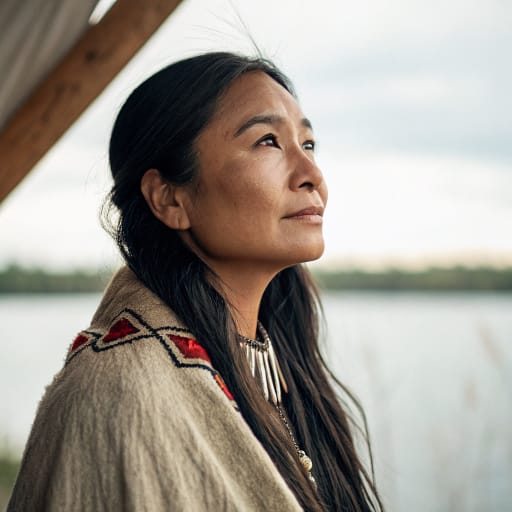
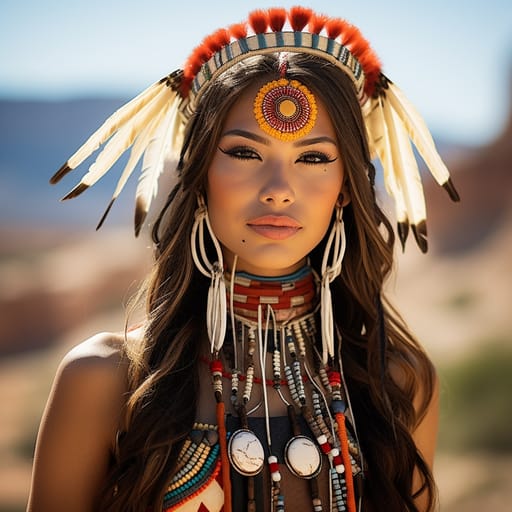
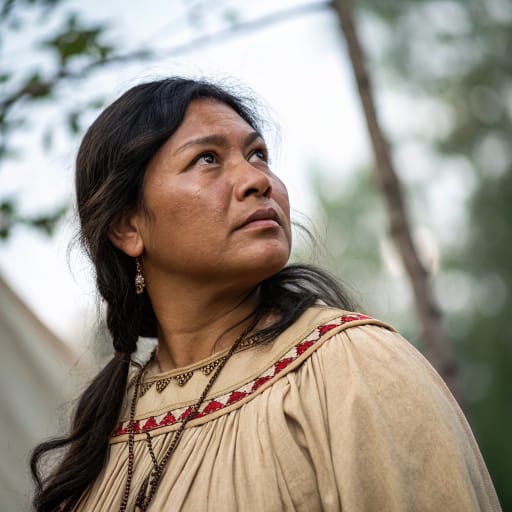
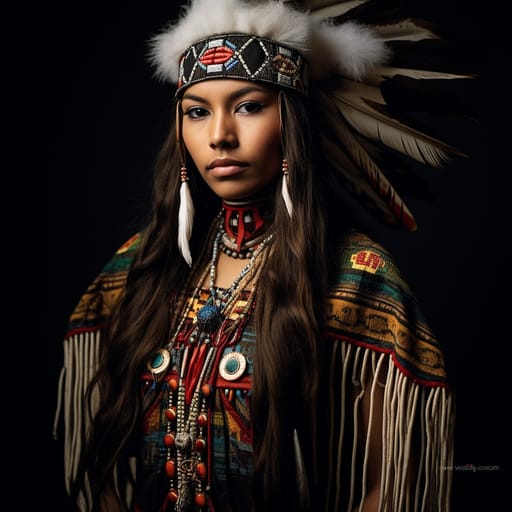
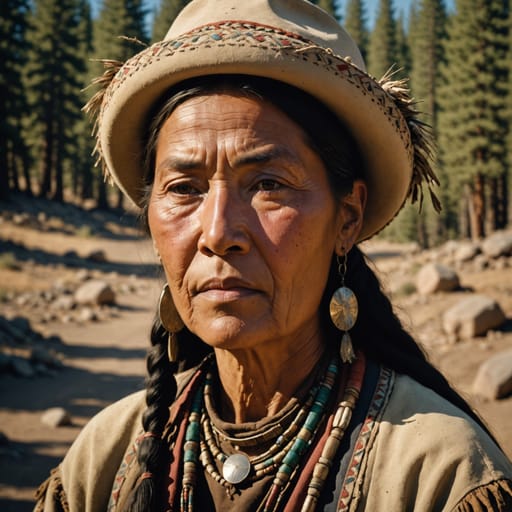
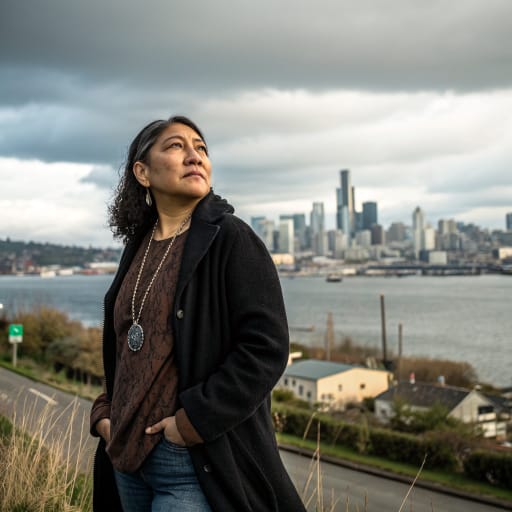
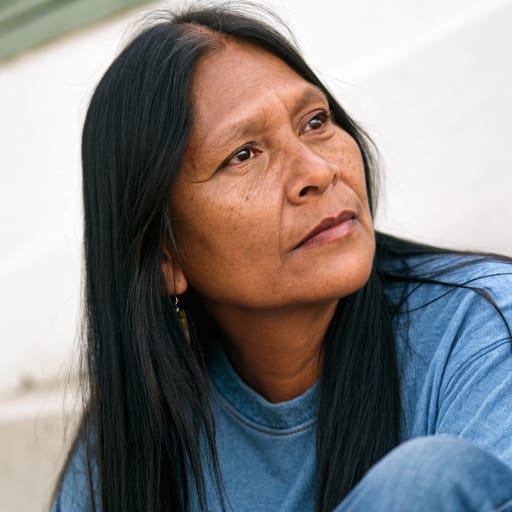
Typical Umatilla Phenotypes
Reference for AI generation: hair, eyes, skin, facial structure, build
Umatilla Body & Anatomy Reference
Anatomy by feature, Indigenous Northern American / Algonquian-Iroquoian phenotype
Umatilla Boobs & Breasts
Bust reference for Umatilla women: medium cup, moderate projection, which is typical of Indigenous Northern American / Algonquian-Iroquoian ancestry. Areolas measure about 30-44mm across, with medium-brown pigmentation. Body type (mesomorph, broader frame in northern Indigenous populations) shapes the bust as well, so Umatilla tits are usually full and moderate projection. In AI imagery, keep the forward-set shape rather than drifting toward the smaller East Asian bust.
Umatilla Ass & Hips
The Umatilla ass is typically medium, moderate-to-full projection, which sets it apart from the slim East Asian narrow-hip profile. Underneath, the pelvis shows medium iliac crests, part of the Indigenous Northern American / Algonquian-Iroquoian skeletal pattern. For Umatilla butt pics and AI renders, match that silhouette and the overall build (mesomorph, broader frame in northern Indigenous populations).
Umatilla Vagina & Pussy
Umatilla pussy and vulvar anatomy presents medium-brown labial pigmentation, consistent with the Indigenous Northern American / Algonquian-Iroquoian phenotype's pigmentation pattern. Umatilla pubic hair is typically straight medium-coarse texture, in the inverted-triangle pattern. For anatomically accurate Umatilla pussy renders the labial coloration should match the surrounding copper to medium-brown skin tone with a continuous gradient, and the hair should keep its straight medium-coarse texture.
Umatilla Dicks & Penis
Umatilla dicks follow the Indigenous Northern American / Algonquian-Iroquoian reference data: regional mean ~13cm erect; moderate girth; medium-brown shaft pigmentation. Shaft color should track the copper to medium-brown skin tone with a smooth change toward the glans, and Umatilla pubic hair keeps its straight medium-coarse texture.
Umatilla Body, Curves & Build
Umatilla body type and overall build presents as mesomorph, broader frame in northern Indigenous populations, with mean adult female BMI 25-28: the characteristic Indigenous Northern American / Algonquian-Iroquoian habitus. Umatilla curves and proportions should keep the regional skeletal frame (height, shoulder-to-hip ratio, limb proportions) rather than a generic mesomorph default.
Umatilla Skin Tone & Hair Texture
Umatilla skin sits in the copper to medium-brown (Fitzpatrick III-V) band. Hair is typically straight 1A, dark-brown to black, often thick and dense, in keeping with the Indigenous Northern American / Algonquian-Iroquoian phenotype. In nude renders the skin should stay one even tone from face to body, and body, pubic and head hair should match.
Explore phenotype categories
Structured taxonomy with peer-reviewed scales · 22 anatomical categories
Erotic Poses & Sex Positions
From the pose catalog: 219 named positions with reference skeletons
Frequently asked questions about Umatilla people
Where is the Umatilla homeland?
The Umatilla homeland is Northeastern Oregon and southeastern Washington, along the Umatilla and Columbia rivers; today centered on the Umatilla Indian Reservation near Pendleton, Oregon. in North America.
What language do Umatilla people speak?
Umatilla people primarily speak Umatilla Sahaptin, called Ichishkiin (Sahaptian branch of Plateau Penutian); English is now dominant, with school and tribal language programs teaching Ichishkiin..
What religion do Umatilla people practice?
The predominant religion among Umatilla people is Washat, the Seven Drums longhouse religion, alongside Catholic and Presbyterian membership, frequently within the same families..






Make your own Umatilla images
Five a day, free, no credits to buy. The studio starts from this group's phenotype data, so you can set body type, pose and style and keep the traits accurate.
Start with Umatilla