Help us get this right
Does this portrait look right for Atsugewi?
One tap. It takes a second and it is recorded.
0 say it looks right, 1 says it looks off.
Atsugewi Erotic
Hat Creek and Dixie Valley in northeastern California, east of Mount Lassen, United States
Atsugewi (Palaihnihan, often grouped with the proposed Hokan stock), now without fluent speakers; English in daily use
Traditional shamanic healing and spirit-power practice, alongside Christianity since the nineteenth century
Two divisions, Atsugé of Hat Creek and Apwaruge of Dixie Valley; Palaihnihan kin of the Achumawi; enrolled today among the bands of the Pit River Tribe
About Atsugewi People
The Atsugewi named themselves for trees. The Atsugé, the pine tree people, held Hat Creek, a cold fast stream running off the northeast shoulder of Mount Lassen through broken lava. The Apwaruge, the juniper tree people, held Dixie Valley to the east, higher and drier, where the pines thin out and sage takes the ground. Same language, same relatives, different country, and descendants still know which of the two their families come from.
That language, Atsugewi, pairs with Achumawi in the small Palaihnihan family: two languages related closely enough to be obviously kin, not closely enough for speakers of one to follow the other. Outside California it is best known to linguists. Leonard Talmy worked on it in the 1960s and described a verb system that builds the nature of the moving thing into the root itself, with separate roots for a runny mass, a small round object, a limp linear object, and for the sliding, spilling and dropping they do. Those roots became the standard reference case in later arguments about how languages carve up motion events. The last fluent speakers died in the late twentieth century, and what was written down is the material anyone learning it now has to work from.
Miners and stock came into that country within a few years of 1850, and what followed was the ordinary California catastrophe: killings, indenture under a state law that called itself apprenticeship, families marched west to reservations in the coast ranges and walking home again. Raiders out of the Modoc country had already been taking Pit River captives north to sell at The Dalles. Early anthropological counts put the surviving Atsugewi in the hundreds.
They are one of the eleven bands of the Pit River Tribe today, with land at Hat Creek and Roaring Creek and the XL Ranch up near Alturas, and many families enrolled at Susanville. In 1963 a federal claims commission valued the whole Pit River homeland at 47 cents an acre. Pit River people refused to cash it, and in 1970 they occupied ground near Burney and on Mount Shasta to say so publicly, and were arrested for it. The claim to roughly three and a half million acres has never been settled on terms the tribe accepts, and nobody there treats it as closed.
Related ethnic groups
Groups that share Atsugewi's homeland, region, language, or religious tradition. These are likely candidates for comparative phenotype reference.
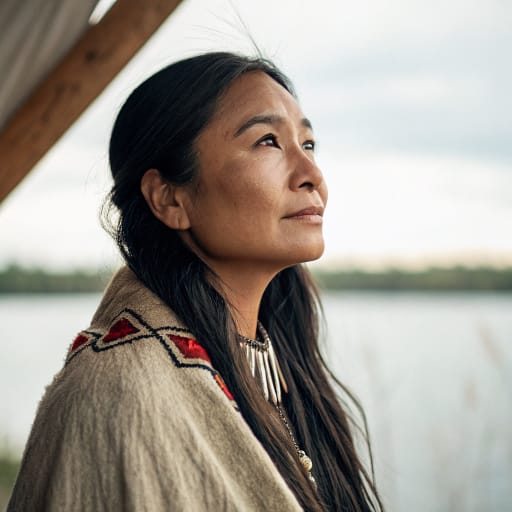
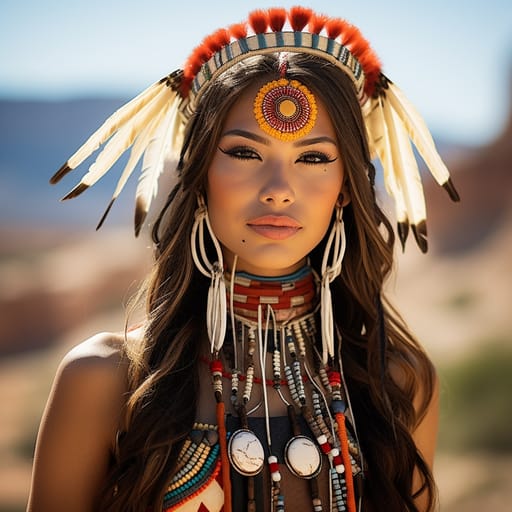
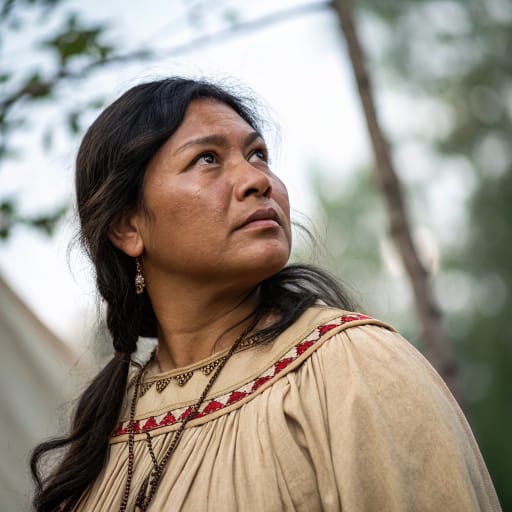
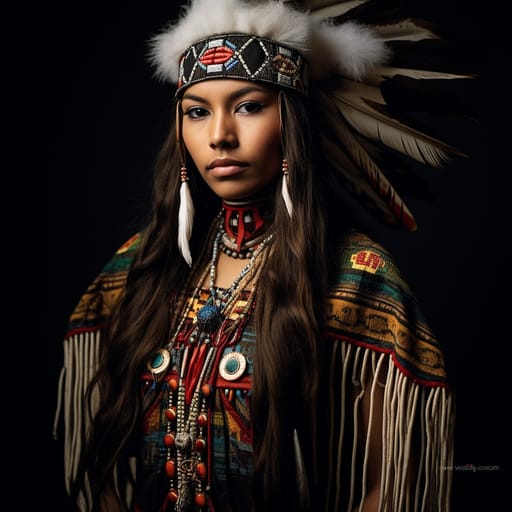

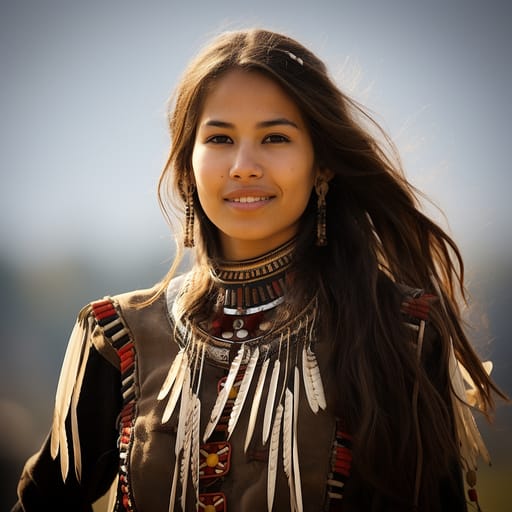
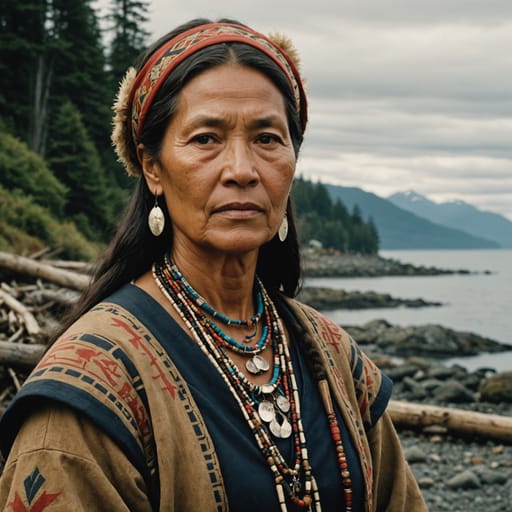
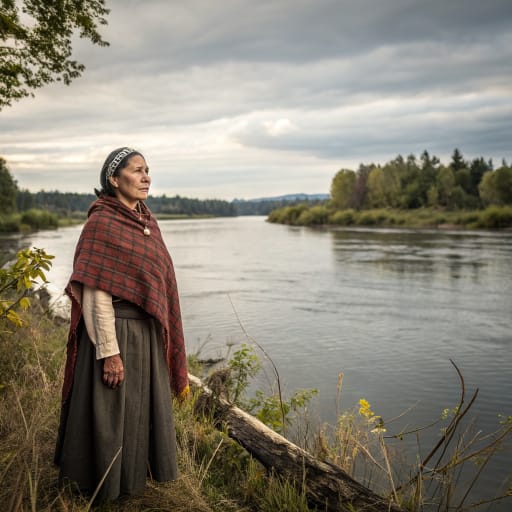
Typical Atsugewi Phenotypes
Reference for AI generation: hair, eyes, skin, facial structure, build
Atsugewi Body & Anatomy Reference
Per-feature anatomical profile for AI nude generation: Indigenous Northern American / Algonquian-Iroquoian phenotype
Atsugewi Boobs & Breasts
Bust reference for Atsugewi women: medium cup, moderate projection, which is typical of Indigenous Northern American / Algonquian-Iroquoian ancestry. Areolas measure about 30-44mm across, with medium-brown pigmentation. Body type (mesomorph, broader frame in northern Indigenous populations) shapes the bust as well, so Atsugewi tits are usually full and moderate projection. In AI imagery, keep the forward-set shape rather than drifting toward the smaller East Asian bust.
Atsugewi Ass & Hips
The Atsugewi ass is typically medium, moderate-to-full projection, which sets it apart from the slim East Asian narrow-hip profile. Underneath, the pelvis shows medium iliac crests, part of the Indigenous Northern American / Algonquian-Iroquoian skeletal pattern. For Atsugewi butt pics and AI renders, match that silhouette and the overall build (mesomorph, broader frame in northern Indigenous populations).
Atsugewi Vagina & Pussy
Atsugewi pussy and vulvar anatomy presents medium-brown labial pigmentation, consistent with the Indigenous Northern American / Algonquian-Iroquoian phenotype's pigmentation pattern. Atsugewi pubic hair is typically straight medium-coarse texture, in the inverted-triangle pattern. For anatomically accurate Atsugewi pussy renders the labial coloration should match the surrounding copper to medium-brown skin tone with a continuous gradient, and the hair should keep its straight medium-coarse texture.
Atsugewi Dicks & Penis
Atsugewi dicks follow the Indigenous Northern American / Algonquian-Iroquoian reference data: regional mean ~13cm erect; moderate girth; medium-brown shaft pigmentation. Shaft color should track the copper to medium-brown skin tone with a smooth change toward the glans, and Atsugewi pubic hair keeps its straight medium-coarse texture.
Atsugewi Body, Curves & Build
Atsugewi body type and overall build presents as mesomorph, broader frame in northern Indigenous populations, with mean adult female BMI 25-28: the characteristic Indigenous Northern American / Algonquian-Iroquoian habitus. Atsugewi curves and proportions should keep the regional skeletal frame (height, shoulder-to-hip ratio, limb proportions) rather than a generic mesomorph default.
Atsugewi Skin Tone & Hair Texture
Atsugewi skin sits in the copper to medium-brown (Fitzpatrick III-V) band. Hair is typically straight 1A, dark-brown to black, often thick and dense, in keeping with the Indigenous Northern American / Algonquian-Iroquoian phenotype. In nude renders the skin should stay one even tone from face to body, and body, pubic and head hair should match.
Explore phenotype categories
Structured taxonomy with peer-reviewed scales · 22 anatomical categories
Erotic Poses & Sex Positions
From the pose catalog: 219 named positions with reference skeletons
Frequently asked questions about Atsugewi people
Where is the Atsugewi homeland?
The Atsugewi homeland is Hat Creek and Dixie Valley in northeastern California, east of Mount Lassen, United States in North America.
What language do Atsugewi people speak?
Atsugewi people primarily speak Atsugewi (Palaihnihan, often grouped with the proposed Hokan stock), now without fluent speakers; English in daily use.
What religion do Atsugewi people practice?
The predominant religion among Atsugewi people is Traditional shamanic healing and spirit-power practice, alongside Christianity since the nineteenth century.






Make your own Atsugewi images
Five a day, free, no credits to buy. The studio starts from this group's phenotype data, so you can set body type, pose and style and keep the traits accurate.
Start with Atsugewi