No portrait yet
Tsou Erotic
The Alishan range and the upper Zengwen river valleys of Chiayi County in south central Taiwan, with communities in Nantou and Kaohsiung.
Tsou (Austronesian, one of the divergent Formosan branches), with Mandarin in daily use and Japanese among the oldest speakers.
Predominantly Christian, Presbyterian and Roman Catholic, running alongside a continuing clan and hosa ritual calendar.
Organized into hosa communities, principally Tapangu and Tfuya; formerly grouped with the Kanakanavu and Saaroa under a Tsouic label, both separately recognized since 2014.
About Tsou People
The Tsou hold the high country around Alishan, in the mountains of south central Taiwan, and they organize themselves around a building. The hosa is the mother village, and at its center stands the kuba, a thatched men's house raised on posts, with a fire inside that is not supposed to go out and a sacred yono fig planted beside it as a ladder for the war god. Smaller settlements scatter down the ridges, but they are not independent: each answers to a hosa, and each family belongs to a patrilineal clan with its own ritual house and its own hunting ground in the forest. Two hosa remain active, Tapangu and Tfuya. There were once more.
Their language is Austronesian, and it matters out of proportion to the number of people who speak it. Taiwan holds the deepest branches of the Austronesian family, the ones that predate the expansion into the Philippines and the Pacific, and Tsou is among the most divergent of them. Fewer than seven thousand people are registered as Tsou, and fluent speakers are fewer still, which is why the language now runs through school programs and hymnals. Until 2014 the government counted the neighboring Kanakanavu and Saaroa as southern Tsou, a grouping linguists had already begun to pull apart; both are now recognized as peoples in their own right.
Most Tsou are Christian, Presbyterian or Catholic, and that has not displaced the older calendar so much as run alongside it. Homeyaya, the millet harvest ritual, is a clan affair held at the family ritual house, millet being the crop that carries the sacred weight. Mayasvi belongs to the whole hosa: once tied to war and the return of raiding parties, it is now the annual occasion when boys are brought into the men's house and the gods are formally welcomed and sent home again.
Two things shaped the modern Tsou more than anything else. The Japanese colonial administration completed a logging railway into Alishan in 1912 and took the cypress forests they had lived among. Then in 1954 the Nationalist government executed Uongu e Yatauyungana, a Tsou teacher, composer and township head who had argued for indigenous self government, a White Terror killing the community still measures itself against.
The village of Shanmei is worth knowing for a quieter reason: in the 1990s its residents closed a stretch of the Danayi river to outside fishing and policed it themselves until the fish returned, then reopened it on their own terms. It is the Tsou answer to being somebody else's scenery.
Related ethnic groups
Groups that share Tsou's homeland, region, language, or religious tradition. These are likely candidates for comparative phenotype reference.

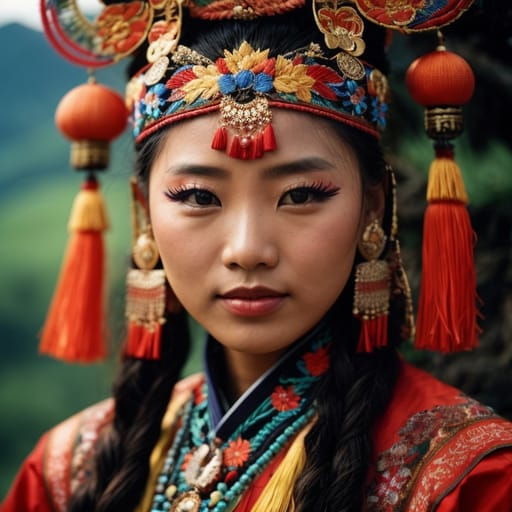
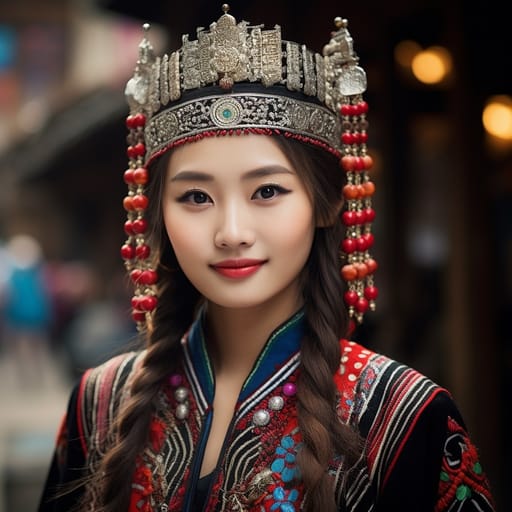

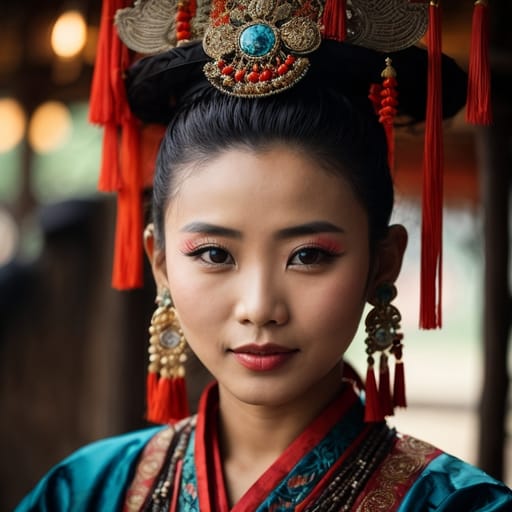
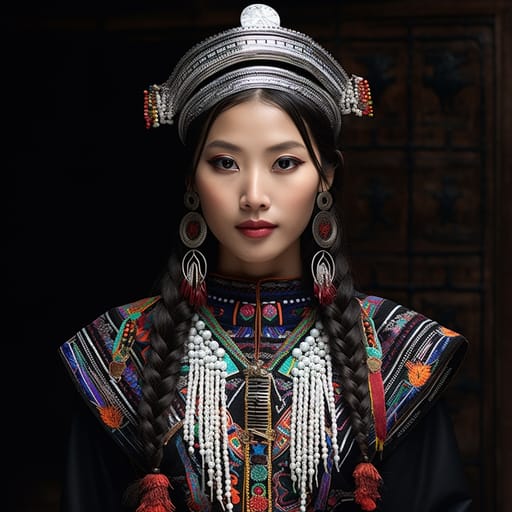
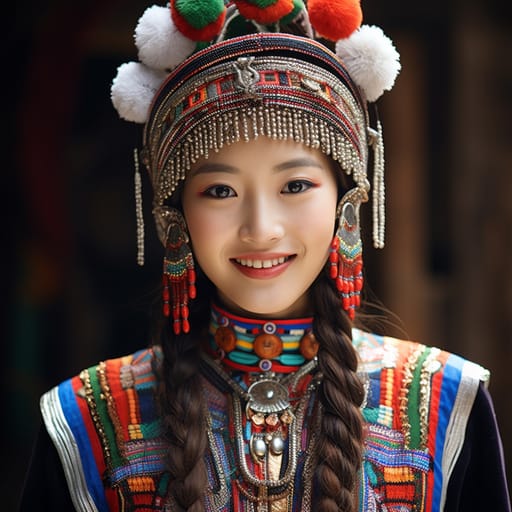
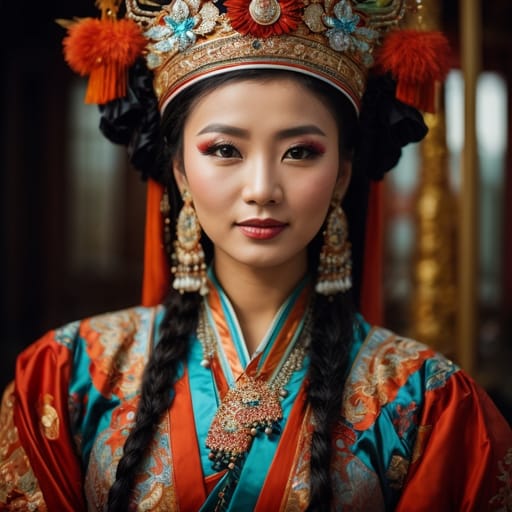
Typical Tsou Phenotypes
Reference for AI generation: hair, eyes, skin, facial structure, build
Tsou Body & Anatomy Reference
East Asian Sinitic / Mongoloid phenotype: anatomy reference for AI nude generation
Tsou Boobs & Breasts
Bust reference for Tsou women: small-to-medium cup, modest projection, which is typical of East Asian Sinitic / Mongoloid ancestry. Areolas measure about 26-36mm across, with light-pink to medium-brown pigmentation. Body type (ectomorph-to-mesomorph, lean frame) shapes the bust as well, so Tsou tits are usually firm and modestly projecting; smaller cup size than the South Asian or Western Asian average. In AI imagery, keep the forward-set shape rather than drifting toward the fuller South Asian or Levantine bust profile.
Tsou Ass & Hips
The Tsou ass is typically small-to-medium, modest projection, narrower hip profile, which sets it apart from the fuller projected glutes of the West African or Polynesian phenotype. Underneath, the pelvis shows narrower iliac crests, less gluteal-femoral fat deposition, part of the East Asian Sinitic / Mongoloid skeletal pattern. For Tsou butt pics and AI renders, match that silhouette and the overall build (ectomorph-to-mesomorph, lean frame).
Tsou Vagina & Pussy
Tsou pussy and vulvar anatomy presents light-pink to medium-brown labial pigmentation, smaller labia minora, consistent with the East Asian Sinitic / Mongoloid phenotype's pigmentation pattern. Tsou pubic hair is typically straight fine texture, sparser distribution than the South Asian norm, in the inverted-triangle pattern. For anatomically accurate Tsou pussy renders the labial coloration should match the surrounding light to medium skin tone with a continuous gradient, and the hair should keep its straight fine texture.
Tsou Dicks & Penis
Tsou dicks follow the East Asian Sinitic / Mongoloid reference data: regional mean ~11-12cm erect; moderate girth; light-brown shaft pigmentation. Shaft color should track the light to medium skin tone with a smooth change toward the glans, and Tsou pubic hair keeps its straight fine texture.
Tsou Body, Curves & Build
Tsou body type and overall build presents as ectomorph-to-mesomorph, lean frame, with mean adult female BMI 20-23: the characteristic East Asian Sinitic / Mongoloid habitus. Tsou curves and proportions should keep the regional skeletal frame (height, shoulder-to-hip ratio, limb proportions) rather than a generic mesomorph default.
Tsou Skin Tone & Hair Texture
Tsou skin sits in the light to medium (Fitzpatrick II-IV) band. Hair is typically straight 1A, fine-to-medium, predominantly black, in keeping with the East Asian Sinitic / Mongoloid phenotype. In nude renders the skin should stay one even tone from face to body, and body, pubic and head hair should match.
Explore phenotype categories
Structured taxonomy with peer-reviewed scales · 22 anatomical categories
Erotic Poses & Sex Positions
From the pose catalog: 219 named positions with reference skeletons
Frequently asked questions about Tsou people
Where is the Tsou homeland?
The Tsou homeland is The Alishan range and the upper Zengwen river valleys of Chiayi County in south central Taiwan, with communities in Nantou and Kaohsiung. in East Asia.
What language do Tsou people speak?
Tsou people primarily speak Tsou (Austronesian, one of the divergent Formosan branches), with Mandarin in daily use and Japanese among the oldest speakers..
What religion do Tsou people practice?
The predominant religion among Tsou people is Predominantly Christian, Presbyterian and Roman Catholic, running alongside a continuing clan and hosa ritual calendar..






Make your own Tsou images
Five a day, free, no credits to buy. The studio starts from this group's phenotype data, so you can set body type, pose and style and keep the traits accurate.
Start with Tsou