No portrait yet
Jurchens Erotic
Manchuria: present-day northeast China (Heilongjiang, Jilin, Liaoning) and the Amur and Ussuri basins of the Russian Far East, with a fringe along the northern Korean border
Jurchen (Tungusic; direct ancestor of Manchu), written in the Jurchen large and small scripts of the Jin period
Shamanism with veneration of heaven, ancestors and mountain and river spirits; Buddhism adopted by the Jin court elite
Wanyan clan (founders of the Jin dynasty); Ming-era Jianzhou, Haixi and Yeren (Wild) Jurchens; renamed Manchus in 1635, with the Nanai and Udege as related Tungusic descendants
About Jurchens People
The Jurchens were a historical people of Manchuria, the forested river country of present-day northeast China and the Russian Far East, recorded from about the tenth century until 1635, when the ruler Hong Taiji ordered the name retired and his subjects called Manchus. That decree renamed a population rather than ending one. The Manchus who took Beijing nine years later were Jurchens under a new label, and the Tungusic fishing peoples of the Amur, the Nanai and Udege among them, descend from the same stock. What set the Jurchens apart was language and livelihood. They spoke a Tungusic language, the direct ancestor of Manchu, unrelated to Chinese to the south, Mongolic to the west or Korean to the southeast. They lived by hunting, fishing, pig raising, millet farming, and gathering pearls and ginseng, a combination that made them, in the eyes of the Liao and Song courts, formidable and hard to read. A Liao saying held that ten thousand Jurchens could not be beaten.
For most of their history there was no single Jurchen state. Clans paid tribute to whoever held the plain to their west, first the Khitan Liao, later the Ming, whose officials handed out border guard commands that chiefs passed to their sons. The Liao appetite for gyrfalcons and pearls, collected by envoys whose conduct the Jurchens resented, is the grievance the chronicles remember. In 1115 Aguda of the Wanyan clan declared the Jin dynasty. Within twelve years his armies had destroyed the Liao and sacked the Song capital at Kaifeng, carrying off two emperors. The Jin ruled northern China until the Mongols finished them in 1234. In that century the Jurchens devised two scripts of their own, took up Buddhism at court alongside older shamanic practice, and ordered Chinese subjects to shave the front of the head and braid the rest in the Jurchen manner, a policy their Manchu descendants would repeat. After the Mongol conquest the people fell back into clans, and Ming administrators sorted them into three loose blocs: the Jianzhou near the Korean border, the Haixi along the Songhua, and the Yeren, the so-called wild Jurchens of the far northeast. Nurhaci, a Jianzhou chieftain grown rich on ginseng and sable, reassembled them into a state between 1583 and 1616 and pointed it at China.
Jurchen households slept on a heated brick platform, the kang, still common in northeastern Chinese homes. Marriage followed the levirate, with a widow passing to her husband's brother or nephew. Heaven, mountains and river spirits were addressed through shamans who drummed and danced into trance, a rite the Qing court maintained until the dynasty fell in 1912.
Related ethnic groups
Groups that share Jurchens's homeland, region, language, or religious tradition. These are likely candidates for comparative phenotype reference.
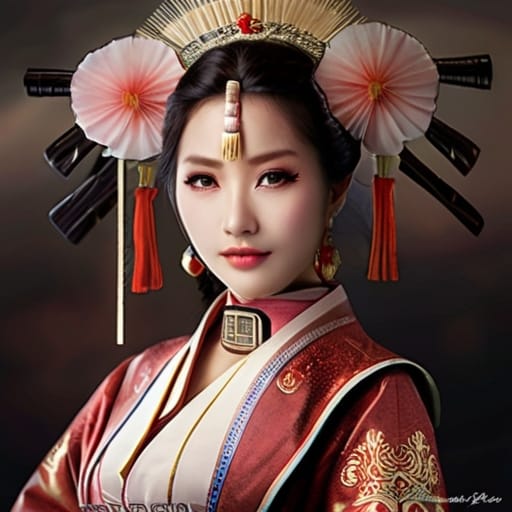
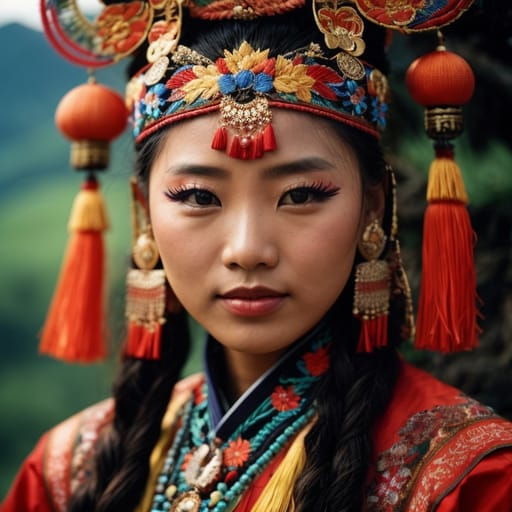
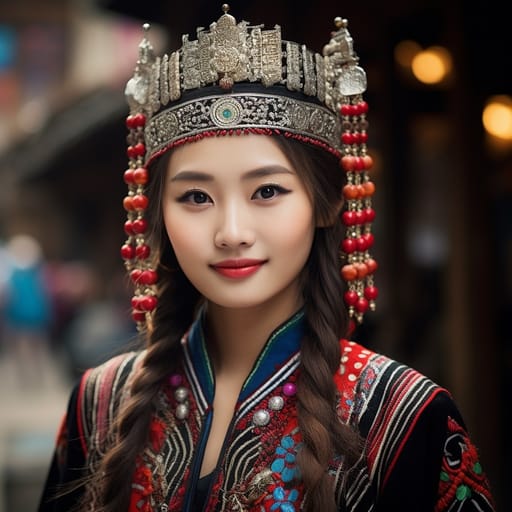
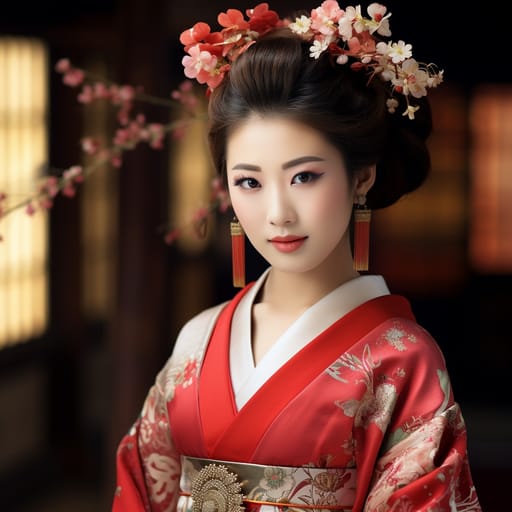
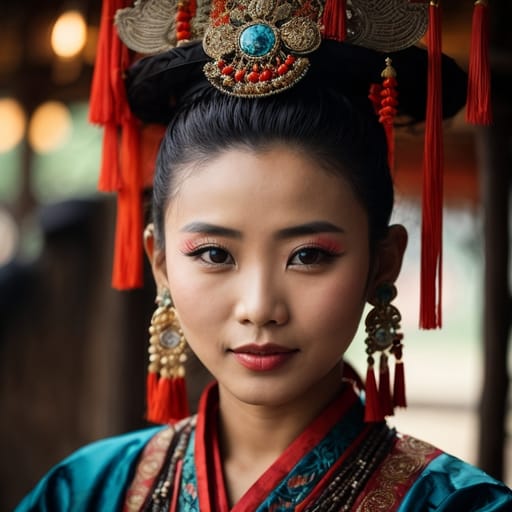
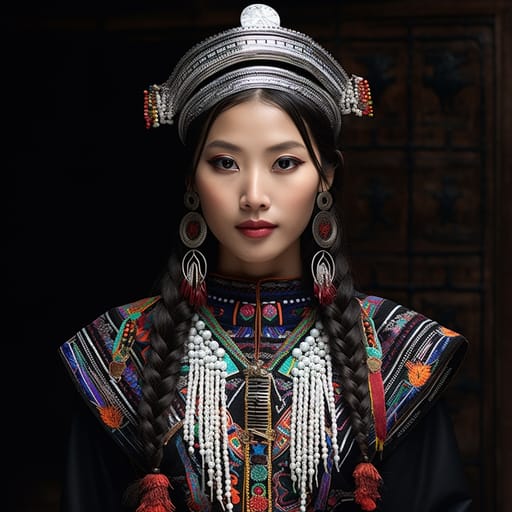
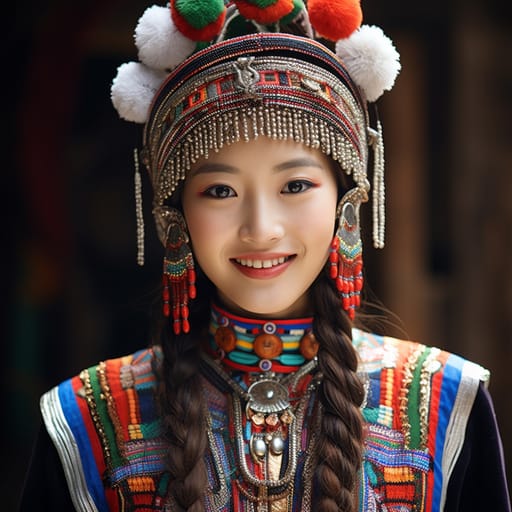
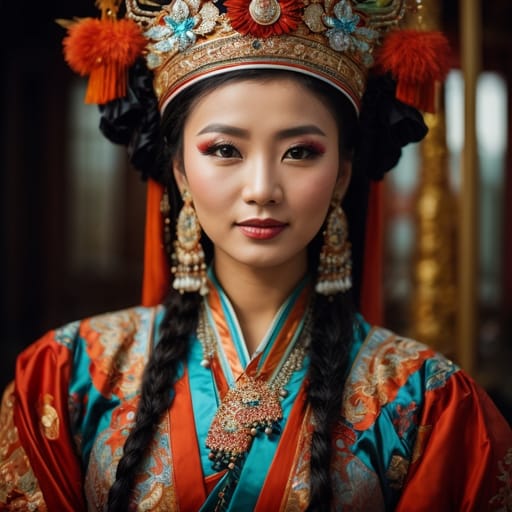
Typical Jurchens Phenotypes
Reference for AI generation: hair, eyes, skin, facial structure, build
Jurchens Body & Anatomy Reference
Anatomy by feature, East Asian Sinitic / Mongoloid phenotype
Jurchens Boobs & Breasts
Jurchens tits and boobs run small-to-medium cup, modest projection, the classic East Asian Sinitic / Mongoloid bust profile. Jurchens nipples and areolas show light-pink to medium-brown areolar pigmentation against the light-to-medium skin tone, with areolar diameter typically in the 26-36mm range and forward-set positioning rather than the fuller South Asian or Levantine bust profile. Jurchens breasts trend firm and modestly projecting; smaller cup size than the South Asian or Western Asian average, a function of the ectomorph-to-mesomorph, lean frame body habitus and the mean adult female BMI 20-23. For anatomically accurate AI-generated Jurchens nudes the render preserves the small-to-medium cup, modest projection shape, 26-36mm areolas with light-pink to medium-brown pigmentation, and the torso proportions of the East Asian Sinitic / Mongoloid phenotype.
Jurchens Ass & Hips
Jurchens hips and butt usually read as small-to-medium, modest projection, narrower hip profile. The skeletal base is narrower iliac crests, less gluteal-femoral fat deposition, the East Asian Sinitic / Mongoloid pattern. Set against the fuller projected glutes of the West African or Polynesian phenotype, the difference is easy to see, and the hip-to-waist ratio is often what identifies Jurchens women in photos.
Jurchens Vagina & Pussy
Expect light-pink to medium-brown labial pigmentation, smaller labia minora on Jurchens women, in keeping with East Asian Sinitic / Mongoloid ancestry. The pubic hair is straight fine texture, sparser distribution than the South Asian norm. Coloring should run evenly from the light to medium skin of the thighs to the labia, and Jurchens nude imagery should keep the hair's straight fine texture.
Jurchens Dicks & Penis
Jurchens dick and penile anatomy in adult AI generation should anchor on the regional reference data: regional mean ~11-12cm erect, moderate girth, and light-brown shaft pigmentation. The Jurchens cock profile reflects the East Asian Sinitic / Mongoloid population's anthropometric measurements. The shaft pigmentation should track the surrounding light to medium skin tone, and the pubic hair should keep its straight fine texture in the typical inverted-V escutcheon.
Jurchens Body, Curves & Build
Jurchens body type: ectomorph-to-mesomorph, lean frame, with mean adult female BMI 20-23. This is the typical East Asian Sinitic / Mongoloid build. Height range, shoulder-to-hip ratio and fat distribution all follow from it, which is what an accurate Jurchens nude body should show.
Jurchens Skin Tone & Hair Texture
Jurchens skin tone falls in the light to medium (Fitzpatrick II-IV) band, the surface signal most often miscalibrated by generic AI nude generators. Jurchens hair texture is typically straight 1A, fine-to-medium, predominantly black, characteristic of the East Asian Sinitic / Mongoloid phenotype. In Jurchens nude renders the skin should hold that band consistently across the body.
Explore phenotype categories
Structured taxonomy with peer-reviewed scales · 22 anatomical categories
Erotic Poses & Sex Positions
From the pose catalog: 219 named positions with reference skeletons
Frequently asked questions about Jurchens people
Where is the Jurchens homeland?
The Jurchens homeland is Manchuria: present-day northeast China (Heilongjiang, Jilin, Liaoning) and the Amur and Ussuri basins of the Russian Far East, with a fringe along the northern Korean border in East Asia.
What language do Jurchens people speak?
Jurchens people primarily speak Jurchen (Tungusic; direct ancestor of Manchu), written in the Jurchen large and small scripts of the Jin period.
What religion do Jurchens people practice?
The predominant religion among Jurchens people is Shamanism with veneration of heaven, ancestors and mountain and river spirits; Buddhism adopted by the Jin court elite.






Make your own Jurchens images
Five a day, free, no credits to buy. The studio starts from this group's phenotype data, so you can set body type, pose and style and keep the traits accurate.
Start with Jurchens