Help us get this right
Does this portrait look right for Korean Chinese?
Nobody has judged this one yet. You would be the first.
Korean Chinese Erotic
Northeast China, above all Yanbian Korean Autonomous Prefecture in Jilin, with communities in Heilongjiang and Liaoning and large migrant populations in South Korea and major Chinese cities
Korean (Koreanic), mainly northern dialects; Mandarin Chinese (Sino-Tibetan) widely spoken as a second or first language
Largely nonreligious, with ancestral rites, Christian minorities (mainly Protestant), and some Buddhism
One of China's 56 official ethnic groups (Chaoxianzu) and part of the wider Korean diaspora; main communities in Yanbian, Changbai, Heilongjiang and Liaoning
About Korean Chinese People
Korean Chinese are the descendants of Koreans who crossed the Tumen and Yalu rivers into northeast China and stayed. Beijing counts them among its 56 official nationalities as the Chaoxianzu. Among themselves and in South Korea the word is Joseonjok, and south of the border it is not always said kindly. They are Chinese by passport and Korean by language, table and family memory, and they have spent a century and a half being asked which one they really are.
Most families came from the 1860s on, when famine in Korea's northern provinces drove farmers across a border that both the Joseon court and the Qing had tried to keep closed. Japan's annexation of Korea in 1910 sent more. Some were fleeing and some were settled under colonial schemes, and they brought wet-rice farming to a frontier that had grown little rice. The region Koreans called Gando became a hub of anti-Japanese organizing, and the poet Yun Dong-ju grew up in a village near Longjing. Many Koreans fought in Communist ranks during the civil war. In 1952 the new state gave them an autonomous area centered on Yanji, later the Yanbian Korean Autonomous Prefecture. The Cultural Revolution was brutal here, with Korean cultural life denounced as local nationalism.
The language is Korean, in dialects that mostly echo the northern provinces families left, and for decades its written standard followed Pyongyang. That changed after China and South Korea opened relations in 1992. Hundreds of thousands went south to work in construction, restaurants and elder care. Seoul's vocabulary and accent came home with them, along with the money that raised apartment towers in Yanji while villages emptied. Koreans are now well under half of Yanbian's population, and Mandarin has steadily gained ground in the schools. In Seoul, neighborhoods such as Daerim-dong run on Joseonjok groceries and the lamb skewer joints that turned yang kkochi into a South Korean staple.
For most people religion sits lightly, as it does across China. Ancestral rites at the Lunar New Year and Chuseok hold on, and Protestant churches have a visible presence, strengthened by South Korean missionaries. The community shows itself best at celebrations: the 60th birthday feast, weddings in hanbok, and folk festivals with swings, seesaws and the farmers' dance. China placed that dance on UNESCO's intangible heritage list in 2009, to open annoyance in Seoul.
Related ethnic groups
Groups that share Korean Chinese's homeland, region, language, or religious tradition. These are likely candidates for comparative phenotype reference.
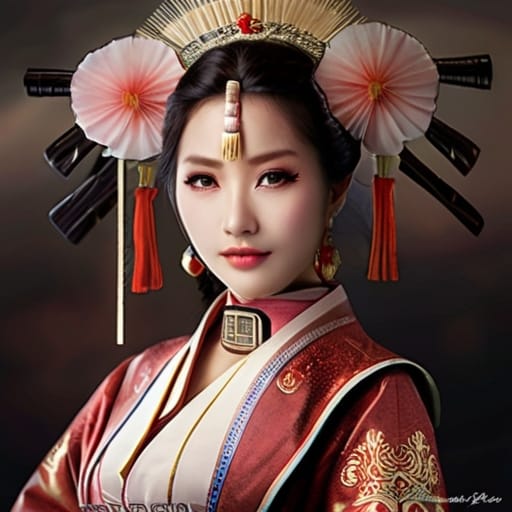
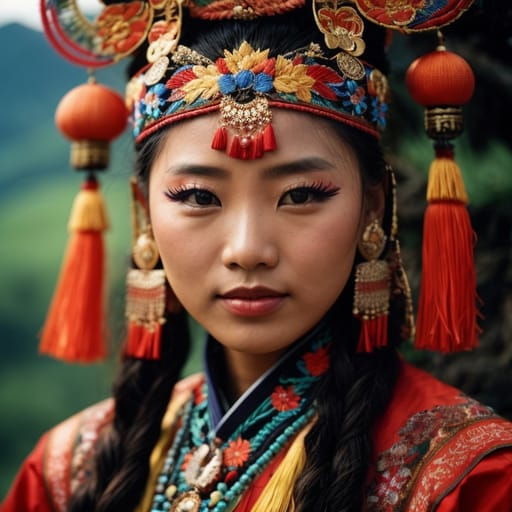
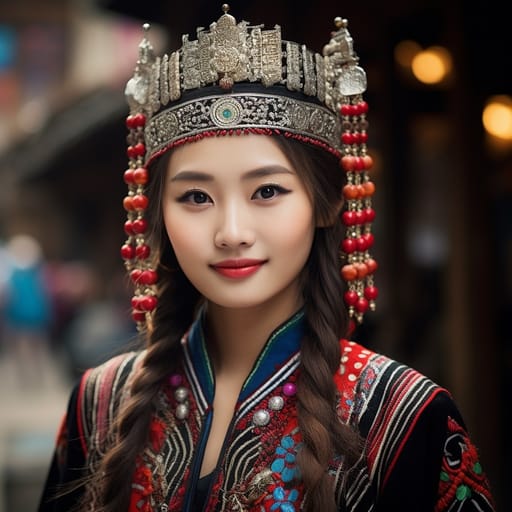
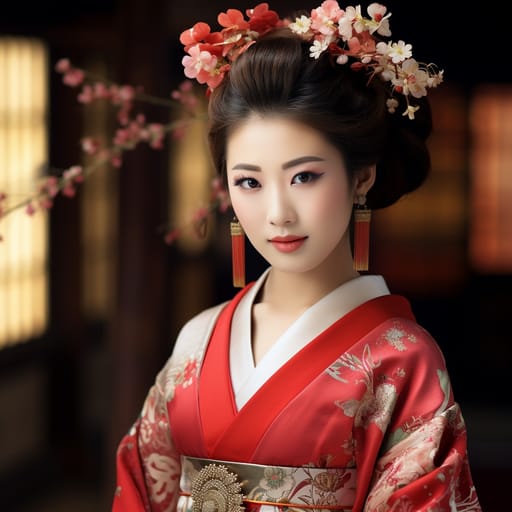
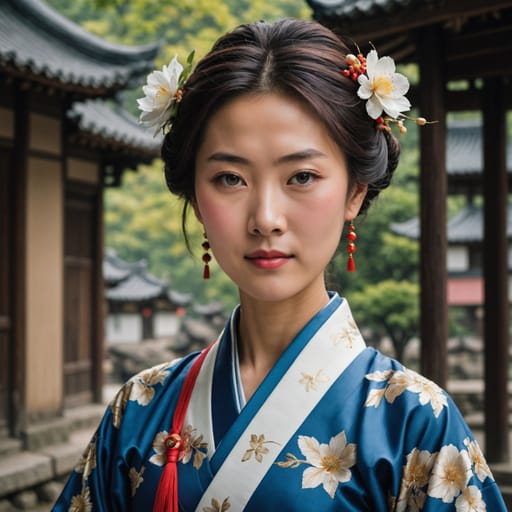
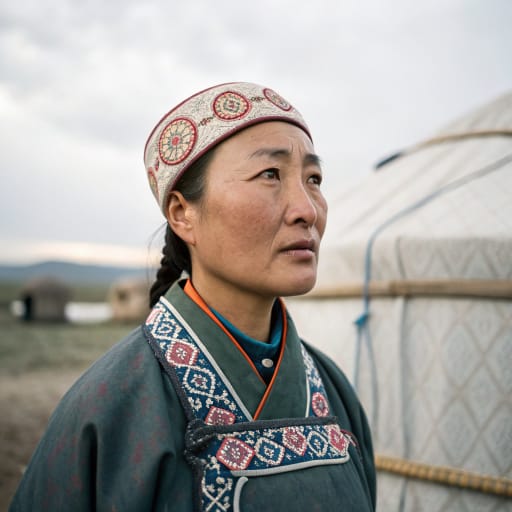
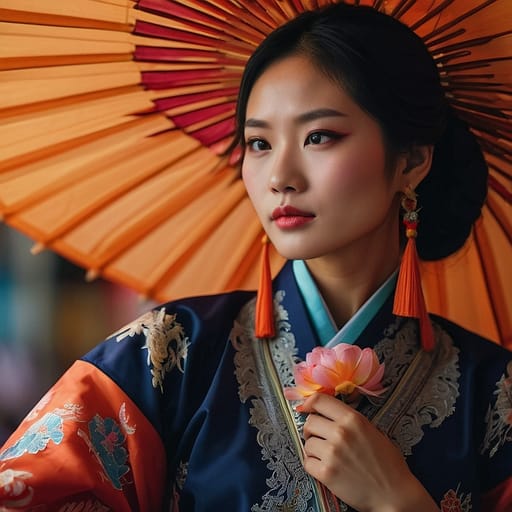
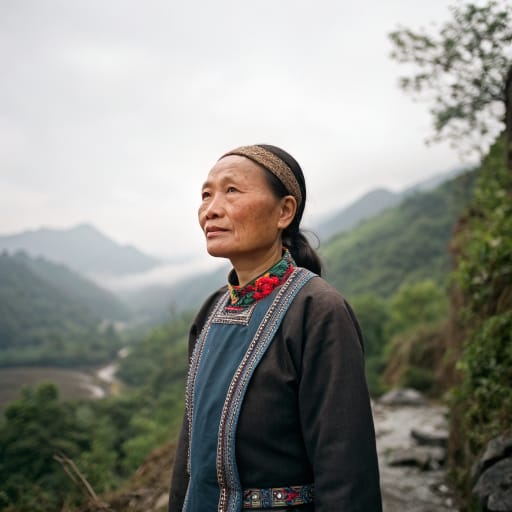
Typical Korean Chinese Phenotypes
Reference for AI generation: hair, eyes, skin, facial structure, build
Korean Chinese Body & Anatomy Reference
Per-feature anatomical profile for AI nude generation: East Asian Sinitic / Mongoloid phenotype
Korean Chinese Boobs & Breasts
The typical Korean Chinese bust is small-to-medium cup, modest projection, in line with the wider East Asian Sinitic / Mongoloid pattern. Areolas usually fall in the 26-36mm range, with light-pink to medium-brown areolar pigmentation against the light-to-medium skin tone. Compared with the fuller South Asian or Levantine bust profile, Korean Chinese breasts sit forward and are generally firm and modestly projecting; smaller cup size than the South Asian or Western Asian average. A faithful AI render of Korean Chinese tits keeps that shape and areola size.
Korean Chinese Ass & Hips
Butt shape among Korean Chinese women: small-to-medium, modest projection, narrower hip profile, over narrower iliac crests, less gluteal-femoral fat deposition. This follows East Asian Sinitic / Mongoloid ancestry and looks quite unlike the fuller projected glutes of the West African or Polynesian phenotype. An accurate Korean Chinese ass in adult AI imagery keeps both the silhouette and the overall build (ectomorph-to-mesomorph, lean frame) instead of a generic average.
Korean Chinese Vagina & Pussy
Vulvar anatomy among Korean Chinese women: light-pink to medium-brown labial pigmentation, smaller labia minora. Pubic hair tends to be straight fine texture, sparser distribution than the South Asian norm, in the usual inverted-triangle pattern. Both follow East Asian Sinitic / Mongoloid pigmentation, which is why Korean Chinese pussy renders should not fall back on a pale, sparse Western template.
Korean Chinese Dicks & Penis
The Korean Chinese cock profile, from East Asian Sinitic / Mongoloid anthropometric data: regional mean ~11-12cm erect; moderate girth; light-brown shaft pigmentation. Pubic hair has a straight fine texture and forms the usual inverted-V pattern. Whether Korean Chinese men are circumcised follows religious and cultural practice rather than phenotype.
Korean Chinese Body, Curves & Build
Build and curves among Korean Chinese women follow the East Asian Sinitic / Mongoloid pattern: ectomorph-to-mesomorph, lean frame, mean adult female BMI 20-23. Proportions matter as much as skin tone, so Korean Chinese figures should keep their regional height and limb ratios.
Korean Chinese Skin Tone & Hair Texture
The Korean Chinese skin range is light to medium (Fitzpatrick II-IV), and hair tends to be straight 1A, fine-to-medium, predominantly black. That combination marks the East Asian Sinitic / Mongoloid phenotype, and skin tone is the trait AI generators most often get wrong for Korean Chinese women.
Explore phenotype categories
Structured taxonomy with peer-reviewed scales · 22 anatomical categories
Erotic Poses & Sex Positions
From the pose catalog: 219 named positions with reference skeletons
Frequently asked questions about Korean Chinese people
Where is the Korean Chinese homeland?
The Korean Chinese homeland is Northeast China, above all Yanbian Korean Autonomous Prefecture in Jilin, with communities in Heilongjiang and Liaoning and large migrant populations in South Korea and major Chinese cities in East Asia.
What language do Korean Chinese people speak?
Korean Chinese people primarily speak Korean (Koreanic), mainly northern dialects; Mandarin Chinese (Sino-Tibetan) widely spoken as a second or first language.
What religion do Korean Chinese people practice?
The predominant religion among Korean Chinese people is Largely nonreligious, with ancestral rites, Christian minorities (mainly Protestant), and some Buddhism.






Make your own Korean Chinese images
Five a day, free, no credits to buy. The studio starts from this group's phenotype data, so you can set body type, pose and style and keep the traits accurate.
Start with Korean Chinese