No portrait yet
Hlai Erotic
Central and southern Hainan Island, China, in the mountains around Wuzhishan and the counties of the former Hainan Li and Miao Autonomous Prefecture.
Hlai languages (Kra-Dai, Hlai branch), in Ha, Qi, Run, Sai and Meifu varieties; most also speak Hainanese Min Chinese and Mandarin.
Animism and ancestor veneration with shamanic ritual specialists; many are secular in daily life.
Five branches: Ha, Qi (Gei), Run (Zwn), Sai and Meifu (Moifau), plus the linguistically divergent Jiamao; a Kra-Dai people related to the Tai and Kam-Sui.
About Hlai People
The Hlai are the people who were on Hainan first. Their ancestors crossed from the mainland thousands of years ago, out of the same rice-growing southern population that later produced the Zhuang, the Thai and the Lao, and everyone else on the island arrived after them. Chinese speakers call them the Li, and that is the name on the official list of China's fifty-six nationalities, but in their own language they are Hlai. They live in the island's mountainous interior and its southern and western hills, around the Wuzhishan massif, in the counties that once formed the Hainan Li and Miao Autonomous Prefecture. Their languages sit on their own branch of the Kra-Dai family, split so early from Tai that a Hlai speaker and a Thai speaker share almost nothing they can hear. The five branches, Ha, Qi, Run, Sai and Meifu, differ enough that the Latin script created in 1957 had to choose one, Ha, as its standard. Most Hlai also speak Hainanese Min and Mandarin. Belief is animist at its core: spirits in the landscape, ancestors who need feeding, and misfortune that a ritual specialist diagnoses and negotiates away, much of it now quiet beneath a secular modern life.
Two things the Hlai made are worth knowing. The first is cotton cloth. Hlai women were spinning, dyeing and weaving cotton, including warp ikat, when most of China wore hemp and silk. In the thirteenth century a Han woman named Huang Daopo lived among them for years, carried their tools and techniques home to the Yangtze delta, and set off the cotton industry that clothed imperial China. Li brocade, the patterned tube skirts still woven on backstrap looms, went onto UNESCO's urgent-safeguarding list in 2009 because the women who knew the full repertoire were old. The second is the tattoo. Until the mid-twentieth century most Hlai women were tattooed on the face, neck and limbs in patterns specific to branch and lineage, so that, the explanation went, their ancestors would know them after death. The last tattooed women are now very old. Around them the older world persists in fragments: boat-shaped thatched houses with roofs sweeping to the ground, upland shanlan rice from burned hillside plots and the sweet wine brewed from it, and the third day of the third lunar month, a courting festival of song, bamboo-pole dancing and the nose flute, played through one nostril. The Hlai also have a long record of pushing back, from rebellions against successive dynasties to the Baisha Uprising of 1943 against wartime Nationalist rule, which folded into the Communist guerrilla movement and is still commemorated on the island.
Related ethnic groups
Groups that share Hlai's homeland, region, language, or religious tradition. These are likely candidates for comparative phenotype reference.
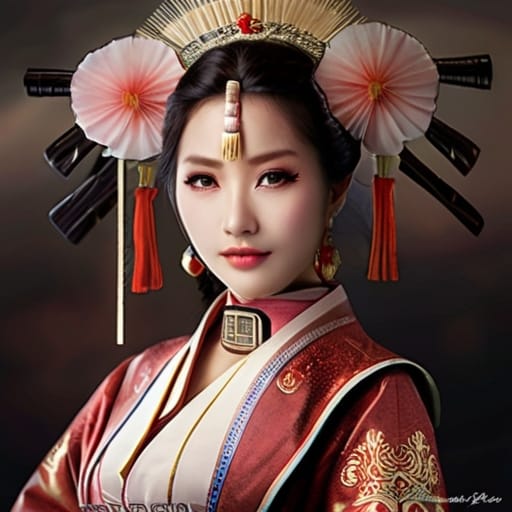
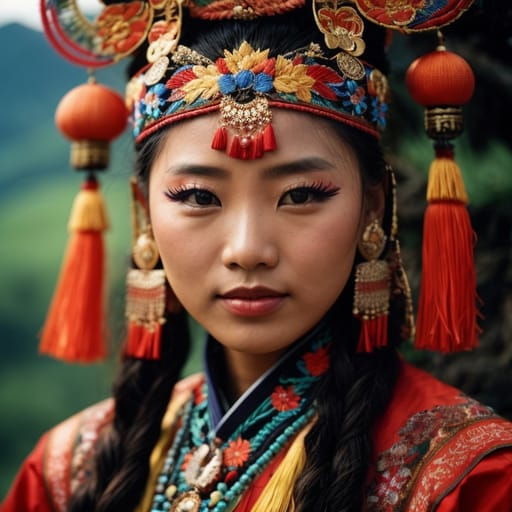
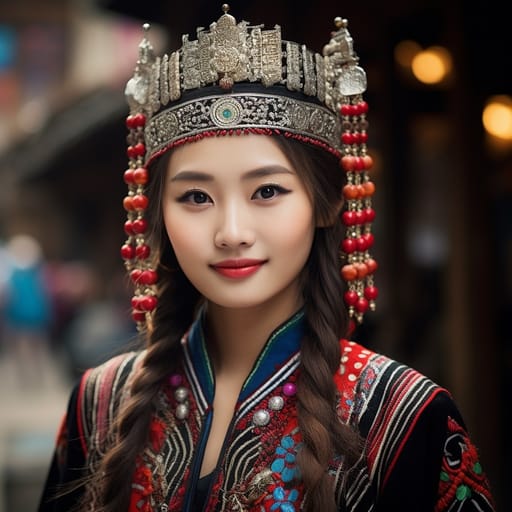
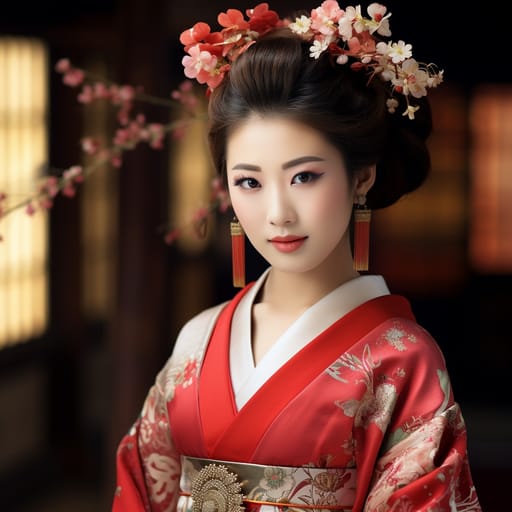
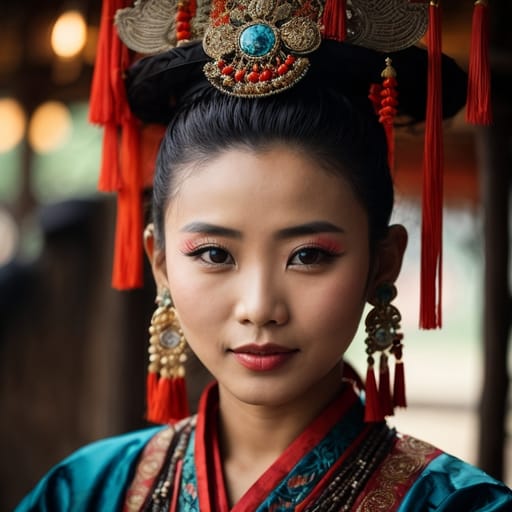
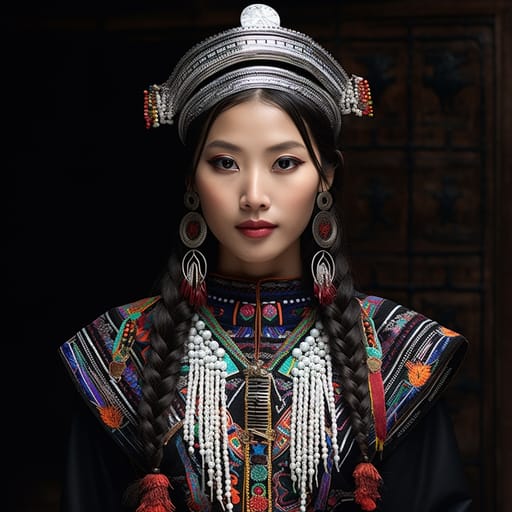
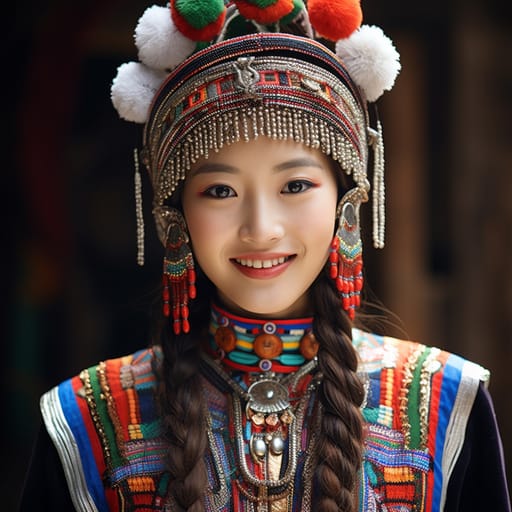
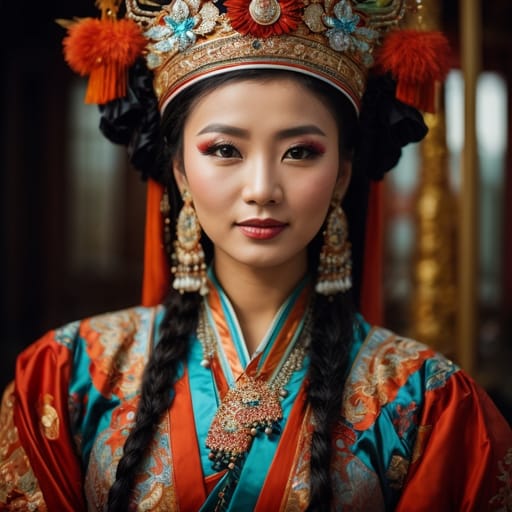
Typical Hlai Phenotypes
Reference for AI generation: hair, eyes, skin, facial structure, build
Hlai Body & Anatomy Reference
Anatomy by feature, East Asian Sinitic / Mongoloid phenotype
Hlai Boobs & Breasts
Hlai tits and boobs run small-to-medium cup, modest projection, the classic East Asian Sinitic / Mongoloid bust profile. Hlai nipples and areolas show light-pink to medium-brown areolar pigmentation against the light-to-medium skin tone, with areolar diameter typically in the 26-36mm range and forward-set positioning rather than the fuller South Asian or Levantine bust profile. Hlai breasts trend firm and modestly projecting; smaller cup size than the South Asian or Western Asian average, a function of the ectomorph-to-mesomorph, lean frame body habitus and the mean adult female BMI 20-23. For anatomically accurate AI-generated Hlai nudes the render preserves the small-to-medium cup, modest projection shape, 26-36mm areolas with light-pink to medium-brown pigmentation, and the torso proportions of the East Asian Sinitic / Mongoloid phenotype.
Hlai Ass & Hips
Hlai hips and butt usually read as small-to-medium, modest projection, narrower hip profile. The skeletal base is narrower iliac crests, less gluteal-femoral fat deposition, the East Asian Sinitic / Mongoloid pattern. Set against the fuller projected glutes of the West African or Polynesian phenotype, the difference is easy to see, and the hip-to-waist ratio is often what identifies Hlai women in photos.
Hlai Vagina & Pussy
Expect light-pink to medium-brown labial pigmentation, smaller labia minora on Hlai women, in keeping with East Asian Sinitic / Mongoloid ancestry. The pubic hair is straight fine texture, sparser distribution than the South Asian norm. Coloring should run evenly from the light to medium skin of the thighs to the labia, and Hlai nude imagery should keep the hair's straight fine texture.
Hlai Dicks & Penis
Hlai dick and penile anatomy in adult AI generation should anchor on the regional reference data: regional mean ~11-12cm erect, moderate girth, and light-brown shaft pigmentation. The Hlai cock profile reflects the East Asian Sinitic / Mongoloid population's anthropometric measurements. The shaft pigmentation should track the surrounding light to medium skin tone, and the pubic hair should keep its straight fine texture in the typical inverted-V escutcheon.
Hlai Body, Curves & Build
Hlai body type: ectomorph-to-mesomorph, lean frame, with mean adult female BMI 20-23. This is the typical East Asian Sinitic / Mongoloid build. Height range, shoulder-to-hip ratio and fat distribution all follow from it, which is what an accurate Hlai nude body should show.
Hlai Skin Tone & Hair Texture
Hlai skin tone falls in the light to medium (Fitzpatrick II-IV) band, the surface signal most often miscalibrated by generic AI nude generators. Hlai hair texture is typically straight 1A, fine-to-medium, predominantly black, characteristic of the East Asian Sinitic / Mongoloid phenotype. In Hlai nude renders the skin should hold that band consistently across the body.
Explore phenotype categories
Structured taxonomy with peer-reviewed scales · 22 anatomical categories
Erotic Poses & Sex Positions
From the pose catalog: 219 named positions with reference skeletons
Frequently asked questions about Hlai people
Where is the Hlai homeland?
The Hlai homeland is Central and southern Hainan Island, China, in the mountains around Wuzhishan and the counties of the former Hainan Li and Miao Autonomous Prefecture. in East Asia.
What language do Hlai people speak?
Hlai people primarily speak Hlai languages (Kra-Dai, Hlai branch), in Ha, Qi, Run, Sai and Meifu varieties; most also speak Hainanese Min Chinese and Mandarin..
What religion do Hlai people practice?
The predominant religion among Hlai people is Animism and ancestor veneration with shamanic ritual specialists; many are secular in daily life..






Make your own Hlai images
Five a day, free, no credits to buy. The studio starts from this group's phenotype data, so you can set body type, pose and style and keep the traits accurate.
Start with Hlai