No portrait yet
Topnaar Erotic
Lower Kuiseb River valley in the Namib Desert near Walvis Bay, Erongo Region, Namibia; a second community at Sesfontein, Kunene Region, Namibia
Khoekhoegowab, Nama dialect (Khoe); Afrikaans widely spoken as a second language
Christian, mainly Lutheran, a legacy of the Rhenish mission
Khoekhoe people, often counted among the Nama; Kuiseb River and Sesfontein communities
About Topnaar People
The Topnaar are a people defined by one river. Their home settlements sit along the lower Kuiseb, the usually dry watercourse that separates the red dunes of the Namib from the gravel plains to the north before it reaches the Atlantic near Walvis Bay. They call themselves the ǂAonin, and they were living on this coast long before European ships began anchoring in the bay. Outsiders tend to file them under the Nama. They do speak Khoekhoegowab, the click language they share with Nama and Damara neighbors, but many Topnaar insist on a history of their own. Afrikaans is the common second language, and English comes through school and work in town.
Life on the river runs through the !nara, a leafless, thorny melon plant found only in the Namib. Its roots reach deep under the dunes for water. Families hold inherited rights to particular !nara patches. At harvest the pulp is boiled down into a paste and dried for storage, while the oily seeds are kept or sold. Goats feed on the pods that drop from the ana trees along the riverbed. The Kuiseb flows above ground only after good rains upstream, and the aquifer beneath it is pumped to supply Walvis Bay. That makes groundwater, not just land, one of the community's sharpest political questions.
The nineteenth century opened the Kuiseb to outsiders. Walvis Bay drew whalers, traders and missionaries, and a Rhenish mission station at Rooibank brought the Christianity that most Topnaar still practice, largely through the Lutheran church. One branch moved north and settled at Sesfontein in the Kunene region, where a Topnaar community still lives. Britain annexed Walvis Bay in 1878, and the port stayed in South African hands until 1994, four years after Namibian independence. Meanwhile, many of the Kuiseb settlements ended up inside the Namib Naukluft Park. For generations that has meant bargaining with conservation authorities over grazing, water and access to land the Topnaar never left. The community keeps its own traditional authority, headed by a kaptein, and it still speaks for itself on those questions.
Related ethnic groups
Groups that share Topnaar's homeland, region, language, or religious tradition. These are likely candidates for comparative phenotype reference.

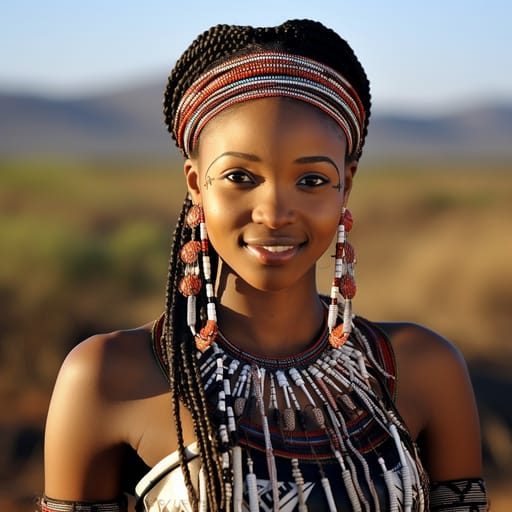
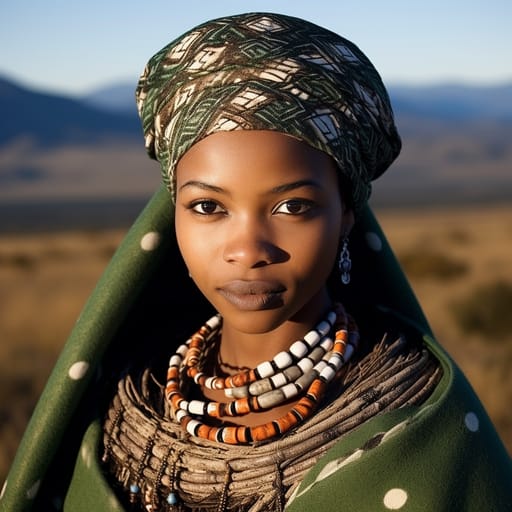
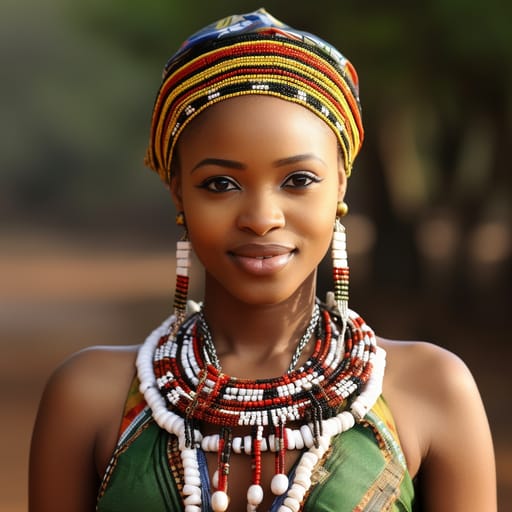
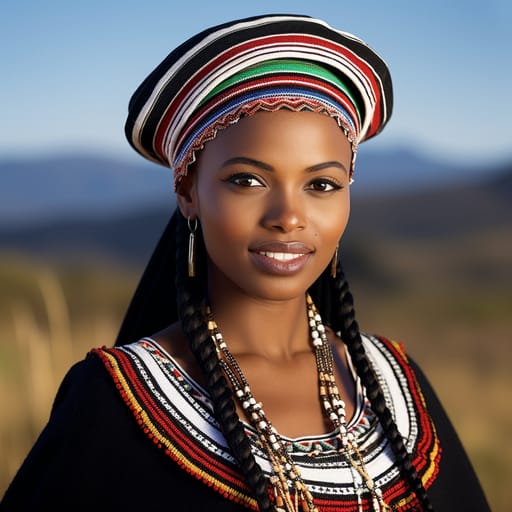

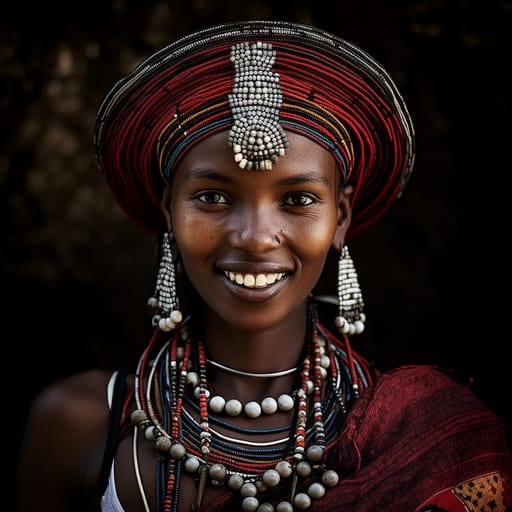
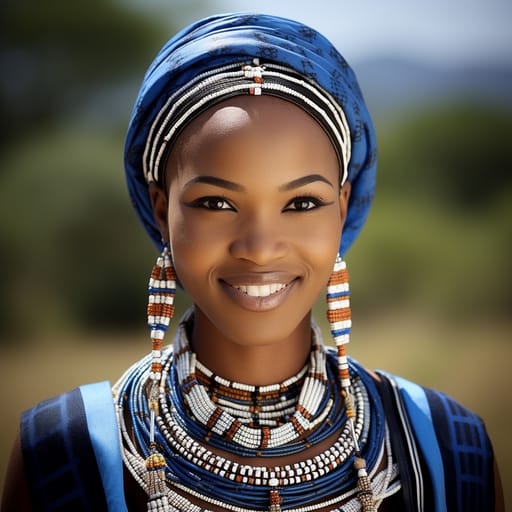
Typical Topnaar Phenotypes
Reference for AI generation: hair, eyes, skin, facial structure, build
Topnaar Body & Anatomy Reference
Per-feature anatomical profile for AI nude generation: Bantu / Khoisan Southern African phenotype
Topnaar Boobs & Breasts
The typical Topnaar bust is medium cup, full but moderate projection, in line with the wider Bantu / Khoisan Southern African pattern. Areolas usually fall in the 30-44mm range, with medium-brown to deep-brown areolar pigmentation. Compared with the heavier West African bust, Topnaar breasts sit forward and are generally moderately full; less projecting than West African norm. A faithful AI render of Topnaar tits keeps that shape and areola size.
Topnaar Ass & Hips
Butt shape among Topnaar women: the distinctive Khoisan-influenced steatopygic profile in some sub-populations (San, Khoekhoe); broader gluteal projection in Bantu-speaking groups, over wide iliac crests with notable lordosis in Khoisan-descended sub-populations. This follows Bantu / Khoisan Southern African ancestry and looks quite unlike the slim Cushitic East African profile. An accurate Topnaar ass in adult AI imagery keeps both the silhouette and the overall build (mesomorph; Khoisan-descended sub-populations show distinctive steatopygic fat deposition) instead of a generic average.
Topnaar Vagina & Pussy
Vulvar anatomy among Topnaar women: deep-brown labial pigmentation; the elongated labia minora documented in some Khoisan-descended populations. Pubic hair tends to be tightly-coiled coarse texture, in the usual inverted-triangle pattern. Both follow Bantu / Khoisan Southern African pigmentation, which is why Topnaar pussy renders should not fall back on a pale, sparse Western template.
Topnaar Dicks & Penis
The Topnaar cock profile, from Bantu / Khoisan Southern African anthropometric data: regional mean ~14cm erect; moderate-to-above-average girth; deep-brown shaft pigmentation. Pubic hair has a tightly-coiled coarse texture and forms the usual inverted-V pattern. Whether Topnaar men are circumcised follows religious and cultural practice rather than phenotype.
Topnaar Body, Curves & Build
Build and curves among Topnaar women follow the Bantu / Khoisan Southern African pattern: mesomorph; Khoisan-descended sub-populations show distinctive steatopygic fat deposition, mean adult female BMI 24-28. Proportions matter as much as skin tone, so Topnaar figures should keep their regional height and limb ratios.
Topnaar Skin Tone & Hair Texture
The Topnaar skin range is medium-brown to deep-brown (Fitzpatrick V-VI); lighter in Khoisan-descended populations, and hair tends to be tightly-coiled 4A-4C; the distinctive 'peppercorn' tight-spiral texture in Khoisan-descended populations. That combination marks the Bantu / Khoisan Southern African phenotype, and skin tone is the trait AI generators most often get wrong for Topnaar women.
Explore phenotype categories
Structured taxonomy with peer-reviewed scales · 22 anatomical categories
Erotic Poses & Sex Positions
From the pose catalog: 219 named positions with reference skeletons
Frequently asked questions about Topnaar people
Where is the Topnaar homeland?
The Topnaar homeland is Lower Kuiseb River valley in the Namib Desert near Walvis Bay, Erongo Region, Namibia; a second community at Sesfontein, Kunene Region, Namibia in Southern Africa.
What language do Topnaar people speak?
Topnaar people primarily speak Khoekhoegowab, Nama dialect (Khoe); Afrikaans widely spoken as a second language.
What religion do Topnaar people practice?
The predominant religion among Topnaar people is Christian, mainly Lutheran, a legacy of the Rhenish mission.






Make your own Topnaar images
Five a day, free, no credits to buy. The studio starts from this group's phenotype data, so you can set body type, pose and style and keep the traits accurate.
Start with Topnaar