No portrait yet
Sauk Erotic
Historically the western Great Lakes, the Rock River valley of Illinois and eastern Iowa; today central Oklahoma and the Kansas-Nebraska border, United States.
Sauk, a dialect of Sauk-Meskwaki-Kickapoo (Central Algonquian, Algic); English
Traditional clan and sacred bundle ceremonies, the Native American Church, and Protestant Christianity, often held in combination.
Central Algonquian, historically paired with the Meskwaki and closely related to the Kickapoo. Present-day nations: Sac and Fox Nation (Oklahoma) and Sac and Fox Nation of Missouri in Kansas and Nebraska.
About Sauk People
The Sauk are best understood alongside the Meskwaki, the people the French called Fox. The two are so close in speech that linguists treat Sauk, Meskwaki and Kickapoo as dialects of a single language, and so close in history that the United States spent the nineteenth century writing them into treaties as one entity, Sac and Fox, which they never were. The Sauk call themselves Othakiwaki, usually glossed as people of the yellow earth against the Meskwaki red earth. Their language sits in the Central Algonquian group, cousin to Ojibwe and Potawatomi, and today it has a small number of fluent speakers and a stubborn apprenticeship program in Oklahoma keeping it moving. They were a Great Lakes people first, remembered around Saginaw Bay in Michigan, then pushed west by Iroquois pressure and French war into Wisconsin and finally onto the Rock River in Illinois. There they built Saukenuk, one of the largest towns in the interior of the continent: bark lodges holding several families apiece, fields of corn, beans and squash worked by women, and a seasonal emptying each fall when households scattered west into hide-covered wickiups to hunt. Sauk and Meskwaki women also dug and traded lead out of the Galena diggings, an industry the incoming Americans wanted badly.
The break point is 1804, when a handful of Sauk men with no authority to do it signed away the land east of the Mississippi at St. Louis. Black Hawk spent three decades refusing to accept that paper, against a rival faction under Keokuk that accepted removal, and in 1832 his attempt to come home ended in the slaughter at Bad Axe. His dictated autobiography, printed the following year, is among the earliest Native memoirs published in the United States, and it still reads as an argument rather than a lament. The nation was moved to Iowa, then Kansas, then Indian Territory. Two Sauk governments carry on: the Sac and Fox Nation in Oklahoma and the Sac and Fox Nation of Missouri in Kansas and Nebraska. Clan membership descends through the father, and every Sauk child is also assigned at birth to one of two ceremonial divisions, Kishko or Oskush, alternating between siblings, so brothers land on opposite sides. The divisions paint black and white respectively and compete against each other in games, races and dances. It is rivalry built into a family on purpose, and it still functions.
Related ethnic groups
Groups that share Sauk's homeland, region, language, or religious tradition. These are likely candidates for comparative phenotype reference.

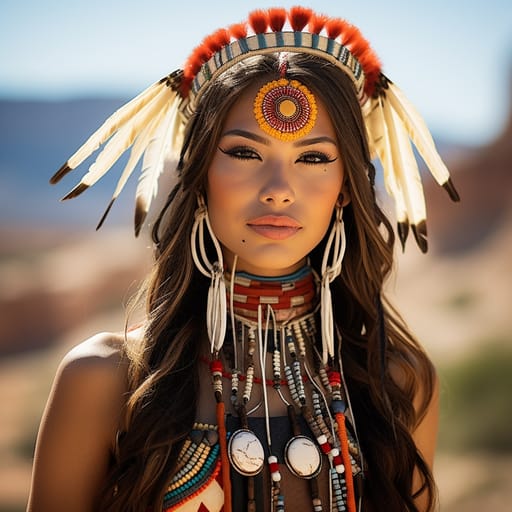
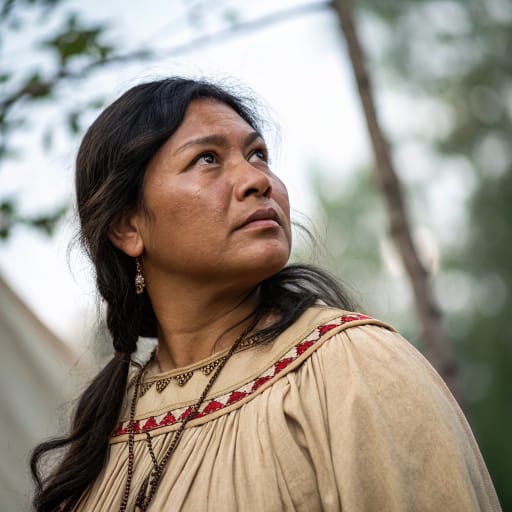
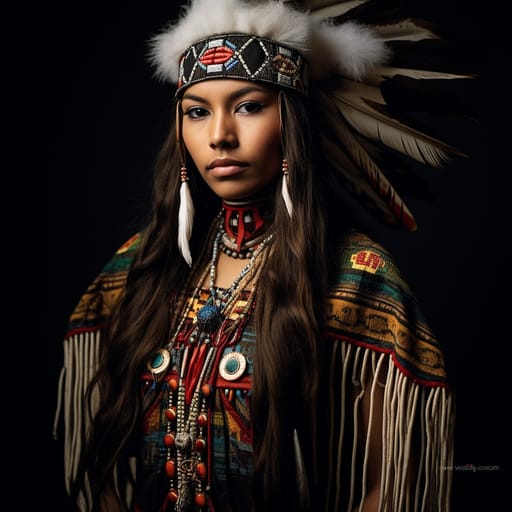

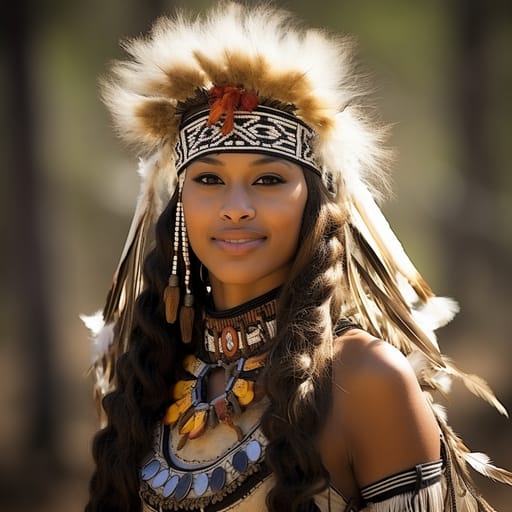

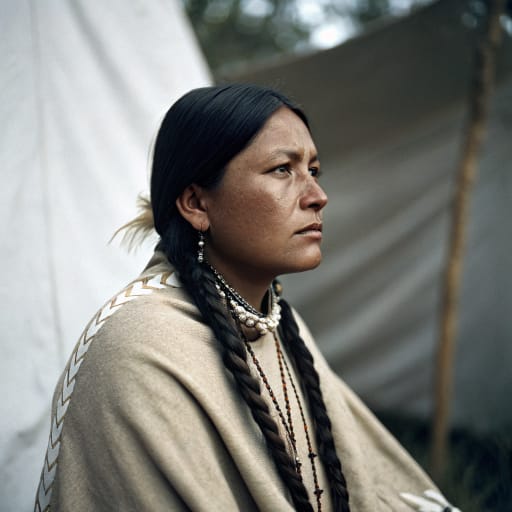
Typical Sauk Phenotypes
Reference for AI generation: hair, eyes, skin, facial structure, build
Sauk Body & Anatomy Reference
Indigenous Northern American / Algonquian-Iroquoian phenotype: anatomy reference for AI nude generation
Sauk Boobs & Breasts
Sauk boobs follow the Indigenous Northern American / Algonquian-Iroquoian profile: medium cup, moderate projection. Areolar diameter is usually 30-44mm, and the coloring is medium-brown areolar pigmentation against the copper-to-medium-brown skin tone. Breast shape tracks body composition (mesomorph, broader frame in northern Indigenous populations, mean adult female BMI 25-28), so Sauk breasts tend to be full and moderate projection. Expect a forward-set shape, not the smaller East Asian bust.
Sauk Ass & Hips
Sauk ass and hip morphology presents as medium, moderate-to-full projection, distinctly different from the slim East Asian narrow-hip profile. The Sauk pelvic profile shows medium iliac crests, anchored in the Indigenous Northern American / Algonquian-Iroquoian skeletal pattern. Sauk butt shots in adult AI imagery should render the medium, moderate-to-full projection silhouette with the overall build (mesomorph, broader frame in northern Indigenous populations) and the fat distribution typical of the Indigenous Northern American / Algonquian-Iroquoian phenotype.
Sauk Vagina & Pussy
Sauk pussy anatomy typically shows medium-brown labial pigmentation. Pubic hair is usually straight medium-coarse texture. In AI-generated Sauk nudes, labial color should blend into the copper to medium-brown skin with a gradual transition, and the hair should keep its straight medium-coarse texture.
Sauk Dicks & Penis
Penis reference for Sauk men: regional mean ~13cm erect, moderate girth. Coloring: medium-brown shaft pigmentation. An accurate Sauk cock in AI imagery matches the surrounding copper to medium-brown skin rather than a generic porn default. Circumcision depends on religion and custom, not ancestry.
Sauk Body, Curves & Build
The Sauk figure is generally mesomorph, broader frame in northern Indigenous populations, with mean adult female BMI 25-28, characteristic of Indigenous Northern American / Algonquian-Iroquoian ancestry. AI image tools tend to flatten regional body types into a few stock shapes; here the Sauk build is kept as its own reference.
Sauk Skin Tone & Hair Texture
Skin: copper to medium-brown (Fitzpatrick III-V). Hair: straight 1A, dark-brown to black, often thick and dense. Both are typical of Indigenous Northern American / Algonquian-Iroquoian ancestry. The most common mistake in AI nudes of Sauk women is a body rendered lighter than the face.
Explore phenotype categories
Structured taxonomy with peer-reviewed scales · 22 anatomical categories
Erotic Poses & Sex Positions
From the pose catalog: 219 named positions with reference skeletons
Frequently asked questions about Sauk people
Where is the Sauk homeland?
The Sauk homeland is Historically the western Great Lakes, the Rock River valley of Illinois and eastern Iowa; today central Oklahoma and the Kansas-Nebraska border, United States. in North America.
What language do Sauk people speak?
Sauk people primarily speak Sauk, a dialect of Sauk-Meskwaki-Kickapoo (Central Algonquian, Algic); English.
What religion do Sauk people practice?
The predominant religion among Sauk people is Traditional clan and sacred bundle ceremonies, the Native American Church, and Protestant Christianity, often held in combination..






Make your own Sauk images
Five a day, free, no credits to buy. The studio starts from this group's phenotype data, so you can set body type, pose and style and keep the traits accurate.
Start with Sauk