No portrait yet
Tillamook Erotic
The northern Oregon coast, from the Nehalem River south to the Siletz, centered on Tillamook Bay, United States
Tillamook, with Siletz and other dialects (Salishan, an isolated southern branch); dormant since the 1970s, English today
Ancestral practice centered on guardian spirit power and first salmon observances; Christianity since the reservation era
Divisions named for their rivers: Nehalem, Tillamook proper, Nestucca, Salmon River (Nechesne) and Siletz. Descendants are enrolled mainly in the Confederated Tribes of Siletz Indians and the Confederated Tribes of Grand Ronde.
About Tillamook People
The Tillamook are Salish who ended up cut off from the rest of the Salish. Their language belonged to the Salishan family, whose center of gravity sits far to the north in Puget Sound and British Columbia, but a wide band of Chinookan speakers held the lower Columbia between them and their nearest relatives. The separation was old enough that Tillamook drifted a long way from its cousins, and linguists treat it as a branch of its own. It also made the northern Oregon coast the southern limit of Salish country in North America. That country is a narrow shelf of headlands, spruce and tidal flats, with rivers emptying into Tillamook Bay and the Nehalem, Nestucca, Salmon and Siletz drainages running north and south of it. Bands took their names from those rivers, which is the practical way to think about Tillamook politics: no single chief, no capital, just villages on the water with ranked families, cedar plank houses, canoes built for surf and river alike, and wealth counted in dentalium shell. Salmon and elk carried the year. A whale that drifted ashore was a windfall the whole coast heard about, and a party from the Lewis and Clark expedition walked south in 1806 to trade for blubber from one.
Two things sit oddly early in the written record. A Manila galleon went down on the Nehalem spit near the end of the 1600s, and the beeswax it carried still works its way out of the sand; Tillamook accounts of survivors coming ashore were still being told to outsiders two centuries later. Then the fevers of the 1830s emptied villages up and down the coast and the lower Columbia, and a people numbered in the thousands at contact were counted in the hundreds within a generation. Treaties negotiated at Tansy Point in 1851 were never ratified by the Senate, so the land changed hands without the payment promised for it, a debt not recognized until the Supreme Court ruled for the coastal bands in 1946. Survivors were pressed onto the Coast Reservation, later pared down to Siletz, which Congress terminated in 1954 and restored in 1977. The language went quiet in the 1970s with its last fluent speakers, but not before Clara Pearson of the Nehalem band narrated a full body of Tillamook stories, including the South Wind cycle, to the ethnographer Elizabeth Jacobs in 1934. Descendants are enrolled today at Siletz and Grand Ronde, on the same coast.
Related ethnic groups
Groups that share Tillamook's homeland, region, language, or religious tradition. These are likely candidates for comparative phenotype reference.

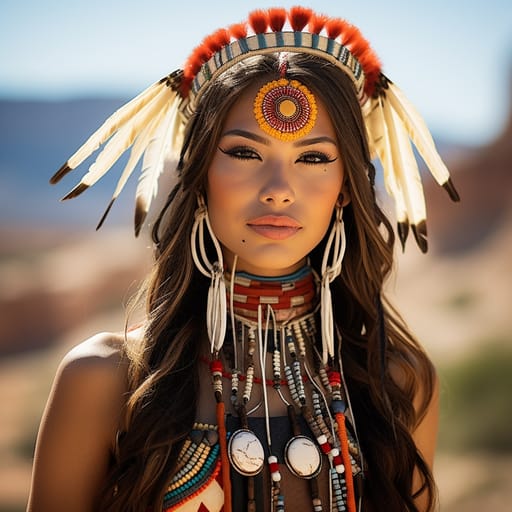
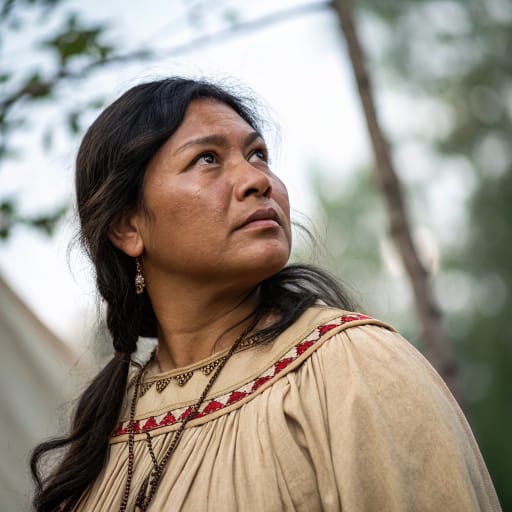
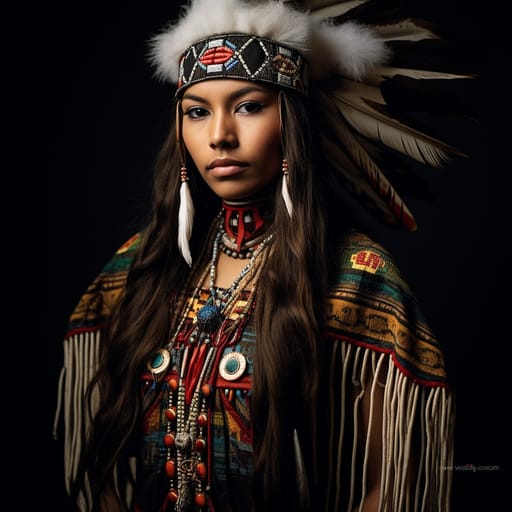

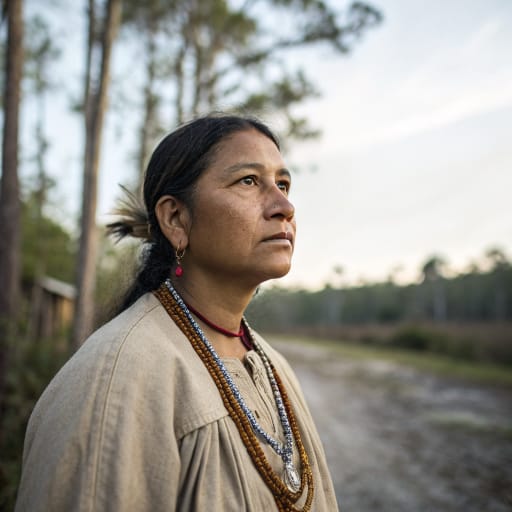
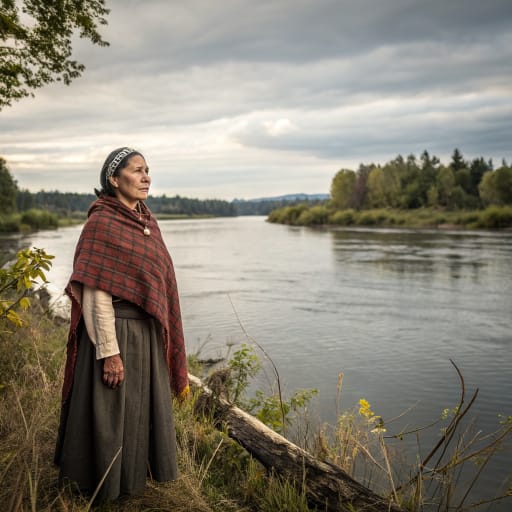
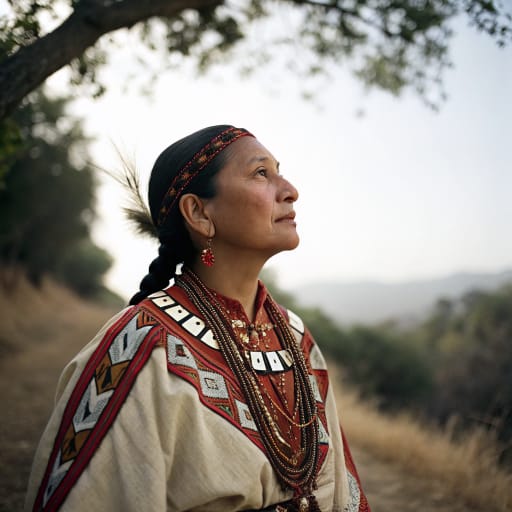
Typical Tillamook Phenotypes
Reference for AI generation: hair, eyes, skin, facial structure, build
Tillamook Body & Anatomy Reference
Per-feature anatomical profile for AI nude generation: Indigenous Northern American / Algonquian-Iroquoian phenotype
Tillamook Boobs & Breasts
Tillamook tits and boobs run medium cup, moderate projection, the classic Indigenous Northern American / Algonquian-Iroquoian bust profile. Tillamook nipples and areolas show medium-brown areolar pigmentation against the copper-to-medium-brown skin tone, with areolar diameter typically in the 30-44mm range and forward-set positioning rather than the smaller East Asian bust. Tillamook breasts trend full and moderate projection, a function of the mesomorph, broader frame in northern Indigenous populations body habitus and the mean adult female BMI 25-28. For anatomically accurate AI-generated Tillamook nudes the render preserves the medium cup, moderate projection shape, 30-44mm areolas with medium-brown pigmentation, and the torso proportions of the Indigenous Northern American / Algonquian-Iroquoian phenotype.
Tillamook Ass & Hips
Tillamook hips and butt usually read as medium, moderate-to-full projection. The skeletal base is medium iliac crests, the Indigenous Northern American / Algonquian-Iroquoian pattern. Set against the slim East Asian narrow-hip profile, the difference is easy to see, and the hip-to-waist ratio is often what identifies Tillamook women in photos.
Tillamook Vagina & Pussy
Expect medium-brown labial pigmentation on Tillamook women, in keeping with Indigenous Northern American / Algonquian-Iroquoian ancestry. The pubic hair is straight medium-coarse texture. Coloring should run evenly from the copper to medium-brown skin of the thighs to the labia, and Tillamook nude imagery should keep the hair's straight medium-coarse texture.
Tillamook Dicks & Penis
Tillamook dick and penile anatomy in adult AI generation should anchor on the regional reference data: regional mean ~13cm erect, moderate girth, and medium-brown shaft pigmentation. The Tillamook cock profile reflects the Indigenous Northern American / Algonquian-Iroquoian population's anthropometric measurements. The shaft pigmentation should track the surrounding copper to medium-brown skin tone, and the pubic hair should keep its straight medium-coarse texture in the typical inverted-V escutcheon.
Tillamook Body, Curves & Build
Tillamook body type: mesomorph, broader frame in northern Indigenous populations, with mean adult female BMI 25-28. This is the typical Indigenous Northern American / Algonquian-Iroquoian build. Height range, shoulder-to-hip ratio and fat distribution all follow from it, which is what an accurate Tillamook nude body should show.
Tillamook Skin Tone & Hair Texture
Tillamook skin tone falls in the copper to medium-brown (Fitzpatrick III-V) band, the surface signal most often miscalibrated by generic AI nude generators. Tillamook hair texture is typically straight 1A, dark-brown to black, often thick and dense, characteristic of the Indigenous Northern American / Algonquian-Iroquoian phenotype. In Tillamook nude renders the skin should hold that band consistently across the body.
Explore phenotype categories
Structured taxonomy with peer-reviewed scales · 22 anatomical categories
Erotic Poses & Sex Positions
From the pose catalog: 219 named positions with reference skeletons
Frequently asked questions about Tillamook people
Where is the Tillamook homeland?
The Tillamook homeland is The northern Oregon coast, from the Nehalem River south to the Siletz, centered on Tillamook Bay, United States in North America.
What language do Tillamook people speak?
Tillamook people primarily speak Tillamook, with Siletz and other dialects (Salishan, an isolated southern branch); dormant since the 1970s, English today.
What religion do Tillamook people practice?
The predominant religion among Tillamook people is Ancestral practice centered on guardian spirit power and first salmon observances; Christianity since the reservation era.






Make your own Tillamook images
Five a day, free, no credits to buy. The studio starts from this group's phenotype data, so you can set body type, pose and style and keep the traits accurate.
Start with Tillamook