Help us get this right
Does this portrait look right for Coquille?
Nobody has judged this one yet. You would be the first.
Coquille Erotic
The Coquille River watershed and nearby coast of southwestern Oregon, United States, around Bandon, Coquille, Myrtle Point and Coos Bay
Miluk (Coosan) and Upper Coquille (Athabaskan, Na-Dene), both now revitalization languages; English today
Mostly Christian, with traditional Indigenous spiritual practice kept up and revived
Lower Coquille (Miluk-speaking, including the Nasomah) and Upper Coquille (Athabaskan-speaking); organized today as the Coquille Indian Tribe, with kin among the Coos, Tututni, Siletz and Grand Ronde
About Coquille People
The Coquille are a river people. Their name comes from the Coquille River, which winds out of Oregon's Coast Range and reaches the Pacific at Bandon. Their homeland is that river's valley, estuary, sloughs and nearby beaches. Before the 1850s the valley held two communities that shared a river but not a language. Downstream, the Lower Coquille, whose villages included Nasomah near the river mouth, spoke Miluk, a Coosan language closely tied to the speech of neighboring Coos Bay. Upriver, the Upper Coquille spoke an Athabaskan language related to Tututni to the south. It was a distant cousin of Navajo, Apache and many languages of Alaska. Marriage, trade and ceremony tied the two groups together, and today's tribe carries both lineages.
Life followed the seasons of the river: runs of salmon and lamprey, shellfish from the tideflats, camas and berries, elk from the hills, and plank houses at the village sites. The gold rush on the southern Oregon beaches in the early 1850s broke that world apart. Miners and settlers poured in, violence followed, and after the Rogue River War most survivors were removed north to reservations at Siletz and Grand Ronde. Some made their way back to the valley and held on to their ties to the land through the generations that followed.
In the twentieth century the government nearly finished the job on paper. In 1954 Congress ended federal recognition of dozens of western Oregon tribes, the Coquille among them, which wiped out their legal standing as a nation. Descendants organized and won that recognition back in 1989. Since then the Coquille Indian Tribe, based in North Bend, has rebuilt a land base. That includes a tribal forest made from former federal timberland, which it manages under the same environmental standards as the neighboring federal lands. The tribe also runs businesses anchored by a casino on the Coos Bay waterfront, and in 2008 it became the first tribe in the country to recognize same-sex marriage.
Religious life today is mostly Christian, while traditional practice is coming back through ceremonies, basketry and language work. The last fluent Miluk speakers died generations ago, so much of what is taught now comes from field notes taken with elders, and every recovered phrase carries real weight. Even the name reflects that reclamation: the town of Coquille says ko-KEEL, while the tribe says and often writes Ko-Kwel.
Related ethnic groups
Groups that share Coquille's homeland, region, language, or religious tradition. These are likely candidates for comparative phenotype reference.
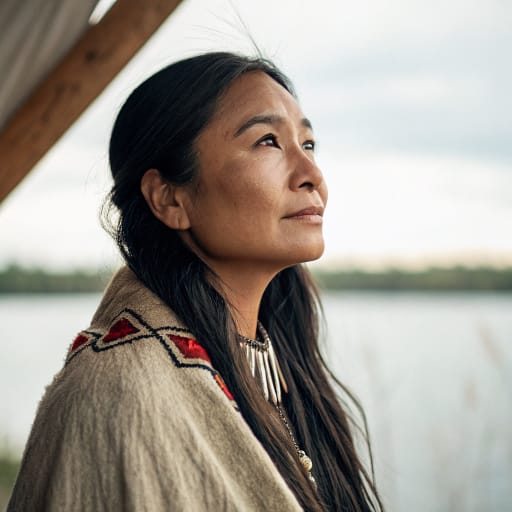
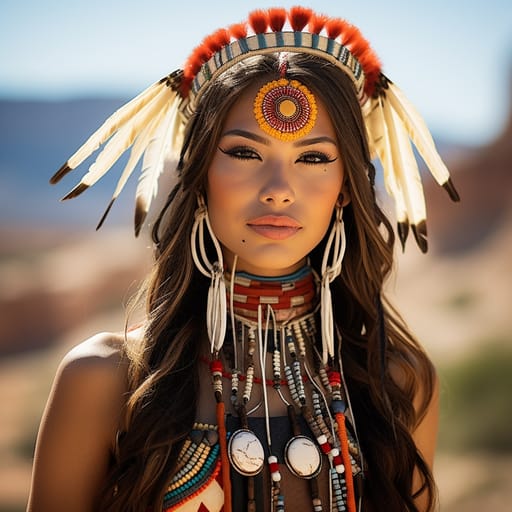
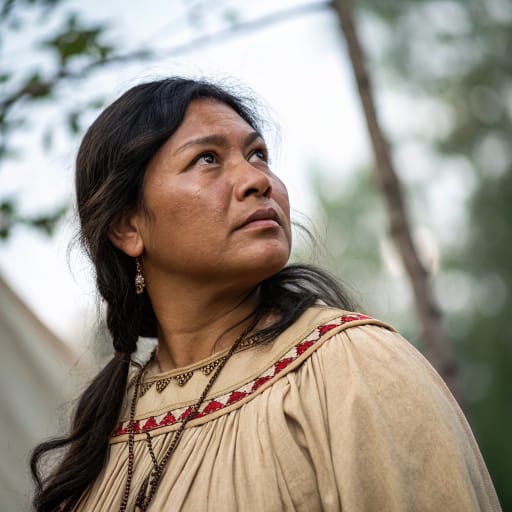
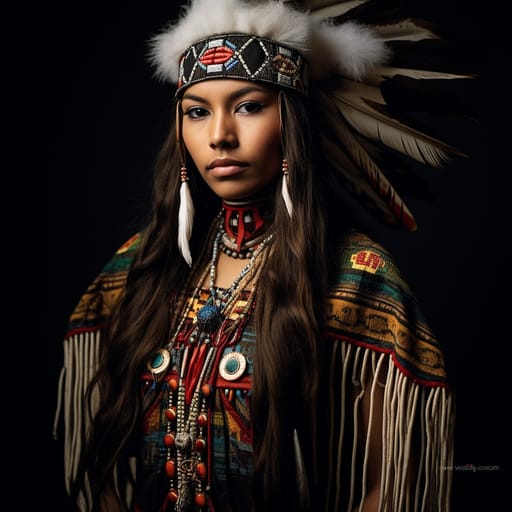
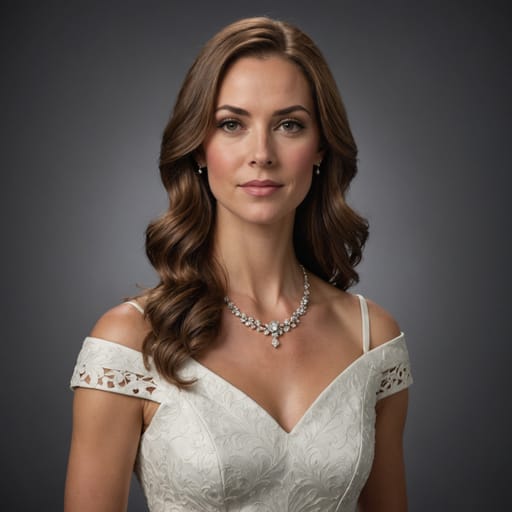
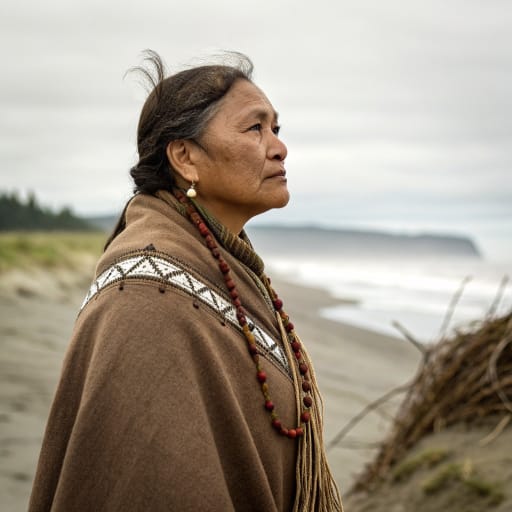
Typical Coquille Phenotypes
Reference for AI generation: hair, eyes, skin, facial structure, build
Coquille Body & Anatomy Reference
Per-feature anatomical profile for AI nude generation: Indigenous Northern American / Algonquian-Iroquoian phenotype
Coquille Boobs & Breasts
Coquille tits and boobs run medium cup, moderate projection, the classic Indigenous Northern American / Algonquian-Iroquoian bust profile. Coquille nipples and areolas show medium-brown areolar pigmentation against the copper-to-medium-brown skin tone, with areolar diameter typically in the 30-44mm range and forward-set positioning rather than the smaller East Asian bust. Coquille breasts trend full and moderate projection, a function of the mesomorph, broader frame in northern Indigenous populations body habitus and the mean adult female BMI 25-28. For anatomically accurate AI-generated Coquille nudes the render preserves the medium cup, moderate projection shape, 30-44mm areolas with medium-brown pigmentation, and the torso proportions of the Indigenous Northern American / Algonquian-Iroquoian phenotype.
Coquille Ass & Hips
Coquille hips and butt usually read as medium, moderate-to-full projection. The skeletal base is medium iliac crests, the Indigenous Northern American / Algonquian-Iroquoian pattern. Set against the slim East Asian narrow-hip profile, the difference is easy to see, and the hip-to-waist ratio is often what identifies Coquille women in photos.
Coquille Vagina & Pussy
Expect medium-brown labial pigmentation on Coquille women, in keeping with Indigenous Northern American / Algonquian-Iroquoian ancestry. The pubic hair is straight medium-coarse texture. Coloring should run evenly from the copper to medium-brown skin of the thighs to the labia, and Coquille nude imagery should keep the hair's straight medium-coarse texture.
Coquille Dicks & Penis
Coquille dick and penile anatomy in adult AI generation should anchor on the regional reference data: regional mean ~13cm erect, moderate girth, and medium-brown shaft pigmentation. The Coquille cock profile reflects the Indigenous Northern American / Algonquian-Iroquoian population's anthropometric measurements. The shaft pigmentation should track the surrounding copper to medium-brown skin tone, and the pubic hair should keep its straight medium-coarse texture in the typical inverted-V escutcheon.
Coquille Body, Curves & Build
Coquille body type: mesomorph, broader frame in northern Indigenous populations, with mean adult female BMI 25-28. This is the typical Indigenous Northern American / Algonquian-Iroquoian build. Height range, shoulder-to-hip ratio and fat distribution all follow from it, which is what an accurate Coquille nude body should show.
Coquille Skin Tone & Hair Texture
Coquille skin tone falls in the copper to medium-brown (Fitzpatrick III-V) band, the surface signal most often miscalibrated by generic AI nude generators. Coquille hair texture is typically straight 1A, dark-brown to black, often thick and dense, characteristic of the Indigenous Northern American / Algonquian-Iroquoian phenotype. In Coquille nude renders the skin should hold that band consistently across the body.
Explore phenotype categories
Structured taxonomy with peer-reviewed scales · 22 anatomical categories
Erotic Poses & Sex Positions
From the pose catalog: 219 named positions with reference skeletons
Frequently asked questions about Coquille people
Where is the Coquille homeland?
The Coquille homeland is The Coquille River watershed and nearby coast of southwestern Oregon, United States, around Bandon, Coquille, Myrtle Point and Coos Bay in North America.
What language do Coquille people speak?
Coquille people primarily speak Miluk (Coosan) and Upper Coquille (Athabaskan, Na-Dene), both now revitalization languages; English today.
What religion do Coquille people practice?
The predominant religion among Coquille people is Mostly Christian, with traditional Indigenous spiritual practice kept up and revived.






Make your own Coquille images
Five a day, free, no credits to buy. The studio starts from this group's phenotype data, so you can set body type, pose and style and keep the traits accurate.
Start with Coquille