No portrait yet
Tłı̨chǫ Erotic
The boreal forest and barrenlands between Great Slave Lake and Great Bear Lake, Northwest Territories, Canada, centered on Behchokǫ̀, Whatì, Gamètì and Wekweètì.
Tłı̨chǫ Yatıì, also called Dogrib (Northern Athabaskan, Na-Dene); English widely spoken.
Roman Catholic, alongside Dene spiritual practice, prophecy traditions and medicine power.
One of the Dene peoples of the Northwest Territories, neighbors and relatives of the Yellowknives, Sahtú, Dehcho and Dënesųłıné Dene.
About Tłı̨chǫ People
The Tłı̨chǫ are a Dene people of Canada's Northwest Territories, and for most of the last century English speakers called them the Dogrib, a flat translation of the name they use for themselves. Their country is the wedge of land between Great Slave Lake and Great Bear Lake, where black spruce and muskeg thin out to the northeast into the barrenlands. It is so thoroughly broken up by water that the old map of the region is really a map of canoe routes and portages. Four communities anchor it: Behchokǫ̀ on the north arm of Great Slave Lake, the largest First Nations community in the territory, and the smaller Whatì, Gamètì and Wekweètì, which for most of their history were reached by float plane in summer and ice road in winter. The language, Tłı̨chǫ Yatıì, is Northern Athabaskan, which makes it a distant relative of Navajo and Apache far to the south. It is among the better held Indigenous languages in the north, still spoken at home in the smaller communities and taught in the schools, though the pressure from English never lets up. Catholicism arrived with the Oblate missionaries in the nineteenth century and stuck, sitting beside older Dene practice rather than replacing it, including a living prophecy tradition and a regard for medicine power that people tend not to discuss with outsiders.
Two moments define the modern nation. In 1921 Chief Monfwi put his name to Treaty 11 and, as the Tłı̨chǫ tell it, set the boundary of the territory himself before he would sign anything. In 2005 the Tłı̨chǫ Agreement took effect, the first in the Northwest Territories to fold a land claim and self-government into a single document, giving the Tłı̨chǫ Government title to a contiguous block of roughly 39,000 square kilometers and a working voice on the diamond mines out on the barrens. Between those dates sits Chief Jimmy Bruneau's instruction that Tłı̨chǫ children be schooled to be strong like two people, quoted often enough now to function as a national motto. Mine revenue has not settled everything: the barren-ground caribou herds the Tłı̨chǫ hunted for generations have crashed, and the harvest limits that followed cut closer to the bone than any question of income. What holds is the practice of going out. Each summer the Trails of Our Ancestors canoe journey retraces the old routes into the annual assembly, elders and teenagers in the same boats. Year round there are hand games, a fast and loud contest of hidden tokens and drum crews that draws teams from across the north, and that the Tłı̨chǫ play extremely well.
Related ethnic groups
Groups that share Tłı̨chǫ's homeland, region, language, or religious tradition. These are likely candidates for comparative phenotype reference.
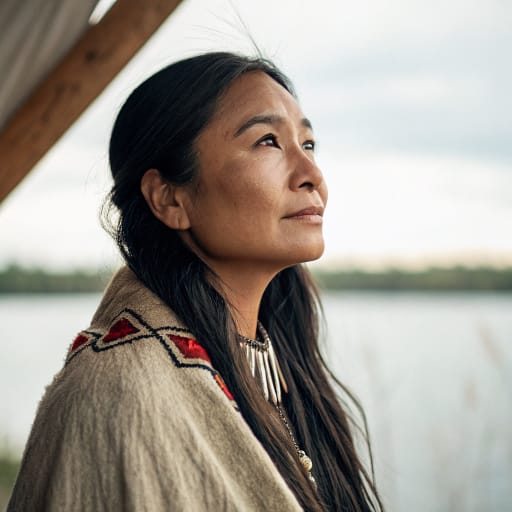
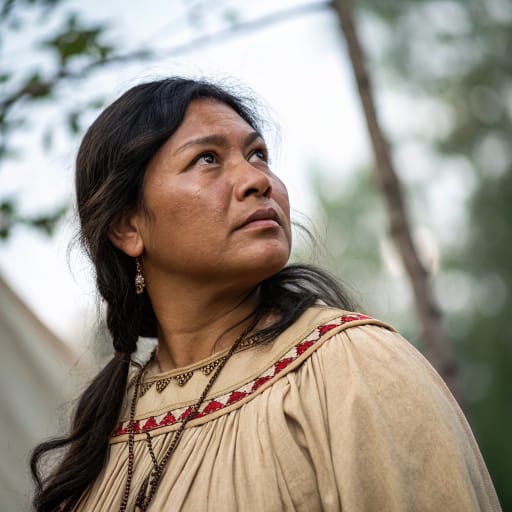
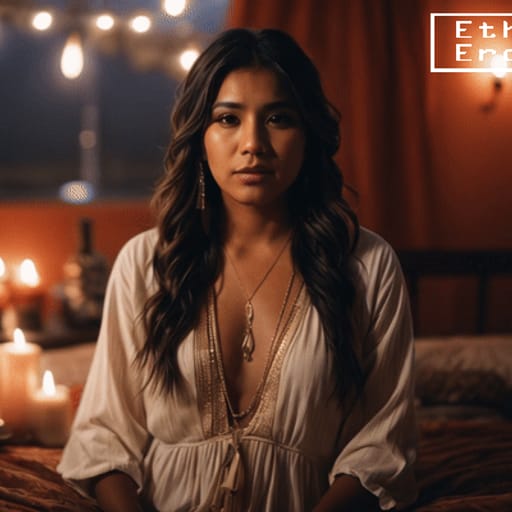
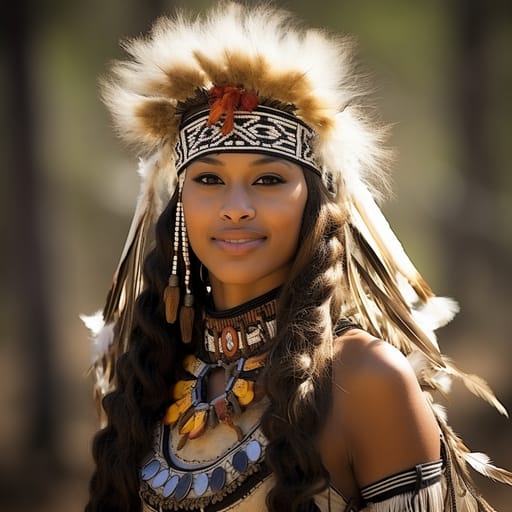
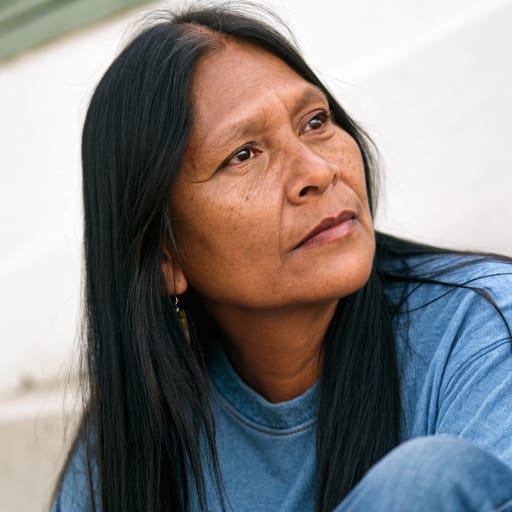
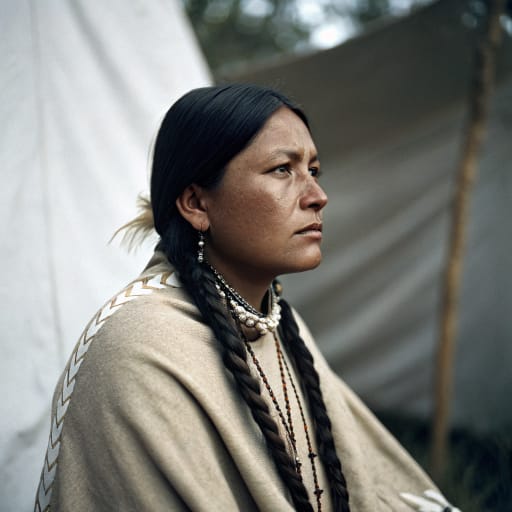
Typical Tłı̨chǫ Phenotypes
Reference for AI generation: hair, eyes, skin, facial structure, build
Tłı̨chǫ Body & Anatomy Reference
Per-feature anatomical profile for AI nude generation: Indigenous Northern American / Algonquian-Iroquoian phenotype
Tłı̨chǫ Boobs & Breasts
The typical Tłı̨chǫ bust is medium cup, moderate projection, in line with the wider Indigenous Northern American / Algonquian-Iroquoian pattern. Areolas usually fall in the 30-44mm range, with medium-brown areolar pigmentation against the copper-to-medium-brown skin tone. Compared with the smaller East Asian bust, Tłı̨chǫ breasts sit forward and are generally full and moderate projection. A faithful AI render of Tłı̨chǫ tits keeps that shape and areola size.
Tłı̨chǫ Ass & Hips
Butt shape among Tłı̨chǫ women: medium, moderate-to-full projection, over medium iliac crests. This follows Indigenous Northern American / Algonquian-Iroquoian ancestry and looks quite unlike the slim East Asian narrow-hip profile. An accurate Tłı̨chǫ ass in adult AI imagery keeps both the silhouette and the overall build (mesomorph, broader frame in northern Indigenous populations) instead of a generic average.
Tłı̨chǫ Vagina & Pussy
Vulvar anatomy among Tłı̨chǫ women: medium-brown labial pigmentation. Pubic hair tends to be straight medium-coarse texture, in the usual inverted-triangle pattern. Both follow Indigenous Northern American / Algonquian-Iroquoian pigmentation, which is why Tłı̨chǫ pussy renders should not fall back on a pale, sparse Western template.
Tłı̨chǫ Dicks & Penis
The Tłı̨chǫ cock profile, from Indigenous Northern American / Algonquian-Iroquoian anthropometric data: regional mean ~13cm erect; moderate girth; medium-brown shaft pigmentation. Pubic hair has a straight medium-coarse texture and forms the usual inverted-V pattern. Whether Tłı̨chǫ men are circumcised follows religious and cultural practice rather than phenotype.
Tłı̨chǫ Body, Curves & Build
Build and curves among Tłı̨chǫ women follow the Indigenous Northern American / Algonquian-Iroquoian pattern: mesomorph, broader frame in northern Indigenous populations, mean adult female BMI 25-28. Proportions matter as much as skin tone, so Tłı̨chǫ figures should keep their regional height and limb ratios.
Tłı̨chǫ Skin Tone & Hair Texture
The Tłı̨chǫ skin range is copper to medium-brown (Fitzpatrick III-V), and hair tends to be straight 1A, dark-brown to black, often thick and dense. That combination marks the Indigenous Northern American / Algonquian-Iroquoian phenotype, and skin tone is the trait AI generators most often get wrong for Tłı̨chǫ women.
Explore phenotype categories
Structured taxonomy with peer-reviewed scales · 22 anatomical categories
Erotic Poses & Sex Positions
From the pose catalog: 219 named positions with reference skeletons
Frequently asked questions about Tłı̨chǫ people
Where is the Tłı̨chǫ homeland?
The Tłı̨chǫ homeland is The boreal forest and barrenlands between Great Slave Lake and Great Bear Lake, Northwest Territories, Canada, centered on Behchokǫ̀, Whatì, Gamètì and Wekweètì. in North America.
What language do Tłı̨chǫ people speak?
Tłı̨chǫ people primarily speak Tłı̨chǫ Yatıì, also called Dogrib (Northern Athabaskan, Na-Dene); English widely spoken..
What religion do Tłı̨chǫ people practice?
The predominant religion among Tłı̨chǫ people is Roman Catholic, alongside Dene spiritual practice, prophecy traditions and medicine power..






Make your own Tłı̨chǫ images
Five a day, free, no credits to buy. The studio starts from this group's phenotype data, so you can set body type, pose and style and keep the traits accurate.
Start with Tłı̨chǫ