No portrait yet
Pamunkey Erotic
The Pamunkey Indian Reservation and the Pamunkey River watershed, King William County, Virginia, United States
English today; historically Virginia Algonquian, also called Powhatan (Eastern Algonquian, Algic), silent since about 1800
Baptist Christianity, centered on the Pamunkey Indian Baptist Church on the reservation
One of the tribes of the Powhatan paramount chiefdom, Tsenacommacah; closely tied to the neighboring Mattaponi, whose reservation is of the same treaty vintage
About Pamunkey People
The Pamunkey hold what is very likely the oldest Indian land title in the United States, and they hold it by treaty with Virginia rather than with Washington. The reservation is a neck of about 1,200 acres in King William County, wrapped on three sides by the Pamunkey River: high ground, marsh, and cypress swamp, an hour from Richmond and invisible from the highway. They were the ranking town of Tsenacommacah, the Algonquian paramount chiefdom the English called Powhatan, and Wahunsenacawh, the paramount chief himself, drew his core strength from them. So did Opechancanough, who planned the coordinated attacks of 1622 and 1644 that came close to ending the colony outright. After the second war, Cockacoeske, whom the colonists called the Queen of Pamunkey, signed the Treaty of Middle Plantation in 1677 and spent her rule trying to reassemble a coalition out of what was left. That treaty is not a dead letter. Every November the chief and council drive to Richmond and hand the governor deer or turkey, rent paid in game, because the document says so.
The language, Virginia Algonquian, went quiet around 1800 and survives only in word lists John Smith and William Strachey scratched down. The pottery did not go quiet. Pamunkey potters still dig clay from the riverbank and coil it into vessels, work the Commonwealth formalized in 1932 with a pottery school on the reservation and a trading post that is still standing. The tribe also runs one of the older shad hatcheries in the country, restocking the river it fishes. The twentieth century was the hardest stretch: under Virginia's Racial Integrity Act of 1924, registrar Walter Plecker ordered Pamunkey births and marriages filed as "colored," erasing on paper exactly the documentary continuity that federal recognition would later demand. Under that pressure the tribe policed its own rolls with a marriage restriction it did not strike until the run-up to the federal petition, an ugly artifact of an uglier law. Recognition finally came in 2015, the first for any Virginia tribe, after generations of asking. A couple hundred people are enrolled and only a few dozen live on the neck, but they govern it, fish it, bury their dead in it, and make the November trip with a deer in the back.
Related ethnic groups
Groups that share Pamunkey's homeland, region, language, or religious tradition. These are likely candidates for comparative phenotype reference.
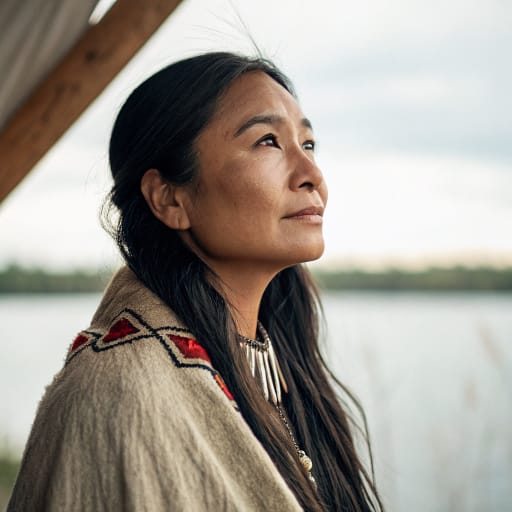
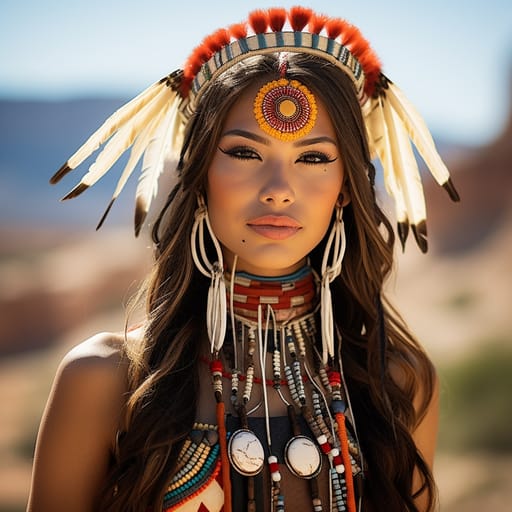
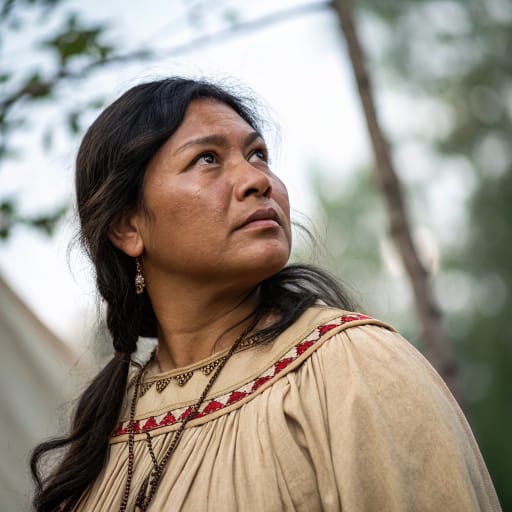
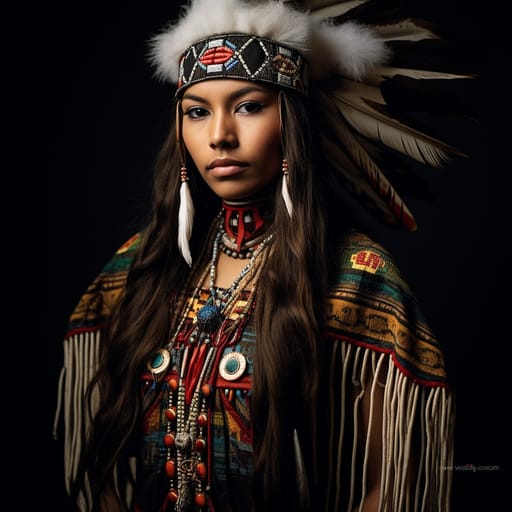
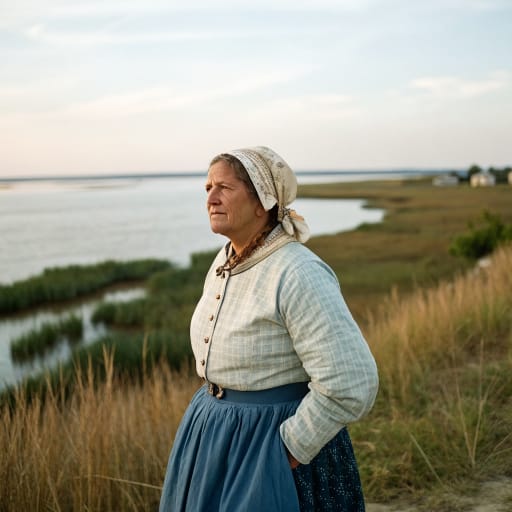
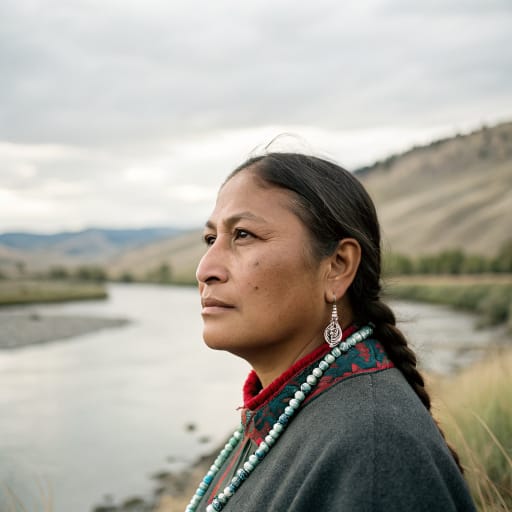

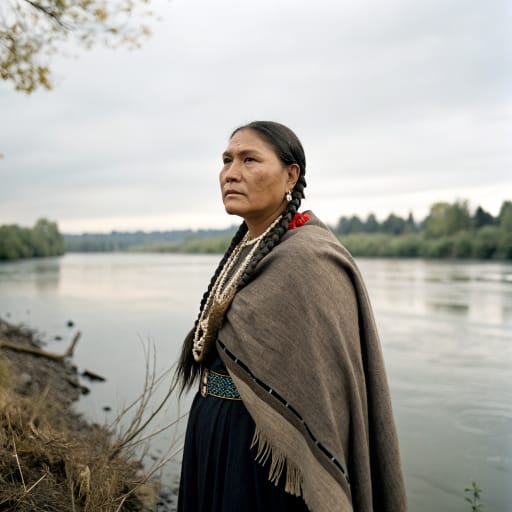
Typical Pamunkey Phenotypes
Reference for AI generation: hair, eyes, skin, facial structure, build
Pamunkey Body & Anatomy Reference
Per-feature anatomical profile for AI nude generation: Indigenous Northern American / Algonquian-Iroquoian phenotype
Pamunkey Boobs & Breasts
Pamunkey boobs follow the Indigenous Northern American / Algonquian-Iroquoian profile: medium cup, moderate projection. Areolar diameter is usually 30-44mm, and the coloring is medium-brown areolar pigmentation against the copper-to-medium-brown skin tone. Breast shape tracks body composition (mesomorph, broader frame in northern Indigenous populations, mean adult female BMI 25-28), so Pamunkey breasts tend to be full and moderate projection. Expect a forward-set shape, not the smaller East Asian bust.
Pamunkey Ass & Hips
Pamunkey ass and hip morphology presents as medium, moderate-to-full projection, distinctly different from the slim East Asian narrow-hip profile. The Pamunkey pelvic profile shows medium iliac crests, anchored in the Indigenous Northern American / Algonquian-Iroquoian skeletal pattern. Pamunkey butt shots in adult AI imagery should render the medium, moderate-to-full projection silhouette with the overall build (mesomorph, broader frame in northern Indigenous populations) and the fat distribution typical of the Indigenous Northern American / Algonquian-Iroquoian phenotype.
Pamunkey Vagina & Pussy
Pamunkey pussy anatomy typically shows medium-brown labial pigmentation. Pubic hair is usually straight medium-coarse texture. In AI-generated Pamunkey nudes, labial color should blend into the copper to medium-brown skin with a gradual transition, and the hair should keep its straight medium-coarse texture.
Pamunkey Dicks & Penis
Penis reference for Pamunkey men: regional mean ~13cm erect, moderate girth. Coloring: medium-brown shaft pigmentation. An accurate Pamunkey cock in AI imagery matches the surrounding copper to medium-brown skin rather than a generic porn default. Circumcision depends on religion and custom, not ancestry.
Pamunkey Body, Curves & Build
The Pamunkey figure is generally mesomorph, broader frame in northern Indigenous populations, with mean adult female BMI 25-28, characteristic of Indigenous Northern American / Algonquian-Iroquoian ancestry. AI image tools tend to flatten regional body types into a few stock shapes; here the Pamunkey build is kept as its own reference.
Pamunkey Skin Tone & Hair Texture
Skin: copper to medium-brown (Fitzpatrick III-V). Hair: straight 1A, dark-brown to black, often thick and dense. Both are typical of Indigenous Northern American / Algonquian-Iroquoian ancestry. The most common mistake in AI nudes of Pamunkey women is a body rendered lighter than the face.
Explore phenotype categories
Structured taxonomy with peer-reviewed scales · 22 anatomical categories
Erotic Poses & Sex Positions
From the pose catalog: 219 named positions with reference skeletons
Frequently asked questions about Pamunkey people
Where is the Pamunkey homeland?
The Pamunkey homeland is The Pamunkey Indian Reservation and the Pamunkey River watershed, King William County, Virginia, United States in North America.
What language do Pamunkey people speak?
Pamunkey people primarily speak English today; historically Virginia Algonquian, also called Powhatan (Eastern Algonquian, Algic), silent since about 1800.
What religion do Pamunkey people practice?
The predominant religion among Pamunkey people is Baptist Christianity, centered on the Pamunkey Indian Baptist Church on the reservation.






Make your own Pamunkey images
Five a day, free, no credits to buy. The studio starts from this group's phenotype data, so you can set body type, pose and style and keep the traits accurate.
Start with Pamunkey