Help us get this right
Does this portrait look right for Dakelh?
Nobody has judged this one yet. You would be the first.
Dakelh Erotic
Central interior British Columbia, Canada: the Nechako Plateau and the upper Fraser, Stuart and Babine lake systems.
Dakelh, also called Carrier (Northern Athabaskan / Dene, Na-Dene family), with Central and Southern dialects; English now dominant in daily use.
Predominantly Roman Catholic since nineteenth century Oblate missions, alongside continuing Dakelh ceremonial practice centered on the balhats.
Northern Athabaskan (Dene). Central and Southern Dakelh communities including Nak'azdli, Tl'azt'en, Saik'uz, Stellat'en, Nadleh Whut'en, Lheidli T'enneh, Ulkatcho and Nazko; closely tied to Babine and Wet'suwet'en speakers.
About Dakelh People
The Dakelh call themselves people who travel by water, and the name fits the country: the Nechako Plateau and the upper Fraser drainage in the central interior of British Columbia, a landscape of long lakes strung together by rivers, where the fastest route between two places was usually a canoe. The English name Carrier came from outside, a translation of what Sekani neighbors called them, and is usually explained by an old mourning practice in which a widow carried her husband's cremated remains until the feast that released her from the obligation. The language belongs to the northern branch of Athabaskan, or Dene, which puts the closest relatives immediately around them: Babine and Wet'suwet'en speakers to the northwest, Sekani to the north, Tsilhqot'in to the south. The distant ones are very distant, since Navajo and Apache sit at the far end of the same family. Land is held as keyoh, family territories with named stewards who inherit responsibility for a particular stretch of trapline, berry ground and fishing water rather than owning it outright.
Public life turns on the balhats, the feast hall, where names and crests are transferred, funeral costs are settled, and decisions about territory are witnessed by the people who will have to remember them. The clan and crest system is strongest in the northern communities, who took it up over generations of trade and intermarriage with the coast; southern groups organized themselves more loosely. Sockeye was the staple, taken at weirs, and the destruction of the Babine barricades by federal fisheries officers early in the twentieth century is still argued about as a live grievance. Fort St. James, planted on Nak'azdli territory in 1806, was the first sustained European settlement in what became British Columbia, and the district was called New Caledonia before the province had a name. In 1885 a missionary at that post worked out a syllabary for the language, which Dakelh writers then used for decades. Harder inflections followed: the residential school at Fraser Lake, and the reservoir behind the Kenney Dam in 1952, which drowned Cheslatta land and moved families off it with almost no notice. Fluent speakers are now mostly elders, and the language work running out of Vanderhoof and the Carrier Sekani communities is a deliberate, unromantic attempt to change that.
Related ethnic groups
Groups that share Dakelh's homeland, region, language, or religious tradition. These are likely candidates for comparative phenotype reference.
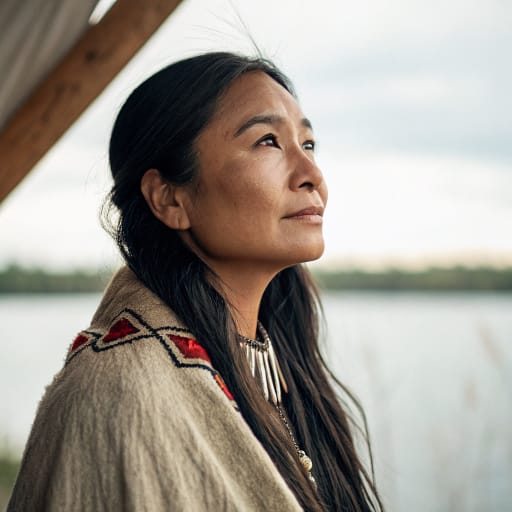
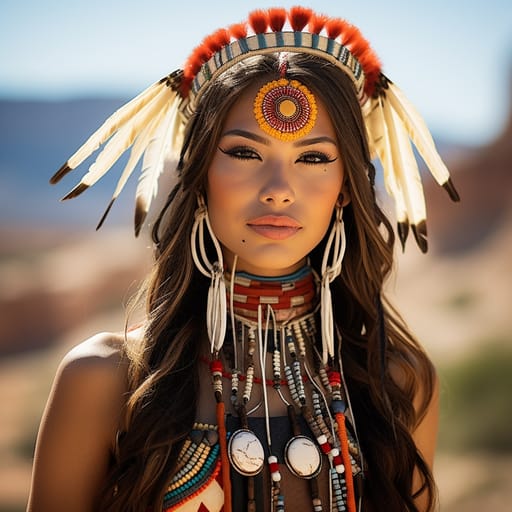
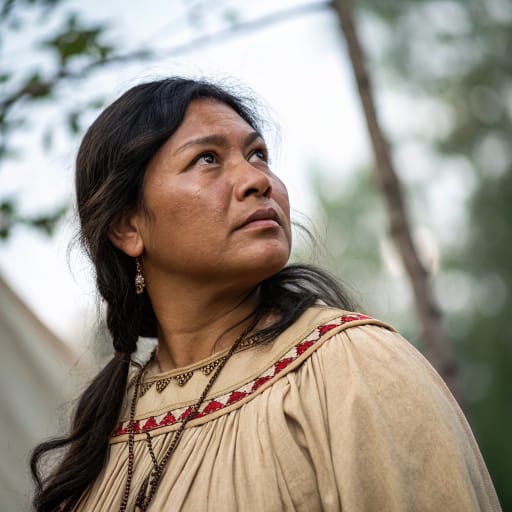
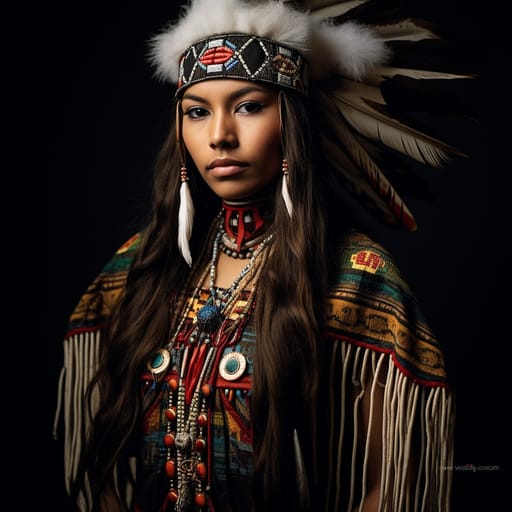
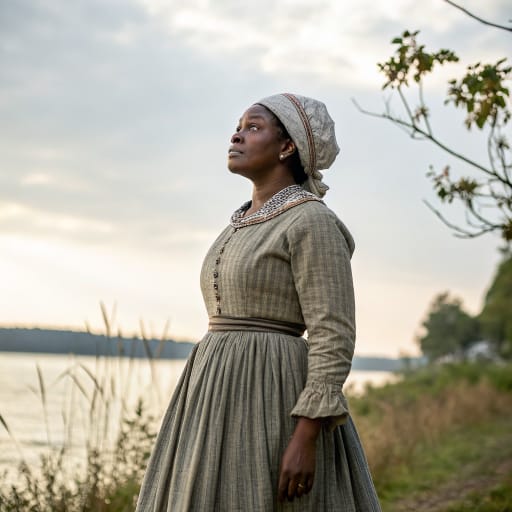
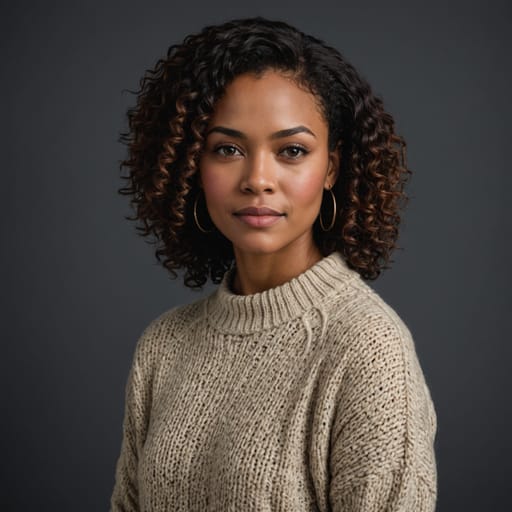
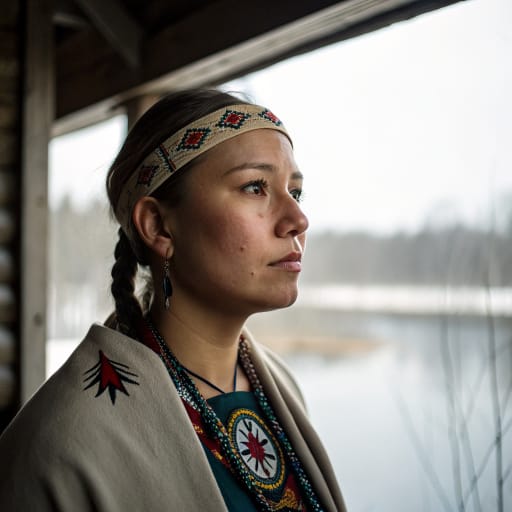
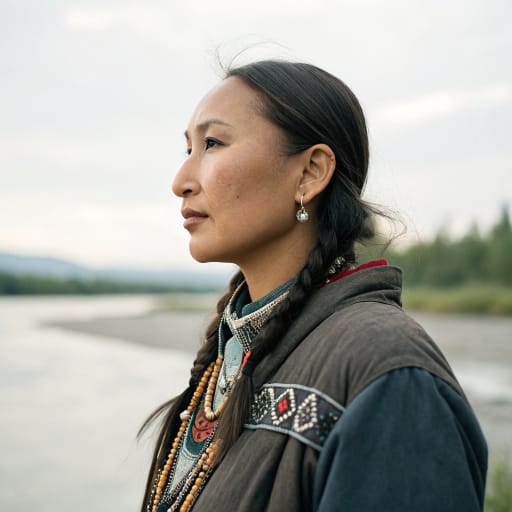
Typical Dakelh Phenotypes
Reference for AI generation: hair, eyes, skin, facial structure, build
Dakelh Body & Anatomy Reference
Indigenous Northern American / Algonquian-Iroquoian phenotype: anatomy reference for AI nude generation
Dakelh Boobs & Breasts
The typical Dakelh bust is medium cup, moderate projection, in line with the wider Indigenous Northern American / Algonquian-Iroquoian pattern. Areolas usually fall in the 30-44mm range, with medium-brown areolar pigmentation against the copper-to-medium-brown skin tone. Compared with the smaller East Asian bust, Dakelh breasts sit forward and are generally full and moderate projection. A faithful AI render of Dakelh tits keeps that shape and areola size.
Dakelh Ass & Hips
Butt shape among Dakelh women: medium, moderate-to-full projection, over medium iliac crests. This follows Indigenous Northern American / Algonquian-Iroquoian ancestry and looks quite unlike the slim East Asian narrow-hip profile. An accurate Dakelh ass in adult AI imagery keeps both the silhouette and the overall build (mesomorph, broader frame in northern Indigenous populations) instead of a generic average.
Dakelh Vagina & Pussy
Vulvar anatomy among Dakelh women: medium-brown labial pigmentation. Pubic hair tends to be straight medium-coarse texture, in the usual inverted-triangle pattern. Both follow Indigenous Northern American / Algonquian-Iroquoian pigmentation, which is why Dakelh pussy renders should not fall back on a pale, sparse Western template.
Dakelh Dicks & Penis
The Dakelh cock profile, from Indigenous Northern American / Algonquian-Iroquoian anthropometric data: regional mean ~13cm erect; moderate girth; medium-brown shaft pigmentation. Pubic hair has a straight medium-coarse texture and forms the usual inverted-V pattern. Whether Dakelh men are circumcised follows religious and cultural practice rather than phenotype.
Dakelh Body, Curves & Build
Build and curves among Dakelh women follow the Indigenous Northern American / Algonquian-Iroquoian pattern: mesomorph, broader frame in northern Indigenous populations, mean adult female BMI 25-28. Proportions matter as much as skin tone, so Dakelh figures should keep their regional height and limb ratios.
Dakelh Skin Tone & Hair Texture
The Dakelh skin range is copper to medium-brown (Fitzpatrick III-V), and hair tends to be straight 1A, dark-brown to black, often thick and dense. That combination marks the Indigenous Northern American / Algonquian-Iroquoian phenotype, and skin tone is the trait AI generators most often get wrong for Dakelh women.
Explore phenotype categories
Structured taxonomy with peer-reviewed scales · 22 anatomical categories
Erotic Poses & Sex Positions
From the pose catalog: 219 named positions with reference skeletons
Frequently asked questions about Dakelh people
Where is the Dakelh homeland?
The Dakelh homeland is Central interior British Columbia, Canada: the Nechako Plateau and the upper Fraser, Stuart and Babine lake systems. in North America.
What language do Dakelh people speak?
Dakelh people primarily speak Dakelh, also called Carrier (Northern Athabaskan / Dene, Na-Dene family), with Central and Southern dialects; English now dominant in daily use..
What religion do Dakelh people practice?
The predominant religion among Dakelh people is Predominantly Roman Catholic since nineteenth century Oblate missions, alongside continuing Dakelh ceremonial practice centered on the balhats..






Make your own Dakelh images
Five a day, free, no credits to buy. The studio starts from this group's phenotype data, so you can set body type, pose and style and keep the traits accurate.
Start with Dakelh