Help us get this right
Does this portrait look right for Bidai?
One tap. It takes a second and it is recorded.
0 say it looks right, 1 says it looks off.
Bidai Erotic
Wooded country along the lower Trinity River in southeast Texas, between the Brazos and Neches rivers, United States; removed in 1859 to Indian Territory (Oklahoma)
Bidai, extinct and known only from fragments (unclassified, often grouped with the Atakapan languages)
Traditional Native beliefs, largely unrecorded; brief contact with Spanish Catholic missions in the 1700s
Independent people of the lower Trinity, allied with the Akokisa and Deadose; the survivors were absorbed into the Caddo Nation of Oklahoma
About Bidai People
The Bidai were a Native American people of southeast Texas. From the 1700s into the middle of the 1800s they lived in the wooded country along the lower Trinity River, between the Brazos and the Neches. Disease and the loss of their land wore them down to a few families. The last of them went north with the Caddo to Indian Territory, in present-day Oklahoma, and their descendants became part of what is now the Caddo Nation.
Where they lived is what set the Bidai apart. Their name is said to come from a Caddo word meaning brushwood, which fits the thick country they held, and it survives in east Texas place names such as Bedias. Their land was a crossroads, with Caddo farming towns to the north and the Akokisa and Atakapa toward the coast. Only scraps of their language survive. Scholars usually group it with Atakapa, but there is too little to be sure. No missionary or trader wrote down their beliefs in any detail.
That crossroads shaped their colonial history. French traders from Louisiana worked the lower Trinity, and Spain answered with outposts meant to hold the ground. In 1749 Franciscans opened the mission of San Ildefonso on the San Gabriel River for the Bidai, Akokisa and Deadose. Drought, disease and raids emptied it within a few years. Spain then built a fort and mission near the mouth of the Trinity, again hoping to settle the Bidai there. Neither effort held them, and the Bidai kept their own villages and their own trade.
Disease did far more damage. An epidemic in 1776 and 1777 is reported to have killed nearly half of them, and their numbers never recovered. American settlement from the 1820s on took most of the land that remained. In 1854 the surviving band was placed on the Brazos Indian Reservation with Caddo and Wichita groups. In 1859, under pressure from Texas settlers, the reservation was emptied and its people were moved across the Red River. The Bidai ended there as a separate people, but their descendants did not. Their history continues in the Caddo community in Oklahoma, and their name is still on the map of the country they knew.
Related ethnic groups
Groups that share Bidai's homeland, region, language, or religious tradition. These are likely candidates for comparative phenotype reference.
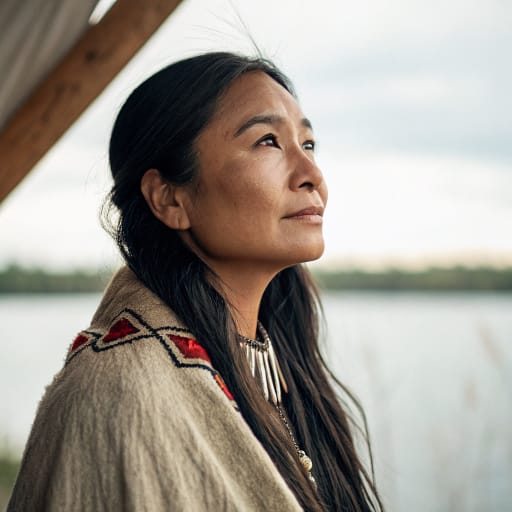
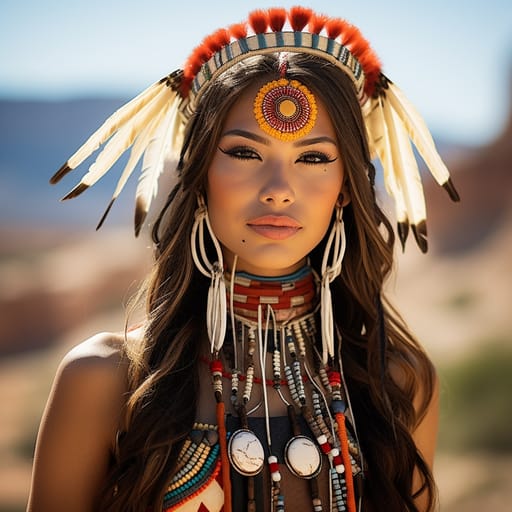
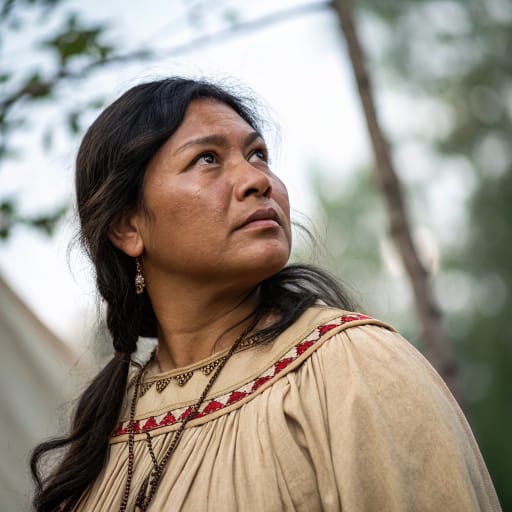
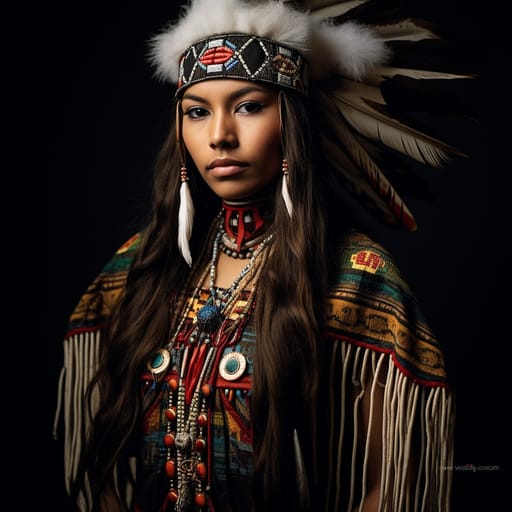
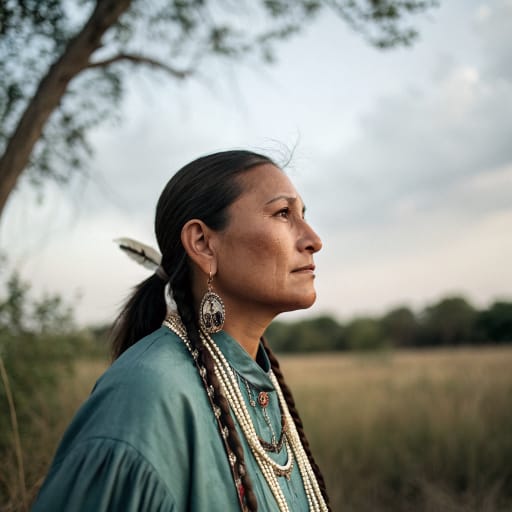
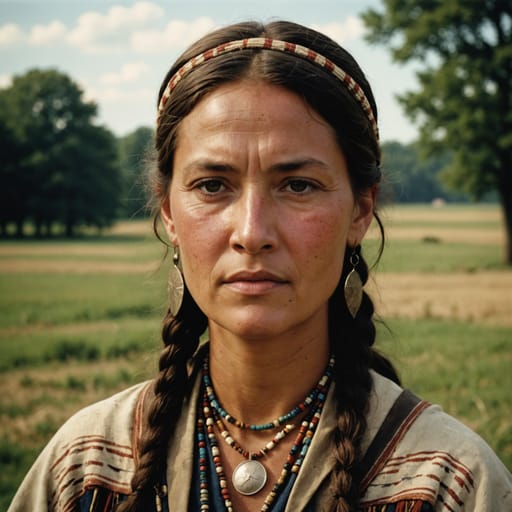
Typical Bidai Phenotypes
Reference for AI generation: hair, eyes, skin, facial structure, build
Bidai Body & Anatomy Reference
Indigenous Northern American / Algonquian-Iroquoian phenotype: anatomy reference for AI nude generation
Bidai Boobs & Breasts
The typical Bidai bust is medium cup, moderate projection, in line with the wider Indigenous Northern American / Algonquian-Iroquoian pattern. Areolas usually fall in the 30-44mm range, with medium-brown areolar pigmentation against the copper-to-medium-brown skin tone. Compared with the smaller East Asian bust, Bidai breasts sit forward and are generally full and moderate projection. A faithful AI render of Bidai tits keeps that shape and areola size.
Bidai Ass & Hips
Butt shape among Bidai women: medium, moderate-to-full projection, over medium iliac crests. This follows Indigenous Northern American / Algonquian-Iroquoian ancestry and looks quite unlike the slim East Asian narrow-hip profile. An accurate Bidai ass in adult AI imagery keeps both the silhouette and the overall build (mesomorph, broader frame in northern Indigenous populations) instead of a generic average.
Bidai Vagina & Pussy
Vulvar anatomy among Bidai women: medium-brown labial pigmentation. Pubic hair tends to be straight medium-coarse texture, in the usual inverted-triangle pattern. Both follow Indigenous Northern American / Algonquian-Iroquoian pigmentation, which is why Bidai pussy renders should not fall back on a pale, sparse Western template.
Bidai Dicks & Penis
The Bidai cock profile, from Indigenous Northern American / Algonquian-Iroquoian anthropometric data: regional mean ~13cm erect; moderate girth; medium-brown shaft pigmentation. Pubic hair has a straight medium-coarse texture and forms the usual inverted-V pattern. Whether Bidai men are circumcised follows religious and cultural practice rather than phenotype.
Bidai Body, Curves & Build
Build and curves among Bidai women follow the Indigenous Northern American / Algonquian-Iroquoian pattern: mesomorph, broader frame in northern Indigenous populations, mean adult female BMI 25-28. Proportions matter as much as skin tone, so Bidai figures should keep their regional height and limb ratios.
Bidai Skin Tone & Hair Texture
The Bidai skin range is copper to medium-brown (Fitzpatrick III-V), and hair tends to be straight 1A, dark-brown to black, often thick and dense. That combination marks the Indigenous Northern American / Algonquian-Iroquoian phenotype, and skin tone is the trait AI generators most often get wrong for Bidai women.
Explore phenotype categories
Structured taxonomy with peer-reviewed scales · 22 anatomical categories
Erotic Poses & Sex Positions
From the pose catalog: 219 named positions with reference skeletons
Frequently asked questions about Bidai people
Where is the Bidai homeland?
The Bidai homeland is Wooded country along the lower Trinity River in southeast Texas, between the Brazos and Neches rivers, United States; removed in 1859 to Indian Territory (Oklahoma) in North America.
What language do Bidai people speak?
Bidai people primarily speak Bidai, extinct and known only from fragments (unclassified, often grouped with the Atakapan languages).
What religion do Bidai people practice?
The predominant religion among Bidai people is Traditional Native beliefs, largely unrecorded; brief contact with Spanish Catholic missions in the 1700s.






Make your own Bidai images
Five a day, free, no credits to buy. The studio starts from this group's phenotype data, so you can set body type, pose and style and keep the traits accurate.
Start with Bidai