No portrait yet
Saisiyat Erotic
Mountain foothills straddling the Hsinchu and Miaoli county border, northwestern Taiwan
Saisiyat (Austronesian, Formosan branch), in northern and southern dialects; Mandarin and Hakka widely spoken
Christianity, mainly Presbyterian and Catholic, alongside ancestral spirit observance centered on the pasta'ai
Northern Branch (Wufeng, Hsinchu) and Southern Branch (Nanzhuang and Shitan, Miaoli); patrilineal clans; one of the Formosan Austronesian peoples
About Saisiyat People
The Saisiyat are one of the smallest of Taiwan's officially recognized indigenous peoples, roughly six thousand people living along the ridges and river valleys where Hsinchu County meets Miaoli County, in the foothills of the island's northwestern mountains. Their position is the central fact of their history. To the east were the Atayal, numerous and formidable. To the west, from the eighteenth century onward, came Hakka settlers pushing into the hills after camphor and farmland. The Saisiyat absorbed pressure from both directions and borrowed from both: their language took on a heavy load of Atayal vocabulary, many families are bilingual or trilingual in Hakka and Mandarin, and the line between Saisiyat and Hakka households in the lower villages has been porous for generations. Saisiyat is an Austronesian language, one of the Formosan languages that make Taiwan the likely homeland of that entire family, and it is now seriously endangered, spoken fluently by a minority and split into northern and southern dialects matching the two territorial branches.
What the Saisiyat are known for, in Taiwan and beyond it, is the pasta'ai: the ritual for the ta'ai, a short, dark-skinned people who according to Saisiyat tradition lived nearby, taught them songs and how to farm, and were finally killed by Saisiyat ancestors after their conduct toward Saisiyat women became intolerable. The ritual is an apology that has never ended. It is held every two years in the tenth lunar month, with a larger observance every ten years, running several nights of linked song and dance at Xiangtian Lake in the south and Da'ai in the north. The song cycle has to be performed complete and in order. Dancers wear tall shoulder banners hung with mirrors and small bells. It is not a performance for visitors, though visitors come.
The clan names are worth knowing about too. They are drawn from the natural world, and when Japanese administrators required Han-style surnames the clan names were simply translated into Chinese characters, which is why Saisiyat families carry surnames rare or unknown elsewhere in the Chinese-speaking world: Wind, Sun, Root, Bean, Blood, Camphor. The clans are patrilineal, and charge of the pasta'ai is hereditary rather than elected. Most Saisiyat today are Christian, Presbyterian or Catholic, and the ritual is not treated as a rival to that. It is an obligation of a different kind.
Related ethnic groups
Groups that share Saisiyat's homeland, region, language, or religious tradition. These are likely candidates for comparative phenotype reference.
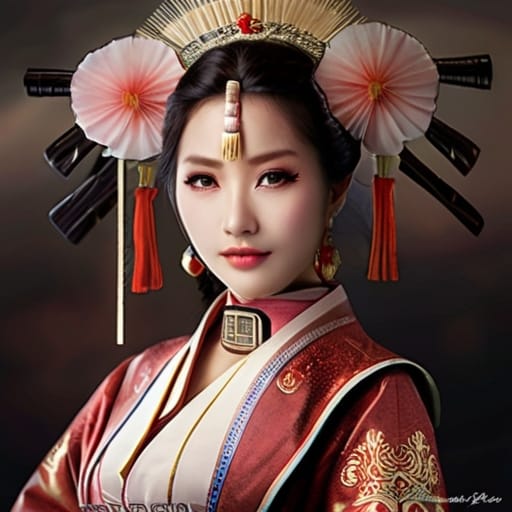
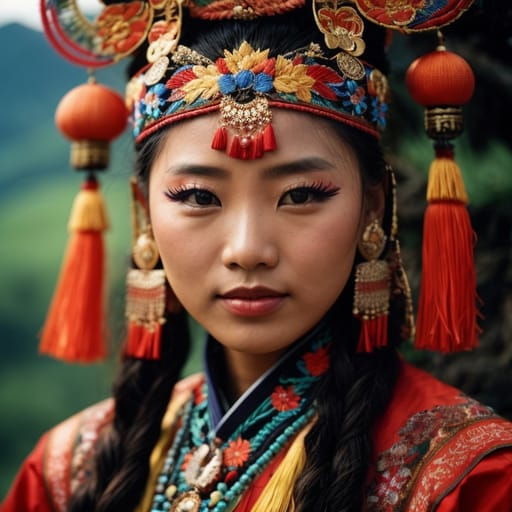
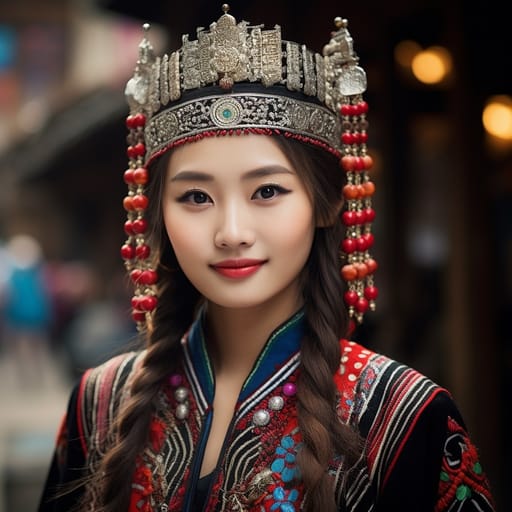
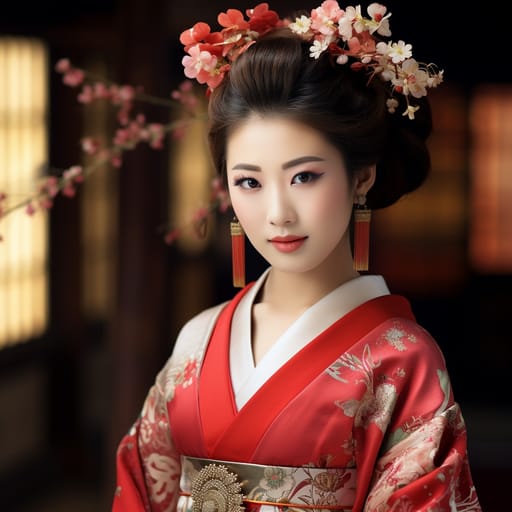
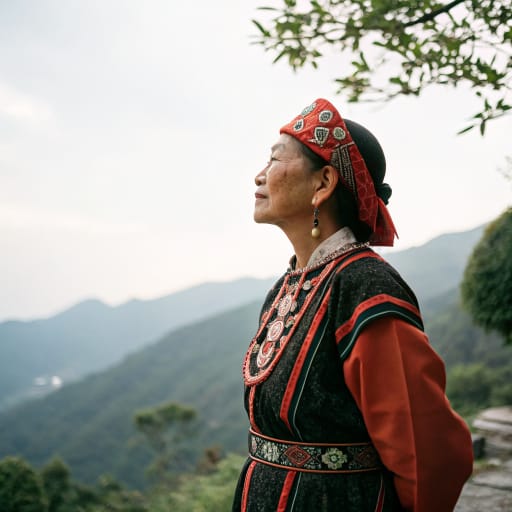
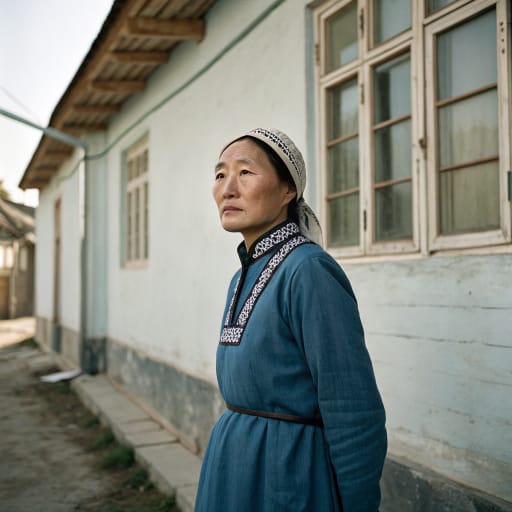
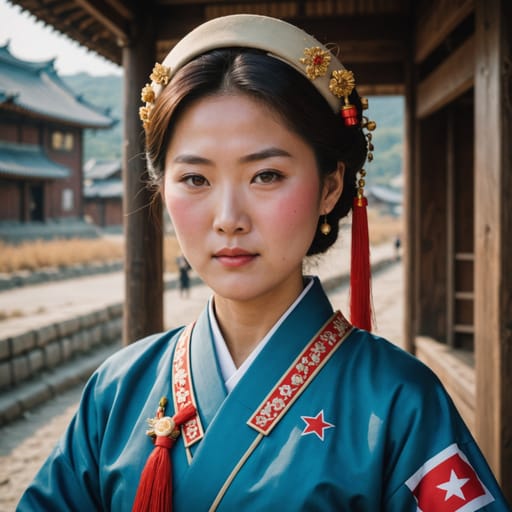
Typical Saisiyat Phenotypes
Reference for AI generation: hair, eyes, skin, facial structure, build
Saisiyat Body & Anatomy Reference
Anatomy by feature, East Asian Sinitic / Mongoloid phenotype
Saisiyat Boobs & Breasts
The typical Saisiyat bust is small-to-medium cup, modest projection, in line with the wider East Asian Sinitic / Mongoloid pattern. Areolas usually fall in the 26-36mm range, with light-pink to medium-brown areolar pigmentation against the light-to-medium skin tone. Compared with the fuller South Asian or Levantine bust profile, Saisiyat breasts sit forward and are generally firm and modestly projecting; smaller cup size than the South Asian or Western Asian average. A faithful AI render of Saisiyat tits keeps that shape and areola size.
Saisiyat Ass & Hips
Butt shape among Saisiyat women: small-to-medium, modest projection, narrower hip profile, over narrower iliac crests, less gluteal-femoral fat deposition. This follows East Asian Sinitic / Mongoloid ancestry and looks quite unlike the fuller projected glutes of the West African or Polynesian phenotype. An accurate Saisiyat ass in adult AI imagery keeps both the silhouette and the overall build (ectomorph-to-mesomorph, lean frame) instead of a generic average.
Saisiyat Vagina & Pussy
Vulvar anatomy among Saisiyat women: light-pink to medium-brown labial pigmentation, smaller labia minora. Pubic hair tends to be straight fine texture, sparser distribution than the South Asian norm, in the usual inverted-triangle pattern. Both follow East Asian Sinitic / Mongoloid pigmentation, which is why Saisiyat pussy renders should not fall back on a pale, sparse Western template.
Saisiyat Dicks & Penis
The Saisiyat cock profile, from East Asian Sinitic / Mongoloid anthropometric data: regional mean ~11-12cm erect; moderate girth; light-brown shaft pigmentation. Pubic hair has a straight fine texture and forms the usual inverted-V pattern. Whether Saisiyat men are circumcised follows religious and cultural practice rather than phenotype.
Saisiyat Body, Curves & Build
Build and curves among Saisiyat women follow the East Asian Sinitic / Mongoloid pattern: ectomorph-to-mesomorph, lean frame, mean adult female BMI 20-23. Proportions matter as much as skin tone, so Saisiyat figures should keep their regional height and limb ratios.
Saisiyat Skin Tone & Hair Texture
The Saisiyat skin range is light to medium (Fitzpatrick II-IV), and hair tends to be straight 1A, fine-to-medium, predominantly black. That combination marks the East Asian Sinitic / Mongoloid phenotype, and skin tone is the trait AI generators most often get wrong for Saisiyat women.
Explore phenotype categories
Structured taxonomy with peer-reviewed scales · 22 anatomical categories
Erotic Poses & Sex Positions
From the pose catalog: 219 named positions with reference skeletons
Frequently asked questions about Saisiyat people
Where is the Saisiyat homeland?
The Saisiyat homeland is Mountain foothills straddling the Hsinchu and Miaoli county border, northwestern Taiwan in East Asia.
What language do Saisiyat people speak?
Saisiyat people primarily speak Saisiyat (Austronesian, Formosan branch), in northern and southern dialects; Mandarin and Hakka widely spoken.
What religion do Saisiyat people practice?
The predominant religion among Saisiyat people is Christianity, mainly Presbyterian and Catholic, alongside ancestral spirit observance centered on the pasta'ai.






Make your own Saisiyat images
Five a day, free, no credits to buy. The studio starts from this group's phenotype data, so you can set body type, pose and style and keep the traits accurate.
Start with Saisiyat